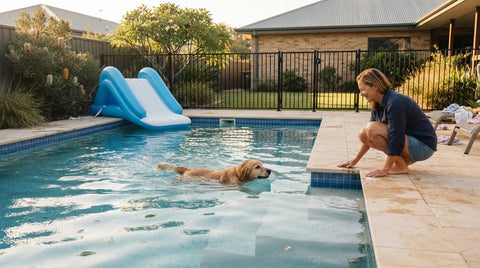
A dog’s confidence at the water’s edge doesn’t make a pool safe. Preventing dog drowning accidents in a backyard pool starts with active supervision, restricted access and a clear, practised exit. Not every dog is a natural swimmer, and even a strong swimmer can tire or struggle to find the way out.
It’s easy to assume a dog will paddle instinctively and make it to the pool steps. But unfamiliarity with the exit, fatigue or unsupervised access can turn a backyard swim into an emergency. In Australia, according to the Sydney Children’s Hospitals Network, any pool that can be filled with 30 cm of water or more must have fencing that complies with state or territory law.
This guide explains how to reduce the risks with attentive supervision, pool barriers, safe exits and suitable equipment. You’ll also learn how to practise exit routes with your dog, recognise signs of fatigue and manage pool access more safely, so you can enjoy outdoor time with a clear plan.
Key Takeaways
- Stay within reach while your dog swims, and pause the session if they start struggling, slowing down or losing interest.
- Teach your dog to enter the pool only when invited, then practise finding the steps from different parts of the water.
- Make the exit easy to locate and use; a dog may head for the spot where they entered, so practise more than one route out.
- According to Sydney Children’s Hospitals Network, any Australian pool that can be filled with 30 cm of water or more must have fencing that complies with state or territory law.
- Use barriers to limit unsupervised access, and keep gates secure rather than propped open or broken.
1. Swimming supervision and fatigue
Stay poolside and watch your dog continuously whenever they’re in the water. Keep your attention on the swimmers, not your phone, a conversation or a task inside the house. A dog can tire or struggle to find an exit even if they started confidently. Not every breed swims well; Boxers, Bulldogs, Pugs, Pekingese, Staffordshire Bull Terriers, Basset Hounds and Dachshunds may find swimming difficult. Dogs with heavier builds or shorter limbs can also tire more quickly.
Make each swim a supervised activity, not free access to the pool. Young or enthusiastic dogs may keep paddling without recognising fatigue. Start early sessions at under five minutes, then keep later swimming sessions to about 10 minutes with breaks. Offer a shaded place to rest between swims, particularly on a warm day. Fresh drinking water gives your dog an alternative to pool water. Keep watching during breaks, too, so your dog doesn’t wander back into the pool unnoticed.
Watch for changes in your dog’s movement or interest. Flailing, struggling to swim, slowing down or losing interest in a favourite toy can signal fatigue. End the swim as soon as you notice these signs, guide your dog to the exit and let them rest. Even a dog that swims strongly at first can become exhausted. Schedule breaks rather than waiting for your dog to stop swimming.
Signs of drowning or near-drowning can include flailing, struggling to stay afloat or slowing down in the water. Get your dog out promptly and seek urgent veterinary care, even if they seem to recover, as complications can develop later.
If your dog isn’t breathing after a pool accident, check for an airway obstruction and begin rescue breathing. Get urgent veterinary help. Even a dog that appears to recover needs prompt assessment after the incident.
Supervision works alongside barriers, not instead of them. NSW Health says pools should be properly fenced, with gates that aren’t propped open or broken. Close the gate after every entry and exit, including when you’re carrying towels or pool toys. Before swimming, check that the gate has closed and that your dog is on the supervised side. If children or other swimmers are using the pool, agree who is watching the dog so attention doesn’t lapse during a changeover.
Follow the same routine when leaving the pool area: take your dog with you and secure the gate. A shaded resting spot outside the barrier helps keep swim breaks separate from pool access. These steps clarify who is supervising and reduce the chance of a tired dog returning to the water alone.
2. Pool alarms, covers, and training
A pool alarm can alert you to activity, but it doesn’t stop a dog entering the water or replace active supervision. Treat it as one layer of a safety routine, alongside a secure barrier and a practised exit. Before relying on an alarm, learn what triggers it, where you can hear it and how it signals that it needs attention. Continue to monitor the pool area yourself; an alert only helps if someone can respond promptly.
A cover can restrict access when the pool isn’t in use, but only if it’s fitted and secured as intended. Don’t assume a cover will support your dog’s weight. Keep your dog away while the cover is being moved, and secure it again after swimming. If the pool is uncovered, control access rather than treating an alarm or cover as a substitute for supervision.
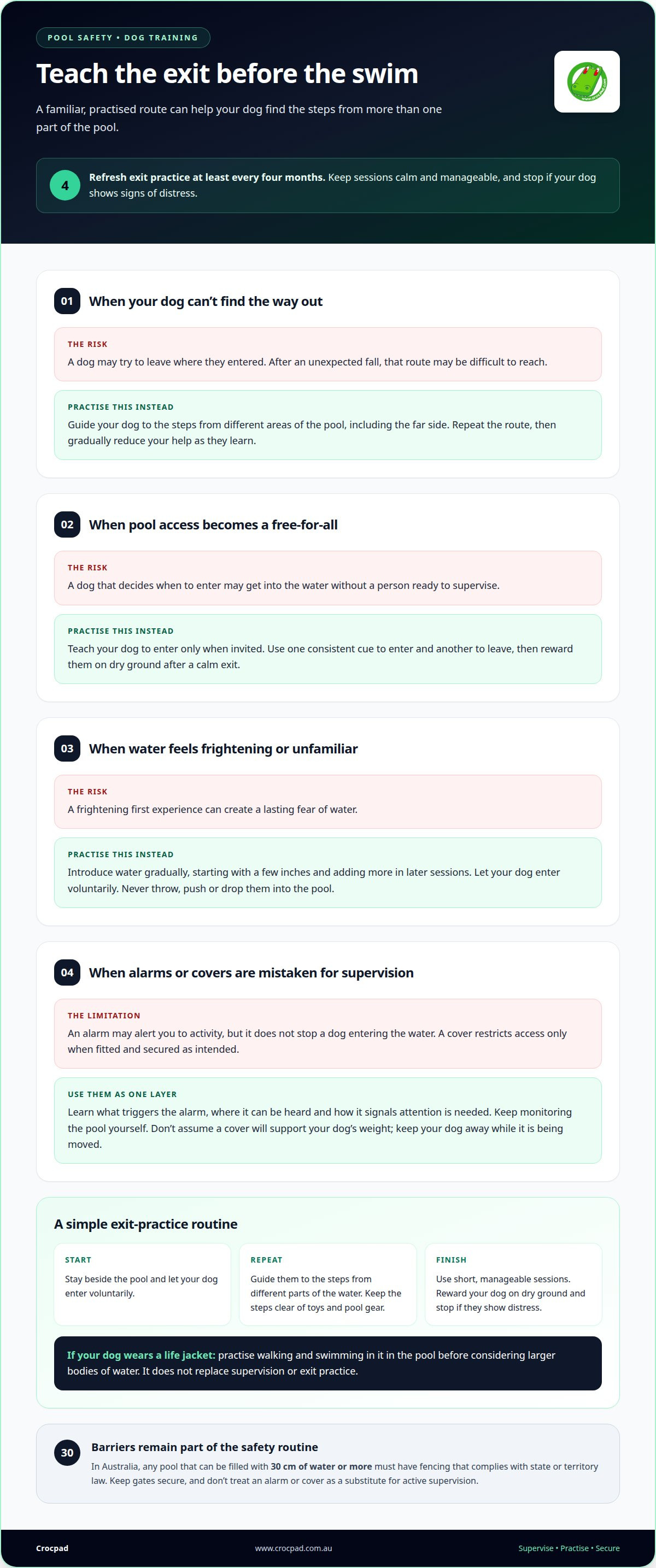
Training gives your dog a routine for entering and leaving the water. Teach them to enter only when invited, so pool access doesn’t become their own decision. Introduce water gradually, starting with a few inches and adding more in later sessions. Never throw, push or drop a dog into the pool; a frightening first experience can create a lasting fear of water.
Practise the exit beside your dog. Guide them to the pool steps from different parts of the water, then repeat with as little help as possible. Dogs may head towards the point where they entered, so practising from several locations helps them learn the steps from more than one starting point. Refresh their memory at least every four months.
Use one consistent cue for entering and another for leaving. Invite your dog in, guide them through a calm exit, then reward them on dry ground. Repeat in short, manageable sessions, and stop if they show signs of distress. If your dog wears a life jacket, practise walking and swimming in it in the pool before considering larger bodies of water. The jacket doesn’t replace supervision or exit practice.
Make the routine easy for everyone in the household to follow. Agree who gives the invitation and who watches the pool when several people are present. Before swimming, check that the alarm is ready to alert, the cover is fully clear of the water and the exit route is accessible. After swimming, bring your dog away from the pool before securing the cover. These steps help protect against accidental entry and keep training focused on controlled access. For a more enjoyable poolside setup, explore recreational pool gear alongside your safety routine.
3. Pool exits, ramps, and pet-friendly steps
A dog that falls into a pool may panic if they can’t find the steps or a ledge. Dogs often try to leave where they entered, but that route may be difficult to reach after an unexpected fall. Give your dog more than one familiar exit point. Practise guiding them towards the steps from different areas, including the far side of the pool, so they learn to find an exit rather than relying on one route.
Begin exit practice in calm conditions, with you beside the pool and your dog entering voluntarily. Lead them to the steps, let them climb out, then repeat from another part of the water. Gradually reduce your help as your dog learns the route. Keep the steps clear of toys and pool gear that could block the way. A clear, predictable exit matters during summer swims and after an unexpected slip.
Look at the pool from your dog’s height. Check whether the steps are visible from the water and whether your dog can reach them without scrambling over a high edge. A smooth wall may offer no useful grip, while steps at one end may be difficult to find from the opposite end. Practise from less obvious positions, staying close enough to guide your dog safely.
A dog ramp can provide another route between the water and poolside. Its usefulness depends on whether it can be positioned securely and whether your dog can approach and climb it confidently. Introduce the ramp while your dog is calm, then practise entering and exiting under close supervision. Don’t assume a ramp suits every pool layout or every dog. Keep familiar steps available too, and practise using both routes.
Watch how your dog uses the exit. If they hesitate, slide back or struggle to get a foothold, pause the session and guide them to a more familiar route. Don’t pull a frightened dog by the collar or force them up a ramp. Reward calm attempts on dry ground, then practise again once they’re settled. A tired dog may find an easy climb harder, so end swimming before fatigue affects their movement.
Make exit practice part of your household pool routine. Show everyone who supervises your dog which steps or ramp to use, and keep the route clear. Practise from different points in the pool, not just the spot your dog prefers. Refresh the route regularly so it stays familiar. A clear exit, patient training and attentive supervision work together to help your dog get out safely.
4. Pool fencing and barriers
Make a backyard pool safer for dogs by securing access, keeping the barrier in good condition and supervising every swim. In Australia, any pool that can be filled with 30 cm of water or more must have pool fencing that complies with state or territory law, according to Sydney Children’s Hospitals Network. A fence helps separate your dog from the water when nobody is poolside, but it doesn’t replace active supervision during swimming.
Start with the gate. NSW Health says pool gates shouldn’t be propped open or broken. Close the gate every time you enter or leave the pool area, even when carrying towels or toys. Before walking away, look back and make sure it has shut properly. A gate left ajar during a busy afternoon can give a curious dog direct access to the water.
Check the barrier as part of your regular pool routine. Walk around the pool and look for visible damage, gaps or objects that could make access easier. Move chairs, storage boxes and pool toys away from the fence, as a dog could use them to get closer to or over the barrier. If you find a damaged section or a gate that won’t close, keep your dog away from the pool until access is secure.
Consider access from your dog’s point of view. A small dog may explore a gap near the ground, while a larger dog might push against a loose gate. Check the entire perimeter, not just the poolside entrance. After gardening, deliveries or pool maintenance, check again: a moved object or open gate can change how easily your dog reaches the water.
Set a clear household routine for pool days. Decide who closes the gate after each trip and who supervises the dog near the water. If children carry snacks outside, remind them to shut the gate behind them. Keep your dog on the house side of the barrier when no adult is watching the pool. This routine helps prevent accidental access during busy moments, not just planned swims.
Use the barrier to create a reliable boundary, paired with supervision and a familiar exit route. Before using the pool, check the gate, scan the perimeter and bring your dog into the supervised area only when you’re ready to watch. After swimming, guide your dog away from the water and close the gate. Repeating these steps helps keep pool access manageable throughout the season.
5. Unsupervised pool access and drowning risks
A backyard pool remains a hazard even when nobody is swimming. A dog may follow a ball, investigate splashing or wander outside while someone carries washing indoors. A brief change in routine can leave the water unattended. Treat every trip away from the pool as a transition: take your dog with you, secure the barrier and make sure the gate has closed.
Consider how everyday activity can create an opening. A delivery arrives, a guest props the gate open, or a child carries toys through without closing it. Agree on one simple rule: whoever uses the gate closes it behind them. After visitors arrive or pool equipment is moved, walk the barrier and check that access remains secure.
Dogs can enter the pool accidentally, not just during planned swims. Chasing a toy may take one to the water’s edge, while a dog exploring alone may fall in and struggle to find the exit. Don’t rely on your dog’s swimming ability for protection. A dog that can paddle may still tire, panic or fail to find the steps without supervision.
Establish a routine for when the pool area is empty. Before leaving the backyard, bring your dog inside or into a separate, secure area. Close the pool gate, then check that no chairs, boxes or toys are beside the barrier. These objects can help a curious dog approach or climb over a fence.
If your dog has been in the water without supervision, act promptly. Remove them from the pool and watch closely for changes in breathing, energy or behaviour. A dog may appear normal after a frightening incident, but symptoms can emerge later. Monitor your pet for 48 hours after a water incident, and contact a veterinarian if symptoms appear.
Make the household plan specific: name the person responsible for the dog when guests arrive, the gate rule everyone follows and where the dog goes when nobody can watch. Revisit the routine when pool use changes, such as during a gathering or garden work. For enjoyable backyard recreation, explore poolside gear while keeping secure access and supervision at the centre of your safety plan.
Crocpad: Minima Pool Slide
The Minima Pool Slide from Crocpad adds a playful feature to supervised pool days. Consider it once your pool barriers, dog exit routes and supervision routine are in place. A slide is for recreation, not dog safety, and doesn’t replace secure pool access or close supervision. Keep your dog away from the slide area while people use it, and maintain a clear route to the pool steps or ramp. For lively pool days, the Minima Pool Slide can complement a safer, well-organised backyard setup. Keep dog swimming separate from slide activity and follow your safety routine throughout. Contact Crocpad to discuss the Minima Pool Slide for your poolside plans.
Make your next pool day safer by design
Turn safer pool habits into a routine your household can follow, even when the backyard gets busy. Keep your dog’s safety plan separate from the fun: recreation products don’t replace barriers, supervision or a clear exit. If you’re planning a more inviting poolside setup, Crocpad offers the Floating Water Mat, Minima Pool Slide and Megalo 3M Inflatable Water Pool Slide. Choose leisure equipment for the people using your pool, while keeping your dog’s access controlled and their safety needs front of mind.
For preventing dog drowning accidents in a backyard pool, consistency is essential. Make pool access, supervision and the end-of-swim routine clear to everyone at home. That way, a sunny afternoon can stay enjoyable without relying on your dog to manage the risks alone.
Contact Crocpad to explore poolside options, and keep building a backyard routine that makes room for both safe swimming and relaxed recreation.
Frequently Asked Questions
Are all pets natural swimmers?
No. Swimming ability varies, and some dogs struggle because of their build, limb length or limited experience in water. Confidence near the pool doesn’t prove a dog can swim safely. A short-legged dog, for example, may find sustained paddling tiring, while an older dog may tire easily. Introduce swimming gradually, watch how your dog moves and keep them out of the water if they seem uncomfortable.
Can dogs drown in pools?
Yes. A dog can drown if they become exhausted, panic or can’t reach a usable exit. Being able to paddle doesn’t guarantee they can stay afloat or find the steps without help. A dog who falls in while alone may face a different challenge from one swimming with someone close by. Control pool access when nobody is watching, and seek urgent veterinary care after a pool accident, even if your dog seems to have recovered.
What are the best ways to prevent a dog from drowning in a backyard pool?
Preventing dog drowning accidents in a backyard pool means combining controlled access, supervision and exit practice. Keep your dog away from the pool when nobody can watch, and make sure the way out is familiar. For example, practise using the pool steps from different entry points rather than relying on your dog to find them in an emergency. End a swim if your dog’s movement or interest changes.
What pool fence and gate features help keep dogs away from backyard pools?
Choose a barrier that complies with the pool rules applying in your state or territory, and keep its gate working and closed. According to Sydney Children’s Hospitals Network, any Australian pool that can be filled with 30 cm of water or more must have fencing that complies with state or territory law. NSW Health says gates shouldn’t be propped open or broken. Keep nearby chairs and boxes away from the fence.
Are pool covers safe and effective for preventing dog drownings?
A pool cover can help limit access when the pool isn’t in use, but don’t assume it can support your dog or prevent every accident. Use it as intended, secure it after swimming and keep your dog away while it’s being moved. A cover doesn’t replace a compliant fence, a closed gate or active supervision. If the pool is uncovered, keep your dog in a secure area away from the water.
How can I teach a dog to find and use pool steps or an exit ramp?
Practise calmly beside the pool, guiding your dog towards the steps or ramp from different points in the water. Let your dog enter voluntarily, and don’t push or drop them into the pool. Once they can follow the route with guidance, give them a chance to find it with less help. Keep the chosen exit clear of toys, and stop if your dog becomes distressed or tired.
How should I supervise dogs around pools, including puppies and older dogs?
Stay close enough to watch your dog continuously, and assign one person clear responsibility when several people are poolside. Puppies may be enthusiastic without knowing their limits, while older dogs may tire more easily. Keep sessions short, offer breaks and stop if your dog slows down or struggles. During gatherings, take your dog away from the pool if nobody can focus on them, then secure the barrier before leaving.