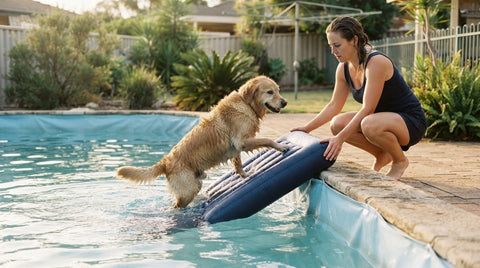
A ramp that floats isn’t automatically suitable for a big dog. When choosing a large-breed dog water ramp for a dog weighing 100 lbs or more, look for a stated capacity that suits your dog, a stable surface with grip, and a design that fits the pool, boat or shoreline where it’ll be used.
Strength matters, but size and setup matter too. Your dog needs room to climb, a manageable slope and a secure approach from the water. This guide explains how to assess a water ramp for a large breed dog weighing 100 lbs plus, including its capacity, dimensions, stability and suitability for your setting. You’ll also learn how Crocpad’s inflatable dog ramps fit into the decision, helping you choose equipment for more confident water access.
Key Takeaways
- Choose a ramp with a stated weight capacity that accommodates your dog, and consider the extra load created as they climb out of the water.
- Compare the ramp’s length, width and slope with your dog’s size and the spot where they’ll use it.
- Look for a stable, grippy surface and a secure setup to help your dog approach and climb with confidence.
- Crocpad’s Floating Water Mat offers a different way to enjoy the water, while a ramp is the option for helping a dog get in and out.
Large breed dog water ramp 100 lbs plus
A dog weighing 100 lbs or more needs a ramp selected for its actual weight, body size and way of moving. Start with the manufacturer’s stated weight capacity, then compare it with your dog’s current weight. Don’t rely on a ramp looking sturdy or assume that a general-purpose model can support a large breed.
Capacity is only one part of the decision. A dog climbing from water shifts its weight as paws land, the body moves forward and the ramp responds. Choose a ramp with a stated limit that accommodates your dog, and consider how confidently they can step onto its surface. If the capacity is below your dog’s weight, cross that option off.
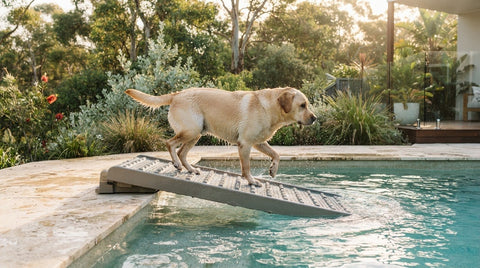
Compare the usable width with your dog’s stance. A broad-chested Labrador, for example, needs room to place its paws without crowding the edges. Check the climbing length, too: a longer ramp can provide a gentler approach, while a short, steep one may be difficult for a heavy dog that is hesitant or less agile.
Pay close attention to surface grip. Wet paws can slip on a smooth surface, so look for texture that helps your dog keep its footing while climbing. The surface should also feel comfortable underfoot. A nervous dog may pause partway, so consistent grip from the waterline to the top can make each attempt feel more secure.
Assess stability at the connection point and across the ramp. A floating ramp may move with the water, while a poolside design may rely on a firm edge or attachment. Match the structure to where you will use it, such as a pool, boat or lake edge. A ramp suited to a fixed pool step may not work on a moving boat.
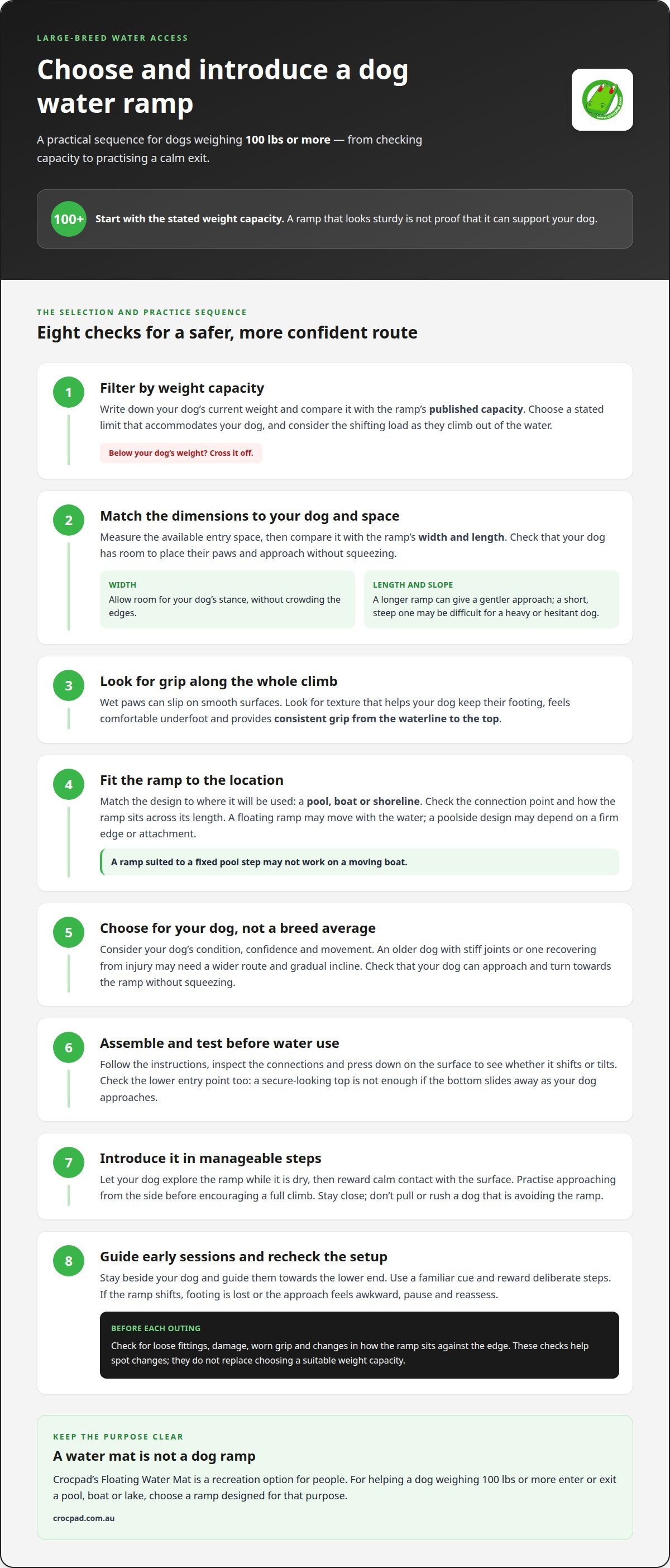
Use this selection sequence before choosing:
- Write down your dog’s current weight and compare it with the ramp’s published capacity.
- Measure the available entry space, then compare it with the ramp’s width and length.
- Inspect the climbing surface for grip and a clear route from water to exit.
- Consider how the ramp sits against the pool edge, boat or shoreline.
- Check whether your dog can approach and turn towards the ramp without squeezing.
Consider your dog’s condition, not just its breed. A fit, confident dog may approach differently from an older dog with stiff joints or one recovering from an injury. For example, a senior German Shepherd may need a wider route and gradual incline. Choose for your own dog, not a breed average.
Before using the ramp in water, assemble it according to its instructions and inspect the connections. Press down on the surface to see whether it shifts or tilts, and check the entry point from the water. A secure-looking top is not enough if the lower end slides away as your dog approaches.
Introduce the ramp in manageable steps. Let your dog explore it while it is dry, then reward calm contact with the surface. Practise approaching from the side before encouraging a full climb. Stay close and support the learning process; do not pull or rush your dog onto a ramp they are avoiding.
During early water sessions, stay beside your dog and guide them towards the lower end of the ramp. Use a familiar cue and reward deliberate steps. If the ramp shifts, your dog loses footing or the approach feels awkward, pause and reassess the setup. A large dog needs a clear exit route, not a hurried climb.
Recheck the ramp before each outing. Look for loose fittings, damage, worn grip or changes in how it sits against the edge. Storage by the pool, transport in a boat and repeated use can affect the setup. These checks do not replace choosing a suitable weight capacity; they help you spot changes that could make an otherwise appropriate ramp harder to use.
A suitable large-breed ramp combines a sufficient stated capacity with dimensions, grip and a stable fit for its location. For a dog at or above 100 lbs, make capacity the first filter, then judge the practical details with your dog’s movement in mind. A ramp that suits both the animal and the water setting supports a more confident routine.
Crocpad: Floating Water Mat
Crocpad’s Floating Water Mat is a separate option for enjoying time on the water, not a substitute for a large breed dog water ramp for a dog weighing 100 lbs plus. If your priority is helping your dog enter or exit a pool, boat or lake, choose a ramp designed for that purpose. The mat suits a different need: adding a floating recreation option for people alongside your water activities.
Keep the two uses distinct. Choose a large breed dog water ramp for a dog weighing 100 lbs plus to support water access, and consider the Floating Water Mat for recreation. That way, each product matches the job you need it to do. For details about Crocpad’s Floating Water Mat, contact Crocpad.
Make water access part of the plan
Build your dog’s water routine around a clear, consistent exit plan. Before each outing, decide where the ramp will sit, who will guide your dog, and how you’ll keep the approach calm. A large-breed dog water ramp for a dog weighing 100 lbs or more should suit both your dog and the setting where you’ll use it.
That preparation gives you a practical next step: match your dog’s needs with the right water-access option. Crocpad offers inflatable dog ramps alongside recreational products such as its Floating Water Mat, Minima Pool Slide and Megalo 3M Inflatable Water Pool Slide. Explore water ramp options with Crocpad and plan your next outing with confidence.