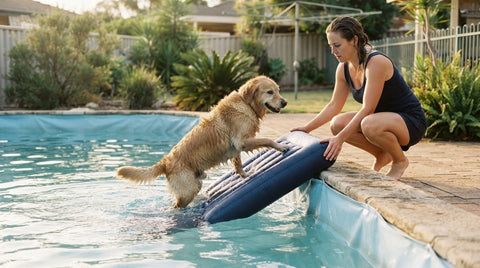
Dog claws can puncture vinyl pool liners, so protecting a vinyl pool liner from dog claws starts with reducing scrambling against the pool floor and walls. Guide your dog to a suitable entry and exit, supervise every swim, and consider how a protective layer might reduce direct contact with the vinyl.
It’s understandable to worry that a happy splash could lead to a tear, leak or costly repair. A dog-friendly way in and out matters too: dogs need an exit they can use, rather than relying on a human ladder.
Read on for practical ways to reduce claw damage, what to consider when choosing steps or a ramp, and how protective pool layers may help separate paws from vinyl. You’ll also learn when a ramp can make pool access easier, while keeping liner care and safe supervision in focus.
Key Takeaways
- Dog claws can puncture vinyl, so managing how your dog enters, exits and moves around the pool can help reduce risk.
- Understand how a protective pool liner may create a barrier, and what to consider before relying on one.
- Supervise your dog around the water and make sure there’s an exit it can use, not just a human ladder.
- Choose entry steps or a ramp with your dog’s size and ability in mind to help limit scrambling against the pool surface.
- Explore Crocpad’s Floating Water Mat for a different way to enjoy time on the water, separate from protecting a pool liner.
Protecting pool liners from dog claws
Dog claws can scratch or puncture vinyl pool liners, and a tear can lead to a major leak. Focus on calm pool entry, an accessible exit and supervised swimming to reduce risky scrambling.
These steps help protect the liner while keeping your dog’s access and safety in view.
Dog Claws and Vinyl Damage
A dog’s claws can scratch or puncture vinyl when its paws grip the liner during entry, swimming or exit. Even a small puncture can let water escape and become a larger repair concern.
Notice where your dog places its paws, especially near steps and the pool edge. Repeated scrambling in one spot concentrates pressure, so guide your dog towards a suitable entry and exit.
Preparing Claws Before Swimming
Before your dog enters the water, trim overlong claw tips and smooth sharp edges. Shorter, filed claws may snag less, but trimming does not make vinyl puncture-proof.
Use dog nail clippers to remove small amounts at a time, taking care to avoid the sensitive quick inside each claw. Smooth rough edges with a pet nail file. If your dog resists or its claws are difficult to trim, ask a vet or groomer to do it.
Swimming Habits and Liner Risks
Liner risk depends more on behaviour than on breed. A dog that launches, scrambles against the wall or struggles to find an exit may press its claws against the vinyl more than one that enters calmly.
Watch your dog during its first swims and note where it paws at the liner. Redirect frantic climbing towards an accessible exit, and supervise throughout the swim. Dogs can tire quickly, and not every dog instinctively knows how to swim.
Are there Australian pool safety rules for dogs and pool access? The key safety measure is to supervise dogs whenever they are around a pool. A dog’s swimming ability or access to an exit does not replace supervision.
How much does vinyl pool liner repair or replacement cost in Australia? The cost depends on whether the damage is a local puncture or requires broader liner replacement. The affected area, liner dimensions and repair method all affect the work involved.
What should I do if a dog scratches or punctures a vinyl pool liner? Keep the dog out of the pool, then look for visible damage and signs of water loss. Arrange an assessment promptly, as a puncture can cause a leak and further liner damage.
For everyday prevention, guide your dog to use the same accessible entry and exit instead of scrambling along the pool wall. Watch its movements, keep its claws maintained and pause swimming if it becomes tired or starts clawing at the liner. These habits address the main risk: sharp claws pressing against vinyl.
Protective pool liners
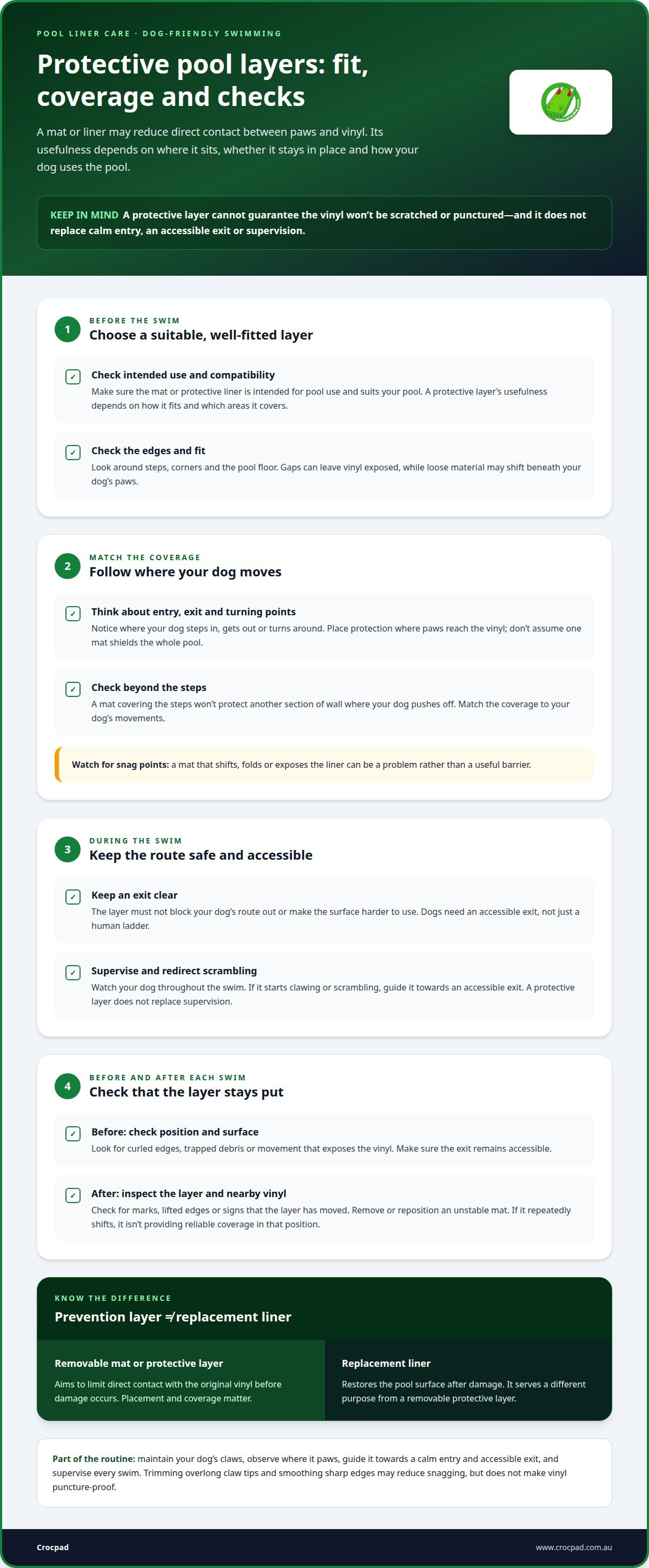
Protective mats or liners can create a layer between a dog’s claws and the pool’s vinyl. When correctly fitted and suitable for pool use, they may reduce direct contact, but cannot guarantee that the liner won’t be scratched or punctured.
Pool Mats as Claw Protection
A protective pool mat is a separate surface placed between paws and vulnerable vinyl. Its effectiveness depends on where it sits and whether it stays in place as the dog moves.
Before using one, consider its intended use, fit and edges. A mat that shifts, folds or exposes the liner can create a snag point rather than a useful barrier. Supervise your dog and redirect it if it starts clawing or scrambling.
Think about where your dog enters, exits or turns around. For example, a mat covering the steps won’t protect a different section of wall where your dog pushes off. Match the coverage to your dog’s movements instead of assuming one mat shields the whole pool.
Check the mat’s position before each swim and after your dog moves across it. Look for curled edges, trapped debris or movement that exposes the vinyl. Remove or reposition an unstable mat. It must not block the dog’s route to an exit or make the surface harder to use.
Protective Liners and Claw Damage
A protective liner is an additional layer intended to shield the pool’s original vinyl surface. Its usefulness depends on compatibility with the pool and whether it covers the areas your dog reaches.
Check how the layer fits around steps, corners and the pool floor. Gaps can leave vinyl exposed, while loose material can shift under your dog’s paws. A protective layer does not replace calm entry, an accessible exit or supervision.
Distinguish a pool’s replacement liner from a removable protective layer. Replacing damaged vinyl restores the pool surface; a separate cover or mat aims to limit direct contact before damage occurs. They serve different purposes, so first identify whether you’re preventing wear or addressing an existing tear.
After swimming, inspect the covered area and nearby vinyl for marks, lifted edges or signs of movement. If the mat repeatedly shifts, it isn’t providing reliable coverage in that position. Adjust the setup and guide your dog towards a stable entry and exit instead of letting it climb against the pool wall.
Choose protection as part of a broader routine: maintain your dog’s claws, observe where it paws, and keep the exit accessible. A layer can help limit direct contact, while careful placement determines which part of the liner it shields. For a separate way to add activity around the water, explore poolside recreation ideas.
Can dogs safely swim in a vinyl-lined pool?
A dog can swim in a vinyl-lined pool, but supervision matters for water safety and liner care. Keep watch whenever your dog is near the pool, including while it enters, swims or gets out.
Swimming ability varies. Not all dogs instinctively know how to swim, and dogs can tire quickly, particularly if swimming isn’t usual for them. Keep the first swim calm and observe your dog’s movements. If it struggles, tires or paws at the pool wall, help it leave via an accessible exit.
Plan access before your dog gets in. Human ladders aren’t suitable exits for dogs, so identify steps or another route it can reach and use. A shallow tanning ledge can give dogs and children a place to play without swimming, but it doesn’t replace supervision or a clear way out of the pool.
For a dog new to swimming, introduce the water gradually. Stay close, let it approach at its own pace, and don’t encourage it to jump into deep water. Watch for repeated attempts to climb the wall or difficulty reaching the exit. These behaviours can bring claws into contact with the vinyl and indicate it’s time to end the swim.
Pool water care matters too. Rinsing your dog before it enters can help keep the water clean by washing off loose dirt and debris. After a swim in a chlorinated pool, rinse your dog again to help mitigate risks to its fur and skin. Chlorine can damage a dog’s fur and skin over time.
Salt-cleaned pools are described as gentler on dogs and people than traditional chlorine pools. Whichever system your pool uses, supervise swimming and make sure your dog can get out. Pool chemicals and your dog’s ability in the water are separate considerations, so neither replaces the other.
- Before swimming: Rinse your dog and make sure its exit route is accessible.
- During swimming: Stay with your dog and watch for fatigue, struggling or wall-climbing.
- After swimming: Rinse your dog after chlorine-pool use.
These checks support a more controlled swim, but you still need to monitor your dog’s paws around the liner. Keep the session calm, use an exit your dog can reach, and end the swim if it appears tired or starts scrambling. This helps you consider your dog’s wellbeing and the vinyl surface together.
The comparison with other pool surfaces is useful: dogs almost never damage fibreglass or concrete pools. The author says most of the company’s 1000+ pool customers have saltwater pools, and many let their animals swim in them. The page also says dogs’ fur and other debris can put extra demands on pool filters, though dogs are not known to damage them. So even where damage to the filter is not known, fur and debris remain considerations alongside the dog’s contact with a vinyl liner.
Do dog claws puncture or scratch vinyl pool liners?
Yes. Dog claws can scratch or puncture vinyl pool liners, particularly when a dog paws at the wall or floor for traction. A puncture may let water escape and cause a major leak. Damage doesn’t require a dramatic jump: repeated claw contact in one spot can also leave visible marks.
Scratches and punctures are different signs of contact. A surface mark may affect the liner’s appearance, while a puncture breaks through the material. Don’t assume a small mark is harmless or that every scratch means there’s a leak. Check the area carefully, especially where your dog enters, turns or tries to climb out.
Your dog’s swimming behaviour can help explain where damage occurs. A dog that can’t find the steps may push its paws against the side, while a tired dog may scramble instead of swimming calmly. Watch for clawing near the waterline, steps and corners. These observations can help pinpoint risky spots and improve pool access.
After a swim, inspect the visible liner where your dog has been moving. Check for fresh scratches, small holes, lifted edges or changes in the water level. A changing water level alone doesn’t prove there’s a puncture, so inspect the liner rather than relying on one sign. If you see a hole or suspect a leak, keep your dog out and arrange a liner assessment.
Don’t press, scrape or pull at a suspected puncture while inspecting it. Keep your dog away from the area, as further pawing can worsen the damage. Note the mark’s location, whether it looks superficial or open, and whether you’ve noticed water loss. These details help explain what you observed during an assessment.
- At the pool edge: Notice whether your dog paws at the vinyl while searching for a way out.
- After swimming: Inspect the same access and turning areas for new marks.
- If you find damage: Keep paws away from the spot and arrange an assessment.
Protecting a vinyl pool liner from dog claws means managing moments when paws press against the surface. A dog that enters calmly and uses an accessible exit has less reason to claw at the wall. Trimming sharp tips may reduce snagging, but it doesn’t make vinyl immune to punctures. Supervision remains important because even a familiar swimmer can tire or struggle to get out.
Use what you observe to adjust the pool routine. If your dog repeatedly claws at a step or section of wall, make that access point easier to reach and guide it away from the liner. Address a new mark, visible puncture or suspected leak before your dog swims again.
What pool entry steps or ramps are safest for dogs and vinyl liners?
Choose an entry and exit your dog can use without scrambling against the vinyl. Suitable steps can give dogs a way in and out, with the right size depending on the individual dog. Human pool ladders aren’t a practical exit for dogs.
Consider your dog’s size, confidence and ability to climb. A small dog may need lower, easier-to-reach steps, while a larger dog may need more room to turn. Watch how your dog approaches the pool. If it hesitates, slips or paws at the wall, the access point may not suit it.
Pool shape matters too. An above-ground pool can be harder for a dog to enter and exit than other pools. Make the route obvious and accessible rather than expecting your dog to find a way out unaided. Dog pool ladders can be placed at intervals around the pool, giving dogs options for exiting at different points.
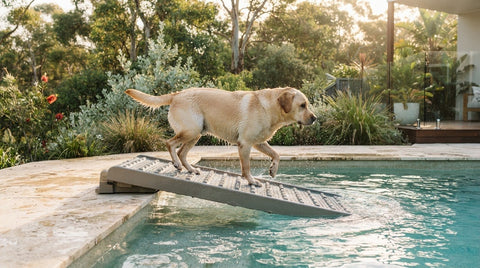
A ramp provides a gradual route between the water and the pool edge. Before using one, check how it sits in your pool and whether it gives your dog a clear path. Position it so it won’t rub or scrape the vinyl. Watch your dog use the ramp, and adjust the setup if it still claws at the pool wall.
- Steps: Choose a size suited to your dog, and make the steps easy to reach.
- Dog pool ladders: Position exits around the pool so your dog has options.
- Ramps: Check their fit and placement, then observe how your dog moves across them.
Introduce a new exit while your dog is calm and out of the water. Guide it towards the steps or ramp, then see whether it can approach and leave without frantically climbing the wall. Practise until the exit becomes familiar. Stay close during swims, as a tired dog may struggle to use an unfamiliar route.
Check the setup before swimming if the steps or ramp have shifted. Look for contact with the vinyl, blocked access or a position that forces your dog to turn sharply. These checks can reveal problems before your dog starts pressing its claws against the liner.
Crocpad’s Inflatable Dog Ramps may suit owners looking for a ramp option for their dog. Explore inflatable dog ramp options as you consider a more accessible pool entry.
Treat steps and ladders as parts of an access plan, rather than assuming one point will suit every dog. Suitable steps can provide pool entry and exit points, with the right size depending on the dog using them. The goal is a route that works for that individual dog, not reliance on a human ladder.
Dogs need accessible pool stairs to get out because they can’t use human ladders. Placing dog pool ladders at intervals around the pool gives them options for exiting at different points. Consider whether your dog can easily locate those access points and whether more than one route is available.
Crocpad: Floating Water Mat
Crocpad’s Floating Water Mat offers a separate way to enjoy time on the water; it does not protect vinyl from dog claws. Consider it for floating and poolside recreation once your dog has a suitable, supervised route into and out of the pool. It isn’t a substitute for an entry ramp, an accessible exit or a protective liner, and it should not be treated as claw protection.
Keep the priorities clear: manage your dog’s pool access to reduce scrambling, and choose floating recreation for a different kind of water activity. If you’d like to explore the Floating Water Mat, visit Crocpad’s website.
Make pool time work for your dog
Build a pool routine around your dog’s comfort, access and behaviour. Notice which entry point it chooses, whether it can leave without struggling, and when it needs a break. Use those observations to adjust the setup before the next swim. This practical approach to protecting a vinyl pool liner from dog claws connects prevention to what your dog actually does in the water.
Crocpad’s range is focused on water recreation, including the Floating Water Mat, Minima Pool Slide and Megalo 3M Inflatable Water Pool Slide. These products offer different ways to enjoy time around the water, rather than liner repair or claw protection. For a closer look at Crocpad’s pool products, explore the range.
Keep supervision and an accessible exit at the heart of every swim. With a setup that suits your dog, pool days can be more enjoyable for everyone.
Frequently Asked Questions
How can I protect a vinyl pool liner from dog claws?
Protecting a vinyl pool liner from dog claws means combining suitable pool access with calm, supervised behaviour. Before swimming, practise walking your dog to its chosen exit on dry ground, then reward it for approaching the steps or ramp without pawing at the wall. During swims, interrupt climbing attempts early and guide your dog back towards that route. Keep loose objects clear of the pool area so they don’t catch paws or damage the liner.