A safe pool exit should be guided, not rushed. To help an arthritic dog climb out of a pool, support their body with a well-fitted harness, give them time and use a suitable ramp or stable steps instead of letting them jump. Stay close and watch for pain, stiffness or reluctance to move.
It’s understandable to worry that getting out could undo the fun of a gentle swim. The right support can make the transition easier, but your dog’s comfort should set the pace. This guide covers harness support, patient handling, ramps and cubes, plus the changes to watch for during and after swimming.
Key Takeaways
- Guide your dog out of the pool with a well-fitted harness and steady support instead of letting them jump.
- Give your dog time to move at their own pace, especially when they’re tired or stiff after swimming.
- Choose a ramp or stable cubes to make the exit easier, and keep the route secure underfoot.
- Watch for limping, increased stiffness or reluctance to move, and adjust activity if discomfort appears.
- Explore Crocpad’s Floating Water Mat as a poolside recreation option, while keeping a supported exit route in place.
1. Safe pool entry and exit for arthritic dogs
Plan the exit before your dog enters the water. Check the route to dry ground, clear away toys and hoses, and make sure your dog can reach a suitable ramp or steps. A ladder is difficult for an arthritic dog because climbing puts extra demands on sore joints. If your pool has no accessible exit, skip swimming until you can provide safe assistance.
To help an arthritic dog out without straining their joints or back, use a properly fitted harness to support and steady them as they move towards the exit. Guide them slowly, supporting their weight rather than pulling on their collar, legs or tail. Don’t drag or suddenly hoist them. If they can’t manage the exit with controlled support, avoid swimming and discuss suitable exercise with your veterinarian.
Drowning, slipping and injury are risks if a dog becomes tired, struggles to find the exit or loses footing on a wet surface. Supervise your dog throughout the swim, stay close enough to help, and watch for heavy panting or reluctance to continue. Keep the exit clear and prevent running or jumping, which can jar painful joints. A wet dog may also slip around the pool, so guide them onto secure footing straight away.
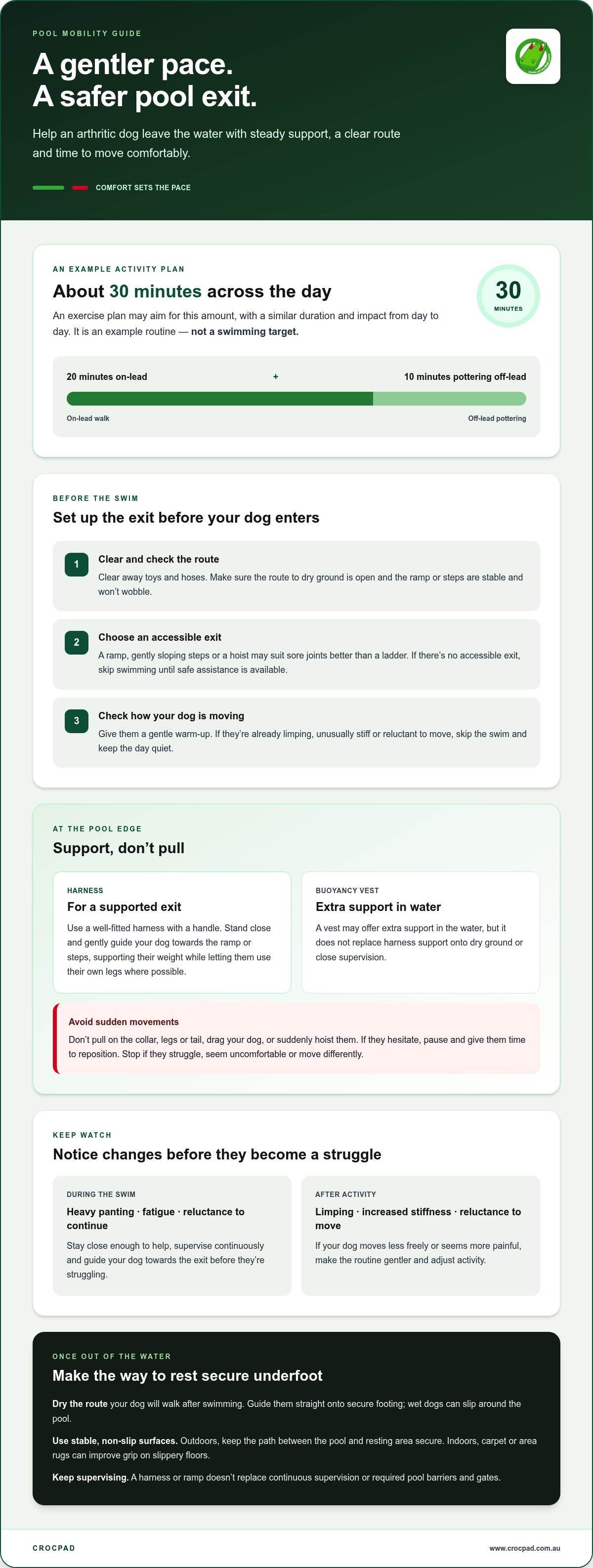
After swimming, dry the route your dog will walk. Carpet or area rugs can improve grip on slippery indoor floors. Outdoors, use a stable, non-slip surface between the pool and resting area. Check that the ramp or steps stay in place and don’t wobble under your dog’s weight. These simple checks help prevent a careful exit from turning into a fall.
Signs of arthritis can include stiffness after rest, limping, reduced movement, sensitive joints, or reluctance to climb stairs or jump into a car. Some dogs lick their paws or joints, stop playing or withdraw from activities. Notice what changes after exercise: a dog who moves less freely or seems more painful needs a gentler routine. If you’re learning how to help an arthritic dog climb out of a pool, these changes matter as much as the exit itself.
Groom older dogs with pool safety in mind. Use a non-slip mat during brushing or bathing, let your dog stand or lie comfortably, and pause if they shift away or seem stiff. Keep the grooming session calm and avoid making them climb into a bath or onto a raised surface. Regular, gentle grooming lets you notice coat changes and handle your dog carefully without adding unnecessary strain.
2. Using a harness to assist with pool access
A well-fitted harness gives you a steadier way to support your dog at the pool edge. Choose one that sits securely around the chest and body, with a handle you can hold without twisting your dog. Before swimming, check that it isn’t loose, rubbing or restricting movement. A harness can help with entry and exit, but it doesn’t replace supervision or a clear route out.
As your dog approaches the exit, keep your harness support gentle and controlled. Stand close, hold the handle and guide them towards the ramp or steps. Let them use their own legs where possible; don’t yank upwards or pull on a limb. If they hesitate, pause and give them time to reposition. Stop if they show discomfort, struggle or move differently.
A buoyancy vest may offer extra support in the water and help reduce fear and fatigue. It isn’t a substitute for a harness when guiding a dog onto dry ground, so plan how you’ll assist at the edge. For example, keep a hand ready to steady the harness as your dog finds the ramp. Never rely on a vest instead of staying beside a swimming dog.
Accessible entry makes pool access easier to manage. A ramp, gently sloping steps or a hoist may be more suitable than a ladder for a dog with sore joints. At a hydrotherapy pool, ask about its entry and exit options before your visit. Purpose-built facilities commonly use ramps, hoists or gently sloping steps rather than ladders. Choose an exit your dog can approach calmly, with enough room for you to support them.
For pool safety in Australia, keep any required pool barriers and gates in place. A pet harness or ramp doesn’t replace them. Requirements can depend on your location and pool, so follow the rules that apply to your property. Supervise your dog continuously, prevent access when you’re away, and keep the exit route clear. A harness helps you assist, but it cannot prevent a dog from entering the water unsupervised.
Make the first practice session about calm movement, not distance or exercise. Let your dog approach the exit on dry ground, then practise a short, supported walk towards it. At the pool, stay beside them and use the same cue and route each time. If the harness causes rubbing or your dog resists support, stop and adjust the setup before trying again. For more ideas around enjoying the water, explore pool recreation options.
3. Allowing extra time for movement
Allow extra time for every transition, from the house to the pool and back. An arthritic dog may need longer to stand after resting, cross a patio or turn towards the exit. Don’t hurry them with a lead or call for them to move faster. Instead, let them pause, find their footing and move at a comfortable pace. Patience reduces pressure to make sudden movements on sore joints.
Before swimming, give your dog a gentle warm-up instead of moving straight from bed to active exercise. A short, comfortable lead walk lets their muscles prepare for movement. Watch how they walk before entering the water. If they’re already limping, unusually stiff or reluctant to move, skip the swim and keep the day quiet. Sudden, intense activity after rest can jar stiff joints.
Start with a little activity, then increase it gradually only if your dog’s lameness doesn’t worsen. Keep the first session calm and leave plenty of time to exit without rushing. A tired dog may take longer to climb a ramp or coordinate their steps, so guide them towards the exit before they’re struggling. Let them pause on a stable surface before continuing to a resting spot.
Consistency matters more than one long outing. An exercise plan may aim for about 30 minutes of activity each day, with a similar duration and impact from day to day. One example is 20 minutes on leash followed by 10 minutes pottering off leash. These figures describe an example routine, not a swimming target. Break activity into manageable portions, and let your dog’s comfort guide the pace.
For example, two shorter walks of 20 minutes each may be easier on the joints than one 40-minute walk. The same principle can help with pool access: plan a calm approach, a supported exit, and recovery time afterwards. Don’t add running or jumping to make up for a shorter swim. Gentle, regular movement can be beneficial, while overdoing activity may leave your dog stiff or reluctant to move.
A veterinarian or qualified canine physiotherapist can help tailor activity to your dog’s condition. They can demonstrate suitable movement techniques and help you judge how swimming fits your dog’s routine. Keep a simple record of swim days, walking time and changes in mobility. If stiffness or limping increases after a session, reduce the next activity and share the pattern with your veterinary professional. Track recovery, not just time in the water.
4. Arthritis-related pain and mobility changes
Watch how your dog moves before, during and after each swim. Note changes such as limping, shorter steps, stiffness after resting or hesitation at the pool exit. A dog may seem keen to enter but struggle to turn or climb out once tired. Compare their movement with their usual walking pattern instead of judging the session by enthusiasm alone.
Stop the activity if your dog lags, pants heavily, sits repeatedly or refuses to continue. These signs may mean they’ve had enough exercise. After they leave the pool, observe them over the following hours. Increased stiffness or reluctance to move may mean the session was too long or strenuous. Reduce the next session’s duration or intensity, and note what changed.
Swimming and wading can support movement because buoyancy helps carry body weight while a dog uses their muscles. That doesn’t mean every swim is comfortable or suitable. Avoid vigorous swimming for a dog with severe elbow arthritis, as it can sometimes worsen the condition. Keep activity controlled, and don’t add chasing, jumping or rough play around the pool.
Book a veterinary appointment if you notice possible signs of arthritis rather than waiting to see whether they improve. Seek advice promptly for obvious limping, joint swelling, persistent stiffness or general reluctance to move. A veterinarian can assess your dog’s comfort and recommend an exercise program suited to their condition. They can also consider whether medication, physiotherapy or hydrotherapy belongs in the management plan.
For each swim, make a simple record of the activity and your dog’s response. Note whether they entered willingly, how they moved on the way out and whether stiffness appeared later. For example, if your dog walks comfortably after a gentle session but limps after a longer one, reduce the workload and share that pattern with your vet. These notes help distinguish a one-off change from a repeated response.
Keep the goal practical: comfortable, consistent movement rather than maximum distance. Adjust the type and intensity of exercise according to veterinary advice, and avoid sudden increases after a quiet period. If your dog seems painful before entering, can’t manage the exit or shows worsening mobility, skip swimming and arrange a veterinary assessment. A pool session should suit your dog’s ability that day, not push beyond it.
Osteoarthritis is progressive and involves degeneration and inflammation of joints, including cartilage. It can cause pain and impaired movement, so changes after activity matter even if your dog seemed willing to exercise. Watch for pain or increased stiffness after a swim. If stiffness or reluctance to move appears in the hours afterwards, the exercise intensity or duration may need to be reduced.
Keeping an arthritic dog at a healthy weight can help reduce joint strain, discomfort and mobility problems. Heavy panting, lagging behind, sitting often during walks or reluctance to continue can indicate that your dog has had enough exercise. Obvious limping, joint swelling, stiffness that doesn’t ease with gentle movement, or general reluctance to move can indicate a need for rest.
5. Ramps and cubes for climbing
A ramp can replace a steep climb with a gradual route, reducing effort on painful joints. Choose one that reaches the pool edge without an abrupt lip, then position it so your dog can approach straight on. A ramp that shifts, flexes or ends in deep water can make the exit harder, so check its position before every swim.
Dog pool ramp and step costs in Australia depend on the design, materials and size, and on whether the option is portable or fixed. Compare those features with your dog’s weight, mobility and pool layout instead of choosing by price alone. The right setup must provide a usable route and stay stable as your dog moves.
Make the surface easier to grip before introducing your dog. Clear leaves and loose debris, and use a traction surface suited to wet conditions. Check the ramp and each step for movement, sharp edges or worn areas. Keep the approach clear, too. A slippery pool surround can undermine even a well-gripped ramp, so guide your dog from secure ground to the entry point.
If you’re using a ramp, practise on dry land first. Encourage your dog to walk up and down at their own pace, with you beside them. Reward calm steps and stop if they hesitate or show discomfort. Once they know the route, introduce it beside the pool without rushing into a swim. This helps your dog learn where the exit begins and how to turn onto it.
Cubes can provide intermediate steps when a direct climb is too demanding. Arrange them in a stable line, with each step close enough for your dog to reach without jumping. Test every cube for wobbling before your dog uses it. Don’t use a loose stack or place a cube where it could slide on wet paving. If your dog struggles to step between levels, change the layout or choose a continuous ramp.
Match the setup to your dog’s condition and the pool’s shape. A dog with stiff hips may need a gradual slope, while a dog with front-limb pain may struggle to bear weight on a high step. Keep the exit route consistent, and prepare it before each session. Crocpad’s inflatable dog ramps are an option to explore for helping dogs access water. Explore inflatable dog ramps and consider how a ramp could fit your poolside setup.
Crocpad: Floating Water Mat
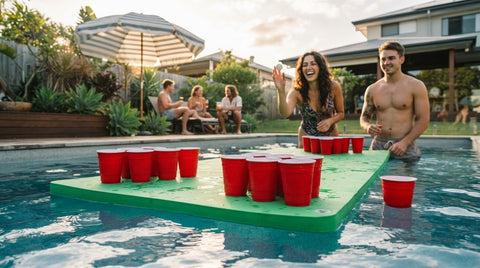
Crocpad’s Floating Water Mat adds a recreational option for pool days, but it isn’t an exit aid for an arthritic dog. Keep your dog’s supported route out of the pool separate, using the suitable ramp or steps you’ve prepared. Supervise your dog closely, and don’t rely on a floating mat to support their weight or replace a harness.
Consider the Floating Water Mat when you want to enjoy time on the water while keeping your dog’s access needs in mind. If you’re choosing gear for pool recreation, explore Crocpad’s Floating Water Mat. Visit Crocpad’s website to learn more.
Make the next swim easier to manage
Make pool access a familiar routine your dog can recognise. Use the same calm cue, approach and exit pathway, and make sure everyone helping understands how to support them. A consistent routine can reduce confusion at the water’s edge, especially when your dog is tired or moving slowly.
Knowing how to help an arthritic dog climb out of a pool safely also means being ready to change plans. Your dog’s comfort can vary from day to day, so treat their movement and willingness as useful signals, not obstacles to overcome. If pool access becomes difficult, pause swimming and work with your veterinary team on a comfortable way forward.
For poolside gear that suits your setup, contact Crocpad for help. A thoughtful plan keeps pool time centred on your dog’s needs and makes each outing easier to approach. Take it at your dog’s pace, and enjoy the moments that feel right for them.
Frequently Asked Questions
What is the safest way to help an arthritic dog get out of a swimming pool?
Guide your dog towards a stable exit and support them with a well-fitted harness, keeping their body aligned as they move. Stay beside them and let them use their legs rather than lifting by the collar or pulling a limb. If your dog can’t manage the exit without struggling, end the swim and plan safer access before swimming again.
Are dog pool ramps or steps suitable for dogs with arthritis?
Yes, a suitable ramp or low, stable steps can offer a more manageable route than a ladder. Choose based on how your dog moves: a ramp may suit a dog that finds stepping up painful, while steps require enough balance and strength for each rise. Practise on dry ground first, then introduce the route beside the pool with close supervision.
How do I choose a pool ramp for an arthritic dog by size, weight capacity and slope?
Measure the distance from the pool edge to secure ground, then compare it with the ramp’s length and width. Select a capacity above your dog’s weight and choose a gradual slope that they can walk without jumping. Crocpad’s ramp sizes list capacities of 45 kg and 65 kg, with lengths of 120 cm and 150 cm respectively. Check fit and stability before use.
What harness or sling helps support a dog getting out of a pool?
Choose a harness that fits securely around your dog’s body and has a handle you can hold while guiding them. A full-body support harness can help steady movement, while a buoyancy vest is designed to support your dog in the water, not lift them onto the pool edge. Avoid pulling on the neck or legs, and seek veterinary guidance on fit if your dog has painful or sensitive areas.
How do I train a dog to use a pool ramp or steps?
Start with the ramp or steps on dry ground, using a familiar cue and small rewards for calm approaches. Let your dog explore and walk across at their own pace; don’t pull or push them. Once they’re comfortable, position the equipment beside the pool and practise approaching it while the pool isn’t in use. Keep sessions brief, supervised and positive, then build familiarity gradually.