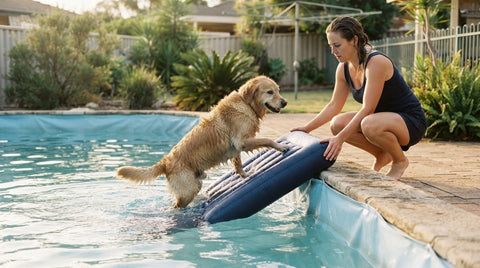
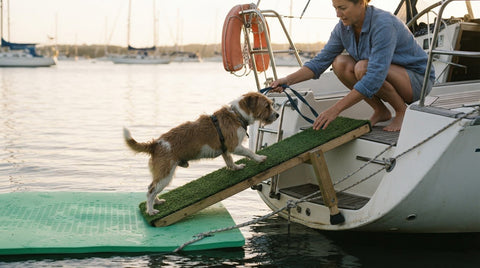
The most buoyant ramp isn’t automatically the best choice for a sailboat transom. A floating dog ramp for a sailboat transom needs to stay steady against the boat, give your dog secure paw grip and suit the height and shape of the boarding point. A platform secured to the transom steps, with a temporary support leg, is one setup sailors have used to create a more stable route aboard.
Easy access matters, but a ramp that shifts, sinks too far or feels slippery can make boarding harder for you and your dog. The right option depends on your vessel, your dog’s comfort and how you’ll set up access from the water or dock.
Here, you’ll compare inflatable, rigid and DIY ramp options, then weigh grip, corrosion, sinking risk and dock setup. Use the decision guide to narrow down what suits your transom and your dog, so your next swim can end with a confident climb back aboard.
Key Takeaways
- Choose a ramp surface that gives your dog dependable paw grip; artificial grass or a securely fitted rubber-backed rug may help.
- Match the ramp style to your vessel’s transom, boarding height and available space rather than choosing by flotation alone.
- Reduce movement by planning how the ramp will be supported and secured during boarding.
- Salt water can affect ramp hardware, so consider corrosion-resistant materials and rinse and inspect components after use.
- Fenders at the lower end can help limit how far a ramp sinks, while your dock setup influences the easiest route aboard.
Artificial-grass ramp surface and paw grip
For a dog boarding from a sailboat in Australia, prioritise a secured ramp, direct supervision and a stable route underfoot. Choose a surface that helps paws grip as the ramp moves, and watch your dog throughout boarding.
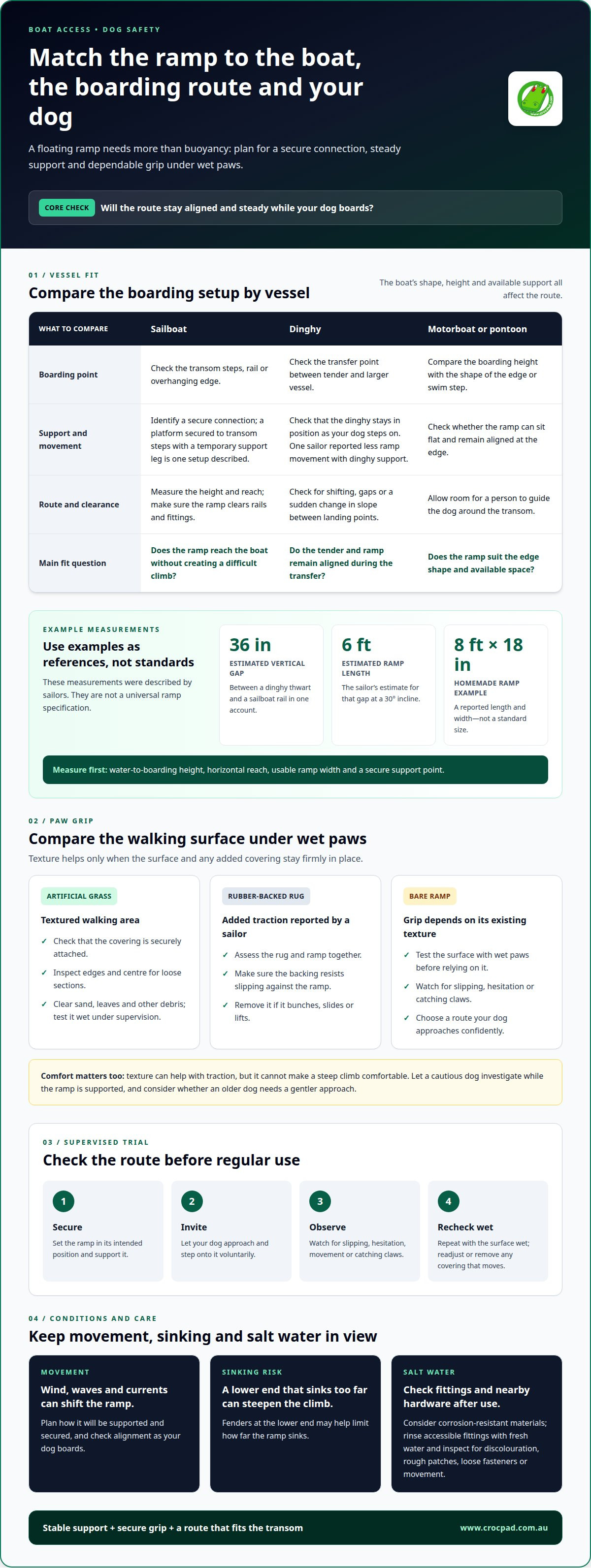
Artificial grass can add texture beneath paws, but it helps only if the covering stays firmly attached. A loose edge can catch claws or fold underfoot, so inspect the full walking path before each swim. Press along the edges and centre, then clear away sand, leaves and other debris that could affect footing. Test the surface wet, under supervision, because a dry deck test won’t show how it feels after swimming.
One sailor reported using rubber-backed throw rugs to help a dog gain confidence and traction on a ramp. The same principle applies to any added covering: it must resist slipping against the ramp, not just feel textured under a paw. Avoid loose mats that can bunch, slide or lift when a dog steps on them. Assess the ramp and covering together rather than judging either one alone.
Match the texture to your dog’s confidence and movement. A cautious dog may pause before stepping onto unfamiliar material, so let them investigate while the ramp is supported. An older dog may also need a gentler route. One account described Honey at ten years old, with concerns about her ageing joints. The example shows why grip and an easy approach matter together: texture can help with traction, but it can’t make a steep climb comfortable.
| Surface option | Paw grip | What to assess |
|---|---|---|
| Artificial grass | Textured walking area | Check that it’s secure, clear and comfortable when wet. |
| Rubber-backed throw rug | Added traction reported by a sailor | Make sure the backing and rug don’t shift or bunch. |
| Bare ramp surface | Depends on its existing texture | Test under wet paws before relying on it. |
Try this simple sequence before regular use:
- Secure the ramp in its intended position.
- Let your dog approach and step onto it voluntarily.
- Watch for slipping, hesitation or catching claws.
- Repeat with the surface wet, then readjust or remove any covering that moves.
A floating dog ramp for a sailboat transom needs traction that remains useful when wet and a covering that stays put. Choose a surface your dog walks on confidently, then assess its grip and attachment during a supervised trial.
Choosing a ramp for different vessel types
A ramp suited to a sailboat transom may not suit a dinghy or pontoon. Start with the boarding point, then consider the boat’s movement, available support and the route your dog must climb. The vessel’s shape matters as much as its height. A floating ramp needs a secure connection and stable landing area, while a fixed platform needs a suitable attachment point.
Sailboats: A transom can have steps, a rail or an overhanging edge. Measure the vertical gap from the water to the boarding surface, then consider how far the ramp must reach. One sailor estimated a 36-inch gap between a dinghy thwart and the boat’s rail. At a 30-degree incline, that sailor estimated a 6-foot ramp would bridge the height. Treat those as example measurements, not a universal fit. A steeper approach can make boarding harder, especially for a dog hesitant to climb.
Dinghies: A dinghy can provide a closer, lower approach to a larger vessel. Check whether it stays in position as your dog steps from the water onto the ramp. One sailor found that a dinghy reduced ramp movement compared with floating support. This setup may suit a transfer between a tender and sailboat, but the landing points still need to align. Watch for shifting, gaps or a sudden change in slope as the dinghy moves.
Motorboats and pontoons: Compare the boarding height and edge shape before choosing a ramp. A broad, low platform may allow a direct approach; a narrow transom or projecting swim step may need a different attachment and landing position. Walk the intended route without your dog first. Check whether the ramp lies flat against the edge, clears rails and fittings, and leaves room for a person to guide the dog.
A homemade ramp described by a sailor measured about 8 feet long and 18 inches wide. Those dimensions show why measuring the actual vessel matters: length affects the incline, while width affects the dog’s available walking path. They don’t establish a standard size. Compare the usable ramp width with your dog’s stance, then check that the ramp reaches the boat without blocking access around the transom.
- Measure the water-to-boarding height and the route’s horizontal reach.
- Identify a secure support point on the boat or tender.
- Test alignment and movement before inviting your dog aboard.
Choose a ramp style that matches your vessel’s boarding geometry, then practise with the boat and support in their usual positions.
Corrosion and sinking risks
Salt water, metal fittings and changing conditions can challenge a floating ramp. Waves, currents and wind can shift it, change the boarding angle or pull it away from the transom. If the lower end sinks too far, your dog may face a steep, unstable climb instead of a clear route aboard.
Check every metal connection after use in salt water. Look for discolouration, rough patches, loose fasteners and movement where fittings meet the ramp. One account described a sailboat transom with two stainless-steel steps and hand-hold slots. It shows why the whole connection matters: inspect the ramp attachment, step edges and nearby hardware, not just the metal parts on the ramp.
Rinse salt and grit from accessible fittings with fresh water, then let them dry before storage. Salt residue can remain around joints and fasteners, where movement may wear surfaces over time. Keep the ramp’s attachment points clear so you can inspect them. If a fastener feels loose or a connection shifts under hand pressure, don’t put your dog on the ramp until it’s secure again.
One sailor suggested attaching fenders to the ramp’s lower end to help prevent it from sinking too far. Position them so they support the ramp without blocking your dog’s entry or creating a gap. Test the setup without your dog first. Check whether the lower edge stays high enough and the ramp remains aligned with the transom.
Wind, current and waves create changing loads. A gust can push a floating ramp sideways; a passing wake can lift or drop its lower edge. A current can hold it at an angle, while repeated movement can loosen a connection. If the ramp drifts, bounces or separates from the boat, pause boarding and reposition it in calmer conditions.
Use this check before each boarding:
- Inspect fittings, straps and contact points for corrosion, looseness or damage.
- Press down on the ramp and confirm its support stays in place.
- Watch the lower end through passing wakes or changes in wind.
- Keep the dog out of the water until the ramp sits steadily against the boat.
For a floating dog ramp at a sailboat transom, reliable support depends on both buoyancy and attachment. Fenders can help limit sinking, but they don’t prevent sideways movement or corrosion. Recheck the setup after changing position, moving between sheltered and exposed water, or adjusting the ramp. Testing it without your dog aboard lets you spot movement before paws reach the surface.
Why a dog ramp is useful on a boat
A boat’s boarding edge can sit well above the water, leaving a dog with no easy step aboard. One sailor measured a gate rail 46 inches above the water. A ramp creates a sloped route between the water and deck, instead of asking a dog to jump or rely entirely on human lifting.
That route can matter for dogs that hesitate, tire easily or struggle with a high step. A sailor described using a homemade ramp for an 85-pound dog. The example highlights a practical benefit: the dog can place its paws on a surface and move towards the boat, rather than being lifted bodily over the rail. The handler still needs to supervise and manage the boarding.
Without a ramp, boarding may take more than one person. One sailor said two people were needed to help a dog climb from the water: one boosted from below while another lifted from above. A ramp can give the dog a route to climb, reducing reliance on a coordinated lift. It doesn’t remove the need for someone to steady the dog or watch the boat’s movement.
For a dog wearing a life jacket, a handle can give you a practical grip while assisting them. Sailors have recommended life jackets or harnesses with handles to help lift dogs from the water. The ramp and handle serve different purposes: the ramp provides a walking route, while the handle helps you support the dog during an awkward moment.
Consider your dog’s size, confidence and movement before relying on a ramp. A small dog may need a closer approach to the water; a larger dog needs a route that stays supported under its weight. A dog that freezes at the waterline may benefit from getting used to a stable surface before boarding. Keep the first attempt calm, with the ramp secured and someone close by.
- Set the ramp in place before your dog enters the water.
- Keep a person positioned to guide or assist during boarding.
- Let your dog approach at its own pace, without pulling it onto the ramp.
- Use a handle on a suitable life jacket or harness when assistance is needed.
A ramp is most useful when the boat’s edge makes direct boarding difficult, such as with a high gate rail or elevated transom. It gives your dog a defined path and gives you a planned way to assist. Match the setup to your dog and vessel, then practise the route before relying on it during a busy swim or changing conditions.
Ramp angle is another part of the fit to consider, not just whether a ramp reaches the deck. The author says Honey would find a steep ramp uncomfortable on their Pacific Seacraft 34. That makes the approach and slope worth assessing for the individual dog before relying on the setup. A ramp that seems convenient may still feel difficult for a dog, so watch how your dog responds during calm practice and adjust the arrangement rather than urging them to continue.
What floating dog ramps are suitable for a sailboat transom?
Three broad choices suit different transoms: inflatable ramps, rigid ramps and supported DIY platforms. The best fit depends on the connection, how the ramp supports your dog and how it meets the boat’s boarding edge. A floating design must stay aligned as the boat moves. A fixed or supported option needs a secure contact point.
Inflatable ramps can provide a buoyant route from the water. Their suitability depends on whether they remain stable under your dog and connect cleanly to the transom. Check the walking area, attachment points and how the ramp sits when loaded. Don’t treat flotation alone as proof of support. One sailor described dogs weighing around 70# each, making load and stability important comparison points.
Rigid ramps offer a firm walking surface, but the structure and connection still matter. One sailor reported that a used plastic ramp advertised as rated for 300 lb cracked when they walked across it at about 195 lb. That account shows why a printed capacity shouldn’t be your only measure. Inspect the ramp for flex, cracks and weak points, and consider how it behaves under a moving load.
A supported platform can suit a transom with usable steps or attachment points. One design used a platform secured to the transom steps, along with a temporary support leg. A stable step stool served as a midstep. This arrangement creates a staged route rather than one long climb, but it needs careful placement and firm support before the dog approaches.
| Option | Useful when | Key assessment |
|---|---|---|
| Inflatable ramp | Buoyancy and a floating route suit the boarding setup | Check stability, attachment and loaded position |
| Rigid ramp | A firm surface matches the transom approach | Inspect flex, cracks and support points |
| Supported platform | Transom steps allow a staged boarding route | Secure the platform and temporary leg |
Choose by testing the complete route, not just the ramp material. Set it against the transom, check the connection, then apply hand pressure before your dog uses it. Confirm the top edge meets the boarding surface without a gap and the lower end doesn’t drift away. If your dog needs a middle step, place it where the platform remains stable.
- Match the ramp’s length and landing position to your transom.
- Assess support and movement with the setup in place.
- Choose a route your dog can climb at a comfortable pace.
Compare water-access options alongside your transom layout, then select the setup that fits your dog and boarding route.
Crocpad: Floating Water Mat
Crocpad’s Floating Water Mat offers another way to enjoy time on the water, alongside a dedicated boarding ramp for your sailboat. Choose it as a floating recreation surface, not as a substitute for a ramp designed for your dog’s transom access. The ramp still needs to match your vessel, provide a stable route and suit your dog’s confidence.
Keep those roles clear as you plan a day afloat: use the right equipment for each activity, and assess how every item fits your setup. If you’re exploring floating water gear for your next outing, visit Crocpad’s website.
Make your next boarding practice count
Before your next outing, plan a calm practice session at the boat. Let your dog approach the boarding route at their own pace, with the ramp secured and someone ready to assist. Notice where they hesitate, then adjust the approach or support before trying again. This gives you a practical way to judge whether a floating dog ramp for a sailboat transom suits your dog and setup.
If you’re considering an inflatable option, Crocpad offers Inflatable Dog Ramps. For help taking the next step, contact Crocpad about dog ramps. A thoughtful setup can help make getting back aboard part of the fun.
Frequently Asked Questions
3 Different Dog Ramps For Boats: Which Is Best?
There’s no single best ramp for every boat; choose a style that fits your transom and dog. An inflatable ramp may suit a setup that needs buoyant access, while a rigid ramp offers a firm structure. A supported platform can work where the boat has useful steps. Compare the boarding route, attachment points and your dog’s confidence. The right option stays secure and lets your dog approach comfortably.
What reviews and owner experiences are available for floating dog ramps on sailboats?
Owner accounts describe practical experiments, not a consistent set of formal product reviews. Sailors have reported adding rubber-backed rugs for traction, supporting a platform from transom steps and using a stable stool as an intermediate step. Another account found that a dinghy reduced ramp movement. These experiences can suggest setup ideas, but they don’t prove that a particular design suits every sailboat or dog.
How do floating dog ramps compare with boat ladders and fixed swim platforms for dogs?
A ramp gives a dog a sloped route aboard, while a fixed platform can provide a landing area when secured to the transom steps and supported. The article offers no direct comparison with boat ladders; it notes that using a dinghy as support reduced ramp movement.
What ramp length, width and weight capacity are suitable for different dog sizes?
There is no standard size or weight capacity given; measure your boat’s boarding height, reach and the space your dog needs. Examples include a homemade ramp about 8 feet long and 18 inches wide, and a 6-foot ramp estimated for a 36-inch gap at a 30-degree incline.