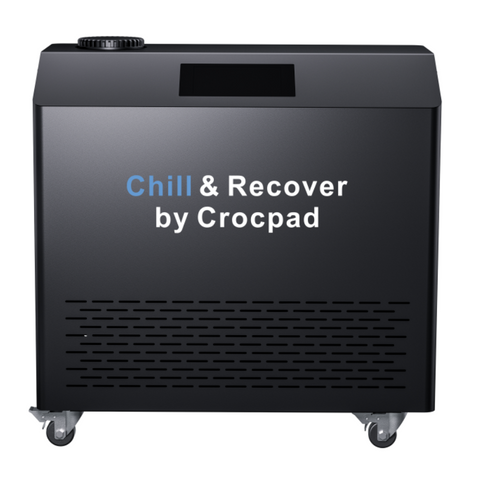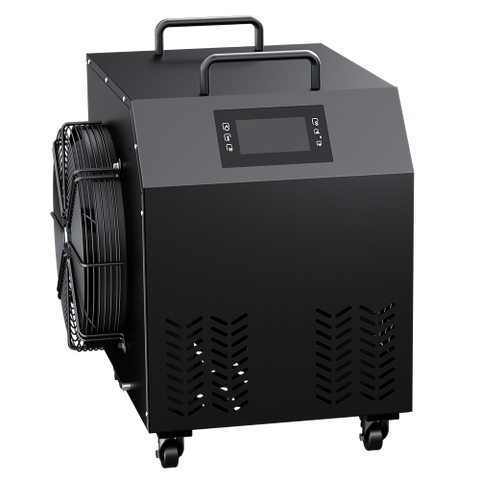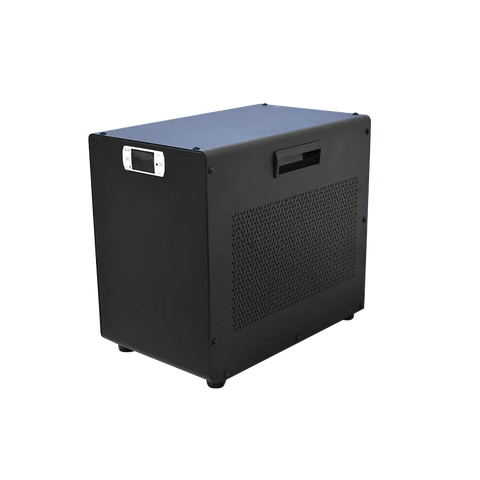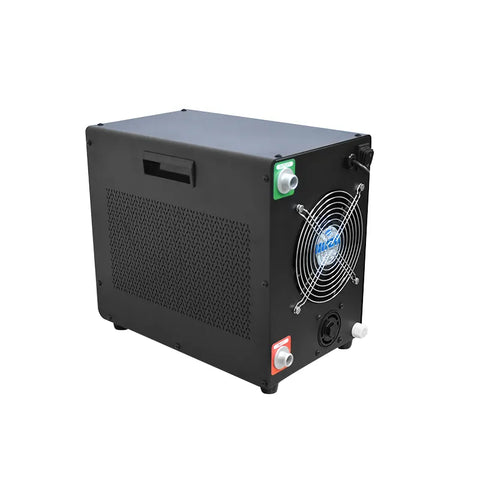
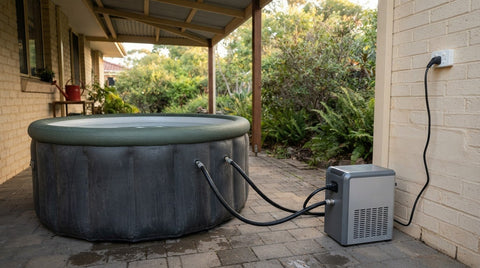
A switchboard upgrade isn’t automatic: cold plunge chiller electrical requirements and amp draw depend on the unit and the capacity of the circuit it will use. Chiller draws can range from 10 to 30 amps, while some cold plunge tubs have a stated draw of 3-5 amps, so the appliance’s specifications matter more than a one-size-fits-all estimate.
It makes sense to check the cold plunge chiller’s electrical requirements and amp draw before setting it up, especially if you’re unsure whether your existing electrical installation can handle it. Running costs also depend on how much power the chiller uses, how long it operates and your electricity rate. Warm conditions, heat gain and a lower target temperature can increase energy use.
This guide explains how to estimate electricity consumption and running costs, what affects a chiller’s workload, and which electrical details help determine whether an upgrade may be needed. You’ll get a clearer picture of what to consider before adding a cold plunge to your routine.
Key Takeaways
- Use a chiller’s rated electrical input to understand its power draw; cooling capacity describes heat removal, not electricity consumed.
- Estimate running costs from power use, operating time and your electricity tariff, allowing for higher demand during initial cooling.
- Insulation, a lid, shade and clear airflow around the chiller can all affect how often it needs to run.
- Compare the unit’s electrical requirements with your existing supply to understand whether your setup may need changes.
- For an outdoor plunge, consider weather protection and RCD protection as part of a safe electrical setup.
How Much Electricity Does a Cold Plunge Chiller Use?
A chiller’s electricity use depends on its rated electrical input, while its cooling capacity describes how much heat it removes from the water. These figures help you assess running demand and whether your existing electrical setup is suitable.
Cooling capacity in BTU per hour
Cooling capacity in BTU per hour measures how much heat a chiller can remove from water over an hour. A unit rated at 8,500 BTU/hr can remove 8,500 BTU of heat per hour under its rated conditions.
This figure helps match a chiller to the tub and cooling task. The manufacturer’s specifications should be considered alongside water volume, starting temperature and target temperature. Cooling water from 25°C to 10°C is a smaller task than cooling the same volume from 30°C to 3°C. That difference affects how hard and how long the chiller must work.
Cooling capacity versus power consumption
Cooling capacity measures heat removed; electrical input measures the power drawn to operate the chiller. They describe different things, so a cooling rating alone won’t tell you how much electricity the unit uses.
For example, a chiller with 2.5 kW of cooling capacity doesn’t necessarily consume 2.5 kW of electricity continuously. Check the manufacturer’s specifications for rated input in watts or kilowatts, plus voltage and current in amps. Electrical input depends on the voltage and current, so check the unit’s specifications to determine its power draw. That input figure, rather than cooling capacity, is the starting point for estimating consumption.
Chiller capacity and sizing
Chiller sizing means choosing enough cooling capacity for the tub’s water volume and the conditions it faces. A larger volume, warmer starting water or lower target temperature increases the heat the chiller must remove.
Use the manufacturer’s capacity information with the tub’s specifications, then consider insulation and heat gain around the setup. A well-insulated tub can limit heat entering the water, while exposed placement can add to the cooling workload. A rating under 1 kW of cooling capacity may hold a small tub cool in mild weather, but can struggle during an Australian summer or with a large tub. Capacity therefore matters for performance, but doesn’t replace the electrical input rating when assessing supply needs.
Circuit capacity, breakers and cable sizing
In Australia, there isn’t one breaker or cable size that suits every chiller. The required setup depends on the unit’s electrical specifications and the installation. Have a licensed electrician assess the nameplate, circuit and switchboard before installation, especially if the existing supply may need an upgrade.
Can a cold plunge chiller share a household circuit? It depends on the chiller’s load and the other appliances using that circuit. Don’t assume a shared outlet has enough capacity: the combined demand matters. An electrician can assess the circuit and determine whether a dedicated supply or switchboard changes are needed. Judge the cold plunge chiller’s electrical requirements and amp draw from its specifications, not its cooling capacity alone.
Estimating energy use and running cost
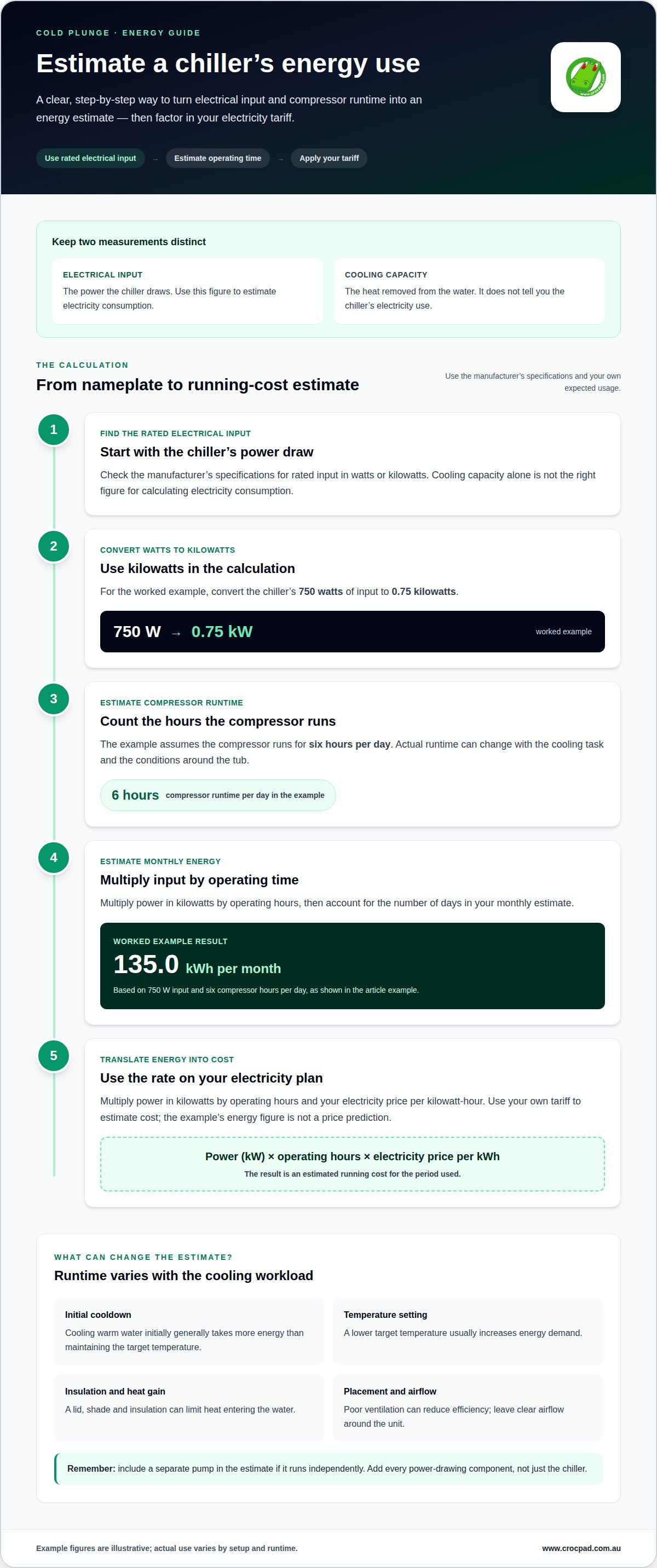
Estimate running costs from the chiller’s electrical input, compressor operating time and electricity tariff. The worked example below shows how daily use translates into an estimated monthly figure.
Factors affecting energy use
Energy use changes with the heat the chiller must remove and how often its compressor runs. Cooling warm water initially generally takes more energy than maintaining the target temperature afterwards.
Temperature, insulation and heat gain all affect the chiller’s workload. A lid, shade and suitable placement can limit heat entering the water, while poor ventilation can reduce efficiency because the unit needs space to release heat. A lower temperature setting usually increases energy demand. These factors explain why two similar setups can have different running costs.
Energy efficiency in operation
Operating efficiency describes how effectively a chiller maintains the chosen water temperature for the electricity it uses. It matters because compressor runtime, rather than the cooling rating alone, drives energy consumption.
A well-insulated tub can reduce how often the chiller cycles. Keep the unit’s airflow clear, and use a lid and shade to limit heat gain. These measures can reduce unnecessary running, but they don’t replace the manufacturer’s electrical specifications or the electricity tariff in your calculation. Cooling water initially may require a longer operating period than maintaining its temperature.
Use this formula: power in kilowatts × operating hours × electricity price per kilowatt-hour. For a clear illustration, assume a chiller draws 750 watts while its compressor runs for six hours per day. Convert 750 watts to 0.75 kilowatts, then multiply by the daily runtime and the number of days in the monthly estimate. That example gives 135.0 kWh per month.
This is an example calculation, not a standard Australian tariff or a prediction for every household. Use the rate on your electricity plan to tailor the estimate. Actual compressor runtime can vary with temperature, insulation, placement and the cooling task.
A separate pump adds to the total if it runs independently. Include every power-drawing component rather than estimating the chiller alone.
For a more useful estimate, distinguish initial cooldown from ongoing temperature maintenance, then use the expected operating hours for each. If you’re considering a cold plunge setup, explore cold-plunge options alongside your electricity calculation.
What Changes Cold Plunge Power Consumption?
A chiller’s electrical draw depends on its rated input and how its components operate. Compressor demand, voltage, power factor and any separate pump or filter all affect the total.
Rated power and electrical draw
Rated electrical input shows how much power a chiller uses while operating, helping you understand its demand beyond its cooling rating. Check the manufacturer’s specifications for watts, voltage and amps, and note whether the figures cover the compressor alone or the complete unit.
A compressor and a separate pump or filter can each draw power. Add their rated inputs when estimating the setup’s total demand. A chiller’s running draw doesn’t show its brief startup demand, so consider both ratings when assessing the electrical supply.
Voltage and power factor
Voltage and current together describe electrical input, while power factor indicates how effectively an AC load uses the supplied power. Both details help explain why an amp figure alone can’t tell the whole story about a chiller’s demand.
For example, a 10 A draw at 240 V is shown as 2,400 W. Power factor also varies between equipment: examples include 0.9 for a high-quality compressor and 0.6 for a cheaper or older model. Treat those as examples, not specifications for every ice bath chiller. Use the actual manufacturer’s ratings for the unit being considered.
Startup surge and outlet capacity
Startup surge is the brief increase in current when a compressor starts. Its value varies by model, so the running amp rating alone cannot establish the startup current. Check the manufacturer’s specifications for the startup or locked-rotor rating, if provided.
Can a cold plunge chiller run from a standard Australian 10-amp outlet? It can only suit that outlet when its electrical requirements, including startup demand, fit the circuit’s capacity. Other appliances sharing the circuit also contribute to the load. A 10 A draw at 240 V corresponds to 2,400 W, but that calculation doesn’t establish whether a particular outlet or circuit is suitable.
Climate and operating conditions affect how long a compressor runs, not just its rated input. A chiller maintaining cold water in a warm setting may run differently from one cooling water in a milder climate. The target temperature and heat entering the tub also influence demand.
Check whether the published power rating includes circulation equipment. If the pump or filter has a separate rating, account for its draw too. Standby use can differ by model, so don’t treat the compressor’s running figure as a complete estimate of every operating state.
For an accurate comparison, use the same basis for each model: rated input, voltage, running amps, startup rating and any separately rated pump or filter. This gives you a clearer view of electrical demand than cooling capacity alone.
Indoor and outdoor installation requirements
The right electrical setup depends on the chiller’s specifications and whether the cold plunge is indoors or outdoors. Water and electricity require careful planning in either setting.
Electrical supply and outdoor safety
Electrical supply and outdoor safety mean matching the chiller’s connection to its location and protecting it from moisture. Outdoor setups face weather exposure, while indoor ones still place powered equipment near water.
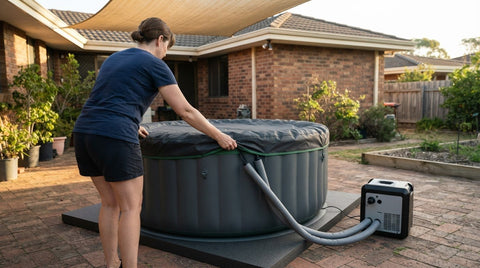
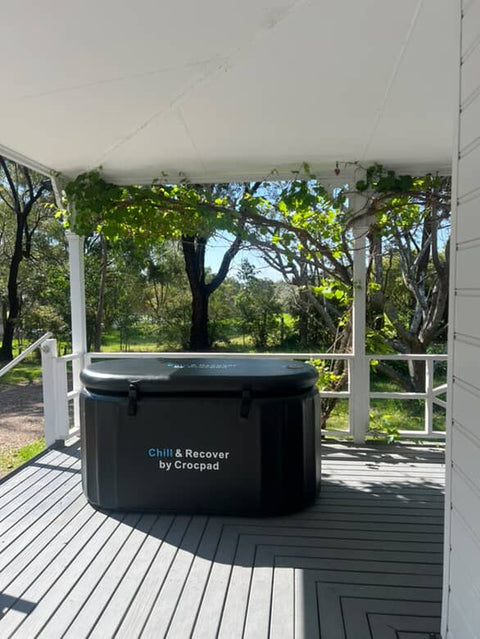
For either location, a licensed electrician can assess the circuit, outlet position and chiller requirements. Outdoors, use an outlet intended for outdoor conditions, with weather protection suited to its exposure. Protect electrical connections from water and avoid placing equipment where rain or splashing can reach it.
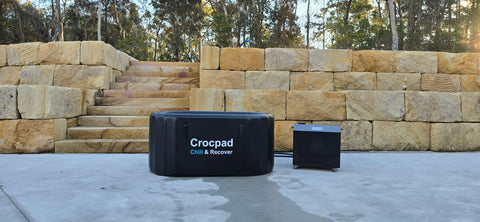
Indoors, consider the distance between the tub, chiller and outlet. A cramped space can make access difficult and expose connections to splashes. Follow the manufacturer’s placement and connection instructions, and keep the chiller’s electrical components away from wet areas. The installation should suit the actual room or outdoor setting, not just the tub’s position.
Circuit, RCD and outlet requirements
A dedicated circuit, RCD protection and a weatherproof outlet each address a different part of an installation. They matter because the chiller’s load, other appliances and exposure to water all affect the setup.
Does a cold plunge chiller need a dedicated circuit, RCD or weatherproof outlet in Australia? A dedicated circuit is recommended to help avoid overloading the household supply, and RCD protection is important for electrical installations involving water. An outdoor setup should use an outlet rated for outdoor conditions on an RCD-protected circuit.
Should an Australian electrician install or inspect a cold plunge chiller circuit? Yes. Use a licensed electrician to install a dedicated circuit or assess an existing one. They can consider the chiller’s rating, other loads on the circuit and the outlet’s location before deciding what the installation needs.
Don’t assume a standard indoor outlet is suitable just because its plug fits. The chiller’s voltage and current requirements must match the supply, and the circuit must also accommodate other connected appliances. If a breaker trips or the outlet shows damage, stop using that connection and arrange an electrician’s assessment.
Before choosing an indoor or outdoor position, consider how close the water is to the outlet, weather exposure and access for safe connection. Protect the electrical setup, use outdoor-rated equipment outside, and have the circuit assessed by a licensed electrician. These checks help align the installation with the chiller’s specifications and the conditions around your cold plunge.
Comparing rated electrical input between models
Compare electrical input, not just cooling capacity, when assessing chiller models. A useful comparison lines up each model’s voltage, rated watts and amps, then accounts for separately powered components.
Start with the manufacturer’s specifications for each unit. Check whether the stated input covers the compressor only or the complete chiller. A model with an integrated pump may list total input, while another may require a separate pump or filtration system. Comparing only the headline rating can hide these differences.
- Voltage: compare models designed for the same supply voltage.
- Rated input: record watts or kilowatts, not cooling capacity alone.
- Current: note the stated amp draw and whether it describes running or startup demand.
- Included equipment: identify separate pumps, filters and other powered components.
These details make an apples-to-apples comparison possible. For example, a listing that gives compressor input but excludes a circulation pump doesn’t represent the whole setup. Add the pump’s rating separately when considering total electrical demand. If filtration is built into another component, avoid counting that load twice.
Horsepower labels need careful reading, too. The 0.5 HP and 0.8 HP labels identify chiller categories, but horsepower alone doesn’t provide the unit’s rated electrical input. It also shouldn’t be treated as a direct substitute for a watt or amp figure. Use the actual electrical specifications for the model and its supplied voltage.
Check that each figure describes the same operating condition. One specification may show rated input, while another may describe cooling capacity or compressor output. Those measures answer different questions. For electrical planning, input watts and amps are the direct figures to compare; cooling capacity helps assess the cooling task.
A comparison table can keep the information clear. Give each model a row, then record voltage, rated input, running current, startup rating and included pump or filtration equipment. List any separate component on its own line. This makes it easier to see which models place similar demands on the electrical supply, without assuming a larger cooling number means higher or lower electricity use.
Before settling on a model, match its actual electrical requirements to the intended setup and cooling needs. Explore cold plunge options as you compare the specifications that matter for your space.
Crocpad
Crocpad is a natural next step when your electrical estimates are shaping your cold plunge choice. Its Ice Baths & Chillers offering gives you options to consider alongside the chiller’s rated input, voltage and your available space. Use the manufacturer’s electrical specifications to understand the unit’s demand, and rely on a licensed electrician to assess your circuit. Product selection and electrical installation are separate decisions, but both matter for a safe, practical setup. If you’d like to discuss your cold plunge options, contact Crocpad.
Make your next setup decision with confidence
Understanding a cold plunge chiller’s electrical requirements and amp draw helps you plan around the space and power supply you have. Use the unit’s specifications to guide your setup decision, and consider equipment placement and electrical planning as you shape a home recovery routine.
Crocpad also offers recreational options including the Floating Water Mat, Minima Pool Slide and Megalo 3M Inflatable Water Pool Slide. Whether you’re planning a compact wellness space or thinking about time on the water, choose products that suit how you want to use your space.
Ready to explore your options? Contact Crocpad about your setup and take the next step towards a refreshing routine.
Frequently Asked Questions
Are electrical panel upgrades necessary?
Not automatically. An upgrade may be needed if the existing switchboard or circuit can’t support the chiller’s load alongside other appliances. For example, a home with limited spare circuit capacity may need changes, while a suitable existing supply may not. A licensed electrician can assess the switchboard, circuit and chiller specifications together, then determine whether the panel needs upgrading or another electrical arrangement is appropriate.
Does a 1 HP chiller continuously consume 1 HP of electricity?
No. A horsepower label describes a rating, but doesn’t establish continuous electrical consumption. A horsepower label describes a cooling rating, not necessarily the electricity the chiller uses. The compressor also cycles according to the cooling demand, rather than necessarily running continuously. For an electricity estimate, use the chiller’s rated electrical input and actual operating time, not horsepower alone.
Is cooling capacity the same as power consumption?
No. Cooling capacity describes heat removed from the water, while power consumption describes electricity used by the equipment. A higher cooling figure doesn’t directly tell you the unit’s electrical input. Compare the cooling rating with the manufacturer’s separate input rating in watts or kilowatts. Use electrical input to estimate energy use and cooling capacity to assess the cooling task.
What voltage and frequency do cold plunge chillers require in Australia?
There isn’t one voltage and frequency specification that applies to every chiller. Read the rating plate or manufacturer’s manual for the exact model’s required supply, then match it to the intended installation. Don’t assume a unit designed for another market suits an Australian outlet. If the label and available supply don’t clearly match, have a licensed electrician assess the connection before using the chiller.
How many amps does a typical cold plunge chiller draw while running?
Chiller amperage typically ranges from 10 to 30 amps, although the actual draw varies by model. Don’t confuse this with the 3-5 amp draw stated for many tubs, which isn’t necessarily the chiller’s current. For a practical comparison, use the running-amp rating on each chiller’s specifications. Also account for any separately powered pump, because its load contributes to the setup’s total demand.
How much does it cost to run a cold plunge chiller per day in Australia?
As an illustration, a chiller drawing 750 watts while running six hours daily uses 4.5 kWh per day. This example isn’t a typical Australian tariff or a universal running cost. Your estimate changes with your electricity rate, compressor runtime and whether separate equipment, such as a pump, also draws power.
How do chiller amp draw and power use compare across common sizes and brands?
Compare each model’s rated input, running amps, voltage and included equipment rather than relying on brand or size labels. Horsepower and cooling capacity don’t provide a direct comparison of electrical consumption. For instance, a model listing compressor input separately from its pump needs an additional line in your comparison. Use specifications for the exact model and compare equivalent ratings across the options.
What electrical safety risks apply to cold plunge chillers near water?
Water near powered equipment makes protection and placement important. A damaged cord, wet connection or unsuitable outdoor outlet can create an electrical hazard. Use RCD protection for water-related electrical installations and outdoor-rated outlet equipment in exposed settings. Keep connections protected from splashes, and don’t use a damaged lead. A licensed electrician can assess the installation’s circuit, outlet position and protective measures.