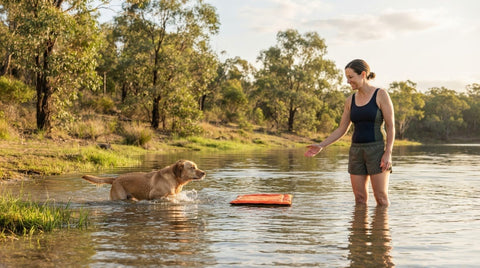
Treat a dog panicking while getting out of deep lake water as a safety situation, not a training exercise. If your dog is panting hard or ignoring cues, calmly guide them in instead of asking for another swim. One trainer walked into knee-deep water to coax a dog towards them.
When you’re focused on getting your dog safely back to shore, fear and fatigue can be hard to tell apart. Staying calm matters: chasing or yelling can add pressure, while a steady approach and clear cues help you respond thoughtfully.
Learn to recognise signs of fear and tiredness, build water confidence gradually, and prepare your dog to return to shore. This guide explains what to do when a dog panics in deep water, how to establish a reliable resting routine, and why a tired dog needs a calm exit, not another training attempt.
Key Takeaways
- Learn to distinguish hesitation around water from signs that your dog is tiring or becoming overwhelmed.
- Build confidence and recall gradually, starting in familiar, shallow settings before practising near deeper water.
- Use a consistent resting spot and watch for hard panting or missed cues as signs to end a swimming session.
- In an emergency, stay calm and focus on guiding your dog towards a safe, reachable exit rather than adding pressure.
- Plan ahead for steep or slippery banks so your dog has a practical route out of the lake.
1. Identifying fear of swimming
A dog unsure about water may hesitate at the edge, retreat from a wave or paddle frantically after entering. Read the whole picture: a stiff body, tucked tail, repeated attempts to turn back or frantic splashing can signal fear. Compare these actions with your dog’s usual behaviour on dry land. If your dog approaches the shoreline confidently but freezes when their paws lose contact with the bottom, they may be struggling with the depth, not refusing to cooperate.
Make the task easier. Let your dog choose whether to approach, and reward calm interest near the water. Never throw or drag a dog into a lake: this can intensify fear and make the water feel threatening. Practise first in a quiet, shallow area where your dog can touch the bottom and turn towards shore without struggling.
To teach your dog to enter and leave water calmly, practise recall at home, then in the yard, beside a kiddie pool and, eventually, in shallow lake water. Use a long line near open water, reward your dog for returning, and sometimes send them back to play so coming when called doesn’t always end the fun.
Choose a reward your dog genuinely values, such as a special treat or favourite toy. Start by calling them away from the water when they’re close to shore. As they respond reliably, practise in slightly more distracting places. Keep the exit familiar: reward your dog for walking back to the same easy-to-reach point on shore, rather than calling them towards a steep or slippery bank.
Chaco, a nine-month-old chocolate Labrador, built confidence through gradual retrieves. After about a week of coaxing, he entered chest-deep water. His trainer tossed a bumper just beyond easy reach, then increased the challenge only as Chaco succeeded. Once he consistently retrieved from one or two feet away, the distance grew by about one foot at a time.
The trainer continued the routine for a couple of weeks. For retrieves of a few feet or more, distance increased in five- to ten-foot increments. Chaco eventually retrieved a bumper thrown 20 yards away on command. The lesson is to build confidence in small, successful stages, not to test a worried dog with a long swim.
Teach a separate cue for a resting place, such as a mat on shore or your dog’s own float. Practise on dry ground first, then beside shallow water. If your dog turns away, scrambles or can’t respond to a familiar cue, make the task easier and end the session on shore. Calm choices and steady progress are more useful than pressure.
2. Recognising fatigue and water safety risks
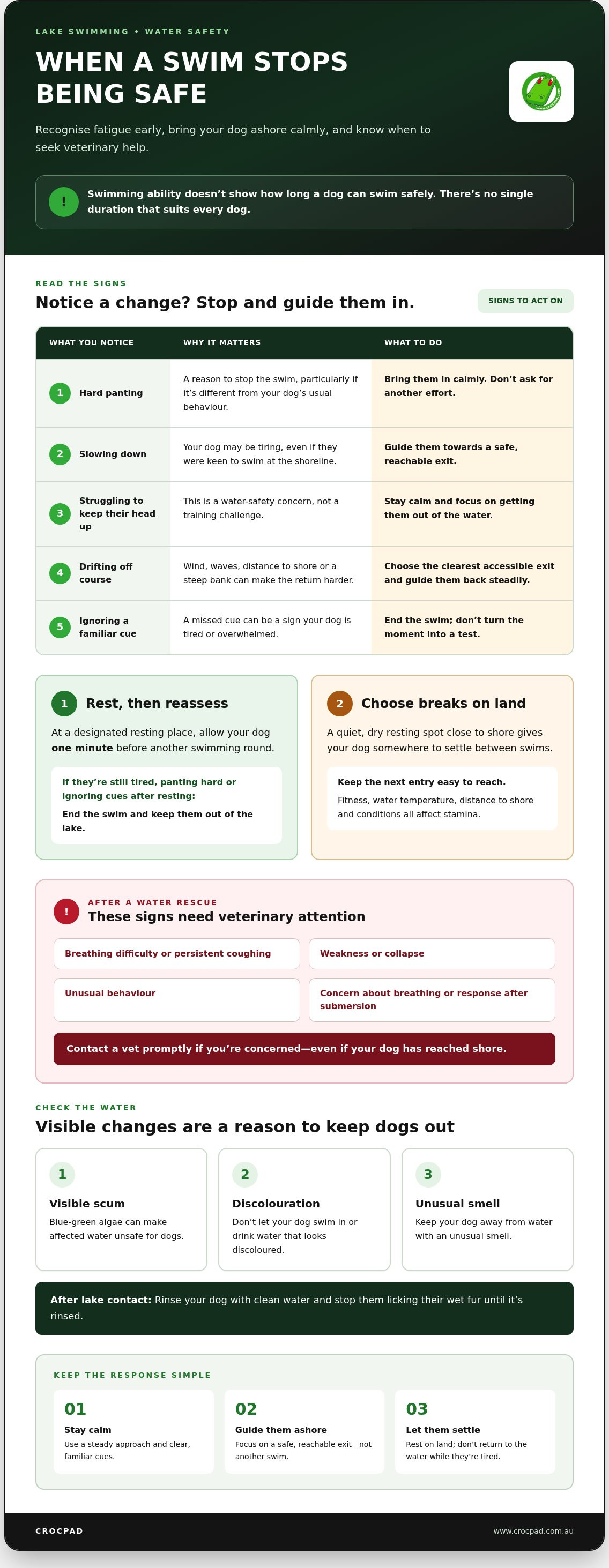
Swimming ability doesn’t tell you how long a dog can swim safely. There’s no single duration that suits every dog: fitness, water temperature, distance to shore and conditions all affect stamina. Keep swims short enough to watch your dog closely, and give them regular breaks on land.
Watch for changes from your dog’s usual swimming. Hard panting, slowing down, struggling to keep their head up, drifting off course or ignoring a familiar cue are reasons to stop. A dog that seemed keen at the shoreline can tire once the swim gets longer or the water is cold. Bring them in calmly; don’t turn missed cues into a training challenge.
At a designated resting place, allow your dog one minute before another swimming round. A quiet spot on shore gives an overheated or overstimulated dog somewhere to settle, rather than continuing to circle in the water. If your dog remains tired, pants hard or still ignores cues after resting, end the swim and keep them out of the lake.
After a water rescue, take your dog to a vet if they have breathing difficulty, persistent coughing, weakness, collapse or unusual behaviour. If you’re concerned about their breathing or response after submersion, contact a vet promptly, even if they’ve reached shore. Be ready to explain what happened, when symptoms appeared, and whether your dog swallowed or inhaled water.
In Australia, blue-green algae can make affected water unsafe for dogs. Parasites and other contaminants can also pose health risks. Don’t let your dog swim in or drink water with visible scum, discolouration or an unusual smell. After lake contact, rinse your dog with clean water and stop them licking their wet fur until it’s rinsed.
Cold or deep water raises the stakes when a dog is tired. They may struggle to reach shore, especially if waves, wind or a steep bank make the return harder. Check conditions before swimming, stay close enough to guide your dog back, and choose an entry point with a clear exit. If your dog can’t settle at the resting place or respond to a familiar cue, end the swim.
For a calm break between swims, choose a dry resting place close to shore and keep the next entry easy to reach. Explore water recreation equipment as part of planning a more comfortable day by the lake.
Treat fatigue as a safety concern, not a reason to ask for one more effort. A tired dog in cold or deep water is at risk, so end the swim and guide them back calmly. If hard panting or ignored cues suggest your dog is tired, bring them in without turning the moment into a training opportunity. Focus on getting them out of the water, not testing whether they’ll respond again.
Once ashore, give your dog a designated resting place where they can settle instead of continuing to swim. Let them rest rather than returning to the water while they’re still tired. If they’re panting hard or ignoring cues, keep it simple: bring them in calmly, allow them to settle, and don’t treat their behaviour as a training challenge.
3. How to safely rescue a panicking dog from deep lake water
If your dog panics while getting out of deep lake water, act quickly without putting yourself in danger. A frightened dog may claw or climb over someone trying to help, so keep your footing and choose the safest route towards shore. Call to your dog in a steady voice, using a familiar cue rather than shouting repeatedly.
First, find the nearest accessible exit. Look for a shallow slope, stable landing or clear stretch of shoreline. Point towards it and move along the bank if that helps your dog orient towards land. Don’t direct them towards rocks, dense plants, boat traffic or another hazard if there’s a clearer exit.
If you can safely enter the water, go only as far as you can keep secure footing. One trainer walked into knee-deep water to coax a dog towards him. Treat that as a limit, not a reason to wade farther: lake beds can drop suddenly, and mud, rocks or weeds can make footing unreliable. If the dog is beyond safe reach, don’t swim after them.
Keep your body slightly sideways and your movements calm. Face the dog, speak simply and encourage them towards the nearest exit. Don’t grab at their head or paws from the front or lean over deep water. A panicked dog may lunge unexpectedly. If another adult is present, ask them to watch the dog’s direction and guide you towards firm ground.
If the dog can’t reach the bank, look for a safe way to offer support from shore. A long object may help guide them towards a reachable exit, but don’t thrust it at their face or pull hard against their neck. Stay on stable ground. If the dog is exhausted, submerged or unresponsive, call for emergency assistance rather than entering deep water.
Once the dog reaches land, move them away from the water’s edge. Check whether they’re breathing normally and responding as usual. Dry them and keep them warm, especially after cold-water exposure. Don’t assume they’re fine because they’re standing: coughing, laboured breathing, weakness or unusual behaviour after a rescue needs prompt veterinary attention.
When the immediate danger has passed, end the swim. Don’t send your dog back in to practise the exit while they’re frightened or tired. Note where the rescue happened, what made the exit difficult, and which route along the shoreline worked. Before another lake visit, choose an entry point with a visible, manageable path back to shore and practise returning to it in shallow water.
4. What to do if your dog is drowning or struggling to swim
If your dog is sinking, unable to move towards shore or repeatedly losing their way, treat it as urgent. Call for help and keep your footing secure. A panicking dog may move unpredictably, so don’t leap into deep water or let urgency turn one emergency into two.
Find the nearest clear exit, such as a gently sloping bank. Call your dog using a familiar cue and point towards that route. Keep your voice steady; don’t shout or chase along the shoreline. If someone else is nearby, ask them to guide you towards firm ground or call emergency services while you focus on the dog.
- Check your reach. Approach from land and assess the water before moving closer. In one training example, the trainer entered only knee-deep water to coax a dog towards him. Don’t treat that example as permission to wade deeper; stop if you can’t keep secure footing.
- Guide, don’t grab. Encourage the dog towards the nearest safe exit with a calm voice and familiar cue. If you can offer an object from firm ground, keep it between you and the dog. Don’t reach over deep water or pull forcefully at the dog’s head, neck or legs.
- Get help if the dog remains out of reach. Keep the dog in sight and describe their location, direction and condition clearly when calling for assistance. If a second adult is present, have them watch the dog while you remain on stable ground.
- End the swim after the rescue. Once the dog reaches shore, move them away from the water’s edge. Don’t send them back in to practise swimming or exiting while they’re distressed or tired.
After your dog reaches land, watch their breathing, alertness and movement. Coughing, laboured breathing, weakness or unusual behaviour after struggling in water are reasons to seek prompt veterinary care. Explain what happened, how long the dog was in the water, whether they went under, and what changes you’ve noticed.
For example, a dog that’s standing but coughing after a lake rescue still needs close attention. Keep them warm and dry, and seek veterinary advice promptly if their breathing or behaviour concerns you. Don’t assume the danger has passed just because they reached shore quickly.
Before the next swim, choose a shoreline with a visible exit and practise approaching it in shallow water. A clear route makes it easier to guide your dog without entering deep water. If the bank is steep, slippery or obstructed, choose another entry point rather than relying on a difficult exit in an emergency.
5. How to help a dog exit a lake with steep or slippery banks
A steep bank can turn a simple return to shore into a struggle. Before your dog enters the lake, identify another exit with a gentler slope or firm ground. Check for loose stones, mud, submerged branches and thick vegetation. If the only bank available looks slippery or unstable, choose a different swimming spot rather than relying on it in an emergency.
If your dog is already in the water, guide them towards the easiest reachable landing. Stand on stable ground and use a familiar cue, then move along the shore if that helps them follow the route. Don’t call them towards a vertical edge just because it’s closest. A slightly longer swim to a safe, gradual exit may be easier than climbing a steep bank.
At the water’s edge, give your dog room to find secure footing. Don’t stand directly above them or pull their collar while they scramble. A frightened dog may slip back into the water if crowded or startled. Keep your voice steady, stay clear of their path, and encourage them towards ground where all four paws can grip.
Use this approach to assess a difficult bank:
- Look for firm footing. Choose a spot without loose gravel, slick mud or exposed roots.
- Check the slope. A gradual bank gives your dog more room to step up than a sharp ledge.
- Clear the landing area. Move people, bags and other obstacles away from the route.
- Keep your position safe. Don’t lean over the edge or step onto unstable ground to reach your dog.
- Change the route early. If your dog can’t get purchase, direct them along the shore towards a safer exit.
If your dog is tired or distressed, don’t turn the bank into a training challenge. Guide them towards a manageable landing, and ask another person to clear the path or guide you from shore. If your dog can’t reach a safe exit and you’d need to enter deep or unstable water, stay on secure ground and call for help.
Once your dog is out, move them away from the bank before checking their condition. A slippery edge can remain hazardous even after the immediate rescue. For the next lake visit, practise walking to and from the chosen exit on dry land, then approach the water only when your dog is settled. Select water recreation options as part of planning a lake day that keeps safe access in mind.
The trainer worked with Chaco, a nine-month-old chocolate Labrador, to build his confidence in water through gradual practice.
Crocpad: Floating Water Mat
Crocpad’s Floating Water Mat offers a floating place to pause during supervised water recreation. If your dog is learning to settle between swims, it could provide a familiar resting point on the water. Introduce any float gradually in calm, shallow conditions, and watch your dog closely. A floating mat is not a rescue device or a substitute for a clear route to shore, attentive supervision or safe water choices.
Consider the Floating Water Mat for relaxed lake days where a floating rest spot suits your plans. Keep your dog’s confidence and comfort central, and end the swim if they become tired or distressed. For details about the mat and other water recreation products, visit Crocpad’s website.
Make your next lake day a calmer one
Before your next outing, turn what you’ve learnt into a simple plan. Agree with the people you’re travelling with who’ll watch your dog, who’ll guide them towards shore, and who’ll call for help if needed. A shared plan reduces confusion when the water gets busy or your dog becomes distressed.
If your dog panics while getting out of deep lake water, treat the moment as a cue to pause future swims and reconsider the setting. Choose activities that suit your dog’s confidence and make sure any water play remains supervised. For pool recreation, Crocpad also offers the Minima Pool Slide and Megalo 3M Inflatable Water Pool Slide. These products are for recreation, not dog rescue or water safety.
For information about Crocpad’s water recreation products, contact Crocpad. A thoughtful plan can help you focus on what matters: enjoying the water together while keeping your dog’s wellbeing front and centre.
Frequently Asked Questions
What are the signs of exhaustion or drowning in dogs?
Exhaustion or drowning can show as a dog struggling to keep their nose above water, losing coordinated paddling, rolling or becoming unusually still. They may also seem confused or unable to respond. Get your dog out of the water safely and seek urgent veterinary help if their breathing or responsiveness is abnormal. Even after they appear settled, watch for changes such as renewed coughing or increased effort to breathe.
What dog water safety equipment is useful, such as life jackets and rescue ramps?
A well-fitted dog life jacket can provide buoyancy and a handle to guide a dog near shore, but it doesn’t replace supervision or a safe exit. A ramp can help a dog move between water and a boat or platform when positioned securely. Crocpad’s Inflatable Dog Ramp uses drop-stitch technology to create a rigid surface. Choose equipment for the setting, and practise using it before an outing.