

A chiller can keep your plunge cold, but it can’t keep the water clean on its own. Your routine for how often to change water in cold plunge tub depends on the tub, how often it’s used and whether filtration or sanitising is part of its care.
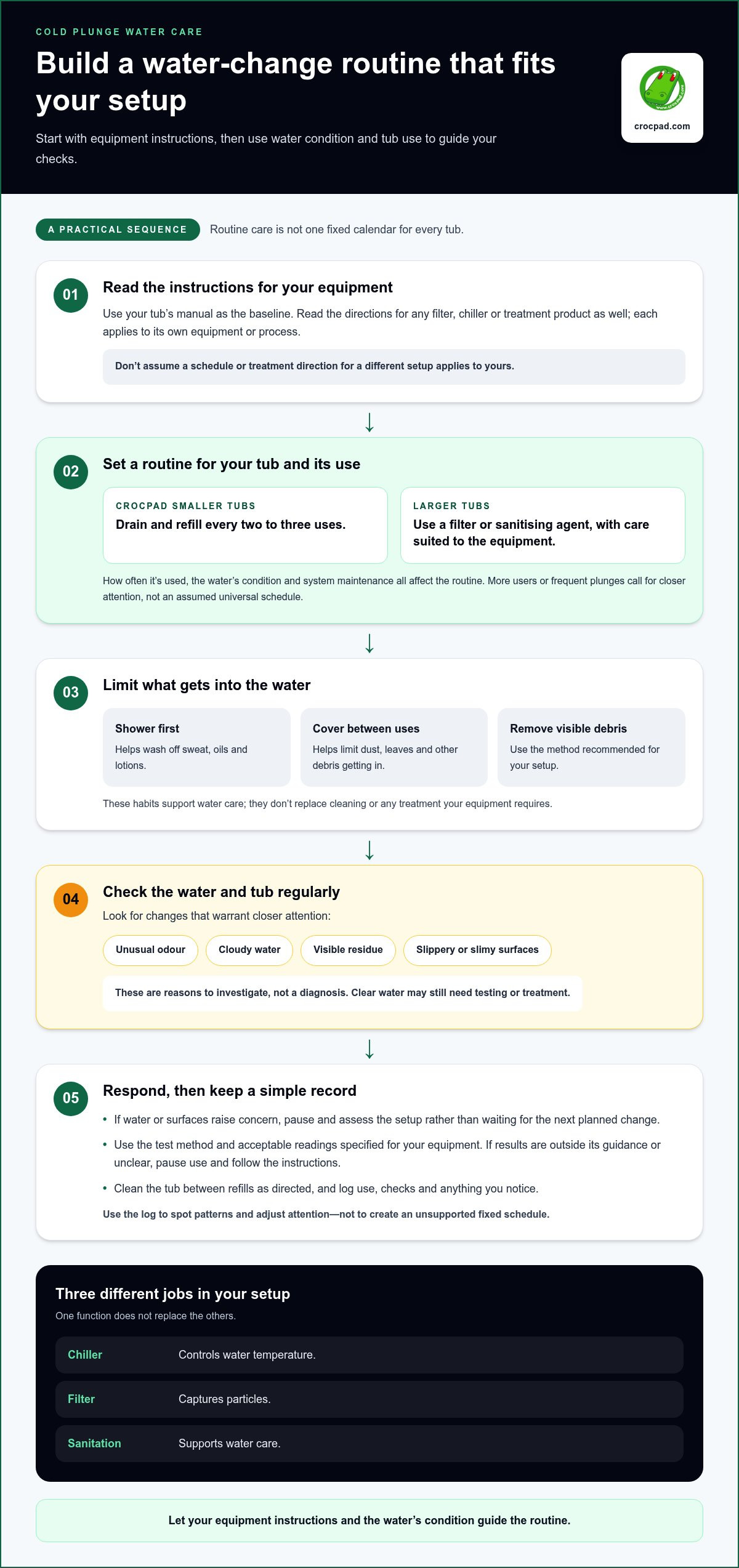
For Crocpad’s smaller tubs, the guidance is to drain and refill every two to three uses. Larger tubs need a filter or sanitising agent, alongside water care that suits the equipment. A chiller manages temperature, while filtration and sanitation have separate roles. Follow the instructions for your specific setup, and pay attention to changes in use or water condition rather than relying on a calendar alone.
This guide explains how to build a practical water-change routine, which signs call for closer attention and how filtration affects water care. It also covers simple habits that help keep your plunge ready for the next session, including cleaning the tub between refills. For equipment, explore Crocpad’s ice baths and chillers.
Key Takeaways
- To decide how often to change water in cold plunge tub, start with the tub’s care instructions and factor in how often it’s used.
- For Crocpad’s smaller tubs, drain and refill every two to three uses. Larger tubs need a filter or sanitising agent, plus care suited to the equipment.
- Check the water and tub regularly. Visible changes, residue or debris can be a reason to act sooner.
- A chiller controls temperature, filtration catches particles and sanitation supports water care. One function doesn’t replace the others.
- Follow the equipment’s instructions for testing and cleaning, and adjust your routine to suit your tub, usage and water condition.
How often should you change water in a cold plunge tub?
There’s no single water-change interval for every cold plunge. For Crocpad’s smaller tubs, drain and refill every two to three uses. For a larger tub, use a filter or sanitising agent and follow water-care instructions suited to its equipment. Usage, the condition of the water and the system’s maintenance all affect the routine.
Use your tub’s instructions as the starting point, then account for the filter, chiller and any treatment products in your setup. Instructions for different equipment cover different tasks, so a water-change schedule for one tub or system may not suit another. If the water or tub gives you a reason to question its condition, respond to that concern instead of waiting for the next planned change.
An ice bath is used for cold-water immersion, but a general overview of ice baths doesn’t set a maintenance interval for your particular setup. Your tub’s care instructions and the water’s condition are more useful guides for deciding when to drain and refill.
For a useful overview of water-care practices, watch this video:
Why there is no reliable one-size-fits-all calendar
Water-care needs depend on the setup and how it’s used. Frequent plunges, more users, an uncovered tub or debris getting into the water can all mean closer attention is needed. Filtration can remove particles, while sanitation and circulation may be part of a broader treatment system. However, none of these factors on its own sets a universal water-change schedule. Use the instructions that apply to your system.
Keep two decisions separate: replacing water as part of routine care, and changing it because its condition raises concern. A calendar can help you stay organised, but it shouldn’t overrule the care instructions or what you observe. If the water looks dirty or the tub’s surfaces feel slippery, pause and assess the setup before the next use.
Which guidance should take priority?
Start with the manual for your tub, then read the instructions for any filter, chiller or treatment product you use. Each set of directions applies to particular equipment or processes, so one schedule may not cover the whole system. Follow the instructions for every component and avoid combining guidance from different types of setups.
Water-quality guidance can help explain testing and treatment, but check that it applies to your type of plunge system. Don’t borrow readings or treatment directions from a different setup without confirming they’re suitable for yours. For the practical question of how often to change water in cold plunge tub, use the applicable equipment instructions as your baseline, then pay attention to usage and water condition between planned changes.
What makes cold plunge water need changing sooner?
Water-care needs can shift between sessions. The main variables are how often the tub is used, how many people use it, whether they enter clean, whether the tub is covered between plunges and how much dust, leaves or other debris can get in. These factors help you decide when to inspect more closely, but they don’t create a reliable water-change interval on their own.
Think about what enters the water as well as what you can see. Sweat, skin oils and product residue can build up with use, while an open tub may collect debris between sessions. A cover can help limit what falls in, but it doesn’t replace cleaning or any water treatment required by your equipment.
How use and everyday habits affect water quality
More frequent use means more opportunities for contaminants to enter the water, so make checks part of your regular routine. A quick shower before plunging helps wash off sweat, oils and lotions. Keep the tub covered when it’s not in use, and remove visible debris using the method recommended for your setup. These habits support water care, but they don’t guarantee that water is suitable for use.
For example, a tub used several times in a day may need closer monitoring than one used occasionally, even if both are covered. That doesn’t automatically mean one needs a particular change schedule. Follow the instructions for your tub and treatment system, and pay closer attention after heavy use, exposure to debris or a change in how the water looks or smells.
Water-quality changes worth investigating
Pause and assess the water if it develops an unusual odour, looks cloudy or has visible residue. Check the tub’s surfaces too. A slippery or slimy feel is a reason to investigate and clean as directed. These observations are warning signs, not a diagnosis. Don’t assume that water is safe or unsafe based on appearance alone.
Clear water can still require testing or treatment. Use the test method and acceptable readings specified for your equipment. If results fall outside its guidance, or you’re unsure how to interpret them, pause use and follow the instructions for your setup. SF.gov’s best practices for cold plunges provide water-quality guidance, including filtration and treatment considerations. Apply it in context rather than assuming every recommendation fits every tub.
Keep a simple log of use, checks and anything you notice. It can help reveal patterns, such as debris after windy conditions or more frequent attention after a busy stretch, without turning those observations into an unsupported fixed schedule. If you’re setting up a plunge routine, explore Crocpad ice baths and chillers alongside a water-care plan suited to your equipment.
Does a chiller or filter mean fewer water changes?
A chiller, filter and sanitation system do different jobs. A chiller controls water temperature; a filter captures particles that pass through it; a suitable sanitation method treats water according to its own instructions. Having one component doesn’t automatically replace the others or remove the need to inspect and care for the tub.
| Component | What it does | What it doesn’t do by itself |
|---|---|---|
| Chiller | Controls water temperature, as described in its equipment instructions. | Sanitise water or confirm it’s suitable for use. |
| Filter | Captures particles according to the filter and system design. | Remove every dissolved contaminant or provide sanitation automatically. |
| Sanitation method | Supports water treatment when used as directed for the system. | Replace cleaning, checks or maintenance required by the tub and equipment. |
What a chiller does, and what it doesn’t do
A chiller’s role is temperature control. It may be part of a larger setup, but cooling the water is not the same as treating it. Don’t assume a low temperature makes water clean, or that a chiller’s presence sets the interval for changing it. Use the chiller according to its operating instructions, and base water-care decisions on the tub and any treatment equipment.
Cold-water immersion has its own considerations beyond equipment. Harvard Health’s overview of cold-water immersion discusses potential benefits and cautions, but it isn’t a guide to chiller maintenance or plunge-water treatment. Keep those questions separate.
How filtration and sanitation fit into the routine
A mechanical filter can catch particles in water that pass through it, but its effectiveness depends on the filter and how the system is designed and maintained. It doesn’t necessarily treat substances that remain dissolved in the water. A sanitation method has a different purpose and must be suitable for the tub and equipment.
Don’t add chemicals or combine treatment methods based on guesswork. Follow the instructions for the exact filter, chiller and treatment product, including any guidance on testing, cleaning and replacement. Make sure you understand how the components work together before assuming one system makes another unnecessary.
So, can equipment mean fewer water changes? It may affect the care routine, but there’s no universal schedule that follows simply from owning a chiller or filter. For how often to change water in cold plunge tub, use the relevant equipment guidance and the water’s condition, not the presence of a single component. Crocpad’s ice baths and chillers are relevant options to explore when planning a setup and its water-care routine.
How to check, care for and change plunge water
A consistent routine makes it easier to spot changes before they become a bigger maintenance job. Keep checks between uses separate from water replacement: inspecting the tub doesn’t automatically mean it needs draining, and a planned change doesn’t replace checks required by your equipment.
A simple routine between plunges
Use this sequence as a practical framework, adapting the checks and testing schedule to the instructions for your tub, filter, chiller and any treatment products.
- Inspect the water and tub. Look for debris, cloudiness, unusual odour or visible residue, and check the surfaces for a slippery feel. Note anything that’s changed since your last check.
- Check as directed. If your system requires water testing, follow its instructions for the correct test method, frequency and acceptable readings. Don’t substitute a schedule or threshold from another type of equipment.
- Keep contamination down. Enter clean, remove visible debris using the method recommended for your setup, and cover the tub between sessions if its instructions allow. These are ongoing habits, not a water-change timetable.
- Record what you find. Note the date, use, test results if applicable, and any changes in appearance or smell. A simple log helps you compare observations over time and identify when closer attention may be needed.
- Decide whether to continue or replace. Compare your observations and any test results with the relevant equipment guidance. If a concern remains, pause use and follow the recommended next steps rather than guessing.
Checklist: If the water changes in appearance or smell, the tub feels slippery, or required test results fall outside the equipment’s guidance, stop using it and reassess before the next plunge.
When to drain, clean and refill
If the tub’s instructions or water-care guidance call for replacement, follow the full sequence they specify. Drain the water as directed, clean the tub with the recommended method and products, then refill and restart the system according to its operating instructions. Don’t assume that topping up, filtering or adding treatment is a substitute for a change when the guidance calls for fresh water.
Keep cleaning products and water treatments within their intended use. Don’t mix treatments or improvise chemical dosages; follow the product label and equipment instructions. If the cleaning method or treatment steps are unclear, pause before refilling or using the tub.
The right routine for how often to change water in cold plunge tub starts with those specific instructions, then uses regular observations to flag concerns sooner. For a setup built around plunge equipment, explore Crocpad ice baths and chillers and plan water care around the equipment you use.
Make cold plunge water care part of your Crocpad setup
A reliable routine should fit the tub you own, the equipment connected to it and the way you use it. Start with the equipment’s directions, then use your pattern of use and the water’s condition to decide what needs attention. That gives you a practical plan without relying on a calendar that may not suit your setup.
Build a routine around your tub and equipment
Keep the tub and chiller instructions somewhere easy to access. They may cover different tasks, so treat each set of directions as relevant to its equipment. A chiller controls water temperature; it doesn’t replace a separate water-care plan or any checks, cleaning or treatment the system requires.
A short care record can make the routine easier to follow. Use a notebook or a simple digital note to capture the details that help you make decisions:
- Use pattern: note when the tub has been used more often than usual.
- Water observations: record changes in appearance, odour or visible residue.
- Checks: write down results and compare them with the guidance for your equipment and treatment method.
- Care actions: record cleaning, filter maintenance or water replacement as directed.
Review the notes when the tub’s use changes or you notice a difference in the water. For instance, a busier period may be a cue to pay closer attention, not an automatic instruction to drain on a set day. If something looks or smells unusual, follow the relevant instructions before using the plunge again. Keep routine observations, required testing and scheduled maintenance distinct, so one isn’t mistaken for another.
Choose the next step for your cold-plunge setup
When planning a setup, consider both the plunge equipment and the care it calls for. Crocpad’s range includes ice baths and chillers, giving you relevant equipment to explore as you work out how its instructions will fit into your maintenance habits. Understand what each component does and have clear directions for its care.
For the ongoing question of how often to change water in cold plunge tub, use the instructions for your specific tub and treatment equipment, then respond to changes in use or water condition. If you’re considering equipment for your routine, Explore Crocpad ice baths and chillers. Keep the guidance close, follow the relevant water-treatment directions and reassess whenever the water raises a concern.
Make your next plunge easier to plan
Turn water care into a small, repeatable part of your plunge routine. Keep the equipment instructions handy, note any changes in how the tub is used and revisit your plan if your setup changes. That way, how often to change water in cold plunge tub stays connected to your actual equipment and use, rather than becoming a guess or a calendar rule you follow without checking.
The right plunge setup is one you can care for consistently. Crocpad’s ice bath range and chiller options give you equipment to consider as you plan your home routine. Use the relevant instructions to guide your water-care plan.
Explore Crocpad ice baths and chillers and plan a plunge routine that’s clear, manageable and suited to your equipment.
Frequently Asked Questions
Can a cold plunge chiller keep the water clean?
No. A chiller controls water temperature; it doesn’t make the water clean or sanitise it. If your setup also has a filter or treatment system, each component has a separate role and its own care instructions. Don’t assume the water is ready to use just because the chiller is running. Follow the tub and equipment guidance for checks, cleaning and water replacement.
Can I just top up the water instead of changing it?
No. Topping up restores water volume, but it doesn’t remove contaminants that have accumulated in the tub. If water has evaporated or been splashed out, topping up may be part of routine care, provided your equipment instructions allow it. It isn’t a substitute for a full change when the instructions or water condition call for one. Keep track of top-ups alongside other maintenance.
Is clear water in a cold plunge safe to use?
Not necessarily. Clear water can still need testing or treatment, so appearance alone can’t confirm it’s suitable for use. Follow the testing method and acceptable readings specified for your system. Don’t use the plunge if a required check is overdue or gives a result outside the equipment guidance. If you can’t interpret a result, pause and resolve the uncertainty before getting in.
Should I shower before getting into a cold plunge?
Yes, showering before a plunge is a useful cleanliness habit. Rinse off sweat, oils, lotions and other residue that could otherwise enter the water. If you’ve just exercised or applied skin products, a quick shower before plunging helps reduce what you bring into the tub. It supports water care, but doesn’t replace the checks, cleaning or treatment your setup requires.
Can I use household bleach to sanitise cold plunge water?
Don’t add household bleach unless the instructions for your exact tub and treatment system explicitly direct you to use it and explain how. Products can differ, and an unsuitable treatment may damage equipment or create risks, especially if mixed with other products. Never guess a dose or combine cleaners and treatments. Use only products and procedures specified by the relevant equipment and product instructions.
What should I do if cold plunge water smells unusual?
Pause use and investigate rather than trying to cover the smell with fragrance or extra treatment. Check the tub and equipment instructions, inspect for visible residue and follow the specified testing procedure if your system requires one. If the guidance calls for draining and cleaning, complete those steps before refilling. Don’t use the plunge again until you’ve followed the recommended corrective steps and reassessed it.
Does covering a cold plunge tub mean I can change the water less often?
A cover can help keep leaves, dust and other debris out, but it doesn’t establish a longer water-change interval by itself. A covered tub used frequently still needs care based on its instructions, treatment system and water condition. Keep using the checks your setup requires, and treat the cover as one helpful habit rather than a replacement for testing, cleaning or changing water.


