

A slide can look dry and still hold moisture in seams and folds. That’s why storing inflatable pool slide for winter should begin with cleaning and a thorough drying check, not with packing it away. Storing it damp may lead to musty odours or visible mildew, while forcing it into a tight fold can put unnecessary strain on the material.
If you’re unsure whether it’s dry enough, concerned about damaging it as you pack, or working out where a bulky slide will fit, a simple routine helps. This guide covers cleaning and drying, careful deflation and packing, choosing a suitable storage spot, and checking the slide before it goes back into use.
A little preparation now makes it easier to bring your slide out when pool season returns. It also helps you avoid common storage problems, such as trapping dampness in a fold or wedging the packed slide between sharp or heavy items.
Key Takeaways
- Make storing inflatable pool slide for winter easier with a clear routine: clean it, dry it thoroughly, then pack it away.
- Follow the slide’s care guidance when cleaning, rinsing and handling its valves or attached components.
- Let the slide deflate fully before folding, and pack it loosely rather than forcing it into a compact shape.
- Choose a clean, dry storage spot and keep the packed slide away from sharp edges and puncture hazards.
- Before setting up next season, inspect the slide for visible wear, residue, dampness or other changes.
Why storing an inflatable pool slide properly matters over winter
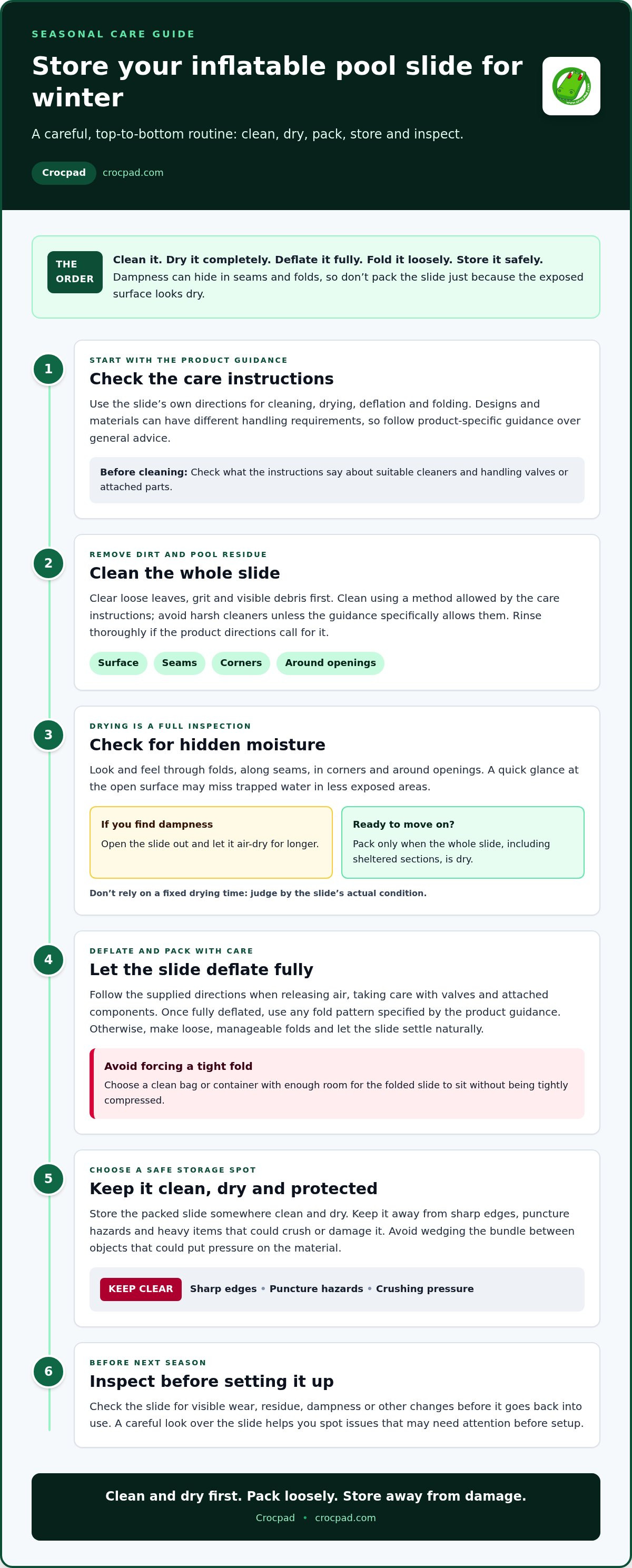
A straightforward routine makes seasonal pack-away easier: clean the slide, dry it completely, deflate and pack it carefully, then store it where it won’t be crushed or exposed to avoidable damage. Use the slide’s own care instructions as your reference at each step, since designs and handling requirements can differ.
Water can remain in seams, folds and sheltered areas after the exposed surface feels dry. Dirt and pool residue may also remain if the slide isn’t cleaned before storage. Trapped moisture and residue can contribute to musty odours or visible mildew, so inspect the whole slide rather than relying on a quick glance. Careful preparation helps reduce these risks, although no storage method can prevent every kind of wear.
Inflatable products come in different forms and are made for different uses. For a general overview of inflatable products, see Wikipedia. For care and storage, follow the instructions supplied with your slide rather than relying on general information.
What can go wrong when a slide is packed away wet?
Moisture may be hard to spot in seams, folds, corners and around openings. If you pack the slide before these areas are dry, dampness can become trapped inside the bundle and may lead to unpleasant odours or visible mildew. Check the full surface, including less exposed sections, and give the slide more drying time if you find any dampness.
Dirt and pool residue are worth addressing too. Left on the slide, they can make it harder to start the next season with clean gear. Before folding, look over the surface and check the seams and folds for residue that needs another clean or water that needs more time to dry.
Which instructions should guide winter storage?
Check the care guidance supplied with your slide for directions on cleaning, drying, deflation and folding. Follow those instructions if they differ from general advice. Slide designs and materials can have different handling requirements, so don’t assume every inflatable pool slide should be prepared or packed in the same way.
Use the product guidance before choosing a cleaner or handling valves and attached parts. If you can’t locate the instructions, avoid guessing about product-specific care. Keep the slide clean and dry, and refer to its supplied information before moving on to any step that depends on its design.
Good preparation won’t eliminate every source of wear, but it gives your slide a better starting point for storage. Once you’ve checked the care guidance, clean and dry the slide before tackling deflation and packing.
How to clean and dry an inflatable pool slide before storage
Clean the slide before folding it, and treat drying as an essential stage of storing inflatable pool slide for winter, not a quick check at the end. Start with the care guidance supplied with your slide. It takes priority over general cleaning advice because suitable methods can vary between designs and materials.
Work over the whole slide, not just the surfaces that are easiest to see. Pay close attention to seams, corners, folds and areas around openings, where debris or water can be less obvious. If you find a damp patch or residue, deal with it before packing the slide.
How should you clean pool residue from the slide?
Use a gentle, orderly approach. First remove loose leaves, grit and other visible debris so they don’t get rubbed across the surface during cleaning. Then clean the slide using a method permitted by its care instructions. Avoid harsh cleaners unless the guidance specifically allows them.
- Clear loose debris: Check the full surface and remove visible dirt before washing.
- Clean as directed: Follow the supplied guidance and use a compatible cleaning method.
- Rinse where appropriate: If the product guidance calls for rinsing after cleaning, rinse thoroughly so cleaner and loosened residue aren’t left behind.
- Inspect as you go: Recheck seams, corners and areas around openings for remaining dirt or residue.
Don’t assume a cleaner is suitable just because it’s intended for outdoor gear. The slide’s own instructions are the best guide to what can be used on its surface.
How can you tell the slide is dry enough to pack?
Check the open surfaces and the places where water can hide. Look through folds, along seams, at corners and around openings. Feel for damp patches and check for visible trapped water. A surface that looks dry at a glance may still need more time in less exposed areas.
If you find moisture, open the slide out and let it air-dry for longer before folding. Don’t rely on a fixed drying time: conditions and slide designs vary, so judge readiness by the slide’s actual condition. Repeat your inspection until the whole slide is dry, including sheltered sections.
Move on to deflating and packing only when cleaning and drying are complete. For future pool days, explore Crocpad inflatable pool slides.
How to deflate, fold and pack an inflatable pool slide
Once the slide is clean and completely dry, follow its supplied instructions to release the air. Take care with valves and attached components, as the correct handling can vary by design. Let the slide deflate fully before folding. If air remains inside, it can be harder to arrange the slide without putting pressure on parts of it.
There isn’t one fold pattern for every inflatable pool slide. Use the product’s guidance if it gives a specific method. Otherwise, make loose, manageable folds that let the slide settle naturally instead of forcing it into a compact shape. Choose a clean bag or container with enough room for the folded slide to sit without being tightly compressed.
What should you do before folding the slide?
Do a quick readiness check. Confirm the slide is clean and dry throughout, then look over the valves and any connected parts. Position them so they won’t be trapped under a fold or sharply bent during packing.
- Follow the instructions: Release air and handle valves as directed for your slide.
- Check attachments: Remove accessories or attached components only if the product guidance says to.
- Let it deflate fully: Don’t start folding while the slide still holds air.
- Plan the folds: Keep valves and connected parts clear so they aren’t strained.
How should you pack it without forcing the shape?
Work gradually. Fold the deflated slide into loose sections that are manageable to lift and place in storage. Pause if the material resists, a valve is caught or an attached component seems strained. Reposition the slide instead of pulling or pressing harder. The aim is a relaxed pack, not the smallest possible bundle.
Choose a clean bag or container with enough room for the slide to sit without being squeezed into a tight shape. Use the original packaging if the product instructions call for it. Once packed, avoid placing heavy items on top. Keeping the bundle free from pressure makes it easier to retrieve and avoids unnecessary strain on the slide.
Take your time with this step. Careful deflation and loose packing make storing inflatable pool slide for winter more straightforward while respecting the handling needs of your particular product. For more ideas for future pool days, explore Crocpad inflatable pool slides.
Where to store an inflatable pool slide during winter
Once the slide is clean, dry, deflated and packed, choose a spot that protects it from damp, direct sunlight and everyday knocks. A spare cupboard, dry garage shelf or sheltered storage area may work if there’s enough room for the slide to rest without being squeezed. A clear space is better than a tight gap where the bundle could be wedged between other gear.
Check the storage area before putting the slide away. Look for damp patches, sharp edges, rough surfaces and objects that could fall or press against the pack. A clean, dry shelf or suitable container can help keep the slide separate from tools and other puncture hazards. If you use a bag or container, make sure the slide is fully dry first. Enclosing damp gear can trap moisture rather than solve the problem.
How do you choose a suitable storage spot?
Think about how the packed slide will sit for the season. Choose a sheltered place with enough room to avoid crushing or tightly compressing the bundle. Keep it away from direct sunlight, damp areas, tools, sharp edges and abrasive equipment. If the floor is prone to moisture, use a clean, dry elevated surface rather than placing the pack directly on it.
Choose a spot that’s easy to access. You’ll be able to see if something has shifted or landed on the slide, and you won’t need to drag the pack past hazards when you retrieve it. Avoid storing it under heavy boxes or pool equipment that could press down on it.
What storage mistakes should you avoid?
- Don’t pack it damp or visibly dirty. Return to cleaning or drying if you find moisture or residue.
- Don’t leave it exposed. Avoid unnecessary sunlight, damp conditions and areas where objects could puncture or crush the slide.
- Don’t assume a sealed bag fixes dampness. Confirm the slide is dry before enclosing it.
- Don’t stack heavy items on top. Keep the pack clear so it isn’t under pressure throughout the off-season.
There’s no need for a rigid inspection schedule, but check the area if you’re moving other stored items nearby. Make sure the slide remains dry, undisturbed and clear of hazards. For your next pool season, explore Crocpad inflatable pool slides.
How to get your inflatable pool slide ready for the next season
Before the first pool day, take your slide out of storage and inspect it carefully. Unpack it in a clear area, let it lie out without pulling or stretching it, and check the care guidance before preparing it for use. This gives you a chance to spot anything that needs attention before setting up the slide.
What should you inspect before inflating the slide?
Look over the full surface, including seams, valves and attached parts. Check for visible wear, residue, damp patches or other changes. If the slide feels damp or has picked up dust during storage, follow its care instructions for cleaning and drying before moving on.
- Inspect the surface and seams for visible wear or anything unusual.
- Check valves and attached parts for visible issues, and make sure nothing is obstructed.
- Look for residue or dampness, particularly in folds and less exposed areas.
- Pause if something seems damaged and follow the product guidance rather than setting up the slide straight away.
After the inspection, follow the slide’s own instructions for inflation and safe use. Don’t guess at inflation steps or assume the setup is identical across different slide designs. Use the supplied guidance as your reference and prepare the slide only as directed.
How can you make seasonal pack-away easier next time?
Make the next round of storing inflatable pool slide for winter simpler by keeping the care instructions somewhere easy to find, such as with the packed slide or in a labelled place nearby. Store accessories together only if their instructions allow it, and keep separate parts arranged so they’re easy to identify when pool season returns.
A quick note about where you stored the slide can save a rummage later, especially if seasonal gear shares space in a garage or cupboard. Keep the slide’s instructions with that note, and refer to them for cleaning, folding, inflation and use. These small habits create a clear handover between seasons without relying on memory.
Ready to plan ahead for warmer days? Explore Crocpad inflatable pool slides, including the Minima, Mikros and Megalo 3M.
Get ready for next season’s pool days
A little care before winter makes it easier to bring your inflatable slide out again when the weather warms up. Clean it according to its care instructions, check that every part is completely dry, then deflate and fold it without forcing the shape. Store the packed slide somewhere clean and sheltered, away from damp, sharp objects and heavy items that could crush it.
Before setting it up next season, inspect the surface, seams, valves and attached parts. Follow the product guidance for inflation and use, and pause if you notice anything unusual. That’s the practical rhythm of storing inflatable pool slide for winter: prepare it thoughtfully now, then check it carefully before the next splash.
Explore Crocpad’s inflatable pool slides, including the Minima, Mikros and Megalo 3M. Explore Crocpad inflatable pool slides and start planning for more fun in the pool. Get ready for your next pool season with a Crocpad inflatable slide.
Frequently Asked Questions
Can I store an inflatable pool slide while it is still damp?
No. Make sure the slide is fully dry before folding and packing it away. A key part of storing inflatable pool slide for winter is checking beyond the obvious surfaces, as moisture can sit in folds or enclosed areas. Inspect seams, corners and areas around openings as well as the main panels. If you find damp patches or trapped water, leave the slide open to dry further and follow its care instructions before storage.
How do I clean an inflatable pool slide before winter storage?
Remove loose dirt and debris first, then clean the slide using methods allowed by its care instructions. If the instructions call for rinsing, rinse thoroughly to remove cleaner and loosened residue. Check the surface, seams and folds for anything left behind. Don’t assume a cleaner suitable for one inflatable will suit another. Once clean, let the slide dry completely before deflating, folding or packing it for winter.
Should I fold or roll an inflatable pool slide for storage?
Follow the instructions for your specific slide, as they take priority over general folding or rolling advice. If no method is given, handle the material gently and avoid forcing tight folds or sharply bending valves and attached parts. Make sure the slide is clean and fully dry first. Pack it in a shape that isn’t compressed, and don’t stack heavy items on top.
Where should I store an inflatable pool slide over winter?
Choose a clean, dry, sheltered place where the slide won’t be crushed or exposed to avoidable damage. Keep it away from sharp objects, tools, direct sunlight and heavy items. Pick a spot that suits the product’s care guidance, with enough room for the bundle to rest without being compressed. Don’t seal it in a bag or container while moisture may still be trapped inside.
What happens if I pack my inflatable pool slide away wet?
Moisture trapped in folds or enclosed areas may lead to unpleasant odours or visible mildew, and can make the slide less pleasant to unpack. Check seams, corners and areas around openings before packing. If you notice dampness, allow more drying time rather than relying on a storage bag or container to remove it. Follow the supplied care instructions as you prepare the slide for storage.
How should I check an inflatable pool slide after winter storage?
Unpack the slide and inspect its surface, seams, valves and attached parts before setting it up. Look for visible damage, residue, dampness or other changes. If anything seems unusual, pause and consult the product’s care guidance rather than proceeding by guesswork. Then follow the instructions for inflation and safe use. A visual check is useful, but it doesn’t replace the slide’s setup directions.


