
![How Long in an Ice Bath: Aussie Recovery Guide [2026]](http://www.crocpad.com.au/cdn/shop/articles/how-long-in-an-ice-bath-aussie-recovery-guide-2026.jpg?v=1788135795&width=480)
You don't need to endure a marathon freeze to reap the rewards of cold water immersion. In fact, the latest 2026 research suggests that just 11 minutes of total weekly exposure is the minimum effective dose for a massive metabolic edge. We understand that the first 30 seconds of a plunge feel like a genuine battle against your own biology. It leaves many Aussies wondering exactly how long to stay in ice bath sessions before the benefits turn into risks. It is completely normal to feel confused by conflicting online advice or a lingering fear of overexposure while you are shivering in your pod.
We've all been there, staring at the stopwatch and questioning if the discomfort is worth the effort. This guide will help you master the clock and the cold by providing expert-backed protocols to optimise your recovery and safety. You will learn how to hit that 11-minute weekly threshold, why timing matters for muscle growth, and how to safely navigate temperatures between 10°C and 15°C. We're breaking down everything you need to transform that initial chill into lasting mental clarity and a genuine energy buzz.
Key Takeaways
- Aim for a cumulative total of 11 minutes of cold exposure each week to maximise metabolic health and build mental resilience.
- Learn exactly how long to stay in ice bath sessions to achieve your specific goals, from quick 2-minute recovery dips to 5-minute advanced protocols.
- Master the inverse relationship between temperature and time to ensure your sessions are always safe, effective, and tailored to your tolerance.
- Optimise your athletic performance by timing your plunges perfectly, whether you are targeting immediate inflammation or long-term muscle growth.
- Recognise the critical physical signals that tell you when to exit the water and how to safely handle the "After-Drop" effect once you are back on dry land.
Understanding the Cold Plunge: Why Duration Matters for Your Recovery
Whether you've just finished a heavy session on the waves or a brutal morning at the local footy club, the temptation to jump straight into an ice bath is real. Cold water immersion (CWI) triggers an immediate and powerful physiological response. Your blood vessels constrict rapidly to protect your core organs, a process known as vasoconstriction, while your heart rate spikes as your body enters a state of controlled stress. Mastering how long to stay in ice bath sessions ensures you get the recovery benefits without pushing your body into dangerous territory. Timing is the most critical variable alongside temperature; if the water is too warm, you're simply having a cold swim, but staying in too long at near-freezing levels can lead to overexposure.
To better understand the science behind this chill, watch this helpful video:
The "Why" Behind the Clock
Your body’s reaction changes the longer you stay submerged. During the first sixty seconds, your vagus nerve is stimulated. This helps regulate your emotional response to stress and is exactly where that post-plunge "zen" feeling originates. Once you move past the initial shock, your body begins a cycle of vasoconstriction and eventual vasodilation once you exit. However, staying in for too long isn't always better for your goals. If you're training for hypertrophy, research suggests you should wait 6 to 8 hours after a workout before plunging, as immediate cold can blunt the muscle-building adaptation. For busy Australians, finding the "Minimum Effective Dose" is about efficiency rather than endurance. Using a Crocpad Ice Bath Pod makes this tracking simple, as the durable, marine-grade materials keep you focused on the clock rather than a flimsy setup.
The 11-Minute Weekly Rule
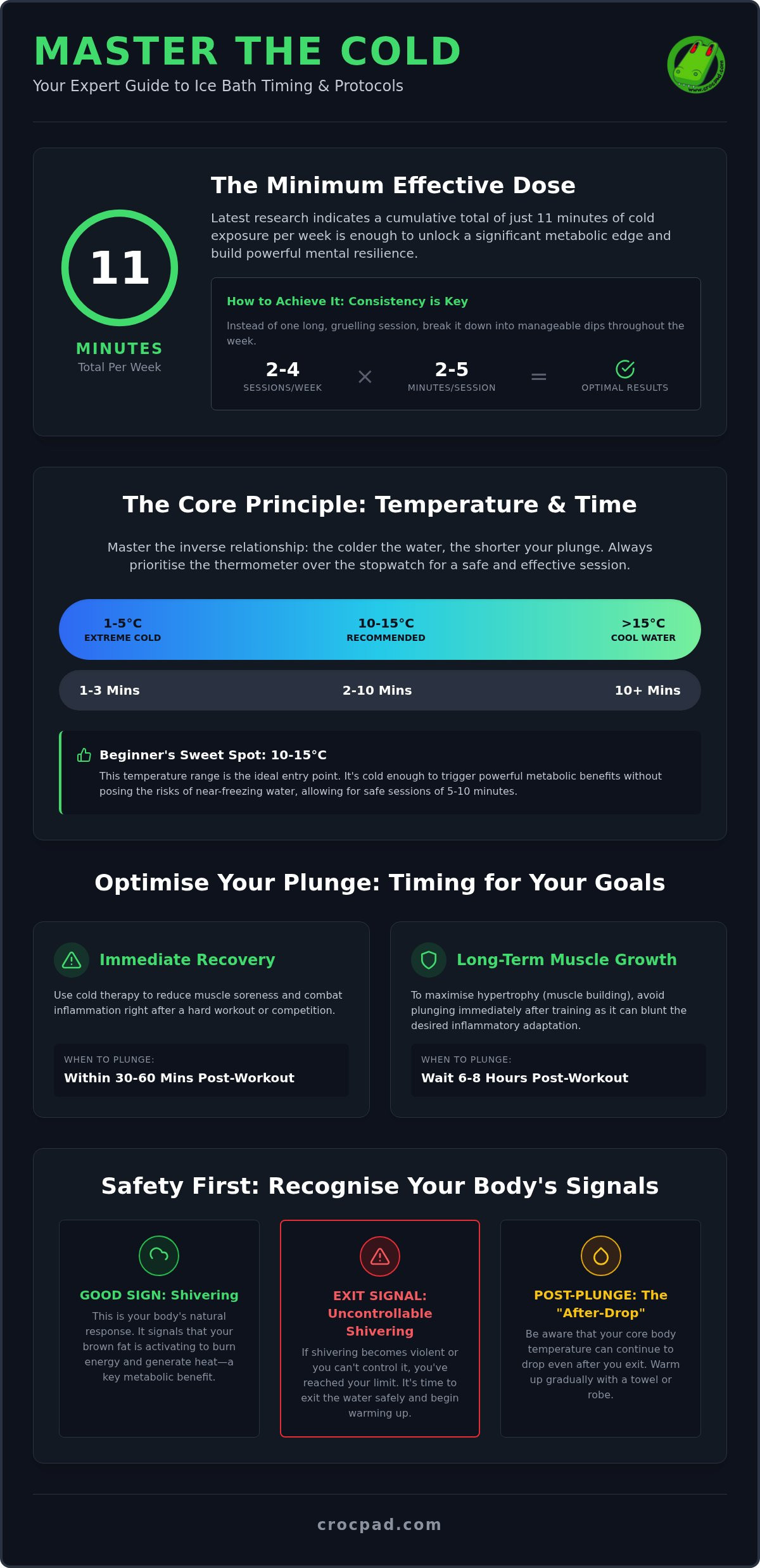
Current 2026 research, including protocols popularised by experts like Dr Andrew Huberman, points to a specific threshold for maximum metabolic health. You only need a total of 11 minutes of cold exposure per week to see significant results. Splitting this time into 2 to 4 sessions of roughly 3 minutes each is far more effective than one long, punishing soak. This cumulative approach at temperatures between 10°C and 15°C is the key to unlocking long-term metabolic benefits. Regularly hitting your 11-minute weekly target through multiple short sessions triggers a lasting increase in metabolic rate and improved insulin sensitivity. By using a Crocpad chiller, you can maintain these precise temperatures regardless of the Aussie summer heat, making it easier to stick to your schedule and see real results.
The Science of the Soak: How Time and Temperature Interact
Effective cold therapy relies on a simple, inverse rule: the colder the water, the shorter your stay. When determining how long to stay in ice bath sessions, always prioritise the thermometer over the stopwatch. Pushing through ten minutes in five-degree water isn't brave; it's potentially dangerous and counterproductive. Your body's "shivering response" is a fantastic indicator of metabolic activation, as it signals that your brown adipose tissue is burning energy to create heat. However, once shivering becomes uncontrollable, you've reached your physiological limit for that session. Recognising this threshold is the difference between a high-performance recovery and an unnecessary safety risk.
Your goals also dictate your timing. If you're chasing immediate relief from muscle soreness and inflammation, a 30 to 60-minute window post-workout is ideal. For those focused on long-term performance and metabolic "buzz," the focus shifts to cumulative weekly exposure. Regardless of your objective, consistency is the ultimate metric. Don't guess your recovery; measure it with precision to ensure every plunge delivers maximum results.
Temperature Zones and Their Time Limits
To help you structure your routine, we've broken down the three primary temperature zones used in 2026 recovery protocols:
- Zone 1: 10-15°C (The Beginner Zone): This is the perfect entry point for most Aussies. You can safely sustain 5 to 10-minute stays here while your body builds cold tolerance.
- Zone 2: 5-10°C (The Performance Zone): This is the sweet spot for experienced plungers. Sessions should be limited to 2 to 5 minutes to trigger significant hormonal and metabolic shifts.
- Zone 3: Below 5°C (The Pro Zone): This is extreme territory. Limit your exposure to a strict 1 to 2 minutes. The risk of tissue damage increases significantly beyond this point.
Why Precision Chillers Change the Game
Relying on bags of ice from the local servo is a recipe for frustration. "Ice melt" causes rapid temperature fluctuations, meaning the water at the start of your soak is much warmer than at the end. This makes it impossible to accurately calculate how long to stay in ice bath sessions for repeatable results. A Crocpad chiller solves this by maintaining a steady, digitised temperature throughout your entire plunge. By removing the guesswork, you can focus entirely on your breathing and mental resilience. If you're ready to standardise your recovery routine, explore our portable ice bath range to find the perfect fit for your backyard or balcony.
Finding Your Sweet Spot: Beginner to Advanced Ice Bath Protocols
Getting started with cold immersion shouldn't feel like a hazing ritual. Whether you are recovering from a heavy surf or a coastal trail run, the secret to success lies in a structured progression rather than raw endurance. Many beginners make the mistake of staying in until they go numb, but "toughing it out" is actually less effective than consistent, timed exposure. A simple stopwatch is your best friend here. It allows you to track your adaptation and answer the question of how long to stay in ice bath sessions without becoming obsessed with the clock. Using a dedicated Ice Bath Pod provides the focused, immersive environment you need to master your breath and stay disciplined with your protocol.
The Beginner Protocol: Weeks 1-4
Your first month is all about breaking the mental barrier and teaching your nervous system to stay calm under pressure. Follow this tiered roadmap to build a rock-solid foundation:
- Step 1: Start with just 30 to 60 seconds at a manageable 15°C. This is enough to trigger the initial shock response without overwhelming your system.
- Step 2: Focus entirely on controlled nasal breathing. Slow, deep breaths through the nose help lower your heart rate and signal to your brain that you are safe.
- Step 3: Gradually add 15 seconds to your time each session. Your goal is to reach a comfortable 3-minute soak by the end of week four.
Consistency during this phase is more important than the depth of the chill. Aim for three sessions per week to allow your body to adapt to the thermal stress.
The Advanced Recovery Protocol
Once you have mastered the basics, you can increase the intensity to chase maximum anti-inflammatory benefits. For advanced plungers, the sweet spot is typically 3 to 5 minutes at a crisp 8°C to 10°C. This is particularly effective when integrated into a 2026 fitness routine after high-intensity sessions or a long day on the footy field. To take it even further, try incorporating "active" movement. By gently moving your limbs, you break the thermal layer of warmer water that forms around your skin, making the soak feel significantly colder and forcing your body to work harder to maintain its core temperature. Always remember that even for the most seasoned athletes, knowing how long to stay in ice bath sessions means respecting the 15-minute hard limit to avoid the risk of hypothermia.
Safety First: Recognising Your Body’s Signals and Avoiding Risks
While chasing the energy buzz is exciting, your safety is the absolute priority. Mastering how long to stay in ice bath sessions requires a deep connection with your body's feedback loop. If you are pushing your limits or testing a new personal best, never plunge alone. Having a mate nearby provides a crucial safety net if the cold becomes overwhelming. You are training your nervous system, and that requires respect for the physiological power of the water.
Avoid the "Cold Shock Response" by entering the water with intention. Don't jump in. Step in slowly and focus on long, steady exhales. This prevents the gasp reflex and keeps your heart rate under control. You must also account for the "After-Drop" phenomenon. This occurs when your core temperature continues to fall even after you have exited the water, as cold blood from your extremities returns to your heart. It is the reason you might feel colder ten minutes after getting out than you did while submerged. Understanding this process helps you manage your recovery without panic.
Warning Signs to Watch For
Your body is incredibly vocal when it reaches its limit. Watch out for these critical red flags that signal it is time to end your session immediately:
- The "Claw": If you lose fine motor skills in your hands and find it difficult to grip the side of your pod, your nerves are significantly chilled.
- Persistent Shivering: While light shivering is a metabolic win, violent shivering that starts during the soak and doesn't stop upon exit is a clear sign of overexposure.
- Mental Fog: Experience any slurred speech or sudden confusion? Get out right away. These are early indicators of your core temperature dropping too low.
Post-Bath Recovery: The First 10 Minutes
How you warm up is just as important as the plunge itself. Resist the urge to jump into a hot shower immediately. The sudden heat can cause rapid vasodilation, leading to a drop in blood pressure and potential dizziness. Instead, use the "Horse Stance" or light calisthenics to generate natural heat from within. This encourages your body to finish the metabolic work it started in the ice. Dry off quickly, layer up with warm clothes, and let your internal furnace do the heavy lifting. This "Aussie way" of warming up ensures you retain the full benefits of the cold. To build your recovery space with gear designed for the rugged Australian climate, explore our ice bath tub range today.
Elevate Your Recovery with Crocpad Ice Baths and Chillers
Mastering your recovery requires more than just a timer; it requires a reliable environment where you can control every variable. Crocpad provides the ultimate hardware for Aussies who take their physical rejuvenation seriously. By moving away from the hassle of buying bags of ice, you can focus entirely on the mental game of the plunge. Our advanced chiller systems ensure that when you decide how long to stay in ice bath sessions, the temperature remains rock-solid from the first second to the last. This consistency is what transforms a simple cold dip into a high-performance recovery protocol. You don't want to be second-guessing the water temperature when you are trying to hit a specific therapeutic window.
Why Crocpad is the Choice for 2026
Our gear is engineered specifically for the harsh Australian climate. We use marine-grade materials that withstand the intense AU sun and coastal salt spray, ensuring your setup lasts for years without degrading. The structural integrity of our products means they can handle the demands of daily use, whether you are a weekend warrior or a professional athlete. The portability of the Ice Bath Pod means you can set up your recovery station anywhere from a city balcony to a beachside backyard. Our plug-and-play chiller system is a genuine game-changer for those who value their time. It eliminates the constant, expensive "ice run" to the local servo, making your daily or weekly protocol as easy as flicking a switch. You get precise temperature control at your fingertips, which is essential for following the 2026 protocols we've discussed.
Ready to Take the Plunge?
Deciding between the Ice Bath Pod and the full Ice Bath Tub depends on your space and goals. The Pod is the perfect, space-efficient choice for post-sport recovery on the go, fitting easily into smaller areas while still providing a deep, vertical soak. If you prefer a more expansive layout, the Tub offers an immersive experience that allows for full relaxation. Investing in a professional recovery station is an investment in your long-term health, longevity, and mental clarity. It turns a recovery chore into an aspirational lifestyle choice. Start small, stay consistent, and let our technology handle the logistics of the chill. You've already mastered the science of how long to stay in ice bath sessions; now it's time to own the experience. Explore the Crocpad Ice Bath collection here and start your journey toward a better recovery today.
Master Your Recovery Journey
Success in the cold isn't about enduring a single, painful marathon. It's about consistency and respecting the science of the soak. By sticking to the 11-minute weekly cumulative threshold and adjusting your time based on the temperature zone, you ensure every session delivers maximum metabolic and mental rewards. You've learned how long to stay in ice bath sessions to avoid risks like the after-drop while still triggering that essential energy buzz. Always listen to your body's signals and keep your sessions focused on efficiency rather than ego.
As a trusted Australian brand, Crocpad is here to support your goals with high-performance water chillers and durable portable designs that stand up to the AU sun. Our gear removes the guesswork, allowing you to standardise your protocol and see real, measurable results in your recovery. It's time to stop guessing and start plunging with precision.
Upgrade your recovery with a Crocpad Ice Bath and Chiller today
Take that first step into the water with confidence and enjoy the life-changing benefits of a professional-grade recovery routine. You've got this.
Frequently Asked Questions
How long should a beginner stay in an ice bath?
Beginners should aim for 1 to 3 minutes during their first few sessions. It is best to start with slightly warmer water, typically between 13°C and 16°C, to allow your body to adapt safely. Focus on your nasal breathing rather than the clock. Once you can comfortably handle three minutes, you can gradually lower the temperature. This progressive approach helps you understand how long to stay in ice bath sessions without overwhelming your nervous system.
Can I stay in an ice bath for 20 minutes?
You should never stay in an ice bath for 20 minutes as it significantly increases the risk of hypothermia and tissue damage. Expert protocols in 2026 strictly advise a hard limit of 15 minutes for even the most experienced athletes. Most of the metabolic and recovery benefits occur within the first 2 to 5 minutes. Pushing beyond the 15-minute mark is counterproductive and dangerous, so always set a timer and exit the water immediately.
How many times a week should I do an ice bath for best results?
For the best results, aim for 2 to 4 sessions per week. This frequency makes it easier to reach the science-backed target of total weekly cold exposure without needing to stay in for long, punishing periods. Spreading your plunges across the week is more effective for metabolic health than one long session. Consistency is the key to building long-term mental resilience, so find a rhythm that fits your training schedule and stick to it.
What is the best temperature for a 3-minute ice bath?
The ideal temperature for a 3-minute session is between 10°C and 15°C. This range is cold enough to trigger the "shivering response" and metabolic benefits without being unmanageable. If you are using a Crocpad chiller, you can set this temperature with precision to ensure your three minutes are as effective as possible. Always remember that the water should feel uncomfortably cold but never unbearable or painful during your recovery soak.
Is it better to do an ice bath before or after a workout?
It depends on your specific goals. Taking an ice bath 30 to 60 minutes after a workout is excellent for reducing inflammation and muscle soreness. However, if you are focused on muscle growth, wait 6 to 8 hours to avoid blunting the hypertrophy response. Some athletes also use a quick morning plunge before exercise to boost alertness and energy levels. Always align your timing with your primary training objective for that day.
How do I know if I have stayed in the cold water too long?
You will know you have stayed in too long if you experience a loss of fine motor skills or find it difficult to move your fingers. Other serious red flags include mental confusion, slurred speech, or violent shivering that continues long after you have dried off. These are signs that your core temperature has dropped too low. Mastering how long to stay in ice bath sessions means prioritising these physical signals over your stopwatch.
Do I need to put my head under during an ice bath?
You don't need to submerge your head to get the primary recovery benefits, but a quick dunk can trigger a stronger vagal response. If you choose to do this, wait until the end of your session and only stay under for a few seconds. Be mindful of the "Cold Shock Response," which can cause a sudden gasp reflex. For most users, keeping the water at shoulder level is perfectly sufficient for physical and mental rejuvenation.
Can I use a Crocpad chiller with any tub?
Our high-performance water chillers are designed for seamless integration with the Crocpad Ice Bath Tub and Ice Bath Pod to ensure maximum thermal efficiency. While they use standard fittings, using the full Crocpad system guarantees a durable and professional-grade recovery station. This setup is specifically engineered to handle the Aussie climate, providing reliable temperature control that maintains your chosen chill regardless of the external conditions or the intensity of the summer sun.


