

What if the ultimate secret to your fastest recovery isn't found in a warm bed, but in a tub of water so cold it makes your heart skip a beat? You have likely seen the viral videos of athletes plunging into frozen lakes and wondered if the hype is actually worth the risk. It is natural to feel a bit of trepidation when asking, are ice baths dangerous, especially with so much conflicting health advice floating around the internet. You want the benefits of reduced inflammation and a sharper mind, but the fear of cold shock or hypothermia is a real barrier to getting started.
This 2026 guide clears the confusion by breaking down the real physiological risks and showing you how to transform that icy shock into a controlled, rejuvenating experience right in your own backyard. We will explore the latest safety standards, including the July 2026 CMAHC cold water guidance, and provide a clear safety checklist to help you organise your routine. By the end of this article, you will have the confidence to step into your portable ice bath knowing exactly how to stay safe while reaping every high performance reward.
Key Takeaways
- Understand why people ask are ice baths dangerous by learning the difference between beneficial hormetic stress and genuine physical risks like the cold shock response.
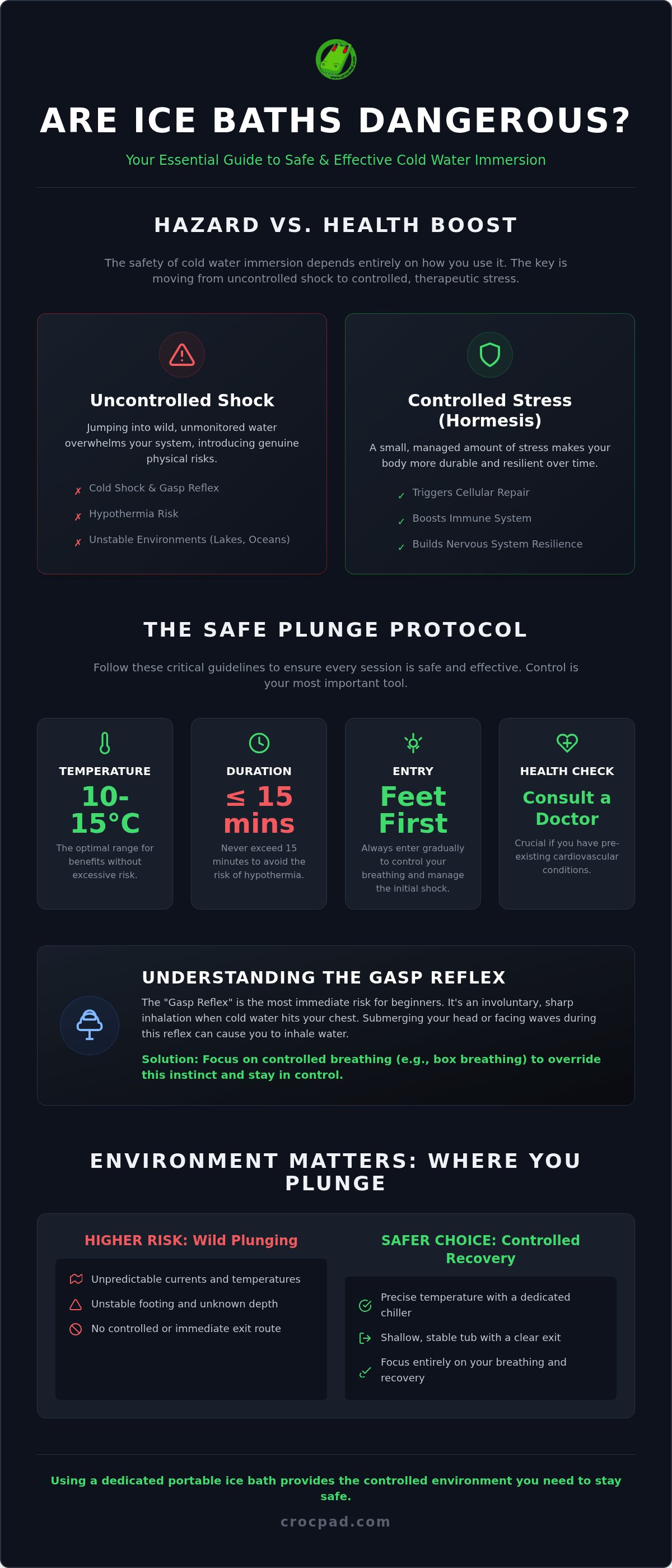
- Master the "Feet First" rule and keep your water between 10°C and 15°C to ensure your recovery session is both safe and effective.
- Identify critical health red flags and why consulting a doctor is essential if you have pre-existing cardiovascular conditions before starting cold therapy.
- Discover how using a dedicated chiller and a high-quality portable ice bath from Crocpad removes the guesswork and provides a controlled recovery environment.
- Learn why you should never exceed 15 minutes in the water and how to gradually build your tolerance to avoid the risk of hypothermia.
The Cold Hard Truth: Is Cold Water Immersion Actually Dangerous?
Cold water therapy has swept through Australia like a summer storm. Whether it's a sunrise dip at the local beach or a post-workout soak in a suburban garage, the practice is everywhere. This surge in popularity leads many to ask: are ice baths dangerous? The reality is that cold water immersion is a tool. Like any high-performance tool, its safety depends entirely on how you use it. Historically, these freezing plunges were reserved for elite athletes, but today, everyday Aussies are using them to tackle inflammation and stress. With the global cold plunge tub market estimated to reach up to $512.9 million in 2026, it is clear that more people are moving their recovery routines into their own homes.
The traditional Ice bath has moved from professional locker rooms into Aussie backyards. It's no longer just for the pros; it's for anyone wanting to boost their mental resilience and physical health. The secret to staying safe lies in moving from "shock" to "control." When you jump into water without a plan, you risk overwhelming your system. When you use a dedicated setup, you turn a potential hazard into a calculated health boost.
To better understand this concept, watch this helpful video:
Hormesis: When Stress Becomes a Strength
The primary reason we subject ourselves to the freeze is a biological process called hormesis. This is the idea that a small, controlled amount of stress actually makes your body more durable. Think of it like training at the gym; you tear muscle fibres to grow stronger ones. Your body reacts to the cold by triggering cellular repair mechanisms and boosting your immune system. Hormesis is a biological advantage where managed, brief exposure to a stressor triggers positive cellular repairs and long-term resilience. Over time, your nervous system adapts, which significantly reduces the perceived danger and physical strain of each session.
The Difference Between a Lake and a Tub
Location matters more than you might think. Many people start their journey by jumping into local dams or the ocean. While adventurous, these "wild" plunges carry higher risks because you cannot control the temperature, current, or depth. When people wonder are ice baths dangerous, they are often thinking about these unmonitored environments where you might struggle against a rip or find yourself without a stable footing to exit.
Using a contained portable ice bath or an Ice Bath Pod provides a much safer environment. These setups are shallow and stable, ensuring you always have a clear, immediate exit route. By choosing a dedicated recovery space, you eliminate the "ice cube guessing game" and focus entirely on your breathing and recovery. Control is the ultimate safety feature in cold water therapy.
The Science of Cold Shock: What Happens to Your Body?
The moment you break the surface of freezing water, your body undergoes a violent physiological shift. It isn't just a chilly feeling; it's an immediate survival response that every Aussie plunger must respect. This sudden drop in skin temperature triggers the Cold Shock Response. Your brain perceives an existential threat, causing your heart rate to skyrocket and your breathing to become erratic. When people ask, are ice baths dangerous, they are usually referring to this initial window where the body feels out of control. Understanding these mechanics is the first step toward mastering the plunge and turning fear into a performance edge.
Understanding the Gasp Reflex
The most immediate risk for a beginner is the "Gasp Reflex." This is an involuntary, sharp inhalation that happens the second the cold hits your chest. If your head is submerged or if a wave hits you during this reflex, you risk inhaling water into your lungs. This is why jumping into wild, deep water is significantly riskier than using a shallow portable ice bath. To override this autonomic response, focus on box breathing: inhale for four seconds, hold for four, exhale for four, and hold again. If you don't consciously regulate your air, the panic response will take over.
As you settle in, your body begins vasoconstriction. Your blood vessels tighten, pushing blood away from your limbs and toward your vital organs to maintain core temperature. This process causes a temporary but sharp spike in blood pressure. While this is a healthy workout for your vascular system in fit individuals, it is the primary reason those with heart conditions need to be cautious. Eventually, the Vagus nerve kicks in. By focusing on long, slow exhales, you can stimulate this nerve to lower your heart rate and bring a sense of profound calm to the chaos.
Cardiac Stress and Temperature Spikes
Your heart is the engine room during a cold plunge. It works overtime to pump blood through narrowed vessels while your metabolism ramps up to generate heat. During the first 30 seconds of immersion, your heart rate can increase by as much as 100 per cent as the body enters a state of hyperventilation and sympathetic nervous system arousal. This temporary stress is exactly what builds long-term resilience, provided it is managed within a safe environment. Keeping your sessions short ensures you stay within the benefit zone rather than the danger zone. Knowing are ice baths dangerous comes down to respecting these first thirty seconds and staying calm under pressure.
Who Should Skip the Dip? Essential Health Precautions
While cold therapy offers incredible rejuvenation, it isn't a "one size fits all" activity. For most healthy Aussies, a quick soak is a fantastic way to reset. However, if you're managing specific medical conditions, the question of are ice baths dangerous becomes much more serious. The key is knowing your own physical limits before you even touch the water. Unlike unpredictable wild plunges in open water, using a portable ice bath at home allows you to control every variable, but that control starts with a medical clearance.
Cardiac and Respiratory Contraindications
If you have a history of hypertension or cardiovascular disease, cold immersion requires extreme caution. The rapid vasoconstriction mentioned earlier puts an immediate load on your heart. For those with high blood pressure, this sudden spike can be risky. Similarly, those with chronic respiratory issues like asthma should be aware that the gasp reflex can trigger a tightening of the airways. Knowing are ice baths dangerous for your specific situation starts with a professional medical assessment. Book a session with your GP and get a clear green light before starting any cold water recovery programme.
Raynaud’s Disease and Circulation
People living with Raynaud’s disease experience an overreaction to cold temperatures, where small arteries that supply blood to the skin narrow excessively. This leads to significant pain, numbness, and even tissue damage in the fingers and toes. Because an ice bath is an extreme environment, it can trigger a severe episode. If your extremities turn white or blue in the cold, a full-body plunge is likely not for you. It's better to stick to standard recovery methods that don't involve extreme thermal stress.
Pregnancy and Cold Immersion
Expectant mothers often ask if they can continue their recovery routines. While you might be used to the chill, pregnancy is a time for stability. Extreme temperature shifts can cause significant stress to the body, and there's currently a lack of clinical data on how a foetus responds to the mother's cold shock. Most health professionals suggest a safety-first approach. Wait until the post-partum period to get back into the tub to ensure both you and your baby remain out of harm's way.
The Danger of Impairment
Mixing alcohol or drugs with cold water immersion is a recipe for disaster. Alcohol dilates blood vessels, which interferes with your body's natural ability to regulate core temperature. It also dulls your senses and slows your reaction time, making it impossible to accurately judge how long you've been in the water. Never use an ice bath while under the influence. Safety in the water requires a sharp mind and total focus on your breathing to manage the initial shock effectively.
The Safe Plunge Protocol: How to Organise Your Routine
Safety in cold water isn't about avoiding the chill; it's about replacing "shock" with "control." If you are still asking, are ice baths dangerous, the answer depends entirely on your protocol. A "cannonball" entry is a recipe for disaster because it triggers the gasp reflex with maximum intensity. Instead, use the "Feet First" rule. Step in slowly, allowing your lower body to signal the temperature change to your brain before you submerge your torso. For your first few sessions, always have a mate nearby to act as a "spotter." Having a partner ensures you exit the water safely if you feel lightheaded or overwhelmed during the initial adjustment phase.
Temperature and Timing Foundations
A common mistake for new plungers is thinking that colder is always better. For most Aussies starting out, a range of 10°C to 15°C is the sweet spot. This temperature is cold enough to trigger beneficial hormetic stress without the extreme risks of nerve damage. To get the best results, follow the 11-minute rule: aim for a total of 11 minutes of immersion spread across an entire week. This cumulative approach is much safer than trying to set a personal record in a single sitting. To maintain this precision, use a dedicated chiller system. This eliminates the "ice cube guessing game" and ensures your Portable ice bath stays at a consistent, safe level every single time.
The Warm-Up: Re-regulating After the Bath
The danger doesn't actually end the moment you step out of the tub. You must account for the "Afterdrop." This phenomenon occurs when cold blood from your extremities starts circulating back to your core, causing your internal temperature to continue falling for about 10 minutes after you have dried off. This is why you feel colder ten minutes after exiting than you did while in the water. To manage this safely, follow these steps:
- Avoid hot showers: Jumping straight into hot water can cause your blood vessels to dilate too quickly, potentially leading to a sudden drop in blood pressure or fainting.
- Use active rewarming: Dry off immediately and put on a warm jumper and socks.
- Get moving: Perform light movements like air squats or a brisk walk to encourage your body to generate its own heat naturally.
By following a structured routine, you turn a high-intensity activity into a manageable habit. Ready to take total control of your recovery? Browse our professional Ice Baths & Chillers to find the perfect setup for your backyard.
Controlled Recovery: Why Crocpad Ice Baths and Chillers Are the Safer Choice
Moving your recovery from a wild, unpredictable lake to a dedicated home system removes the biggest safety variable: lack of control. You no longer have to worry, are ice baths dangerous, because you have transformed a chaotic experience into a precise protocol. Crocpad provides a range of high-performance equipment, including the portable ice bath and the compact ice Bath Pod, designed specifically for those who take their physical rejuvenation seriously. By using a professional setup, you ensure that every session is consistent, effective, and within your personal safety limits. This shift from "surviving the cold" to "managing the cold" is what defines a successful recovery routine.
Precision Temperature Control
A dedicated chiller is the ultimate safety upgrade for any backyard setup. It eliminates the "ice cube guessing game" where you never quite know the actual temperature of your water. Instead of dumping bags of ice and hoping for the best, you set your desired level on the digital display. This prevents the water from reaching dangerously low temperatures that could lead to immediate shock or nerve damage. Having your water ready at a steady 12°C means you can step in with confidence, knowing the environment is exactly what your body expects. It is about convenience and safety working in tandem.
Built for the Aussie Lifestyle
Australian conditions are notoriously tough on outdoor gear. Cheap plastic tubs often crack or fade after a single summer in the harsh sun. Crocpad products are built with high-standard, durable materials that withstand intense UV exposure and demanding residential use. Whether you are setting up an Ice Bath Tub in your backyard, on a balcony, or even on the deck of your boat, you can trust the structural integrity of your equipment. This longevity ensures that your recovery space remains a safe, stable environment for years to come. Our designs are portable and easy to move, allowing you to plunge in a familiar setting where you feel most comfortable.
Stop guessing and start recovering with equipment designed for the bold. Check out our range of Ice Baths and Chillers here to find the perfect fit for your lifestyle. Taking control of your environment is the best way to answer the question, are ice baths dangerous, with a confident "not on my watch." High-performance recovery starts with high-performance gear that prioritises your safety as much as your results.
Take Control of Your Recovery Today
Mastering the chill is about more than just grit; it is about respecting your body's limits and using the right tools for the job. We have seen that while the question are ice baths dangerous is valid, the risks are easily managed through a structured "Feet First" protocol and a medical green light from your GP. By moving your sessions from unpredictable wild waters to a controlled home environment, you eliminate the guesswork and focus entirely on the high-performance benefits of cold therapy.
As an Australian-owned brand, Crocpad provides recovery gear designed specifically for local conditions. Our high-performance materials are built to last, ensuring your setup remains a reliable partner in your wellness journey. With expert support and precision temperature control, you can finally step into the water with total confidence. Invest in your recovery with a Crocpad Ice Bath and Chiller today and experience the difference that professional-grade equipment makes. It is time to turn that initial cold shock into your most powerful tool for rejuvenation and mental resilience. Step in, breathe deep, and start your journey toward a faster, stronger recovery today.
Frequently Asked Questions
Can you have a heart attack in an ice bath?
Yes, it is a genuine risk for individuals with pre-existing cardiovascular conditions. The immediate cold shock triggers a rapid surge in heart rate and blood pressure as your vessels constrict. While healthy individuals typically adapt well, this sudden stress can overwhelm a compromised heart. Always get a green light from your GP before starting, as asking are ice baths dangerous is essential for anyone with a history of heart issues.
What is the safest temperature for a beginner ice bath?
Beginners should aim for a temperature between 10°C and 15°C. This range is cold enough to trigger the beneficial hormetic response without putting excessive strain on your nervous system. Using a dedicated chiller with your ice Bath Pod allows you to set this precise level, removing the risk of accidentally making the water too cold. Start at 15°C and slowly lower the temperature as your body builds tolerance over several weeks of consistent practice.
How long is it safe to stay in an ice bath?
A single session should never exceed 15 minutes to avoid the risk of hypothermia or nerve damage. For those just starting out, one to five minutes is plenty of time to reap the primary recovery benefits. Your goal is to build resilience, not to endure a marathon soak. Follow the 11-minute rule mentioned earlier by spreading your total weekly immersion across several short, controlled sessions for the safest and most effective results.
Is it dangerous to do an ice bath every day?
Plunging daily is generally safe for healthy individuals, but it might not always be the best strategy for your specific fitness goals. If you are training for muscle growth, daily ice baths can actually blunt the inflammatory response needed for hypertrophy. It is often better to use them for mental resilience or on active recovery days. Always listen to your body and ensure you aren't using the cold to mask a more serious injury.
Should I do an ice bath alone?
You should avoid doing an ice bath alone, especially during your first few weeks of training. The initial cold shock can cause lightheadedness or a loss of coordination, making it difficult to exit the tub safely. Having a mate nearby to act as a "spotter" provides an extra layer of security if you experience an unexpected reaction. Once you are an experienced plunger and know your body's limits, you might feel comfortable alone.
What are the warning signs that I should get out of the water immediately?
Exit the water immediately if you experience slurred speech, extreme shivering, or a total loss of feeling in your hands and feet. These are clear indicators that your core temperature is dropping too fast or your nerves are being affected. Other red flags include intense dizziness or a feeling of overwhelming panic that you cannot calm through breathing. Your safety is the priority, so never try to push through these serious physical warning signs.
Can ice baths cause hypothermia?
Yes, prolonged exposure to freezing water can lead to hypothermia even in a backyard setting. This occurs when your body loses heat faster than it can produce it, causing your internal temperature to drop below 35°C. To prevent this, stick to the recommended 15-minute maximum and use a chiller to keep the water at a safe 10-15°C. Understanding that are ice baths dangerous only when misused helps you stay focused on safe, controlled recovery protocols.
Is it safe to ice bath after a heavy gym session?
It is safe and highly effective for reducing muscle soreness and systemic inflammation after a heavy workout. However, if your primary goal is building muscle mass, consider waiting at least four hours after your session. The cold can interfere with the natural muscle-building signals triggered by weight training. For endurance athletes or those in the middle of a heavy competition block, a post-gym plunge is a fantastic way to accelerate physical rejuvenation.

![How Long in an Ice Bath: Aussie Recovery Guide [2026]](http://www.crocpad.com.au/cdn/shop/articles/how-long-in-an-ice-bath-aussie-recovery-guide-2026.jpg?v=1788135795&width=480)


