

Marine-grade engineering isn't just a luxury for your summer gear; it's the only way to survive the brutal Australian sun and salt. You've likely seen the typical foam mat disintegrate into a mess of blue flakes after one season, leaving you with a bulky eyesore and a lighter wallet. Choosing the right lily pad float means looking beyond the bright colours to find structural integrity that withstands the harsh UV levels we face every day. You want gear that works as hard as you play, providing a stable platform for the kids to jump from while you relax with a cold drink.
We know that your time on the water is precious, and you don't want to spend it wrestling with oversized equipment or worrying about safety. Recent statistics showing a rise in drowning incidents underscore why choosing compliant, high-quality gear is vital for every family. This guide delivers everything you need to choose, use, and maintain the perfect lily pad float for the ultimate Australian water adventure. We'll explore the new 2026 aquatic toy safety standards to keep your kids protected and share the best ways to transport your mat without cluttering the boat. From setup to storage, discover how Crocpad gear transforms a standard lake day into a high-performance experience.
Key Takeaways
- Identify the core features of a high-buoyancy lily pad float and why this non-inflatable design is the superior choice for Australian lake and boat trips.
- Learn the science behind marine-grade XPE foam and how closed-cell technology prevents water absorption to keep your mat light and durable.
- Determine the perfect mat dimensions and weight capacity to suit your specific boat size and crew numbers.
- Implement professional maintenance routines, including fresh-water rinsing and proper rolling, to protect your investment from the harsh salt and sun.
- Align your gear choices with the 2026 Australian safety standards for total peace of mind during family water activities.
What is a Lily Pad Float and Why is it a Summer Staple?
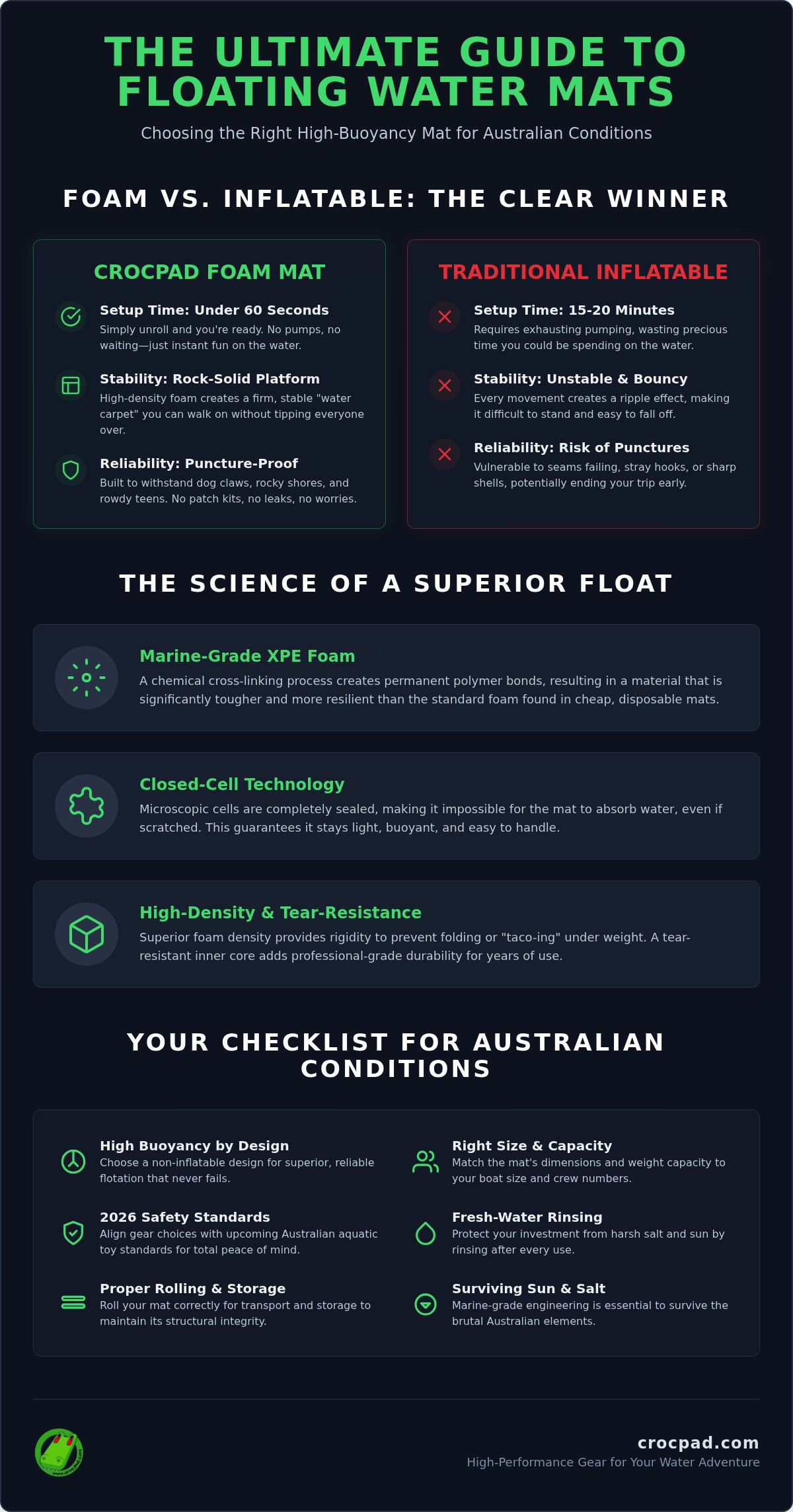
A lily pad float is essentially a high-buoyancy, non-inflatable foam mat designed to act as a stable "water carpet" on the surface. Unlike traditional pool toys, these mats are engineered from multiple layers of high-density foam that provide a flat platform for walking, lounging, or playing. Understanding What is a Lily Pad Float helps clarify why they have become the gold standard for marine recreation. They don't require pumps, batteries, or lung power to get started. You simply unroll the mat and watch it transform into a portable island. Whether you're anchored in a calm bay or tied up at a lake's edge, these mats provide a reliable, stable base for the whole crew to enjoy without the fear of sinking or tipping.
The Rise of the Floating Water Mat in Australia
Aussie boaties are increasingly ditching bulky inflatables in favour of foam for their summer adventures. Space on a boat is always at a premium; while a rolled-up mat takes up some room, it doesn't carry the risk of a catastrophic puncture in the middle of a weekend trip. These mats create an instant social hub on the water, effectively extending the usable deck space of your vessel by several metres. From the calm reaches of inland lakes to sandy coastal inlets, the Floating Water Mat has become a staple for those who take their leisure seriously. It's about creating a communal space where kids can burn off energy and adults can soak in the sun together, rather than being separated by individual tubes or small rings.
Inflatable vs. Foam: Which One Wins?
When you compare these two options, foam wins on durability and efficiency every single time. Inflatables are notorious for failing at the seams or falling victim to a stray fishing hook or a sharp shell. A high-quality lily pad float is puncture-resistant, meaning it can handle dog claws, rocky shores, and rowdy teenagers without ever losing buoyancy or needing a patch kit. It represents a professional-grade solution for an active outdoor lifestyle.
- Setup Time: You can unroll a foam mat and be in the water in under 60 seconds. Inflatables often require 15 to 20 minutes of exhausting pumping before they're firm enough to use.
- Stability: Walking on a foam mat feels like walking on a firm, floating carpet. On an inflatable, every movement from one person causes a bouncing effect that can easily send everyone else into the drink.
- Reliability: There are no valves to leak, no chambers to burst, and no mechanical pumps to fail. It's a "set and forget" investment that remains ready for action for years.
This rugged reliability makes foam the obvious choice for families who want to spend their time swimming rather than troubleshooting equipment. It's a durable alternative that withstands the rigours of the Australian environment while providing a safe, flat surface for all ages.
Decoding Marine-Grade Foam: What Makes a Quality Float Pad?
High-performance water gear starts with advanced material science. While bargain mats often use basic polyethylene that breaks down quickly, a premium lily pad float relies on Cross-Linked Polyethylene (XPE). This chemical cross-linking process creates a permanent bond between polymer chains, resulting in a material that is significantly tougher and more resilient than standard pool foam. It's the difference between a toy that lasts a month and a professional-grade platform that survives years of salt and sun. Adhering to quality standards for marine-grade foam ensures that the materials are both environmentally responsible and structurally sound for long-term flotation.
The "closed-cell" nature of XPE is your best defence against the elements. These microscopic cells are completely sealed off from one another, meaning the mat cannot absorb water even if the surface is scuffed or scratched. This ensures your gear stays light, buoyant, and easy to roll up at the end of a long day on the lake. If you want a mat that doesn't become a waterlogged, heavy mess, checking the foam density is non-negotiable.
The Science of Buoyancy and Tension
Density directly dictates how high your mat sits in the water. A low-density mat will "taco" or fold under the weight of a single adult, but high-density XPE provides the rigidity needed for a stable "water carpet" experience. Premium mats feature a tear-resistant inner layer, often called a "scrim," which acts as a hidden skeleton. This mesh reinforcement allows the mat to handle high tension and dynamic play without ripping at the tether points. It's this internal strength that allows the mat to support a large crew while remaining perfectly flat on the surface.
UV Protection: The Secret to Longevity
The Australian sun is notorious for degrading cheap plastics and foams in a matter of weeks. Without proper protection, foam becomes brittle and begins to shed "blue snow," which is both a mess and an environmental hazard. Premium mats integrate UV stabilisers directly into the foam matrix during the manufacturing process to block harmful radiation. Under the Consumer Goods (Aquatic Toys) Safety Standard 2026, premium marine foam must now meet rigorous durability criteria to ensure the material remains stable and safe during its entire lifecycle in the Australian sun. This chemical shield prevents the foam from crumbling and keeps the colours vibrant season after season. For gear that's built specifically to handle these harsh local conditions, explore the Floating Water Mat range and see the difference that marine-grade engineering makes.
Choosing the Right Size and Capacity for Your Crew
Selecting the perfect lily pad float requires more than just eyeballing the largest option available. You need to balance the number of people in your crew with the physical storage limits of your vessel. A mat that’s too large for your boat becomes a transport nightmare; one that’s too small for your group leads to a crowded, sinking experience. Size matters when you're trying to organise a seamless day on the water, so measure your deck space before making a final decision.
Understanding weight limits is the first step toward a safe day out. Manufacturers often list a "static load," which refers to the maximum weight the mat can support when everyone is lying perfectly still. However, "dynamic play" is what actually happens when kids are jumping, running, and wrestling. For active groups, always choose a mat with a higher buoyancy rating to ensure the surface stays above the water line during high-energy movement. Stability also comes down to thickness. A 3.3cm mat provides excellent portability, while a 3.5cm variant offers that extra bit of rigidity required for adult-heavy groups to stand without the foam bowing.
Small vs. Large: Finding the Sweet Spot
The 2.7m "Compact" mat is a game-changer for couples or owners of small jet boats and bowriders. It offers enough surface area for two adults to lounge comfortably without overwhelming your deck space when rolled up. For those with pontoon boats or larger crews, the 5.5m "Family" mat is the industry standard. It provides a massive footprint that can accommodate multiple families simultaneously. If you're planning to host a major event, some crews even link multiple mats together to create a literal floating island that serves as the ultimate offshore basecamp.
Activity-Based Selection Guide
Your choice should reflect how you actually spend your time on the water. If your primary focus is keeping the kids entertained, look for mats with high-visibility colours and a soft, non-slip texture to ensure safety and easy supervision. For those who prefer a dry-top experience for sunbathing, prioritising that extra thickness is essential to keep the water from washing over the edges. It keeps your towel dry and your relaxation uninterrupted.
If your summer plans involve socialising and entertaining, the Beer Pong Floating Mat is a must-have addition. It takes the standard "water carpet" concept and adds a competitive edge, making it the centrepiece of any bay party. Match your gear to your lifestyle to ensure every lake day is a high-performance success. For the best range of durable options, check out the Floating Water Mat collections designed for Australian conditions.
Maximising Durability: Caring for Your Mat in Australian Conditions
High-performance gear requires consistent maintenance to survive the brutal Australian elements. Salt and UV radiation are the primary enemies of any lily pad float; neglecting post-trip care is the fastest way to ruin your investment. A thorough fresh-water rinse after every ocean session is non-negotiable. Salt crystals dry and become abrasive, acting like sandpaper against the foam cells. Hose the entire surface down on your lawn or boat deck before you even think about rolling it up for storage.
Proper rolling technique is just as vital as cleaning. Always roll the mat with the top side facing out to prevent "permanent curl" memory, which makes the mat difficult to flatten on your next outing. Secure it with the provided straps and store it in a cool, shaded spot. Leaving your mat in the direct afternoon sun for weeks on end will eventually warp the material and fade the vibrant colours, regardless of the foam's quality. Protect your gear and ensure it's ready for the next trip by choosing a Floating Water Mat designed specifically for our local climate.
Cleaning and Mould Prevention
Stick to mild detergents and soft brushes when cleaning your mat. Harsh chemicals or bleach can strip away the UV-stabilisers and damage the structural integrity of the XPE layers. If you've been exploring inland rivers or lakes, remove any organic debris, mud, or slime immediately to prevent staining. Mould is a persistent threat in humid environments, so the mat must be bone-dry before you pack it away. Moisture trapped inside a rolled mat is an invitation for fungal growth that's nearly impossible to remove once it takes hold.
Safe Anchoring in Open Water
Use the integrated heavy-duty tether system rather than improvising with standard ropes. Bungee anchors are the professional choice because they absorb the energy from surface chop, preventing the tether point from ripping through the foam under tension. Boaties must maintain a strict safety distance of at least 5 metres from the propeller to avoid catastrophic damage or injury. The ideal anchor point for a 5-metre mat in a light breeze is the central tethering grommet, which allows the mat to pivot naturally without placing uneven stress on the foam corners.
Ready to upgrade your boat days with gear that actually lasts? Explore the range of high-density Floating Water Mats at Crocpad and experience the difference of marine-grade engineering.
Why the Crocpad Floating Water Mat is the Ultimate Choice
Being an Australian-owned brand isn't just a label; it's a commitment to engineering gear that survives the world's harshest recreational environment. Every Crocpad lily pad float is the result of years spent on local waterways, testing materials against intense UV levels and high-salinity coastal conditions. We don't just sell water mats; we provide the foundation for your family’s most memorable summer moments. Our focus on high-density, marine-grade XPE foam ensures that your platform remains stable and buoyant, even when the whole crew decides to jump on at once. This professional-grade approach to leisure is what sets our gear apart from generic alternatives found in big-box stores.
Portability is a cornerstone of the active Aussie lifestyle. We understand that your gear needs to be as mobile as you are, whether you're heading to a remote lake or a popular coastal inlet. Our mats are designed to roll tightly and secure easily, fitting onto boat decks or roof racks without the struggle associated with inferior, stiffer foams. As your reliable adventure expert, we ensure that every product meets rigorous standards for both performance and longevity, giving you total peace of mind every time you hit the water.
Superior Design Features
Safety is at the core of our design philosophy. Our high-visibility colour schemes aren't just for aesthetics; they ensure boaties and jet-skiers can spot your group from a distance on busy waterways. The integrated tethering systems are built to hold, using reinforced grommets that won't pull through the foam when the tide changes or the wind picks up. Despite this ruggedness, the soft-touch surface remains comfortable against the skin. It resists the extreme heat absorption that makes cheaper, darker mats unbearable to touch during the peak of a summer afternoon.
The Complete Crocpad Ecosystem
Your water adventure doesn't have to stop at a single mat. We've built a range of products that work together to enhance your time on the lake or bay. For families who never leave their four-legged members behind, pairing your mat with Inflatable Dog Ramps ensures pet safety and easy access for every member of the pack. If you're looking to turn your anchored spot into the ultimate social hub, adding the Beer Pong Floating Mat brings a competitive edge to your afternoon. We balance playful excitement with a professional, safety-conscious undertone to ensure your recovery and recreation are handled with the highest standards.
Upgrade your summer and shop the Crocpad range today!
Ready to Own the Water This Summer?
Investing in a premium lily pad float is about more than just buying a pool toy; it's about securing a durable, high-performance platform for your family’s safety and joy. We’ve explored the critical importance of Marine-Grade XPE Foam and why choosing gear Designed for Harsh UV Conditions is the only way to survive the Australian sun. By matching the right size to your crew and committing to simple maintenance like fresh-water rinsing, you ensure your investment remains a summer staple for years to come.
As an Australian Owned & Operated specialist, we understand exactly what it takes to build gear that handles our unique local waterways. Whether you're tied up at a quiet lake or anchored in a busy bay, you deserve equipment that works as hard as you play. Don't settle for flimsy alternatives that end up as landfill after one season. Take the first step toward a superior water experience and Explore the Crocpad Floating Water Mat Collection today. We'll see you out there for a summer of high-energy adventure and ultimate relaxation.
Frequently Asked Questions
How much weight can a standard lily pad float hold?
A high-quality lily pad float is engineered to support significant weight, often accommodating multiple adults and children simultaneously. The specific capacity depends on the mat's dimensions and the density of the foam layers. For example, a 5.5-metre mat is designed to handle a large family crew during active play. Always check the manufacturer’s static load rating to ensure the platform remains buoyant and stable while your group is lounging or moving around.
Can I tow my floating water mat behind a boat?
You should never tow a foam water mat behind a boat while it is in motion or under power. These mats are designed for stationary use as a floating island or water carpet when anchored in calm bays. Towing creates extreme hydraulic pressure that can tear the foam layers or pull the tethering system right out of the mat. Always roll up and secure your gear on the deck before moving locations.
Is a foam lily pad better than an inflatable water mat?
Foam mats offer superior reliability because they are puncture-resistant and require zero setup time. Unlike inflatables, a foam lily pad float won't deflate if it hits a stray fishing hook or a sharp shell. You simply unroll it and start swimming immediately. While inflatables are more compact when deflated, the "set and forget" nature of marine-grade XPE foam makes it the preferred choice for boat owners who value durability.
How do I store a large floating mat if I have limited space?
The most efficient way to store a large mat is to roll it as tightly as possible and secure it with heavy-duty straps. Many boaties store their mats vertically in a garage corner or along the gunnels of their boat to save floor space. Ensure the mat is bone-dry before rolling it up to prevent mould growth. Using a dedicated storage bag can also help keep the roll compact and protected from dust.
Will the saltwater ruin the foam over time?
Saltwater won't ruin high-quality XPE foam immediately, but salt crystals can become abrasive if left to dry on the surface. These crystals can eventually wear down the foam cells and dull the vibrant finish. To maximise longevity, always give your mat a thorough fresh-water rinse after every ocean session. This simple step removes salt and sand, protecting the structural integrity and ensuring the mat remains soft and comfortable for many seasons.
What is the best way to clean bird droppings off the mat?
Use a mild dish soap and a soft-bristled brush to gently scrub away bird droppings or organic stains from lakes and rivers. Avoid using high-pressure washers or harsh chemical cleaners, as these can damage the UV-protective coating and the foam's surface texture. If the stain is stubborn, let the soapy water sit for a few minutes before rinsing it off with a garden hose. Regular cleaning prevents permanent discolouration.
Are lily pad floats safe for dogs to use?
High-density foam mats are excellent for pets because they are resistant to punctures from claws. Dogs love having a stable platform to rest on between swims, and the textured surface provides decent grip for their paws. For the best experience, pair your mat with an inflatable dog ramp to help your pup climb back on safely. This setup protects your dog's joints and ensures the whole pack can enjoy the water.
How do I prevent the mat from blowing away in the wind?
Always utilise the integrated tethering system to anchor your mat to your boat or a weighted anchor bag. Bungee tethers are particularly effective because they absorb the shock from wind gusts and surface chop, preventing the mat from drifting or putting too much strain on the grommets. If you are in a high-wind area, consider anchoring from multiple points or rolling the mat up if the conditions become too rough for safe use.
![How Long in an Ice Bath: Aussie Recovery Guide [2026]](http://www.crocpad.com.au/cdn/shop/articles/how-long-in-an-ice-bath-aussie-recovery-guide-2026.jpg?v=1788135795&width=480)


