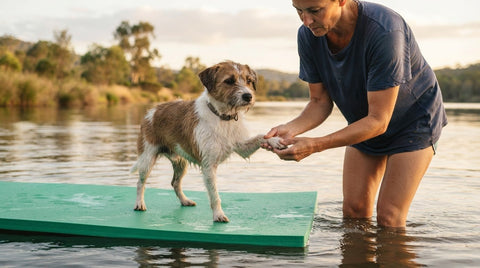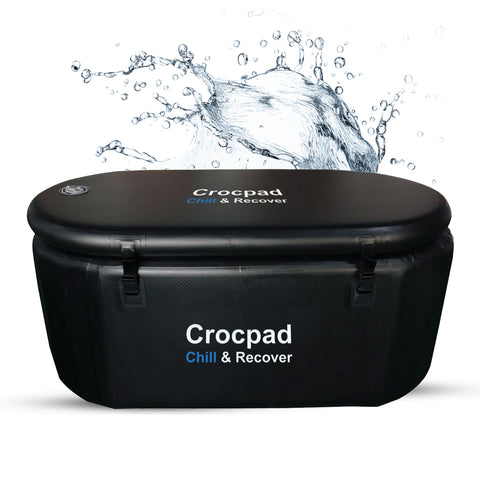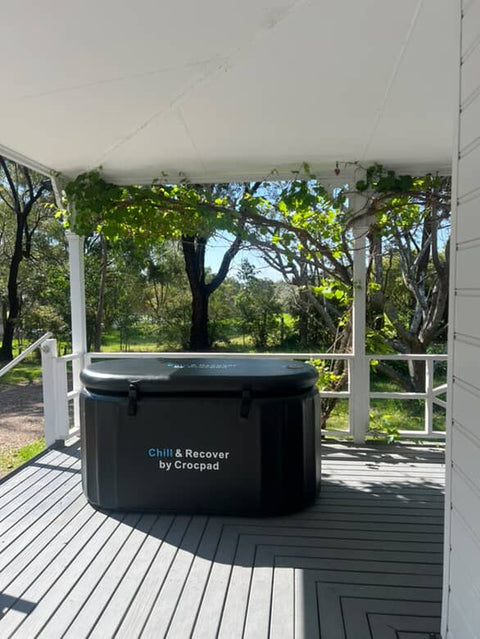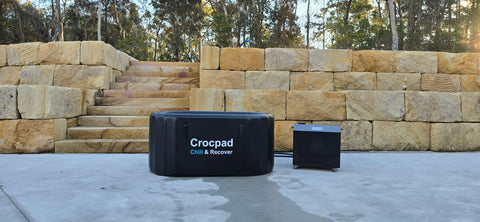
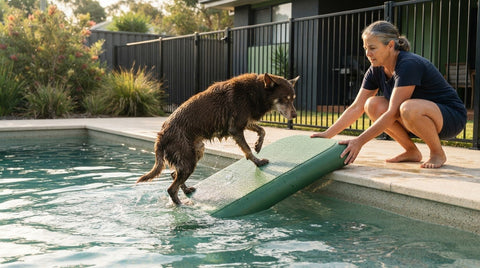
A ramp isn’t essential for every dog, but it can offer a more manageable way out when your pet can’t confidently climb the pool wall. A claw-resistant drop-stitch dog pool exit is worth considering if your dog needs a stable route from the water to the deck, particularly when the pool edge is high or your dog tires easily. In New South Wales, the Swimming Pools Act 1992 governs pool barriers, fencing and registration; AS 1926.1 is the Australian Standard for swimming pool safety barriers and gates. A pet ramp doesn’t replace a compliant pool fence or active supervision.
It makes sense to want pool time to be fun without leaving your dog struggling to get out. The right exit depends on your dog’s size and confidence, the pool’s edge and surface, and the water and weather conditions the ramp will face.
This guide explains when a ramp may help and how to choose one for a concrete, tiled or other pool surround. You’ll also learn what to consider about claw resistance, salt or mineral water, load capacity, positioning and securing the ramp, so you can make a practical choice for your pool and pet.
Key Takeaways
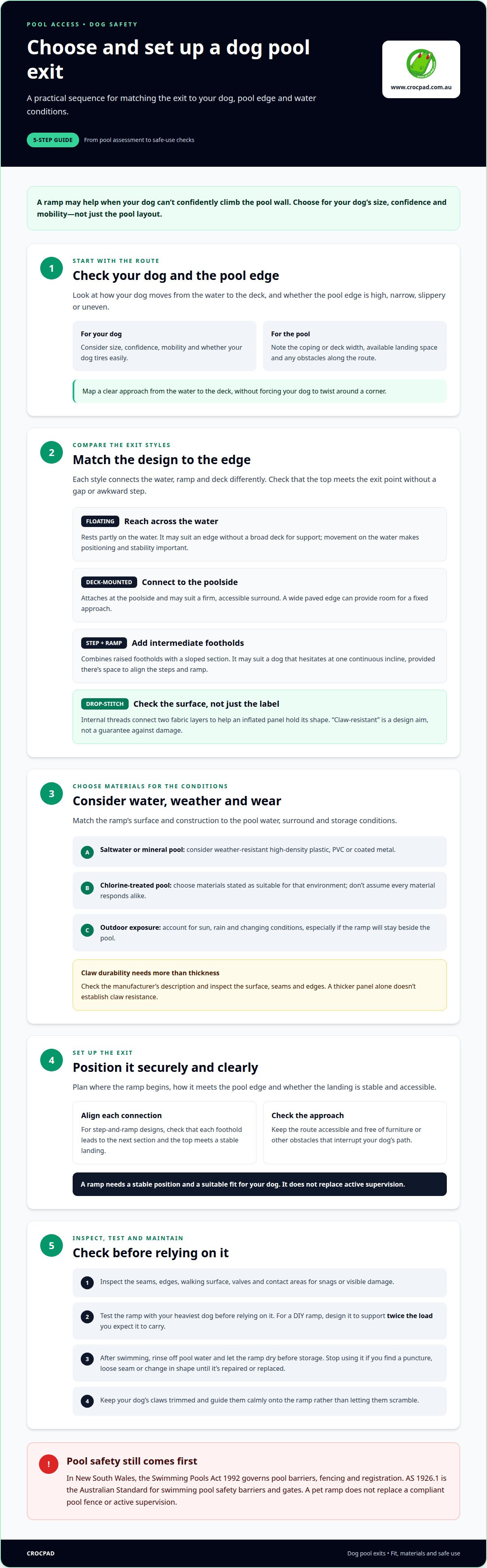
- Choose ramp materials with your pool’s water type and exposure to the elements in mind; weather-resistant options include high-density plastic, PVC and coated metal.
- Compare floating, deck-mounted and step-and-ramp designs against your pool’s edge and the space available for access.
- Match the ramp’s approach and support to your dog’s size, confidence and mobility, not just the pool layout.
- Plan how the exit will be positioned and secured so it stays stable and accessible during use.
- Test the ramp with your heaviest dog before relying on it; if you build one yourself, design it to support twice the load you expect it to carry.
Chlorine-, salt-, and weather-resistant materials
Pool water and outdoor exposure both affect material choice. Match the ramp’s surface and construction to the water type, pool surround and storage conditions.
Puncture-Resistant Drop-Stitch Construction
Some dog ramps use drop-stitch construction, in which internal threads connect two fabric layers to help an inflated panel hold its shape. This doesn’t mean claws can never damage the surface. For a claw-resistant, drop-stitch dog pool exit, look for clear material details and inspect the seams, edges and walking surface before use.
Thickness and Claw Durability
Thickness alone doesn’t establish claw durability. A thicker panel may feel firm, but the surface material, seams and construction also affect how it handles repeated contact. Check the manufacturer’s description of claw resistance, then look for snags or visible damage. Keep your dog’s claws trimmed and guide them calmly onto the ramp rather than letting them scramble.
For saltwater or mineral pools, consider materials suited to those conditions, such as high-density plastic, PVC or coated metal. Chlorine-treated water also makes material suitability important. Choose a ramp whose stated use includes your pool environment rather than assuming every material responds alike.
Consider exposure beyond the waterline, too. Australian sun, rain and changing outdoor conditions can affect equipment left beside a pool. Decide whether the ramp will stay outside or be stored between swims. A removable design can be rinsed and dried after use; a ramp that stays in place needs materials suited to ongoing exposure.
After a swim, rinse off pool water and let the ramp dry before storing it. This helps remove salt or chemical residue. Check the seams, valves and contact areas at the same time. If you notice a puncture, loose seam or change in shape, stop using the ramp until it’s repaired or replaced.
- For a saltwater or mineral pool: favour weather-resistant high-density plastic, PVC or coated metal.
- For a chlorine-treated pool: choose materials described as suitable for that environment, and rinse after use.
- For outdoor storage: consider exposure to sun and rain, and dry the ramp before putting it away.
Material is only one part of safe pool access. The ramp also needs a stable position and a suitable fit for your dog. Treat “puncture-resistant” as a design feature, not a guarantee against every claw, sharp edge or rough landing.
Floating, deck-mounted, and step-and-ramp pet pool exits
A claw-resistant, drop-stitch dog pool exit is an inflatable ramp that gives a dog a sloped route from the water to the pool edge. Floating, deck-mounted, and step-and-ramp designs connect that route to the pool in different ways. The right style depends on the pool edge and available deck space.
Floating and Deck-Mounted Exits
A floating exit rests partly on the water, while a deck-mounted exit connects to the poolside. A floating design may suit an edge without a broad deck for support, but movement on the water makes placement and stability important. A deck-mounted style provides a fixed approach from the edge and may suit a firm, accessible pool surround.
At a pool with a narrow coping ledge, a floating exit may provide a longer approach than a short deck attachment. At a wide paved edge, a deck-mounted option may better match the route your dog already uses. In either case, the top of the ramp should meet the exit point without a gap or awkward step.
Step-and-Ramp Exit Designs
A step-and-ramp exit combines raised footholds with a sloped section leading towards the pool deck. This can offer a gradual transition for dogs that hesitate at a continuous incline or need distinct places to reposition their paws. The poolside also needs enough space to align the steps and ramp.
Imagine your dog approaching from the water, pausing at each foothold and then climbing the slope. That sequence may feel clearer than one long surface, but it creates more points where alignment matters. Check that each step leads to the next section and that the top meets a stable landing, not a slippery or uneven edge.
Claw-Resistant Drop-Stitch Ramps
A claw-resistant, drop-stitch ramp is an inflatable exit with drop-stitch construction and a surface designed to better withstand contact from dog claws. It provides a shaped route without relying on rigid steps, which may suit a pool layout where an inflatable approach works. The term describes a design aim, not immunity from damage.
Choose based on the connection between the water, ramp and deck. A floating style prioritises reach across the water; a deck-mounted style prioritises a firm poolside connection; and a step-and-ramp style adds intermediate footholds. A dog that struggles with a continuous slope may benefit from considering steps, while limited deck space may favour another layout.
Before choosing a style, map your dog’s route from the water to the deck. Note where the ramp begins, how it meets the pool edge and whether furniture or other obstacles block the landing. This helps you judge whether your dog can approach and leave without twisting around a corner.
Explore pool recreation gear if you’re comparing inflatable options for water access. Keep the choice focused on your dog’s approach and the pool’s edge; no ramp design removes the need for active supervision.
Matching a ramp to pool type, pet size, and mobility
Start with the pool’s entry point, then match the ramp’s approach to your dog’s movement. An in-ground pool with raised coping presents a different route from an above-ground pool, where the side wall can limit access. The ramp needs to connect the water to a stable landing without forcing your dog to turn sharply or stretch across a gap.
For a tiled or smooth pool surround, consider where your dog’s paws will land. A dog climbing from the water needs room to move off the ramp without stepping straight onto a slick, narrow strip. A broad deck offers more room to turn, while a tight poolside area may require a more direct approach. Keep the landing clear of loungers, steps and garden equipment.
Your dog’s build matters as much as the pool layout. A small, short-legged dog may find a steep incline harder to manage than a gradual route. A larger dog needs enough width to place its paws comfortably and adjust its footing. Compare the usable ramp surface with your dog’s shoulder width and natural stance, rather than judging by overall length alone.
Mobility matters, too. A senior dog, a dog returning to activity or a pet that hesitates around water may need a gentler approach. Observe how your dog moves on dry ground: does it climb steps confidently or prefer a continuous slope? A step-and-ramp design may suit a dog that pauses between movements, while a steady incline may be simpler for a dog that walks smoothly.
Match the design to the dog and pool together, not to one feature in isolation. A confident, large dog at a wide in-ground pool has different access needs from a small dog approaching an above-ground pool. The pool edge determines where the ramp can sit; your dog’s stride and confidence determine whether that route feels manageable.
- In-ground pool: assess the coping height and the deck space available for a clear landing.
- Above-ground pool: focus on how the exit reaches the pool edge without an awkward turn or unsupported gap.
- Small or less mobile dog: favour a manageable incline and enough surface for deliberate paw placement.
- Larger dog: consider usable width and whether the approach allows steady movement.
Before choosing, observe your dog approaching the pool from the water’s edge under supervision. Note whether it favours a slope, pauses at transitions or needs room to turn. This practical check can help you choose an exit your dog can approach naturally, rather than one that merely fits the pool dimensions.
Ramp installation, anchoring, and flotation
Set up the exit so the water end and poolside landing form one clear route. Before inflating or positioning it, identify the entry point, nearby obstacles and any movement caused by water or wind. If the ramp shifts away from the edge, it can leave a gap where your dog expects a step.
Follow the ramp’s inflation and setup instructions, then place it in position. Check that the surface meets the pool edge without folding, bunching or sitting at an abrupt angle. If the coping slopes, for example, reposition the ramp until its upper end rests evenly and the approach is straight.
Anchoring can limit unwanted movement, but the attachment method must suit the ramp and pool layout. Use only the purpose-designed attachment points and compatible anchors specified for the ramp. Don’t improvise by tying it to a pool fence, gate or nearby furniture, which may move or serve a separate safety purpose.
- Clear the route: move furniture and loose pool toys away from the ramp’s landing.
- Check the edge: align the ramp with a firm section of coping or deck.
- Secure as directed: use the ramp’s intended anchor points and suitable attachments.
- Test the position: observe whether water movement shifts the ramp before your dog approaches.
Flotation affects how an inflatable exit sits in the water. The ramp should stay supported along its intended approach rather than dipping sharply or rolling as the water moves. Observe it from the side after setup. If the top lifts away from the deck or the water end drifts across the pool, reposition and secure it before use.
Pool equipment can affect water movement. A return jet near the ramp, for example, may push a floating section sideways. Where possible, choose a position away from direct flow and watch the ramp after circulation starts. Wind can also move a floating exit, so reassess its alignment when conditions change.
Make the first trial a supervised check, and don’t rely on the ramp as your dog’s only way out. Apply gentle pressure to the surface and watch for shifting, twisting or a loose connection. Then guide your dog towards the entrance at a calm pace. Stop if the ramp moves, the landing lifts or your dog can’t approach comfortably.
After use, detach the ramp as instructed, rinse off pool water and let it dry before storage. Check the attachment points, valves and seams for visible wear. A secure setup depends on the ramp’s condition as well as its position, so don’t return damaged equipment to the pool.
Ramp weight capacity and stability
Check the ramp’s stated capacity against your dog’s weight, then assess movement, footing and the poolside connection. Before relying on it, load-test it with your heaviest dog and watch for tipping, slipping, sagging or gaps at the edge.
Weight Capacity
Weight capacity is the load a ramp is designed to support while remaining usable. It matters because a ramp that flexes or sinks under your dog can make climbing harder and unsettle their footing.
Use the manufacturer’s stated capacity as your starting point and compare it with your heaviest dog, not the smallest pet in the household. A dog’s weight shifts as it climbs, so a static figure alone doesn’t show how the ramp behaves in use. Observe the surface under your dog’s movement during a supervised trial.
For a DIY ramp, build it to hold twice the load you expect it to support. That margin addresses the demands of a moving dog, rather than treating the animal as a stationary load. If several dogs share the pool, assess capacity against the heaviest individual animal and prevent simultaneous use unless the design supports it.
Ramp Stability
Ramp stability describes how well the exit stays supported and aligned as a dog steps onto it. It matters because shifting, rolling or an unstable landing can interrupt the route from water to deck.
During a supervised test, watch the ramp from the side and at the pool edge. Look for a sudden dip beneath a paw, sideways drift, twisting or an upper end that lifts from its landing. A ramp can feel firm when empty yet move when a dog climbs, so assess it under the intended load.
Check the approach and exit surface for slipping risks, too. Wet paws, smooth tiles and a narrow landing can make a stable ramp harder to use. Keep the landing clear, align the ramp with the pool edge and stop the trial if your dog struggles to place its paws or the equipment shifts.
Before each swim, make these practical checks:
- Capacity: compare the stated load with your heaviest dog.
- Support: look for sagging, rolling or an uneven approach under load.
- Connection: check that the ramp stays aligned with the pool edge.
- Condition: inspect for visible damage that could affect support.
- Use: supervise your dog and stop if the ramp moves or footing becomes uncertain.
A load test helps reveal how a ramp behaves, but it doesn’t replace active supervision. Keep your dog within reach during pool use, and don’t rely on an unstable exit. Crocpad’s Inflatable Dog Ramps are another option to consider when assessing pool access for your dog.
Crocpad
Crocpad is a natural next step as you plan a safer, more enjoyable pool setup for your dog and family. Once you’ve assessed your pet’s exit needs, explore Crocpad’s recreational water range, including the Floating Water Mat, Minima Pool Slide, Megalo 3M Inflatable Water Pool Slide, and Ice Baths & Chillers. These products suit different kinds of poolside recreation, so consider how each fits your space and the way you use your pool. For your dog’s exit, keep the focus on a ramp that suits your pool, your pet’s mobility and the support it needs. Contact Crocpad to discuss your pool recreation needs and explore the available options.
Make the next swim a confident one
Choose an exit based on how your dog approaches the water, not just the pool’s shape. A calm, supervised introduction gives your pet a chance to get familiar with the route before relying on it during a swim. Keep the first practice session relaxed and let your dog set a comfortable pace.
A claw-resistant, drop-stitch dog pool exit can be one part of a more considered pool setup, alongside active supervision and a compliant barrier. If you’re weighing up options for your space and pet, ask Crocpad about pool exits.
A suitable approach and steady practice can help make pool time more enjoyable for your dog.
Frequently Asked Questions
Do dogs really need a ramp to get out of a swimming pool?
Not every dog needs a ramp, but one can help if your pet can’t confidently climb out of the pool. A senior dog, a short-legged breed or a dog that tires quickly may struggle to find a way out, even if it enters the water easily. Supervise your dog and keep the ramp accessible. A pet exit ramp never replaces a compliant pool fence.
What weight capacity and dog sizes are supported by dog pool exit ramps?
Capacity depends on the ramp model, so match its stated limit to your dog’s weight. Crocpad’s dog ramp comes in size M, which supports up to 45 kg, and size L, which supports up to 65 kg. Size M measures 120 × 80 × 15 cm; size L measures 150 × 100 × 15 cm. Test the ramp with your heaviest dog before relying on it.
Which dog pool ramps have non-slip surfaces and secure pool attachments?
Look for a ramp that identifies its walking-surface material and explains how it attaches to the poolside. Crocpad’s dog ramp uses drop-stitch technology for rigidity and a claw-resistant pad material. Align the exit with a clear landing and use only the attachment points and securing methods intended for the ramp. Supervise your dog and stop use if the ramp shifts or footing becomes uncertain.