

What if the only thing standing between your best weekend ever and a $1,500 phone repair bill is a single faulty seam? When you are out on the boat or relaxing on a floating mat, the Australian sun and salt are absolutely relentless on your gear. You need high-performance waterproof bags that act as a marine-grade vault for your digital life.
We have all been there; you buy a cheap dry bag only to find it leaking at the seams or discover the zipper has corroded shut after one salty afternoon. It is exhausting to constantly check if your gear is overheating or worry about a bag slipping overboard. This guide will help you choose the perfect waterproof bag to keep your valuables bone-dry during your next adventure. We will explore everything from IP67 ratings to sun-resistant materials, ensuring you have total peace of mind while enjoying the water with Crocpad gear. It is time to organise your storage and protect your investment for many summer seasons to come.
Key Takeaways
- Master the essentials of marine protection to shield your gear from the harsh combination of fine sand, corrosive salt spray, and intense UV rays.
- Decode technical IP ratings and material durability to ensure your waterproof bags provide a truly submersible, dust-tight seal for your electronics.
- Identify the best gear for your specific adventure by comparing the storage benefits of classic roll-top dry bags versus ergonomic waterproof backpacks.
- Extend the life of your equipment with a simple post-beach maintenance routine that prevents salt corrosion and mould growth in the seams.
- Learn the most effective ways to secure your dry storage to a floating water mat using integrated D-rings for a worry-free day on the water.
The Aussie Water Lifestyle: Why Waterproof Bags are Non-Negotiable
Living for the weekend in Australia usually means heading straight for the coast or the nearest lake. Whether you are launching a boat or tethering a Floating Water Mat, the environment is undeniably harsh. To truly understand what is a dry bag, you have to view it as a high-performance vault for your digital life. Standard backpacks are designed for the street; they absorb moisture, trap heat, and fail the moment a stray wave hits the deck. Investing in professional waterproof bags isn't just about storage. It's about insurance. Think about the "Ruined Phone" scenario. A single splash can lead to a $1,500 replacement cost or a massive repair bill. A quality bag costs a fraction of that, acting as a reliable shield against the unpredictable nature of Aussie waters.
Saltwater vs. Freshwater: The Corrosive Difference
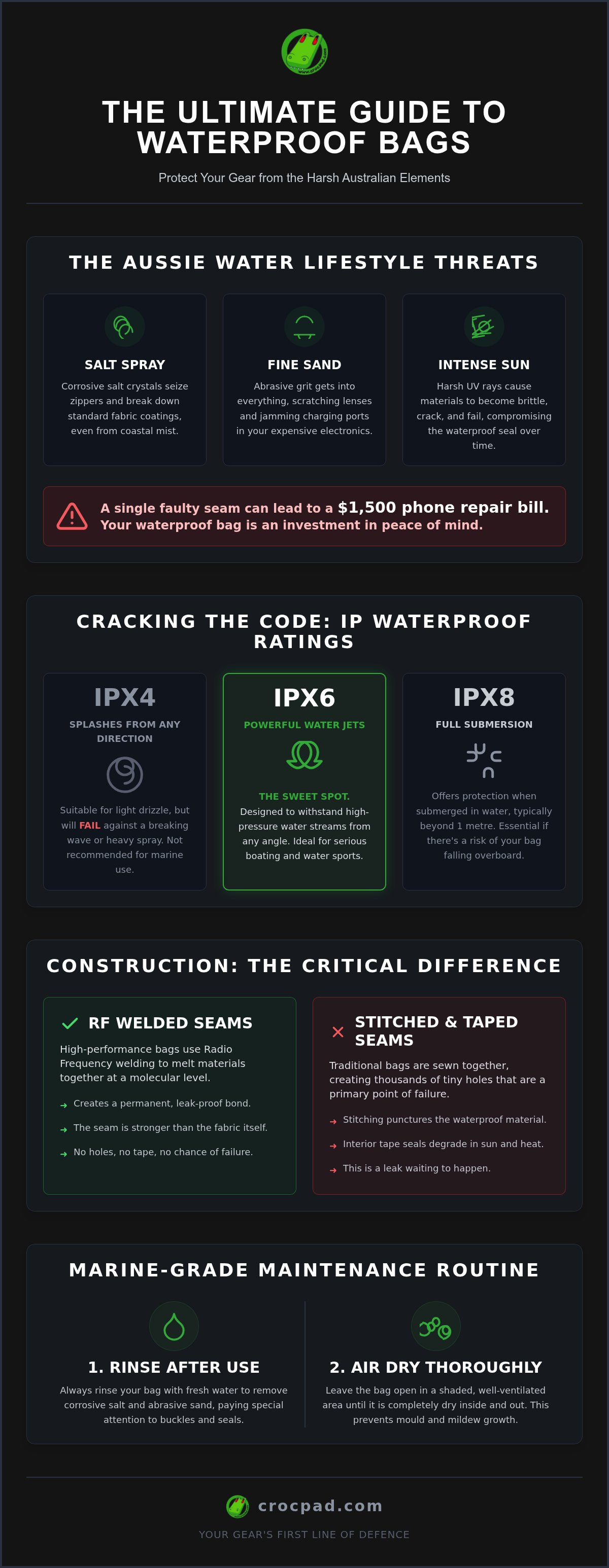
Freshwater is one thing, but the Australian coast brings the added threat of salt. As saltwater evaporates, it leaves behind microscopic crystals. These crystals act like jagged teeth, chewing through standard fabric coatings and seizing metal zippers overnight. For boaties, non-corrosive materials are essential. High-quality waterproof bags utilise welded seams and heavy-duty polymers that don't just repel water; they resist the chemical breakdown caused by salt spray. Even if you aren't planning to submerge your gear, the corrosive mist found near the surf is enough to ruin unprotected electronics in a single afternoon. Standard zippers will often corrode and stick after just one season of exposure, making your gear useless when you need it most.
The "Sand in Everything" Struggle
Sand is the ultimate abrasive. It finds its way into charging ports, camera lenses, and even the "water-resistant" seals of high-end gadgets. A roll-top bag provides a mechanical advantage here by creating a vacuum seal against dust and grit. This makes them just as vital for a day on the dunes as they are for a session on the lake. Crocpad gear is designed to handle these exact conditions, ensuring that your towels stay soft and your phone stays grit-free. By folding the top at least three times and clipping the buckle, you create an airtight barrier that keeps the elements out. This level of protection is non-negotiable for anyone who takes their leisure as seriously as their gear.
Cracking the Code: IP Ratings and Material Durability
Don't be fooled by flashy marketing labels that promise "all-weather" protection. When you are out on the ocean or a lake, you need to look for the technical specifications that separate a fashion accessory from a genuine marine-grade vault. Having IP ratings explained allows you to understand exactly how much pressure your gear can handle before the water wins. These ratings are the global standard for protection against solids and liquids, and they are your best defence against a water-logged wallet. IPX6 serves as the gold standard for gear facing heavy spray and brief submersion on the water.
Understanding IPX Ratings: What You Actually Need
The "X" in an IP rating simply means the bag hasn't been tested for dust protection, but the second digit is what matters for boaties. An IPX4 rating is fine for a light drizzle while walking the dog, but it will fail the moment a wave breaks over the bow. For serious marine activity, IPX6 is the sweet spot; it is designed to withstand high-pressure streams from any angle. If you plan on your bag potentially falling overboard, look for IPX8, which signifies a fully submersible seal. Avoid using "water-resistant" fashion bags for your electronics. They lack the structural integrity to handle the pressure of a proper Aussie swell, and they often rely on coatings that peel off after a few weeks in the sun.
Welded Seams vs. Stitched Construction
The biggest weakness in any bag is where the panels meet. Traditional bags use stitched seams, which essentially creates a row of thousands of tiny holes. Even if a manufacturer uses "taped" interiors, these seals eventually fail under the heat and pressure of the Australian summer. High-performance waterproof bags utilise Radio Frequency (RF) welding. This process uses electromagnetic energy to melt the materials together at a molecular level, creating a permanent, leak-proof bond that is stronger than the fabric itself. When choosing your gear, check for these smooth, fused edges. If you see thread and needles, you are looking at a leak waiting to happen.
Material choice also dictates longevity. While PVC is incredibly tough and cost-effective, Thermoplastic Polyurethane (TPU) is often the premium choice for those who want a bag that stays flexible and resists delamination in high UV environments. To ensure your gear lasts multiple seasons, consider Crocpad's range of durable storage solutions that are built specifically for these demanding conditions. A bag that turns brittle and cracks in the sun is no use to anyone after the first month of summer.
Dry Bags vs. Waterproof Backpacks: Which Suits Your Adventure?
Choosing the right silhouette for your gear depends entirely on how you move from the car to the water. While all high-performance waterproof bags aim to keep your gear dry, their utility varies wildly between a cramped boat deck and a long trek down to a secluded beach. You need to match the bag to your specific activity to ensure your day remains stress-free and organised. The classic roll-top dry bag is the undisputed workhorse for marine environments. These cylindrical bags are designed to be compressed, making them perfect for stowing under boat seats or inside tight storage hatches. They are simple, rugged, and effective. However, if your adventure involves ferrying gear from a boat to the shore or hiking to a hidden swimming hole, a waterproof backpack is the superior choice. These provide the hands-free movement essential for maintaining balance on slippery rocks or carrying a Floating Water Mat down to the shoreline.
Sizing Guide: From Phone Pouches to Family Duffels
Capacity is the next critical decision. Don't make the mistake of buying a bag that is too small to roll down properly, as this compromises the seal. Use this framework to find your fit:
- 5L to 10L: These are for your personal essentials. They easily house your sunnies, keys, phone, and a small wallet. They are small enough to tether directly to you or keep in a side pocket.
- 20L: The "Day Tripper" standard. This size comfortably fits a full-sized towel, a change of clothes, and your lunch. It is the most versatile option for solo adventurers.
- 30L+: These are heavy-duty storage solutions for multi-person boat trips. If you are responsible for the whole family's dry clothes and snacks, this is your go-to size.
Activity-Based Selection
When you are lounging on a floating mat, weight and attachment points are everything. Look for lightweight waterproof bags that feature robust clips. These can be easily secured to the D-rings on your mat, ensuring your snacks stay dry and don't float away if the wind picks up. For boaties, the priority shifts to stability. Rugged, flat-bottomed bags are ideal because they stay upright on a moving deck and are easy to stack during transport. Crocpad offers bags designed specifically for high-energy water use, ensuring they can handle the vibrations of a boat engine or the constant splashing of a busy lake. Always check the IP ratings of your chosen model to ensure it matches the intensity of your planned activity. Whether you are drifting on a river or powering through a swell, the right bag keeps your focus on the fun, not the forecast.
Marine-Grade Care: Protecting Your Gear from Salt and UV
High-performance gear requires high-performance care. You wouldn't leave your boat engine un-flushed after a run in the salt, and your storage should be no different. The combination of crystalline salt and intense UV radiation is the fastest way to turn a premium product into a leaking liability. Just five minutes of maintenance after a day on the water adds five years of life to your gear. It is the simplest way to protect your investment and ensure your electronics stay safe for many summer seasons to come.
UV protection is often overlooked until the damage is already done. While quality materials are built to withstand the sun, leaving your bag on the ute deck or in the back of the boat all week is asking for trouble. Constant exposure to high UV levels can eventually lead to delamination or brittleness in the fabric. Always store your gear in a cool, dry, and shaded place once the adventure is over to maintain its structural integrity.
Rinsing After the Ocean
Saltwater is corrosive by nature. As it evaporates, it leaves behind abrasive crystals that can chew through roll-top seals and seize up buckles. Make rinsing with fresh water a non-negotiable part of your post-beach ritual. Pay close attention to the areas where salt accumulates, such as the roll-top buckle and any D-rings used for tethering. Use only mild, eco-friendly detergents to avoid stripping the specialised waterproof coatings. To prevent mould and mildew growth, employ the "inside-out" drying technique. Turn the bag inside out and hang it in the shade until both the interior and exterior are bone-dry before you pack it away.
Zipper and Buckle Maintenance
Sand acts as a powerful abrasive that can compromise even the toughest seals. Use a soft brush to clear sand from tracks and buckle mechanisms without scratching the waterproof membrane. Don't force any moving parts if they feel gritty or stuck. Before you head out on your next trip, check the material for "stress marks." These appear as faint white lines and indicate where the polymer is being stretched or weakened. Ensuring your bag stays supple in the heat is the key to maintaining that vital vacuum seal. For gear that stands up to the challenge, explore the range of marine-ready waterproof bags at Crocpad.
Crocpad Gear: The Ultimate Companion for Your Floating Mat
Investing in high-quality gear is about creating a seamless summer ecosystem. When you're out on the water, you don't want to be constantly heading back to the boat or the shore to grab a drink or check your phone. By integrating waterproof bags into your setup, you extend your playground. Crocpad understands the local climate better than anyone; we know that a typical Aussie arvo involves intense heat followed by a sudden splash. Our gear is designed to live in that exact environment, providing a professional storage solution that matches the durability of our world-class floating mats. It's time to gear up and ensure your next session on the water is defined by relaxation, not by worrying about your valuables.
Packing for the Floating Mat
A Floating Water Mat is your personal island, and your bag is the vault that keeps it functional. To maintain the best experience, consider your weight distribution. Placing your bag near the centre of the mat ensures maximum stability for everyone on board. You can effectively use your bag as a "dry island" for snacks, bluetooth speakers, and sunnies. This keeps your essentials within arm's reach while you lounge. For visual inspiration on how to set up your perfect aquatic lounge, you can view the lifestyle photos on crocpad.com. Securing your gear is simple; most of our mats feature integrated D-rings. Simply clip your bag's buckle through the D-ring to ensure your supplies stay exactly where you put them, even if the kids start jumping nearby.
Why Crocpad is the Reliable Adventure Expert
We take our role as your adventure partner seriously. Being an Australian brand means we don't just design for "rain"; we design for the salt, the grit, and the UV levels that define our coastlines. Our commitment to high-performance materials and rigorous design standards ensures that every product we sell is fit for purpose. You get the confidence of using gear that matches the premium quality of our floating mats. We don't believe in "good enough" for protecting your digital life. Every clip, seam, and strap is tested to withstand the vibrations of a boat engine and the constant movement of a busy lake. Explore the Crocpad Waterproof Bag range today and discover how the right equipment can transform your time on the water from a logistical challenge into pure leisure.
Gear Up for Endless Summer Sessions
Choosing the right protection for your digital life shouldn't be a gamble. By prioritising technical specs like IPX6 ratings and durable RF-welded seams, you ensure your equipment survives the most intense Aussie swells. Remember that a simple fresh-water rinse after each trip is the secret to keeping your gear supple and salt-free for years. Whether you are tethering your storage to a floating mat or stowing essentials under a boat seat, quality construction makes the difference between a great day out and a costly disaster.
Crocpad is trusted by boaties and mat lovers nationwide because our waterproof bags are specifically designed for the unique challenges of the Australian marine environment. Don't let a stray wave or a bit of grit ruin your weekend. It is time to invest in high-performance storage that works as hard as you play. Secure your gear with Crocpad Waterproof Bags and head out with total peace of mind. We'll see you out on the water for your next epic arvo.
Frequently Asked Questions
Is a waterproof bag better than a water-resistant one for boating?
A waterproof bag is significantly better for boating because it provides a reliable barrier against heavy spray and waves. Water-resistant options are designed for light rain and will fail if they sit on a wet deck or get splashed by a wake. For total peace of mind on the water, choose waterproof bags with a verified IP rating. This ensures your electronics and dry clothes remain protected even in the most demanding marine conditions.
Can I submerge my waterproof bag if it has a roll-top closure?
You can briefly submerge most roll-top bags, but they aren't typically designed for extended underwater use. The seal relies on trapped air and tight folds to create a vacuum. While an IPX6-rated bag handles a quick fall overboard or heavy splashing, you should check for an IPX8 rating if you plan on diving or swimming with it. Always ensure you have at least three tight folds before clipping the buckle to maintain the seal.
How do I stop my waterproof bag from smelling like mildew?
Prevent mildew by rinsing your bag with fresh water after every use to remove salt and organic matter. The most effective method is the "inside-out" technique; turn the bag inside out and hang it in a shaded, well-ventilated area. Never store your bag while it is damp or tightly rolled up. Ensuring both the interior and the seams are bone-dry before storage keeps your gear smelling fresh and ready for your next adventure.
What size waterproof bag do I need for a day at the lake?
Your ideal size depends on your gear list. A 5L to 10L bag is perfect for personal essentials like your phone, keys, and wallet. If you need to carry a towel, a change of clothes, and lunch, a 20L "Day Tripper" is the most versatile choice. For families carrying gear for multiple people on a boat or floating mat, look for 30L or larger to keep everything organised and dry in one place.
Will the Australian sun damage the material of my dry bag?
The intense Australian sun can eventually degrade the polymers in any dry bag, leading to brittleness or delamination. High-quality materials like TPU offer better resistance than cheap PVC, but no material is immune to long-term UV exposure. Avoid leaving your gear on a hot ute deck or in direct sunlight for extended periods when not in use. Storing your bag in a cool, shaded spot will significantly extend its lifespan and maintain its waterproof integrity.
How do I properly close a roll-top waterproof bag to ensure a seal?
Achieving a perfect seal requires a specific technique. First, align the two top edges and squeeze out any excess air if you want a compact fit, or leave some air in if you want the bag to float. Fold the top over itself tightly at least three to four times. Finally, clip the buckles together in the opposite direction of the folds. This creates a mechanical barrier that prevents water from seeping through the opening.
Can I carry my laptop in a waterproof backpack on a boat?
You can carry a laptop in a waterproof backpack, provided the bag has a verified IPX6 rating or higher. This protection is essential on a boat where splashes and deck pooling are common. For extra safety, use a padded internal sleeve to protect the device from vibrations and impacts. Always double-check that the roll-top is secured correctly before boarding, as a single loose fold could compromise your expensive electronics during a swell.
Are Crocpad waterproof bags suitable for saltwater use?
Crocpad waterproof bags are specifically engineered for the harsh Australian saltwater environment. We use durable materials and non-corrosive fittings that resist the damaging effects of salt spray and fine sand. These bags are the perfect companion for our floating mats and boat adventures. To keep them in peak condition, we recommend a quick rinse with fresh water after each ocean session to remove salt crystals from the buckles and seams.

![The Best Boat Floating Mat Guide: Maximising Your Summer on the Water [2026]](http://www.crocpad.com.au/cdn/shop/articles/the-best-boat-floating-mat-guide-maximising-your-summer-on-the-water-2026.jpg?v=1788495054&width=480)


