
![The Best Boat Floating Mat Guide: Maximising Your Summer on the Water [2026]](http://www.crocpad.com.au/cdn/shop/articles/the-best-boat-floating-mat-guide-maximising-your-summer-on-the-water-2026.jpg?v=1788495054&width=480)
Last Saturday, a local boatie named Mark discovered that his bargain-bin foam mat had disintegrated into tiny blue flakes after just three hours in the intense sun. It's a common frustration for those who've invested in flimsy gear that simply can't handle the harsh Aussie environment or the constant pull of a strong current. You deserve a reliable setup that works as hard as you do to create epic memories. Choosing the right boat floating mat from a specialist like Crocpad is the difference between a stressful afternoon of chasing foam and a seamless day of lounging on your own private island.
You want a durable, social space that doesn't eat up all your deck room or require a degree in engineering to deploy. We agree that gear should be high-performance and hassle-free. This guide promises to show you exactly how to choose, secure, and maintain the perfect mat to transform your vessel into the ultimate mobile water resort. We'll explore the science of marine-grade XPE foam, reveal the best anchoring techniques to stop the drift, and share pro tips for easy storage on even the smallest vessels. Get ready to level up your summer with gear built for the long haul.
Key Takeaways
- Maximise your social space on the water by turning a high-quality boat floating mat into a durable, mobile island for your crew.
- Understand the technical advantages of UV-stabilised XPE foam to ensure your gear survives the punishing Australian summer without deteriorating.
- Match your mat's dimensions and weight capacity to your vessel to maintain perfect stability during solo sunbathing or full-scale parties.
- Protect your investment and your passengers by mastering safe tethering techniques using transom eyes and avoiding common towing hazards.
- Learn why opting for Australian-engineered equipment provides the structural integrity needed for demanding local marine environments.
Why a Boat Floating Mat is the Ultimate Deck Extension for Aussie Boaters
Stop fighting for elbow room on the transom every time you drop anchor. While your vessel provides the transport, a boat floating mat provides the lifestyle. It acts as a high-performance mobile island, effectively doubling your usable floor space without the need for a bigger hull. A boat floating mat is a durable, non-inflatable foam platform designed for marine recreation. It solves the primary headache of social boating: limited deck space. Instead of everyone tripping over fishing gear or sun loungers, your crew can move the party directly onto the water.
Transforming Your Mooring Spot into a Private Resort
Deploying a boat floating mat creates an immediate safety perimeter and social hub. It establishes a clearly defined swimming zone away from the propellers and boarding ladders, which is essential when kids are in the water. You can use the mat as a stable lunch station by tethering your esky and snacks to the surface, keeping the interior of your boat dry and crumb-free. During weekend raft-ups with other boaties, these mats become the connecting bridges between vessels, allowing for seamless socialising. It creates a dedicated "kids-only" zone where they can burn energy while the adults enjoy a quiet drink on the deck.
The Practicality of Foam vs Inflatables
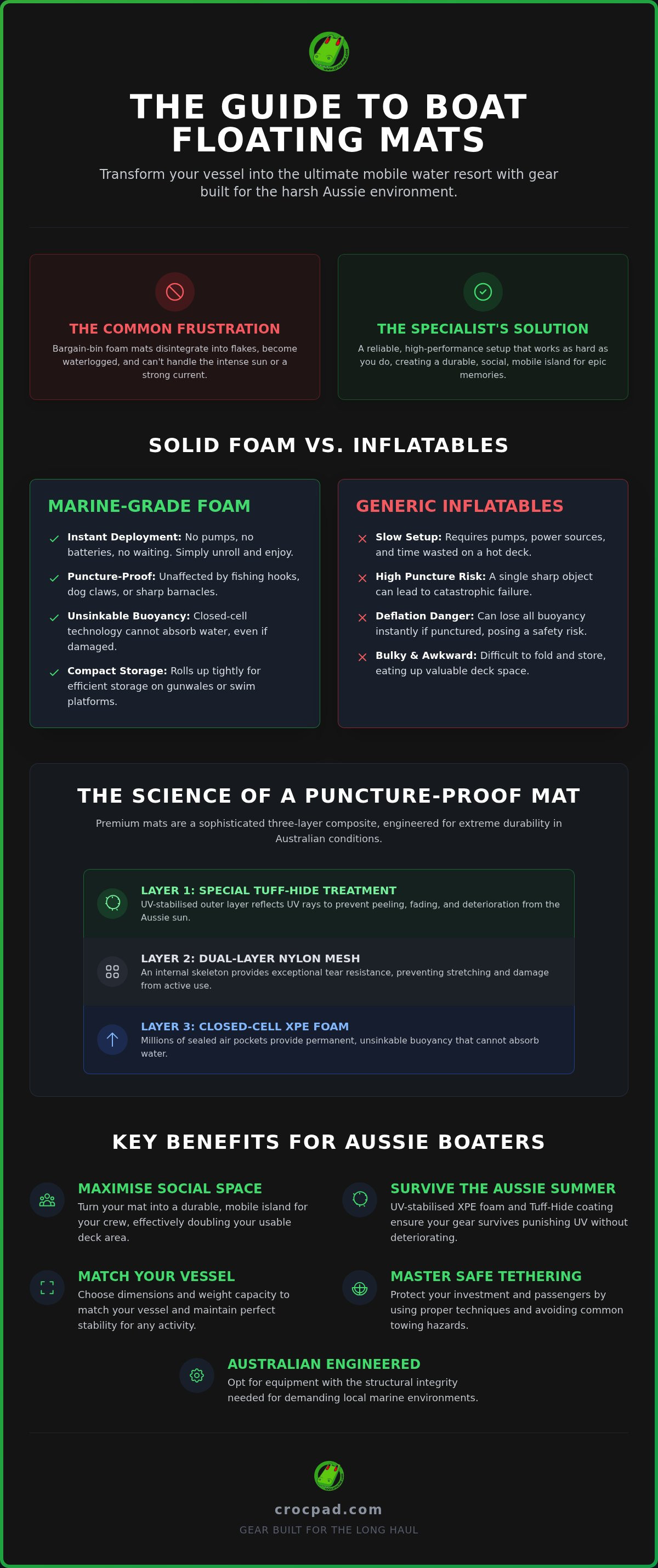
Aussie boaters are rapidly ditching bulky inflatables in favour of solid foam technology for several practical reasons. Deployment is instant. There are no pumps to fail, no batteries to charge, and no time wasted huffing and puffing on a hot deck. You simply unroll the mat and you're ready to lounge. Understanding The Science of Marine-Grade Foam reveals why these platforms are superior for open water. They utilise closed-cell cross-linked polyethylene, which means they cannot be punctured by stray fishing hooks, barnacles, or dog claws. This puncture-proof peace of mind is vital when you're kilometres from shore. Choosing a Crocpad ensures you're getting a platform built for the intense Australian sun, offering structural integrity that cheaper, air-filled toys simply cannot match. It rolls up tightly for easy storage along the gunwales or on the swim platform, making it the most efficient way to maximise your summer fun.
The Science of Marine-Grade Foam: Durability in Harsh UV Conditions
Your gear has to survive more than just a few splashes. In Australia, the combination of salt water and extreme UV radiation acts like sandpaper on inferior materials. Most generic mats use basic open-cell foam that acts like a sponge; however, a premium boat floating mat relies on advanced cross-linked polyethylene (XPE) technology. This material isn't just one solid block. It's a sophisticated three-layer composite reinforced with a dual-layer nylon mesh. This internal skeleton prevents the mat from stretching or tearing when your crew is jumping off the edges, ensuring the platform maintains its shape for years.
UV Resistance: Protecting Your Investment
Standard pool toys often degrade in a single season, becoming brittle and shedding microplastics into our pristine oceans. High-quality mats feature a Special Tuff-Hide treatment specifically designed to reflect UV rays rather than absorb them. This stabilisation is vital for the Australian climate where glare from the water can double your exposure levels. It prevents the unsightly peeling and fading that plagues cheaper alternatives. To keep the colour vibrant, simply rinse your mat with fresh water after use and store it in a dry, shaded area once you're back at the boat ramp.
Closed-Cell Foam: Why Buoyancy Matters
Buoyancy is a non-negotiable safety feature for any marine platform. Closed-cell foam consists of millions of microscopic, sealed air pockets that cannot absorb water or lose their lift. Even if the mat sustained a deep gouge from a stray anchor or a sharp barnacle, it would remain perfectly buoyant. This reliability aligns with the broader goals of the Australian Water Safety Strategy, which emphasises the importance of using equipment that performs predictably in open conditions. Unlike inflatables that can deflate instantly if punctured, this foam platform provides a permanent, stable surface for rest and recovery. It offers a superior weight-to-buoyancy ratio, meaning it can support a full crew without sagging into the waterline. If you're looking for gear that survives the long haul, consider the Floating Water Mat range designed specifically for our unique conditions.
Choosing Your Size: From Solo Sunbathing to Full Crew Parties
Size matters when you're planning a day on the blue. Selecting the right boat floating mat involves balancing your social ambitions with your vessel's storage capacity. Crocpad offers three distinct sizes, 2 metres, 3.65 metres, and the massive 5.5-metre jumbo model, to suit different needs. You don't want a 5.5-metre behemoth cluttering the deck of a small runabout, but a solo pad won't cut it for a full crew. Always overestimate your weight requirements. A mat that is slightly oversized for your group provides significantly better stability, preventing the edges from dipping when someone climbs aboard.
Roll your gear tight to keep your deck organised. These mats roll into a compact cylinder that you can secure with heavy-duty straps. On larger cruisers, they sit perfectly on the swim platform or are lashed to the bow rail. For social boaters, the 5.5-metre "Party Mat" is the gold standard. It transforms your mooring into a massive floating deck where ten or more people can congregate safely, effectively doubling your boat's floor space for the afternoon.
Small to Medium Boats: Portability is Key
For boats in the 4 to 5-metre range, like a standard Aussie tinnie, the 3.65-metre mat is often the "Goldilocks" choice. It offers enough room for a small family without overwhelming the limited deck space. Use bungees to secure the rolled mat to your bimini supports or side rails. This keeps the weight distribution even while you're underway, ensuring your boat handles predictably as you head to your favourite cove. Managing your load is critical for safety, so ensure the mat is centered and won't shift during sharp turns.
Dog-Friendly Boating: Mats and Ramps
One of the biggest advantages of a high-density foam boat floating mat is its resilience against dog claws. Unlike inflatable toys that can fail at the first sign of an excited Labrador, these mats are virtually indestructible. They provide a stable, non-slip "safe zone" for your pup to rest between swims. To make water access even easier, pair your mat with an inflatable dog ramp. This allows older dogs or those with shorter legs to climb back onto the mat or boat without straining their joints. Training is simple; use treats to encourage them onto the mat until they recognise it as their floating home base.
Safe Anchoring and Setup: Securing Your Mat Behind the Boat
Safety on the water isn't just about your hull; it's about how you manage your gear. Before you even unroll your boat floating mat, you must remember the absolute golden rule: never tow a floating mat behind a moving vessel. These platforms are designed for relaxation at anchor, not for high-speed drag. Attempting to tow one can cause massive structural damage to the mat's core and create dangerous drag that affects your boat's handling and fuel efficiency.
Step-by-Step: Securing Your Mat at Anchor
Setting up your private island requires a methodical approach to ensure it stays exactly where you want it. Start by identifying the best tethering points on your boat. Transom eyes are generally the strongest points for this task, but heavy-duty stern cleats also work well if they're easily accessible. Follow these steps for a secure setup:
- Inspect the reinforced grommet on your mat for any signs of wear or stress before use.
- Attach a marine-grade carabiner and a heavy-duty bungee tether to the boat's tethering point.
- Adjust the lead length so the mat floats at least 2 to 3 metres away from the stern. This keeps it clear of outboards or sharp sterndrive components.
- Verify the connection by giving the tether a firm tug before anyone hops on.
Always use specialised bungee tethers instead of static ropes. These cords absorb wave shock and prevent the grommets from snapping when a large wake hits your vessel. For the ultimate peace of mind, equip your vessel with a premium boat floating mat designed to withstand these environmental pressures.
Managing Currents and Wind
Nature doesn't always play fair, so you've got to plan for the drift. In most conditions, position the mat downwind of your boat. This allows the breeze to push the mat away from the hull rather than bumping against it. If you're in a tidal area with strong currents, consider using a secondary sandbag or grapnel anchor on the far end of the mat to keep it from swinging wildly. This dual-point anchoring provides a much more stable platform for socialising with your crew.
Review this safety checklist with your guests before they hit the water:
- Ensure you have at least 1.8 metres of clear water depth to avoid underwater obstacles.
- Never swim underneath the mat to avoid the risk of entrapment.
- Ensure children or weak swimmers wear a life jacket that complies with Australian Standard AS 4758.
Why Crocpad Floating Mats are the Top Choice for Australian Waters
Choosing a boat floating mat is an investment in your family's leisure time. While generic global marketplaces are flooded with flimsy alternatives, they lack the local engineering and support required for our unique environment. Crocpad stands out as an Australian-owned brand that lives and breathes the boating lifestyle. We don't just sell gear; we provide the structural integrity needed to survive a salt-drenched weekend on the open coast or a sun-baked afternoon on a remote waterway. By choosing a local expert, you gain access to professional advice and a product range specifically tested against the Southern Hemisphere’s extreme conditions.
Designed for the Aussie Lifestyle
Our gear is built for the weekend adventurer who demands reliability. Every Crocpad is tested in harsh saltwater and high-UV environments to ensure it won't become brittle or lose its buoyancy after a few trips. Portability is at the heart of our design. We know that deck space is a premium, so our mats are engineered to roll tightly and secure easily, making them perfect for everyone from tinnie owners to yacht captains. When you buy from us, you're supporting a brand that understands the Reliable Adventure Expert persona. We know that your gear needs to be as tough as the boat it's tethered to, providing a safe and stable platform for years of use.
Beyond the Mat: Complete Your Boat Kit
A great day on the water is about the whole experience. That's why we've developed a complete ecosystem of marine accessories to complement your setup. You can level up the excitement by integrating inflatable slides into your vessel's layout, creating a multi-level water park that keeps the kids entertained for hours. We also offer heavy-duty waterproof bags to keep your towels and electronics bone-dry while you're lounging on the mat. The Crocpad promise is simple: we provide quality gear that lasts more than one season. We reject the disposable culture of cheap inflatables in favour of high-performance materials that stand the test of time.
Don't wait for the first heatwave to scramble for equipment. Order your boat floating mat today at crocpad.com to ensure your vessel is fully equipped for the upcoming summer season. Whether you're looking for a solo sunbathing spot or a massive jumbo mat for the whole crew, we have the stock and the expertise to help you maximise every moment on the water. Prepare your boat now and turn every mooring spot into a premium private resort.
Secure Your Private Island for the Season
Your time on the water is precious; don't waste it on gear that fails when the Aussie sun gets serious. By choosing a high-performance boat floating mat, you're not just buying a toy; you're investing in a durable deck extension that transforms every mooring spot into a social hub. We've explored how the secret to longevity lies in marine-grade UV resistant foam and why mastering proper anchoring techniques is essential for protecting your crew. It's about having the confidence that your equipment will perform exactly as expected every single time you hit the blue.
Crocpad is proud to be Australian Owned & Operated, providing the structural integrity needed to handle our unique conditions. We ensure your gear arrives ready for action with free delivery on eligible orders, so you can focus on planning your next offshore adventure. Stop settling for flimsy inflatables that end up in landfill and start building your ultimate water resort with gear that stands the test of time.
Upgrade your boat days with a premium Crocpad Floating Water Mat today!
Grab your esky, gather the crew, and get ready for a summer that never ends.
Frequently Asked Questions
Can I tow my boat floating mat behind the boat while driving?
No, you should never tow a boat floating mat while the vessel is in motion. These platforms are designed for stationary use only. Towing creates extreme hydraulic pressure that can rip out the reinforced grommets and damage the internal nylon mesh skeleton. Always roll the mat tightly and secure it on your deck or swim platform before heading to your next destination to ensure your gear lasts for years.
How do I store a large floating mat on a small boat?
The most efficient storage method is to roll the mat tightly into a cylinder and secure it with heavy-duty velcro straps. On smaller boats like tinnies, you can lash the rolled mat to the side rails or stow it across the bow area. Because the XPE foam is lightweight and flexible, it doesn't require much room once compressed, keeping your deck clear for fishing or socialising.
Are floating water mats safe for dogs with sharp claws?
Yes, high-quality foam mats are specifically engineered to withstand dog claws without puncturing. Unlike inflatable toys that fail easily, the multi-layer cross-linked polyethylene foam is puncture-resistant and provides excellent grip for paws. For easier water access, many owners pair their boat floating mat with an inflatable dog ramp to help their furry mates climb back aboard safely without straining their joints or the equipment.
What is the best way to clean salt water off my foam mat?
Simply rinse the mat thoroughly with fresh water after every use in the ocean. This prevents salt crystals from causing abrasive build-up and protects the UV-resistant Tuff-Hide coating from long-term degradation. For stubborn dirt or bird droppings, use a soft sponge and mild, biodegradable soap. Ensure the mat is completely dry before rolling it up for storage to prevent any mould or unpleasant odours from developing.
Do I need a special permit to use a floating mat in Australian harbours?
You generally don't need a specific permit for personal recreational use in most Australian waterways. However, you must comply with standard maritime safety regulations at all times. This includes ensuring your mat doesn't obstruct navigation channels or busy mooring fairways. Always check with your local maritime authority for specific exclusion zones or temporary restrictions in crowded harbour areas or sensitive, protected marine parks before deploying your gear.
How many people can a standard Crocpad floating mat hold safely?
Capacity depends on the specific size you choose for your crew. The 2-metre model is perfect for solo lounging, while the 3.65-metre version comfortably supports a small family. For larger social gatherings, the 5.5-metre jumbo model can handle ten or more adults safely. Always distribute weight evenly across the surface to maintain maximum stability and prevent the edges from dipping below the waterline during use.
What happens if my floating mat gets a small tear or puncture?
Small nicks or gouges won't affect the performance because the closed-cell foam doesn't absorb water. The mat will remain perfectly buoyant even if the surface is damaged. For cosmetic repairs, you can use a specialised foam repair adhesive to seal the area. The internal dual-layer nylon mesh provides an extra level of protection, ensuring a small surface scratch doesn't compromise the overall structural integrity of the platform.
Can I leave my floating mat in the water overnight at a mooring?
It's best to pull your mat out of the water overnight. Leaving it submerged for extended periods can encourage marine growth like algae or barnacles to attach to the underside. It also presents a potential navigation hazard for other vessels in low-visibility conditions. Rolling it up and securing it on deck ensures your gear stays clean, safe, and ready for another day of adventure without unnecessary wear.


