

Imagine the first scorching Saturday of summer. You head to the shed to grab your gear, but instead of a fresh, bouncy surface, you find a heavy, mouldy mess that has faded under the harsh Aussie sun. It's a frustrating moment for any boatie or pool owner. At Crocpad, we understand that learning how to store a floating water mat can feel like wrestling a giant, slippery crocodile, especially when you're trying to roll it solo. You want that premium, UV-stabilised XPE foam to stay vibrant and structurally sound for years of backyard and lake fun.
This guide delivers the professional "clean-dry-roll" ritual used by the experts to preserve your investment. You'll learn how to defeat the humidity that causes mildew growth and how to shield your mat from relentless UV rays. We're covering everything from compact rolling techniques to using weatherproof storage bags to keep your gear good as new. Let's ensure your mat is ready for high-energy action the moment the next heatwave hits.
Key Takeaways
- Protect your premium investment from "foam fatigue" and permanent curling by mastering correct storage techniques.
- Defeat Aussie humidity with a thorough fresh-water rinse and drying routine that stops mould and mildew in its tracks.
- Learn exactly how to store a floating water mat using a professional rolling method that ensures a compact and manageable finish.
- Shield your gear from the sun's rays and the "oven effect" of metal sheds by choosing the ideal cool, dry storage location.
- Leverage Crocpad’s durable design and portability features to make your end-of-season pack-down fast and efficient.
Why Proper Storage is Vital for Your Floating Water Mat
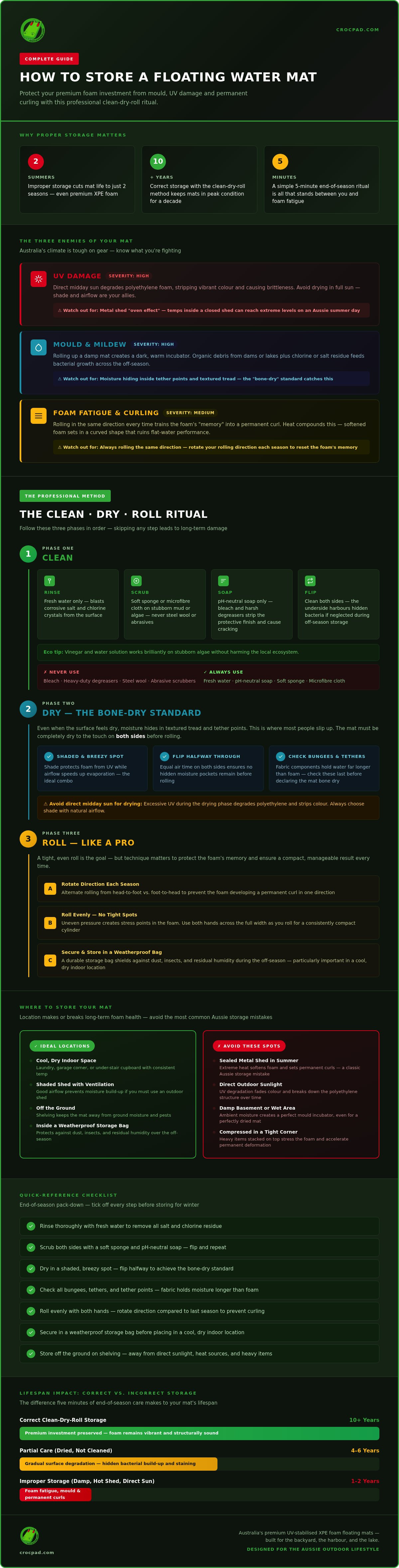
Investing in a premium mat is the ultimate way to level up your summer, but that investment needs respect once the temperature drops. If you shove your gear into a corner while it is still damp or crusty with salt, you are inviting structural failure. Improper storage causes "foam fatigue," where the mat loses its spring and develops permanent, awkward kinks. Learning how to store a floating water mat properly is the difference between a product that lasts a decade and one that ends up in the bin after two summers. A simple five-minute ritual preserves the foam's integrity and ensures it remains a backyard highlight for years.
The 'Memory' of Foam: Preventing Permanent Curls
High-quality mats typically utilise Expanded Polyethylene (EPE) foam, a closed-cell material prized for its buoyancy. While this foam is incredibly durable, it possesses a physical "memory." If you roll the mat tightly in the same direction every single time, the cells eventually adapt to that curved shape. This leads to permanent curling at the edges, which ruins the mat's ability to lay flat on the water. To combat this, rotate your rolling direction and avoid storing the mat in extreme heat. High temperatures, like those found in a typical Aussie metal shed, can soften the foam and cause it to "set" in a curled position permanently.
Mould and Mildew: The Silent Mat Killers
Australia’s humidity is relentless, and it only takes a tiny amount of trapped moisture to ruin your gear. When you roll up a mat that hasn't been dried properly, you are essentially building a dark, warm incubator for mould. Organic debris from dams or lakes, combined with leftover chlorine or salt, creates a film that feeds bacterial growth over the off-season. A clean mat is a healthy mat, especially when kids are involved. Take these steps to ensure a hygienic surface:
- Rinse: Always use fresh water to remove corrosive salt and chlorine crystals.
- Scrub: Use a soft sponge on stubborn mud or algae that can harbour bacteria.
- Dry: Never roll the mat until it is completely dry to the touch on both sides.
Taking these steps ensures that when you head to crocpad.com to grab your gear next season, it is as fresh as the day you bought it. Maintaining a hygienic surface is just as important as protecting the foam's structural strength.
The Pre-Storage Ritual: Cleaning and Drying Your Mat
Cleaning your gear is not just about keeping it looking mint for the next boat trip. It is a critical maintenance step that prevents long-term degradation. After a day on the harbour or in the pool, your mat is coated in salt, sand, or chlorine. These elements act like sandpaper on the foam surface if left to dry and crystallise. Start with a thorough fresh-water rinse. This is the foundation of how to store a floating water mat properly. Use a high-pressure hose to blast away debris from the textured crevices, but keep the nozzle at a safe distance to avoid gouging the material. Use a soft sponge or a microfibre cloth for any stubborn stains or bird droppings. Avoid abrasive scrubbers like steel wool, as these will tear the surface and create pockets where mould can take root later.
Choosing the Right Cleaning Agents
Avoid the temptation to reach for the bleach or heavy-duty degreasers. Harsh chemicals strip the protective finish from marine-grade foam, making it brittle and prone to cracking. Instead, mix a bucket of warm water with a mild, PH-neutral soap. PH-neutral soaps are the gold standard for foam longevity because they clean effectively without compromising the material's chemical balance. For a more eco-friendly approach, a simple vinegar and water solution works wonders on stubborn algae without harming the local ecosystem. Always flip the mat to ensure both sides are treated and cleaned. Neglecting the underside is a common mistake that leads to hidden bacterial growth during the off-season.
The 'Bone-Dry' Standard
Achieving the "bone-dry" standard is where most people slip up. Even if the surface feels dry, moisture often hides in the textured "tread" of the mat or inside the tether points. While you might want to bake it in the sun to speed things up, direct noon sun is your enemy. Understanding how UV damage affects foam is vital; excessive exposure during the drying phase can cause the polyethylene to degrade and lose its vibrant colour. Find a shaded, breezy spot instead. Flip the mat over halfway through the process to ensure both sides get equal air time. Always check the bungees and tethers, as these fabric components hold water much longer than the foam itself.
Never roll a damp mat. It is a recipe for a smelly, mouldy disaster. If you are unsure how to store a floating water mat for the long term, remember that dryness is your best friend. Moisture trapped in a roll will rot the foam from the inside out. If you're heading home from the lake, use one of our waterproof bags to transport your damp accessories, but make sure the mat itself is completely dry before it hits the shed for the winter.
Rolling and Securing Your Foam Water Pad Like a Pro
Once your mat is bone-dry, the physical pack-down begins. This stage is where many people compromise the foam's lifespan by rushing the process. If you want to know how to store a floating water mat so it remains easy to transport, you must focus on the tightest roll possible. A loose roll is not just bulky; it allows air and moisture to seep back into the layers during the off-season. Always begin your roll from the end opposite the tether point. This technique ensures that the heavy-duty hardware ends up on the outside of the roll, preventing it from pressing deep indentations into the soft inner foam layers over several months of storage.
The Two-Person Roll Technique
Don't try to be a hero and tackle this alone. A 3.65-metre floating water mat typically supports around 400kg on the water, which means it has significant surface area and weight to manage on land. Grab a mate to help you maintain even pressure across the entire width of the mat. As you progress, use your knees or hands to "knead" the air out from between the layers. This ensures a compact finish that fits easily into your vehicle or shed. Keep the edges perfectly aligned as you go. If the roll starts to "telescope" or slide out at the ends, unroll it and start again. A straight, tight roll is a no-brainer for long-term foam health.
Straps vs. Ropes: Protecting the Surface
The biggest mistake you can make is securing your mat with thin ropes or bungee cords. These materials act like cheese wire, cutting into the marine-grade foam and leaving permanent "rope burn" scars. Instead, invest in wide velcro storage straps or heavy-duty webbing with buckle systems. These wider bands distribute pressure across a larger surface area, keeping the mat secure without "strangling" the material. You want the straps to be firm enough to hold the shape but not so tight that they create deep valleys in the foam. Using proper straps makes the mat much more portable, allowing you to move your gear with confidence. For the ultimate protection, consider pairing your rolled mat with a dedicated storage bag from crocpad.com to keep the entire unit shielded from dust and pests.
Where to Keep Your Mat: Avoiding UV Damage and Mould
After you have mastered how to store a floating water mat by cleaning and rolling it, you need a safe haven for it during the off-season. In Australia, the environment is your biggest challenge. Leaving your mat exposed to the elements is a death sentence for the foam. Relentless UV rays break down the cellular structure of the material, causing it to peel, fade, and lose its buoyancy. But even moving it indoors requires a bit of strategy. You need a spot that is cool, dry, and completely shielded from the sun. Avoid leaning the mat against sharp objects or heavy garden equipment. A stray rake or a heavy toolbox can easily puncture the foam, creating a permanent weak point that will take on water next summer.
Many Aussies default to the backyard tin shed, but this can be a costly mistake. During a summer heatwave, these structures experience an "oven effect" where internal temperatures soar. This extreme heat can cause the polyethylene foam to soften and permanently take the shape of the roll, leading to the "foam fatigue" we mentioned earlier. If your shed feels like a sauna in January, find a more temperate location. A brick garage or a ventilated storage room is a much safer bet for maintaining the structural integrity of your gear.
Indoor vs. Outdoor Storage Options
Vertical storage is the ultimate space-saver. Stand your rolled mat in a corner of your garage or basement to keep it out of the way. This prevents it from becoming a trip hazard and keeps it away from floor-level moisture. If you are forced to keep the mat outdoors, a heavy-duty, UV-rated cover is non-negotiable. Don't assume the space "under the deck" is safe. These areas are often damp, poorly ventilated, and prone to flooding during heavy rain. This creates a perfect breeding ground for mould, even if the mat was bone-dry when you first packed it away.
Pest Prevention and Ventilation
Your rolled mat is a five-star hotel for local wildlife. Spiders, mice, and even snakes love the dark, tight spaces between the foam layers. Keep the mat off the concrete floor by using a pallet or a sturdy shelf. This simple move prevents ground moisture from seeping in and deters pests from nesting. Wrap the ends of the roll with breathable mesh or a dedicated storage bag to block entry while still allowing vital air circulation. Make it a habit to check the roll once a month during the winter. A quick thirty-second inspection ensures no nasty surprises are waiting for you when the first heatwave of December hits. Ready to upgrade your storage game? Explore the range of durable protection options at crocpad.com to keep your investment in peak condition.
Crocpad Solutions for Easy Handling and Long-Term Care
Choosing a premium product from crocpad.com means you are already ahead of the game. Our mats are engineered specifically for the brutal Australian climate, featuring high-buoyancy, marine-grade foam that resists the common pitfalls of cheaper alternatives. When you understand how to store a floating water mat correctly, you'll find that our durable design simplifies every step of the process. The smooth, high-performance surface doesn't just feel better underfoot; it also sheds water and debris more efficiently, making the cleaning and drying ritual remarkably fast. Because our mats are built for portability, they roll tighter and remain more manageable, ensuring you spend less time wrestling with gear and more time enjoying the water.
The Crocpad Advantage: Built for the Aussie Sun
Cheaper foam pads often suffer from "flaking" after just one season of exposure to salt and UV rays. This happens when the material isn't properly stabilised for our local conditions. Crocpad mats utilise advanced cross-linked polyethylene that maintains its structural integrity even after repeated use. This resilience means the foam doesn't become brittle or crumbly during winter storage. Beyond durability, our signature high-visibility colours serve a dual purpose. They look incredible in your summer photos, but more importantly, they ensure your group is easily spotted by boaties and jet skiers. It is this commitment to safety and longevity that makes us a trusted choice for water recreation across the country.
Preparing for Your Next Trip
When the first heatwave of the next season arrives, you want to be ready to hit the lake in seconds. If you followed our advice on how to store a floating water mat, your gear will be in mint condition. Follow this quick checklist for a stress-free first launch:
- Unroll on grass: Give the mat a quick visual inspection for any pests that might have snuck in.
- Re-train the foam: If the mat has a slight curl at the edges from being rolled, simply flip it over on the lawn for fifteen minutes. The sun's warmth will help the foam "relax" and lay flat.
- Check the hardware: Ensure your bungees and tethers are still supple and free of any fraying.
- Pack the essentials: Use your Crocpad waterproof bags to organise your accessories, ensuring your phone and towels stay dry while the mat is in action.
A little bit of respect for your gear during the off-season pays massive dividends when summer returns. By protecting the foam and keeping your accessories organised, you ensure that every trip to the water is focused on fun, relaxation, and making memories with the family.
Secure Your Summer Legacy
Your mat is more than just high-performance foam; it is the centrepiece of your family's summer memories. By following the professional "clean-dry-roll" ritual, you ensure that every launch is as exciting as the first. Mastering how to store a floating water mat prevents the permanent curling and mould growth that ruins lesser products. Keep your gear in a cool, ventilated spot away from the "oven effect" of metal sheds to maintain that premium, bouncy feel for years to come.
As an Australian owned and operated brand, we build gear that stands up to our unique environment. Our products feature marine-grade durable foam specifically designed for harsh UV conditions. Don't let poor storage habits cut your adventures short. A small amount of care today guarantees a flawless season tomorrow. Maximise your summer fun with a premium Crocpad Floating Water Mat and stay ready for the next heatwave. We'll see you out on the water!
Frequently Asked Questions
Can I store my floating water mat vertically in the garage?
Yes, you can certainly store your mat vertically. It is an excellent way to save floor space in a crowded garage. Just make sure you stand it on a dry surface, like a timber pallet, to prevent ground moisture from seeping into the bottom of the roll. Secure the top with a bungee cord or strap so it doesn't topple over and damage nearby gear. This vertical position also helps any remaining moisture drain out naturally.
Is it okay to leave my water mat in the lake overnight?
Avoid leaving your mat in the lake overnight. Algae and organic debris attach to the foam quickly, making the eventual cleaning process much harder. There is also a risk of nocturnal wildlife or passing boats damaging the mat in low visibility. Always pull it out, give it a quick rinse, and let it dry on the bank or boat deck to maintain the marine-grade finish. This simple habit prevents long-term staining and material degradation.
How do I get the 'curl' out of my mat after it's been stored for winter?
Getting the curl out is easy if you use the sun to your advantage. Simply unroll the mat on a flat patch of grass and flip it over so the curled edges face the ground. The warmth from the sun helps the cross-linked polyethylene foam relax and return to its original flat state. This is a vital part of how to store a floating water mat and bring it back to life each summer season.
What is the best way to clean bird droppings off a foam mat?
Use a mixture of warm water and PH-neutral soap to tackle bird droppings. These can be acidic and may stain the foam if left to bake in the sun. Apply the soapy water with a soft sponge and let it sit for a minute to loosen the debris. Gently scrub the area until clean and rinse thoroughly with fresh water. Avoid using stiff brushes or scouring pads, as these will scratch the textured surface and damage the foam.
Can I use a pressure washer to clean my floating water mat?
You can use a pressure washer, but you must be extremely cautious with the settings. Use a wide fan nozzle and keep it at least 30 centimetres away from the surface. High-pressure streams can easily gouge the foam or peel the outer layers. A standard garden hose with a high-quality spray nozzle is usually enough for most cleaning tasks. Always test a small area first to ensure the pressure isn't too intense for the marine-grade material.
Will my floating mat get mouldy if I store it in a shed?
Your mat will only get mouldy if you roll it up while it is still damp. Mould needs moisture and darkness to thrive. If you store a bone-dry mat in a well-ventilated shed, it will stay fresh all winter. However, Aussie tin sheds can get quite humid, so we recommend checking the roll periodically. Using a breathable storage bag provides an extra layer of protection against moisture buildup and keeps pests like spiders from nesting inside.
Do I need a special cover for my mat if it's stored outside?
A UV-rated protective cover is essential if your mat must stay outdoors. Constant exposure to the Australian sun will cause the foam to disintegrate and fade over time. Ensure the cover is breathable to prevent condensation from being trapped against the foam. If you're unsure how to store a floating water mat outside, remember that a heavy-duty tarp or a dedicated weatherproof bag is your best defence against the elements and will significantly extend its lifespan.
How tight should the storage straps be when the mat is rolled?
Strapping should be firm enough to hold the roll's shape but not so tight that they "strangle" the foam. You want to avoid creating deep, permanent indentations in the material. A good rule of thumb is to tighten the straps until the roll is secure, then check if you can still slide a finger underneath. Using wide velcro straps instead of thin ropes helps distribute the pressure evenly and prevents "rope burn" on the outer foam layer.


