

You don't need a professional sports clinic or a team of elite physiotherapists to flush out lactic acid and reset your nervous system after a brutal training session. What if you could turn your own backyard into a high-performance recovery zone that rivals the setups used by the pros? Most athletes accept delayed onset muscle soreness as an unavoidable tax on their progress, but there is a much faster way to get back in the game.
We've all felt that leaden heaviness in our limbs two days after a heavy workout, or the persistent joint inflammation that makes every movement feel like a chore. It is frustrating when your body cannot keep up with your ambition. This guide will help you master the science of contrast bath therapy, a powerful technique that acts as a vascular pump for your body. You will learn how to alternate hot and cold immersion to slash your recovery times and significantly boost your physical performance.
We are going to demystify the entire process, from the specific temperatures required to the exact timing of each cycle. You will walk away with a clear, repeatable protocol that you can perform at home to improve your circulation, skyrocket your energy levels, and ensure you are always ready for your next adventure.
Key Takeaways
- Master the "vascular pump" effect to rapidly flush metabolic waste and kickstart your body's natural repair mechanisms after a hard session.
- Discover the precise "Golden Ratio" of timing and temperature to ensure your contrast bath therapy sessions deliver maximum recovery results.
- Slash recovery times and manage persistent joint inflammation with a repeatable protocol designed for the serious Aussie athlete.
- Identify and avoid common pitfalls like incorrect hydration or extreme temperature shifts that can stall your physical progress.
- Learn how to integrate a portable Ice Bath Pod and Chiller into your home setup for a seamless, ice-free recovery experience.
What is Contrast Bath Therapy and How Does it Work?
What is contrast bath therapy exactly? It is a high-performance form of hydrotherapy that involves the rapid, repeated alternation between hot and cold water immersion. This isn't just a fancy way to wake up in the morning. It is a strategic recovery tool designed to manipulate your body's circulatory response. From professional footy players to weekend warriors across Australia, athletes use this method to stay at the top of their game and slash downtime between sessions.
The basic concept relies on the body's natural reaction to temperature extremes. When you submerge yourself in hot water and then immediately switch to a cold plunge, you trigger a "vascular pump" mechanism. This physical reaction forces your circulatory system to work overtime, moving blood through your tissues with much more intensity than passive rest ever could. It is an active, aggressive approach to healing that lets you back up a hard session with another one the very next day.
To better understand this concept, watch this helpful video:
The Science of Vasoconstriction and Vasodilation
The magic happens through two specific physiological responses. When you submerge in cold water, perhaps using a portable ice bath from Crocpad, your body enters vasoconstriction. Your blood vessels constrict to protect your core temperature, which helps reduce swelling and numbs pain. Immediately switching to hot water triggers vasodilation. Your blood vessels open up, allowing a rush of fresh, oxygenated blood to flood your tired muscles. This cycle acts like a powerful internal rinse. It flushes out the metabolic waste and inflammatory markers that accumulate during high-intensity exercise, helping you avoid the dreaded "heavy legs" feeling.
The Role of the Lymphatic System
While your heart pumps blood, your lymphatic system lacks a dedicated pump to move fluid and waste. It depends on movement and pressure to function. This is why contrast bath therapy is so vital for recovery. The rapid changes in temperature create a rhythmic squeezing effect on the lymphatic vessels. This stimulation encourages the drainage of excess fluid and cellular debris that often leads to persistent joint pain and stiffness. The lymphatic system responds to these temperature shifts by using rhythmic, mechanical-like contractions to efficiently transport waste away from your recovering muscles. This process ensures your body clears out the junk faster, allowing for a quicker return to peak performance.
The Major Benefits of Alternating Hot and Cold Immersion
Harnessing the power of contrast bath therapy provides more than just a physical flush; it delivers a comprehensive reset for your entire system. The most immediate win is the rapid reduction in Delayed Onset Muscle Soreness (DOMS). Instead of hobbling around for three days after a heavy leg session, you can significantly shorten that window of stiffness. By reducing inflammation and swelling in the joints, you’re not just masking pain; you’re actively facilitating a faster return to sport.
Your cardiovascular system also gets a workout without you lifting a finger. The constant expansion and contraction of blood vessels improve overall efficiency and heart health. Beyond the physical, there’s a massive psychological boost. The sharp transition to cold water triggers an increase in norepinephrine and alertness, while the hot immersion helps lower cortisol levels. This leaves you feeling revitalised and mentally sharp. If you're looking to start your home setup, check out the high-quality Ice Baths & Chillers to get that precise temperature control needed for the best results.
- Rapid DOMS relief: Faster clearance of lactic acid and metabolic waste from muscle tissue.
- Reduced joint swelling: Targeted management of inflammation in soft tissues and joints.
- Enhanced mental clarity: A natural endorphin rush that reduces stress and improves mood.
- Nervous system regulation: Encourages a faster transition to a parasympathetic, restful state.
Post-Workout Recovery for Athletes
Elite athletes choose this over passive recovery because it directly impacts Heart Rate Variability (HRV). It helps shift your nervous system from a stressed, sympathetic state into a parasympathetic recovery state much faster. This makes it ideal after high-intensity interval training (HIIT) or long-distance endurance events where the body is under significant strain. You don't have to wait for a professional appointment to feel the difference.
Managing Chronic Pain and Injury
It isn't just for the gym. Those dealing with chronic sprains or arthritis find that the heat helps with joint flexibility while the cold manages the inflammatory response. It’s also a game-changer for people with poor circulation who need to encourage blood flow to the extremities. However, always consult a healthcare professional before starting a new recovery regime, especially if you have underlying cardiovascular conditions or high blood pressure.
The Contrast Bath Protocol: A Step-by-Step Guide
Setting up your home station is easier than you think. You need two distinct zones to make this work effectively. For the hot station, a standard household bath or a heated spa works perfectly. For the cold component, a Portable ice bath or an ice Bath Pod is the gold standard. These units are designed to maintain those crisp, low temperatures without the hassle of buying fifty bags of ice every time you want to train. Position your stations side-by-side to ensure the transition is fast and the "shock" to your system is immediate.
Recommended Temperatures and Timing
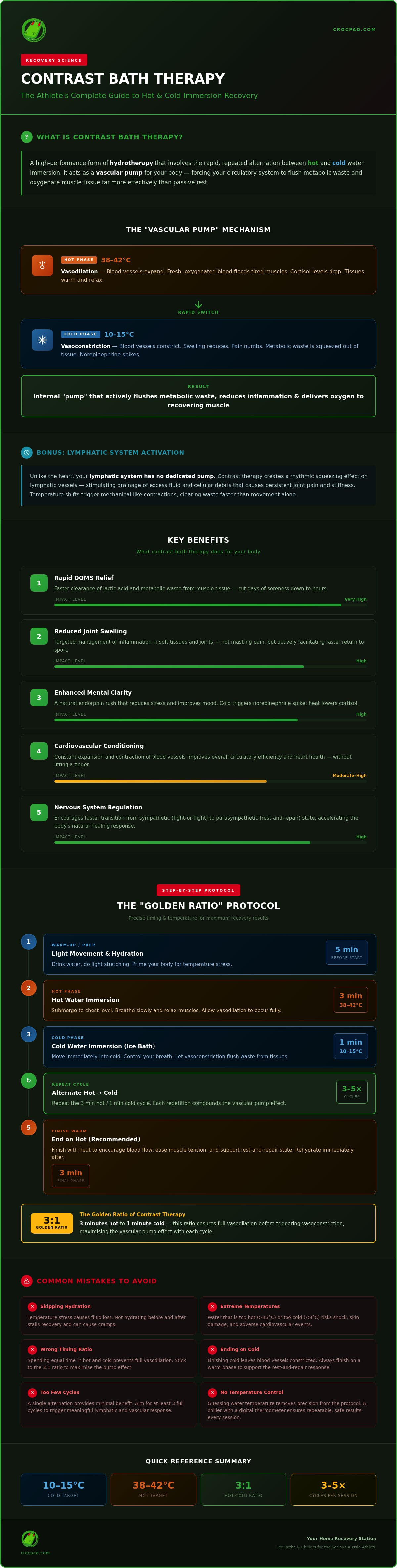
Precision is everything when you want to get the most out of your recovery. Your cold water should target a range between 10°C and 15°C. You only need to stay in for 1 minute to trigger the necessary response. For the hot cycle, aim for a temperature between 38°C and 40°C for a duration of 3 to 4 minutes. The hot cycle is intentionally longer than the cold cycle because heat takes more time to penetrate deep into the muscle tissue and fully expand the blood vessels, whereas the cold shock happens almost instantly upon immersion.
The 20-Minute Recovery Routine
Follow this specific sequence to optimise your results. This routine is designed to fit into a busy schedule while still providing the elite-level benefits you're after. Grab a towel, set a timer on your phone, and get started.
- Step 1: Start with hot immersion for 3 to 4 minutes. This relaxes the muscles and begins the vasodilation process.
- Step 2: Transition quickly to the cold tub for exactly 1 minute. This provides the "shock" effect that constricts the vessels and moves the blood.
- Step 3: Repeat this cycle 3 to 5 times. Consistency through the repetitions is what drives the "vascular pump" effect mentioned earlier.
- Step 4: Always end on the cold cycle. This ensures you leave the session with reduced inflammation and a tightened vascular system.
Once you finish your final cold plunge, don't jump straight into a hot shower. Dry off and allow your body to return to its natural temperature gradually. This helps sustain the benefits of the contrast bath therapy and keeps your energy levels high for the rest of the day. If you're using a portable ice bath, you can easily drain and pack it away, or leave it ready for your next session. Mastering this protocol means you're no longer at the mercy of muscle soreness; you're in control of your own recovery timeline.
Common Mistakes and Safety Considerations
While contrast bath therapy is an incredible tool for rejuvenation, you must respect the physical stress it places on your system. One of the biggest mistakes beginners make is chasing extreme temperatures. Pushing the cold below 10°C or the heat above 40°C doesn't necessarily yield better results; it simply increases the risk of skin burns or hypothermia. Consistency and correct technique are far more valuable than showing off how much cold you can handle. Focus on the process, and the results will follow naturally.
Hydration is another critical factor that many Aussie athletes overlook. Even though you are submerged in water, the heat cycle causes significant sweating, while the cold cycle can trigger a diuretic response. Drink plenty of fresh water before and after your session to maintain your performance levels. This therapy is intense, so certain groups must exercise caution. If you have a heart condition, high blood pressure, or are pregnant, you should skip the contrast cycles and consult your GP first.
Listening to Your Body
You need to distinguish between the natural "sting" of the cold and actual physical pain. It is normal to feel a bit of a rush, but if you start shivering uncontrollably or your skin turns an ashen colour, you have stayed in too long. Build your tolerance slowly over several weeks. Start at the higher end of the cold spectrum, around 15°C, and only drop the temperature once your body has adapted to the sensation. If you're looking for a reliable way to manage these temperatures without the guesswork, explore the range of Ice Baths & Chillers at Crocpad for professional-grade control at home.
When to Use Cold Only vs Contrast
Timing is everything when managing an injury. If you have just rolled your ankle or suffered a fresh muscle tear, stick to cold immersion only for the first 24 to 48 hours. Introducing heat too early can actually worsen swelling by increasing blood flow to an already inflamed area. Once the initial acute phase has passed and the swelling has stabilised, you can transition to contrast therapy to help "flush" the area and speed up the final stages of rehab. This transition is a key part of a smart recovery plan that keeps you on the field and out of the physio's office.
Setting Up Your Home Recovery Station with Crocpad
Setting up a professional recovery centre doesn't require a commercial lease or a six-figure renovation. You can transform your garage or backyard into an elite-level zone with the right gear. Forget the constant trips to the local servo for bags of ice that melt before you even get home. Relying on ice bags for regular contrast bath therapy is a logistical nightmare and an expensive habit. It is almost impossible to maintain the precise 10°C to 15°C range needed for the protocol when you are constantly fighting the Australian heat.
Integrating a dedicated Ice Bath Tub and a specialised water chiller is the only way to ensure consistency. These chillers allow you to set your target temperature and walk away. You won't need to mess around with thermometers or frozen water bottles. For those working with a smaller footprint, the ice Bath Pod offers a compact, space-saving solution that delivers the same high-performance results. It fits easily into tight corners while still providing enough depth for full immersion.
Choosing the Right Equipment
A standard household bathtub isn't designed for the rigours of daily thermal transitions. They often lack the depth for full-body immersion and don't hold temperature well. Dedicated Crocpad equipment is built from durable, marine-grade materials that can withstand the harsh Australian sun without cracking or fading. This structural integrity ensures your station remains a reliable part of your routine for years. Having a chiller attached means your water stays crisp and ready; this allows you to focus entirely on the "vascular pump" effect rather than the setup.
Maintenance and Care for Your Recovery Gear
Keep your water hygienic by using a simple filtration system or regular water changes. It is a good habit to rinse off any sweat or dirt before you climb in to keep the water clear for longer. When you aren't using your Portable ice bath, use the provided cover to keep out leaves and debris. If you need to clear some space, these units are designed for easy drainage and can be packed down into a compact size in minutes. This portability makes them perfect for athletes who travel or those who want to take their recovery on the road.
Organise your home recovery station with Crocpad Ice Baths & Chillers to take your physical performance to the next level.
Take Control of Your Physical Peak
You now have the exact blueprint to turn your backyard into a professional-grade recovery zone. By mastering contrast bath therapy, you're no longer just waiting for your muscles to stop aching; you're actively forcing your body to repair itself faster. Remember to stick to the "Golden Ratio" of timing and maintain those precise temperature targets to see the best results in your performance and energy levels. Consistency is the secret weapon that separates elite performers from the rest of the pack.
Crocpad is a trusted Australian brand specialising in high-performance recovery gear built for our demanding conditions. Our equipment features marine-grade durability for outdoor use and offers portable, easy-to-set-up solutions that fit any lifestyle. You don't need to be a pro athlete to recover like one. All you need is the right protocol and the right gear to stay ahead of the game and keep your body feeling revitalised.
Explore Crocpad Ice Baths & Chillers for your home recovery setup and start feeling the difference in your next session. It's time to stop making excuses and start making progress. Get out there and push your limits, knowing your recovery is sorted.
Frequently Asked Questions
Is contrast bath therapy better than just an ice bath?
Contrast therapy is often superior for flushing metabolic waste because it uses the "vascular pump" effect to move blood through tissues. While a standard ice bath is excellent for numbing pain and reducing acute swelling, the alternating heat in contrast bath therapy prevents the stiff, heavy-legged feeling that can sometimes follow a long cold soak. It is particularly effective for general muscle soreness rather than a fresh, acute injury.
How many times a week should I do contrast therapy?
Most Aussie athletes find that two to three sessions per week provide a significant boost to their recovery and energy levels. If you are training at a high intensity every day, you can safely perform this routine daily to keep your joints mobile. The key is to listen to your body and ensure you aren't feeling excessively fatigued. Consistency over the long term will always yield better results than sporadic, intense sessions.
Can I do contrast bath therapy in my shower?
You can certainly use your shower by alternating the tap between hot and cold, but it isn't as effective as full immersion. Immersion provides hydrostatic pressure, which helps compress the tissues and move lymphatic fluid more efficiently. A shower is a great starting point for beginners to build tolerance, but upgrading to a dedicated tub or pod will significantly improve your physiological response and overall recovery speed.
What is the best temperature for the cold part of the contrast bath?
The ideal temperature range for the cold component is between 10°C and 15°C. This is cold enough to trigger vasoconstriction without causing extreme distress to your nervous system. Going much lower than 10°C doesn't necessarily provide more benefits for contrast bath therapy and can actually make it harder to complete the necessary cycles. Using a chiller ensures you hit these precise numbers every time without needing bags of ice.
How soon after a workout should I start my contrast bath?
You should aim to start your session within 30 to 60 minutes of finishing your training. This window is when your metabolic waste products are at their peak and your muscles are still warm from exercise. Starting early helps kickstart the flushing process before inflammation sets in too deeply. If you can't get to it immediately, even a session later in the evening will still provide benefits for your sleep and next-day mobility.
Are there any side effects of alternating hot and cold water?
Some people experience temporary dizziness or a slight "pins and needles" sensation due to the rapid changes in blood flow. This is usually harmless, but you should always move slowly when exiting the water. You might also notice skin redness from the heat cycles, which is a normal sign of vasodilation. If you feel faint or have a heart condition, stop immediately and speak with a healthcare professional to ensure this therapy is safe for you.
Do I need a professional chiller for contrast therapy at home?
While you can use ice bags, a professional chiller is a game-changer for anyone serious about their recovery. Chillers maintain a constant, precise temperature, which is difficult to achieve manually in the Australian heat. They also save you the ongoing cost and hassle of buying ice for every session. Having your water ready at the touch of a button makes it much easier to stick to your protocol and see lasting physical improvements.


