

A stronger cleaner isn’t necessarily better for a floating mat. If you’re wondering how to remove salt, grime or marks without risking damage, start with the marine grade pvc floating mat cleaning instructions for your specific mat rather than treating every marine surface the same way.
For routine care, Crocpad’s guidance is simple: wipe the mat clean and hose it down. Let it dry fully before rolling it up, then store it away from direct sunlight. This gives you a practical routine without introducing a cleaner or tool that may not suit the mat. For anything beyond routine cleaning, follow the care directions in your product manual.
This guide sets out a rinse, wipe, dry and storage routine, along with clear advice on stubborn marks and common shortcuts to avoid. You’ll also find safety reminders for handling and using the mat, so you can keep care simple and get back to enjoying the water.
Key Takeaways
- Use marine grade pvc floating mat cleaning instructions for the mat’s specific materials, not as a one-size-fits-all guide to every marine surface.
- Remove loose debris before wiping, so grit and sharp particles aren’t dragged across the mat.
- For routine care, wipe the mat clean and hose it down. Check the manual before trying a chemical cleaner or a more intensive method.
- Let the mat dry fully before rolling it up, then store it away from direct sunlight.
- Never tow a Crocpad floating mat behind a boat or other watercraft. Towing may cause injury and voids the warranty.
Marine-grade PVC floating mat cleaning: understand the surface before you start
A floating mat isn’t necessarily made or constructed like a boat seat, deck mat or dock surface. Cleaning advice for those products may not apply to your mat. This guide focuses on floating-mat care and Crocpad’s stated maintenance guidance.
Marine-grade PVC describes polyvinyl chloride associated with marine use, but the term alone doesn’t set a universal cleaning method. You can read general background in Polyvinyl chloride (PVC), but that information isn’t a substitute for product-specific care directions. The surface, construction and other materials in a mat all affect which cleaning methods are appropriate.
That distinction matters when following marine grade pvc floating mat cleaning instructions. Crocpad’s stated routine is to wipe the mat clean and hose it down. Treat this as a straightforward baseline, not as evidence that every product described as marine-grade has the same construction or can tolerate the same treatments. Check your product manual before using a chemical cleaner or a more intensive method.
PVC and foam: why the material distinction matters
PVC and XPE foam are different materials, and a product may include different materials in separate components. Don’t assume that cleaning directions for a PVC surface also suit foam, or that advice for a boat mat applies to every part of a floating mat. Follow the care instructions for the specific product and surface, and use its product information to identify the materials.
The simplest routine for routine floating-mat care
For everyday care, Crocpad’s guidance is to wipe the mat clean and hose it down. Rinsing can carry away loose residue, while wiping removes surface dirt. These steps don’t establish that a particular detergent or stain treatment is suitable. If residue remains, check the manual before trying a stronger product.
Keep cleaning, drying and storage as separate steps. Rinsing and wiping deal with routine surface dirt; drying prepares the mat for storage, and persistent marks may need product-specific guidance. This helps you avoid treating an untested product as standard care or applying advice meant for a different marine item. The next section sets out a careful sequence, including how to clear loose debris before wiping.
How to clean a floating mat: rinse, wipe and dry it carefully
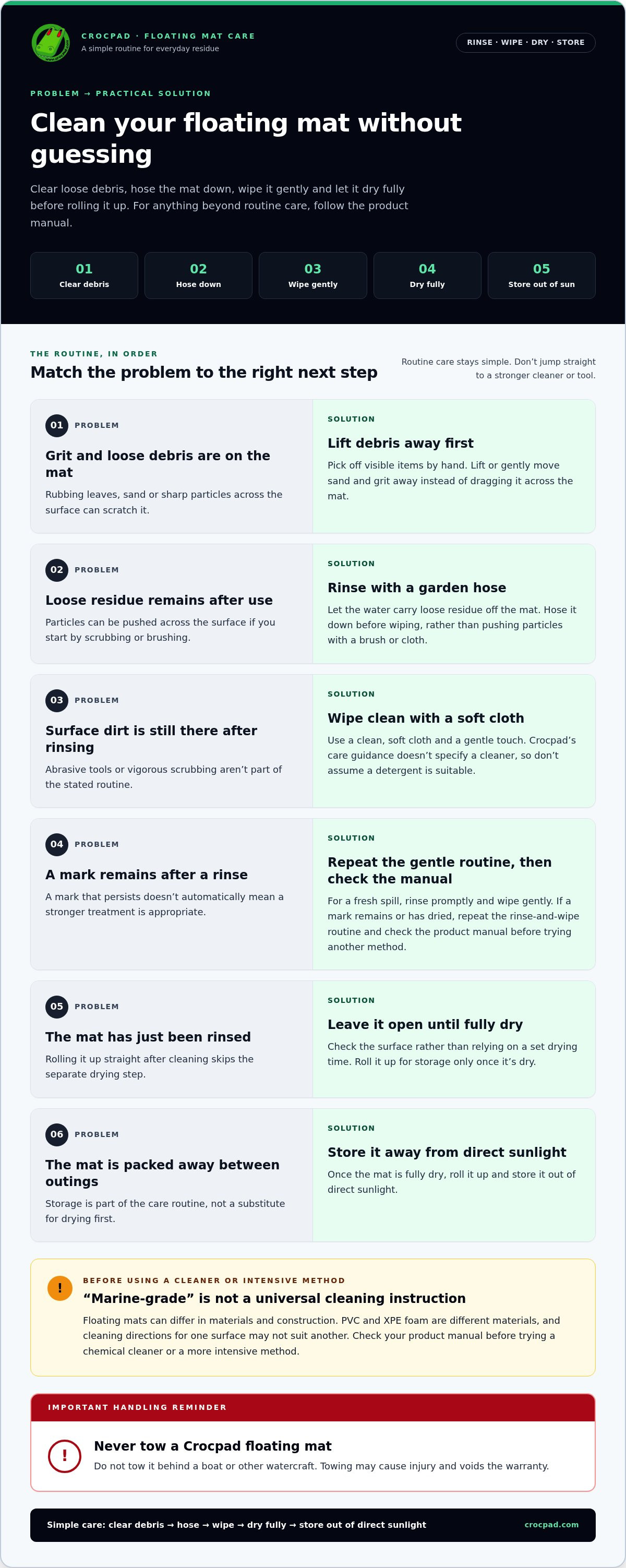
A simple sequence helps remove everyday residue without jumping straight to a treatment that may not suit the mat. Clear loose debris, hose the mat down, wipe the surface, then let it dry before rolling it up. Crocpad’s stated maintenance guidance is to wipe the mat clean and hose it down. Follow the product manual for any material-specific directions.
Clear loose debris, hose the mat down, wipe it clean and let it dry fully before rolling it up.
- Remove loose debris. Pick off leaves and other visible items by hand. Lift or gently move sand and grit away rather than rubbing it across the mat. Dragging sharp particles over a surface can scratch it.
- Hose it down. Rinse away loose residue with a garden hose. Let the water carry particles off rather than pushing them across the surface with a brush or cloth.
- Wipe the surface. Use a clean, soft cloth and a gentle touch to remove remaining dirt. Avoid abrasive tools and vigorous scrubbing. Crocpad’s care guidance doesn’t specify a cleaner, so don’t assume a detergent or treatment is suitable.
- Allow it to dry. Leave the mat open until it’s dry before rolling it for storage. Drying conditions vary, so check the surface rather than relying on a set time.
A straightforward clean after water use
After an outing, check the mat for grit and residue. If it needs rinsing, hose it down before wiping so loose particles are carried away instead of rubbed into the surface. Wipe gently, then leave the mat open to dry. Don’t roll it up straight after rinsing: cleaning and drying are separate steps.
When a mark does not come away with a rinse
For a fresh spill, start with a prompt water rinse and gentle wipe. If a mark has dried or remains, repeat the wipe-and-rinse routine rather than immediately reaching for a stronger treatment. Check the product manual before trying another method, as directions can depend on the specific mat and its materials.
These marine grade pvc floating mat cleaning instructions keep routine care focused on simple, stated steps rather than unverified cleaner recommendations. Make rinsing, wiping and drying part of packing up after a day on the water. If you’re choosing a mat, explore Crocpad Floating Water Mats, available in a range of sizes.
PVC mat cleaners and tools: choose a cautious approach to stubborn marks
A stubborn mark can make a stronger cleaner seem like the obvious next step. But a product described as “marine” isn’t automatically suitable for every floating mat. Material compatibility matters more than a cleaner’s marine label because mats can differ in materials and construction. Use the care directions for your product rather than borrowing a treatment from a guide written for another type of mat.
Here’s a simple comparison, starting with the options that involve the fewest assumptions:
Water rinse
Hoses away loose residue without adding a cleaning product. It’s a cautious first step when the mat needs rinsing.
Wipe clean
Matches Crocpad’s stated maintenance guidance. Use a gentle approach and avoid rubbing grit across the surface.
Unverified chemical treatment
A cleaner isn’t suitable for a particular mat just because it’s marketed for marine use. Check the product manual before trying an unfamiliar treatment.
Crocpad’s stated care options are wiping the mat clean and hosing it down. The product manual is the right reference for product-specific directions beyond those steps. Cleaner recommendations for another brand’s boat, swim platform or marine mat shouldn’t be treated as instructions for a Crocpad floating mat.
Rinse, wipe or use a stronger cleaner?
Start with a rinse or gentle wipe, depending on what’s on the surface. If a mark persists, check the product manual before trying a stronger treatment. A generic guide may describe a method for a different material, so let the manual for your specific product guide what to do next. Don’t assume an approach described as suitable for PVC applies to every surface or component.
Brushes, pressure washers and improvised stain treatments
Be cautious about advice to scrub with a stiff brush or use a pressure washer. Recommendations for another mat don’t show that those tools suit yours. Avoid sharp or abrasive tools that could mark the surface, and don’t improvise a stain treatment based on a list made for a different product. If the manual doesn’t give directions for the mark, stick with the stated care routine rather than experimenting.
These marine grade pvc floating mat cleaning instructions are deliberately cautious: a product category or label can’t replace guidance for its actual materials. Check the manual before using an unfamiliar cleaner or tool, especially if a mark remains after routine care. To compare options, explore Crocpad Floating Water Mats, available in several sizes.
Drying, storage and handling: protect your floating mat between outings
Cleaning is only one part of the routine. Drying and storage come next: finish cleaning, let moisture evaporate, then put the mat away according to its care guidance. Crocpad advises rolling the mat up for storage and keeping it away from direct sunlight while stored. These are practical handling steps, not a promise of a particular lifespan.
Dry first, then roll and store
After rinsing or wiping, leave the mat open and allow it to dry before rolling it up. Check the surface rather than relying on a set drying time, as conditions vary. Once dry, roll it for storage and choose a spot away from direct sunlight. Don’t assume a specific temperature or humidity limit unless the product manual provides one.
Keeping the stages separate makes the routine easy to follow: cleaning removes residue, drying prepares the mat for storage, and rolling puts it away according to Crocpad’s stated guidance. Read Crocpad’s maintenance and storage guidance alongside the manual for your specific product.
Handle and inspect the mat with care
Choose a clear area when moving or rolling the mat. Keep it away from sharp objects and rough surfaces that could catch or mark it, and avoid dragging it across debris. As you handle it, look over the surface for visible dirt or damage. Use the manual for product-specific handling directions rather than assuming every floating mat is made or cared for in the same way.
Never tow a Crocpad floating mat behind a boat or any other watercraft. Towing voids the warranty and may cause injury. This is a firm safety limit, not an alternative way to move the mat between locations.
Before putting the mat away, check that it’s clean, dry and stored away from direct sunlight. Finish any step that’s still needed, then follow the product manual for additional instructions. When you’re ready to choose a mat for your next day on the water, explore Crocpad Floating Water Mats.
Crocpad floating mat care: follow the manual and keep the routine simple
A consistent after-use routine is easier to follow than a collection of guessed treatments. Crocpad’s stated care basics are straightforward: wipe the mat clean and hose it down, then let it dry before rolling it up for storage away from direct sunlight. The checklist below brings those steps together without assuming every mat has identical materials.
A quick care checklist after each outing
Before packing the mat away, give it a quick visual check. Look for loose debris or visible residue, then decide whether it needs a hose-down. Work through the steps in order so cleaning, drying and storage each get attention:
- Check the surface. Notice visible dirt or debris before handling the mat.
- Hose it down when needed. Rinse away loose residue without dragging particles across the surface.
- Wipe it clean. Use a gentle approach and stick to the stated care guidance.
- Let it dry. Leave it open until dry before rolling it up.
- Roll and store. Put it away rolled up, in a spot away from direct sunlight.
This gives you a repeatable end-of-outing routine without adding unverified products or extra maintenance steps. If the mat still looks marked after routine care, pause before trying a stronger treatment and consult the product manual for directions specific to that mat.
Where to find Crocpad product guidance
Crocpad product manuals are available through the website. Use the manual for your specific product when you need material-specific cleaning or handling instructions, especially if you’re considering anything beyond wiping clean and hosing down. General advice for another marine surface may not apply to your floating mat, so let its own product guidance lead.
Keep the distinction clear: the routine provides a practical baseline, while the manual is the reference for product-specific treatment. These marine grade pvc floating mat cleaning instructions make ordinary care easier, but they don’t replace directions for a particular surface or component. If you’re ready to choose a mat for your next day on the water, explore Crocpad Floating Water Mats.
Make mat care part of your next water day
A good care routine should be easy to repeat after a day out. Use the mat’s own guidance as your reference point, and let its product manual steer any material-specific decisions. That keeps your approach grounded in the mat you own, rather than a generic treatment intended for a different surface.
Keep the marine grade pvc floating mat cleaning instructions close at hand, then build a simple pack-up habit around the stated care: wipe clean, hose down, dry, roll and store away from direct sunlight. Product manuals are available through the Crocpad website if you need to revisit the details before trying a different method.
Choosing a floating mat is also a good time to plan for straightforward care. Explore Crocpad Floating Water Mats and choose an option for your next day on the water. Keep the routine simple, and make time to enjoy the water.
Frequently Asked Questions
Can I pressure wash a marine-grade PVC floating mat?
Don’t assume pressure washing is suitable just because another brand recommends it. Crocpad’s stated care starts with wiping the mat clean and hosing it down, so use a hose as your baseline. A concentrated jet could affect vulnerable details such as seams, edges or fittings. Check the manual for your specific product before using a stronger method, and only do so if its instructions allow it.
What cleaner should I use on a PVC floating mat?
Start with the care method stated for your product. For marine grade pvc floating mat cleaning instructions, begin with a wipe and hose-down rather than choosing a cleaner based on advice for another mat. A product suggested for a boat deck or foam surface may not suit yours. If water and wiping leave a mark, check the relevant product manual before trying an unfamiliar chemical treatment.
Can I use bleach or solvents to remove marks from a floating mat?
Don’t assume bleach, solvents or other strong treatments are suitable for a floating mat. Its surface and components may have different care needs, and a treatment used on another product isn’t proof of compatibility. Crocpad’s stated routine doesn’t call for chemical cleaners. If a mark remains after routine care, consult the manual for your particular product before applying anything stronger.
How should I clean a food or drink spill from a floating mat?
Wipe up a fresh spill as soon as practical, before it sits on the surface. Then hose the mat down and let it dry before rolling it away. If a dried mark remains, avoid scraping it or immediately reaching for a strong cleaner. Repeat the basic wipe-and-rinse approach gently; if the mark persists, use the product manual for guidance suited to that mat.
Is marine-grade PVC the same material as XPE foam?
No. PVC and XPE foam are distinct material categories, and a product can use different materials in different components. Cleaning guidance for one surface may not suit another part of the same item. Check the product’s material description and manual before choosing a treatment or tool. Don’t assume a cleaner or method suitable for PVC is also suitable for foam.
Can I use a floating mat on a rough surface while cleaning it?
Not without a protective mat. Crocpad’s safety guidance says not to use its floating mats on rough surfaces without protection. Before laying yours out beside a pool or on a dock, clear the area and place suitable protection underneath. Keep sharp objects away as you handle it. Rough patches or stray debris can come into contact with the mat even during a quick clean.
Can I tow a Crocpad floating mat behind a boat?
No. Never tow a Crocpad floating mat behind a boat or any other watercraft. Towing voids the warranty and may cause injury, even if the mat appears securely attached or the boat is moving slowly. Don’t use a towline to move the mat between locations. Follow the product’s safety instructions and keep the mat untowed whenever it’s around a vessel.


