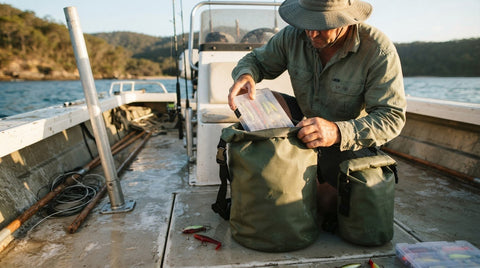
Salt, sand and spray can turn a good day on the water into a tackle clean-up. A marine dry bag for saltwater fishing tackle can help keep gear together and shield it from boat spray and damp surfaces, but choosing the right size and caring for the bag properly matter too.
A bag needs to suit both your fishing setup and the conditions you expect it to face. This guide covers practical ways to clean and store a dry bag after saltwater use, what to consider when choosing capacity, and how to compare product prices and delivery costs in Australia. It also explains how to reduce exposure to weather, sand and dirt without assuming every bag offers the same protection.
From rinsing away salt after a trip to checking that your tackle fits without straining the closure, these steps can help you keep your gear organised on the water.
Key Takeaways
- Match bag capacity to the tackle you carry so gear stays organised without leaving excess space to manage.
- After saltwater use, rinse away residue and let the bag dry thoroughly before storing it.
- Compare Australian prices alongside size and intended use to understand what each option suits.
- Reduce exposure to spray, sand and dirt by keeping the bag closed and stowed securely on the boat.
- Choose a bag for the conditions you expect, and avoid assuming every dry bag offers the same protection.
Waterproof protection from water, sand, dust and dirt
A dry bag can keep fishing gear together and help protect it from spray, grit and damp boat surfaces. The level of protection depends on the bag’s construction, closure and stated limits.
Waterproofing and submersion limits
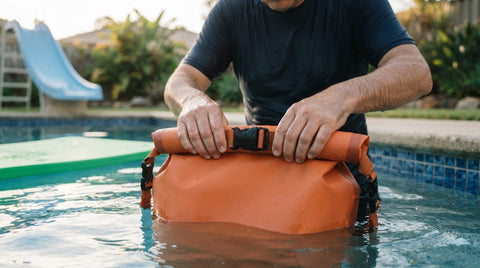
A bag’s water protection depends on its seams and on using the closure as intended. With a roll-top design, fold the top evenly before fastening it; an open or twisted closure can let water in. Check the maker’s instructions for any limits on submersion. The word “waterproof” alone doesn’t tell you how long or how deeply a bag can be submerged.
Styles and capacities for fishing gear
Choose a shape that suits what you carry. A compact pouch can hold small items such as spare hooks or soft-plastic lures, while a larger bag may fit bulkier tackle boxes. Compare the bag’s usable space with your packed gear, including rigid corners and handles. Leave enough room to close it properly instead of forcing the closure around an overfilled load.
Storing tackle, lures and valuables
Tackle boxes and fishing lures can go in a dry bag if the box fits without straining the closure. Keep sharp hooks secured in a closed tackle tray, and position it so hard edges don’t press against the bag. Phones and valuables can also be stored inside; a separate small pouch makes them easier to find and keeps them apart from loose tackle.
On a boat, consider more than direct splashes. Wet hands can carry sand into the bag, while dust and dirt collect around exposed gear. Close the bag between uses, keep it off gritty deck surfaces and avoid dragging it past rod holders or other hard fittings. These simple steps reduce debris and unnecessary wear.
Read the care and protection instructions before relying on a bag around water. Waterproof ratings relate to defined test conditions, so check the specific rating and its limits rather than assuming every rated bag handles submersion. If the instructions describe splash protection, don’t treat that as protection against immersion. A label is useful when you know what it covers.
Before a trip, check the closure, seams and outer surface for dirt or visible damage. Pack tackle so sharp edges won’t rub against the material, and secure the bag where it won’t slide across the boat. Choose a marine dry bag for saltwater fishing tackle based on your gear, the closure and the water exposure you expect, not the label alone.
WHAT IS THE BEST WAY TO CLEAN AND MAINTAIN MY DRY BAG?
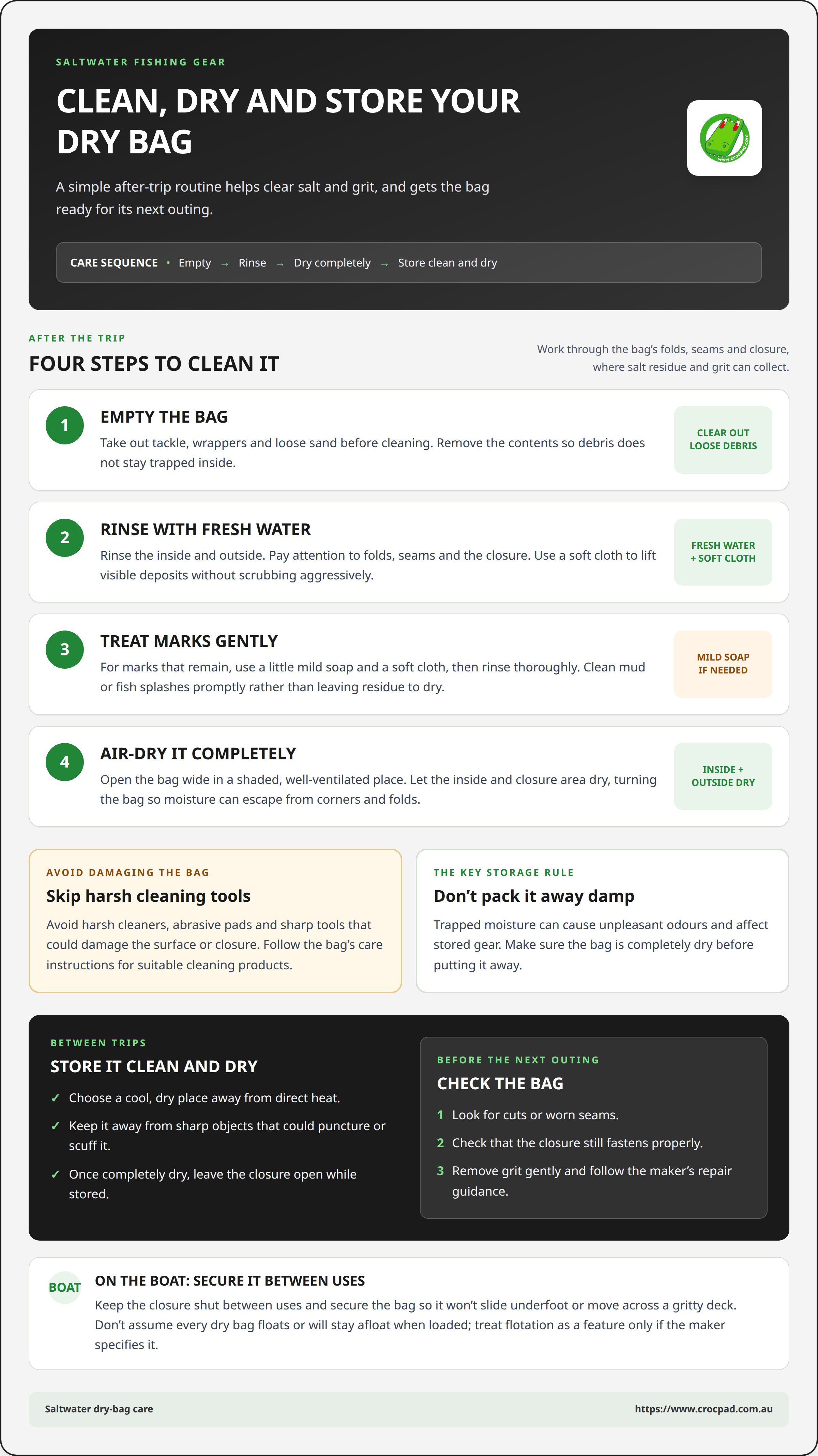
After a saltwater fishing trip, empty the bag and remove tackle, wrappers and loose sand. Rinse the inside and outside with fresh water, paying attention to folds, seams and the closure, where salt residue and grit can collect. Use a soft cloth to lift away visible deposits without scrubbing the material aggressively.
For marks that remain, use a little mild soap and a soft cloth, then rinse thoroughly. Avoid harsh cleaners, abrasive pads and sharp tools that could damage the surface or closure. Follow the bag’s care instructions, especially if they specify suitable cleaning products. Clean mud or fish splashes promptly instead of leaving residue to dry.
Dry the bag completely before storing it. Open it wide in a shaded, well-ventilated place, and let the interior and closure area air-dry. Turn it so moisture can escape from corners and folds. Don’t pack it away while damp, as trapped moisture can cause unpleasant odours and affect stored gear.
- Remove tackle and loose debris before rinsing.
- Use fresh water and a soft cloth to clean salt and dirt.
- Rinse away soap, then air-dry the inside and outside.
- Store the bag clean, dry and away from sharp gear.
Storage matters between trips. Keep the dry bag in a cool, dry place, away from direct heat and objects that could puncture or scuff it. Once it’s completely dry, leave the closure open while it’s stored. A shelf can work if the bag stays clear of hooks, tools and damp flooring.
On a boat, secure the bag so it won’t slide underfoot or move across a gritty deck. Use a suitable attachment point if the design has one, and keep the closure shut between uses. Don’t assume every dry bag floats or will stay afloat when loaded. Treat flotation as a feature only if the maker specifies it, and secure the bag regardless.
Before your next outing, check for cuts, worn seams or a closure that no longer fastens properly. A tear can let water in, and sand caught in the closure can prevent a firm seal. Remove grit gently and follow the maker’s repair guidance rather than improvising with tape or glue.
Consistent care keeps a bag ready for the next saltwater session. For a broader day-on-the-water setup, explore water recreation gear.
Dry bag prices in Australia
For Australian buyers, compare the listed price with delivery costs to understand the total. Check the delivery charge at checkout, as it can affect the total cost.
A dry bag’s price depends on its features and how well it suits your fishing setup. Compare capacity, closure, material and intended water exposure. A compact pouch for spare lures serves a different purpose from a larger bag for a tackle box, pliers and spare clothing. Match the features to your load instead of paying for space you won’t use.
Read sale prices in context. For example, if a dry bag is on sale, compare its sale price with its regular listed price, capacity and included features. Check the exact model and size, then include delivery in the total. A discount alone doesn’t show whether a bag suits saltwater fishing or the tackle you plan to pack.
Compare the whole purchase
Use the same checklist for each option: capacity, closure type, stated protection, seam condition and delivery charge. If bags differ in size, compare how much tackle each can carry rather than treating them as equivalent. A small lure pouch and a boat-sized gear bag meet different needs, even if both are described as waterproof.
- Record the bag’s size and capacity beside its listed price.
- Compare the closure and protection details for your intended use.
- Add the delivery option to understand the purchase total.
- Check whether a sale applies to the size you need.
The lowest initial price may not be the right fit if the bag can’t hold your tackle securely. Start with what you carry: a single tackle tray, several lure boxes or a mixed load with tools. Then compare bags with suitable capacity and similar features. This keeps the decision practical without assuming a higher price guarantees better protection.
Delivery costs can make a more noticeable difference to a small order. Include them when comparing Australian checkout totals, and keep delivery separate from the product price.
Before buying, make sure the selected size fits your tackle and leaves the closure room to fasten properly. Compare the listed features against your boating conditions, then weigh convenience, capacity and delivery together. That gives you a clearer basis for choosing a dry bag at a price that makes sense for your fishing kit.
Available bag sizes
Dry bag sizes vary by design, so compare usable space rather than relying on a small, medium or large label. The shape can affect whether a rigid tackle box fits, even when the stated capacity looks suitable. Start with your gear, then match the bag’s dimensions and opening to the load.
Lay out your usual fishing kit before choosing. Include the tackle box, lure trays, pliers, line, phone pouch and any spare clothing you want to keep together. A soft bag can mould around flexible items, but a hard-sided tackle box needs enough width and height to pass through the opening. Measure the box and compare it with the bag’s interior dimensions.
Match capacity to your tackle
A compact bag may suit a small lure selection, leader spools and hand tools. For a larger setup, allow room for the tackle box and the items you reach for during a trip. Don’t choose by the empty volume in the product details alone. The closure needs room to fasten, and bulky gear can leave awkward gaps.
Shape matters as much as capacity. A narrow bag may fit neatly beside a boat seat, while a wider opening can make it easier to retrieve a tray without unpacking everything. A tall bag can hold longer items, but its base may be awkward in a crowded storage area. Consider where it will sit aboard and how you’ll reach its contents.
Use this practical fit check before choosing a size:
- Group the tackle and accessories you usually carry together.
- Measure the largest rigid item, such as a tackle box.
- Compare its dimensions with the bag’s internal space and opening.
- Allow room for the closure to fold or fasten as designed.
Consider how often you need separate access to different equipment. One larger bag can carry a full fishing kit, while smaller bags can keep lures, electronics or wet items apart. Separate storage can make a packed boat easier to organise, but it also means keeping track of more pieces. Choose the setup that suits your routine.
Capacity descriptions aren’t always comparable across brands or bag shapes. Check whether measurements are internal or external, and look for the opening width. If product details give volume but not dimensions, compare that volume with the shape of your packed kit rather than treating litres as a guarantee that everything will fit.
Choose a bag for the load you actually take, not every item you might carry one day. A well-matched size keeps tackle accessible and avoids forcing the closure around an overfilled bag. For a marine dry bag for saltwater fishing tackle, check the tackle box first, then allow for smaller gear and storage space aboard.
Boat-bag protection from saltwater and weather
A boat exposes fishing gear to more than an occasional splash. Spray can cross the deck, rain can wet exposed equipment, and wind can blow grit into open storage. Choose a sheltered place for the bag, keep it closed between uses and secure it before the boat moves. A dry bag can help protect and contain gear, but placement and handling still matter.
Start with the boat layout. A bag under a seat or inside a covered locker has less direct exposure than one beside the gunwale. Keep it clear of standing water, drains and wet ropes. If conditions change, move exposed gear under cover instead of relying on the bag to handle every source of moisture.
Saltwater spray can leave residue around the closure. Before opening the bag, wipe wet hands and clear visible grit from the closure area. This helps prevent salt or sand getting inside with your tackle. Close the bag again after retrieving pliers or a lure, especially when spray is reaching the deck.
Secure the bag so it can’t slide, tip or catch on moving equipment. Use a suitable storage compartment or an attachment point designed for the bag. Keep it away from sharp hooks, rod guides and metal fittings that could rub against its material. A bag rolling across a deck can be damaged even if it never gets wet.
- Stow the bag under a seat or in a covered locker when possible.
- Keep it clear of drains, pooled water and wet ropes.
- Wipe grit from the closure before opening it.
- Secure it away from hooks and hard fittings.
Plan for items left outside the bag, too. A phone, spare line or tackle tray on deck can still get wet while you open the main compartment. Take out only what you need and return it promptly. Keep frequently used items together in a smaller pouch, so the main closure stays shut when conditions change.
On a longer outing, inspect the bag after heavy spray or rain. Check for a shifted closure, water around the opening or damage from contact with boat fittings. If conditions have exceeded the bag’s stated protection, move sensitive gear to a sheltered spot. A waterproof label doesn’t mean tackle can be left exposed indefinitely.
Set aside a sheltered place for the bag before heading out. Keep tackle organised inside, fasten the closure after each use and secure the bag whenever the boat is underway. These habits help reduce exposure to saltwater, windblown sand and changing weather without relying on the bag alone.
Planning a day on the water? Explore water recreation options alongside your boat setup.
Crocpad
Crocpad offers water recreation products for people who enjoy time around the water. Its range includes the Floating Water Mat, Minima Pool Slide, Megalo 3M Inflatable Water Pool Slide and Ice Baths & Chillers. These products suit recreation and recovery; dry bag selection and tackle protection remain guided by the bag’s size, closure and stated water limits.
Once your fishing gear is sorted, Crocpad’s water recreation range may suit other plans for time on the water. Explore the solid-foam Floating Water Mat for water play, or consider a Crocpad pool slide or ice bath for recreation and recovery.
Contact Crocpad to discuss its water recreation products.
Get your next fishing trip organised
Make your next step a gear decision that fits the way you fish. Before choosing a marine dry bag for saltwater fishing tackle, consider what you want close at hand and how you’ll carry it between the car, boat and shore. That practical picture helps narrow the options without buying for conditions you don’t expect to face.
Crocpad’s Waterproof Bags may be worth exploring as you plan your setup. Think about how a bag would work alongside your tackle and the space available on your boat. For questions about the range, contact Crocpad about dry bags.
With your gear organised and stored thoughtfully, you can focus on the water and enjoy the day ahead.
Frequently Asked Questions
What dry bag size is best for storing fishing tackle and gear?
Choose a size around the largest item you’ll carry, such as a rigid tackle case. A compact bag may suit a short outing with a small lure tray and pliers; a mixed kit with spare clothing needs more room. Consider whether you want wet items separate from electronics or food. Separate bags can make different items easier to reach without unpacking the whole load.
Are roll-top dry bags waterproof enough for saltwater fishing?
A roll-top bag that’s closed correctly can help shield its contents from spray and splashes, but that doesn’t automatically make it suitable for submersion. A bag stored in a sheltered cockpit faces different conditions from one repeatedly washed by waves. Match its stated protection to where it will sit, and use a separate protective case for sensitive equipment if exposure could damage it.
How much do fishing dry bags cost in Australia?
Prices vary with capacity, materials and construction, so there isn’t one price for every fishing dry bag. Treat the figure as a product listing, not a market-wide average. Compare the intended use and product details before choosing by price alone.
PVC vs TPU dry bags for saltwater fishing: which is more durable?
A material name alone doesn’t determine durability. Fabric weight, coating, seams and closure all affect how a finished bag handles regular use. For instance, a bag carried near sharp boat fittings needs protection from abrasion and punctures, whatever its material. Compare the maker’s care guidance and intended-use details, then choose a construction that suits your storage habits and fishing conditions.
What dry bag closures and seams prevent leaks on a boat?
Look for a closure that fastens evenly and seams suited to the bag’s stated water protection. Check that the closure meets cleanly along its full length, with no folds or grit caught in it. Inspect seams around strap attachments, where pulling may occur as the bag shifts aboard. Follow the maker’s fastening instructions, and don’t assume any seam design guarantees protection in every condition.