

How much clear water does a pool slide need for a safe landing? There isn’t one answer for every setup. If you’re assessing a splash down safety zone for inground pool slides, the right space depends on the slide, your pool layout and the people using it.
A clear landing area is essential, but it’s only one part of the setup. Water depth, slide position and exit, nearby pool edges, obstacles and other swimmers can all affect whether the layout meets the slide’s requirements. A generic measurement can’t confirm that a particular slide is suitable for your pool.
This guide explains how to assess the splashdown area, what to check in a slide’s instructions and how to compare slide options with your pool and intended users. Use the manufacturer’s requirements for the specific model, not guesswork or measurements borrowed from another slide.
Key Takeaways
- Assess the landing area as part of the whole pool layout, including nearby edges, obstacles and swimmer activity.
- Check the specific slide’s instructions for its intended pool type, setup requirements and landing-area needs.
- There’s no universal measurement for the splash down safety zone for inground pool slides. Compare the documented requirements with your actual pool.
- Before use, check the manual, clear landing space, product condition and activity around the pool.
- Compare slide options, including Crocpad models, with your pool layout and intended users before choosing.
What is a splash down safety zone for inground pool slides?
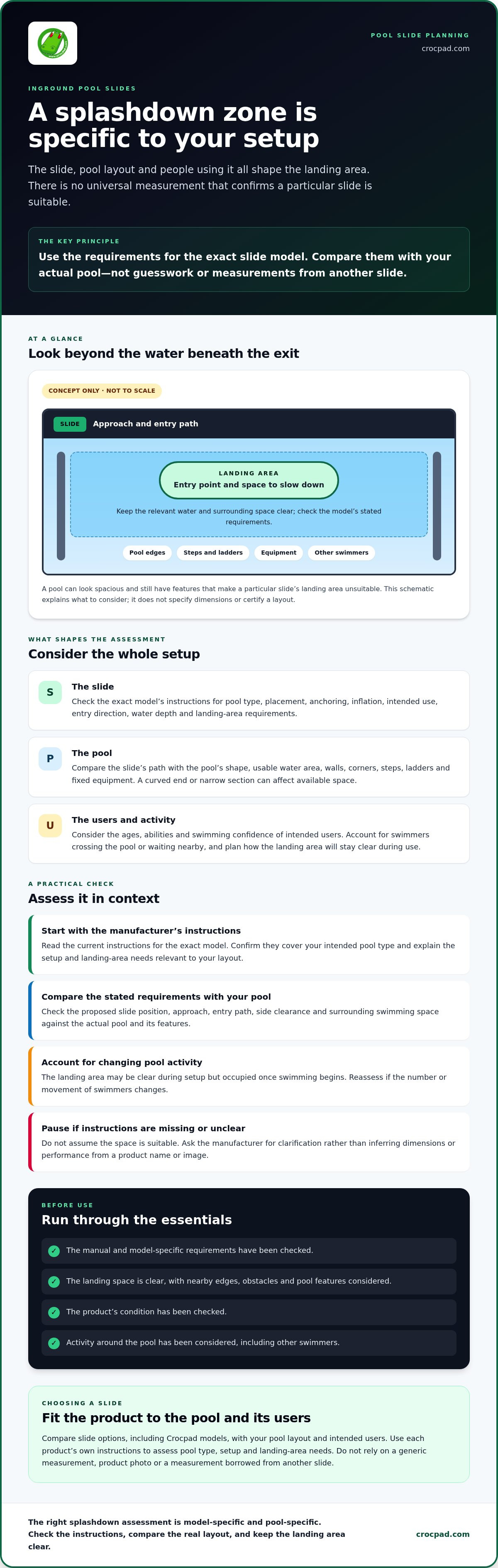
The splashdown zone is the part of the pool where a rider is expected to enter the water and slow down, along with the surrounding space that needs to stay clear. It’s not just the water beneath the slide exit. The rider’s path, entry point and nearby pool features all affect how much usable landing space is available.
Think of the splash down safety zone for inground pool slides as one part of a wider layout check. The slide’s approach, clearance along its sides and general swimming space are related, but they don’t replace the landing area. A pool can look spacious and still have features that make a particular slide’s landing area unsuitable.
A general overview of water slides and how they work can help explain the movement involved, but it can’t establish clearances for a particular product. Check the slide’s own instructions and assess your pool setup.
This clip shows a water slide in motion. Treat it as visual context only, not as a setup or safety guide.
What belongs inside the landing area?
Start with the water where the rider is expected to enter and slow down. Then look beyond that point. Swimmers, pool walls, steps, ladders and equipment can all affect whether the area is clear. Consider how people move through the pool, too. A landing area that’s empty during setup may not stay clear once swimming begins.
Check the product instructions for its landing requirements, including any details about water depth and the slide’s position relative to the pool. These model-specific directions matter more than general advice or measurements from another slide. If the instructions are unavailable or don’t address your layout clearly, don’t assume the space is suitable.
Why inground pool layouts need individual checks
Assess the pool’s shape, usable water area and proposed slide position together. A curved end, narrow section or fixed feature can reduce the available landing space, even in a pool that looks large overall. Consider the slide’s approach and entry path alongside side clearance and the areas used for everyday swimming.
No single layout suits every inground pool or slide. Compare the exact product instructions with your pool as it is, including permanent obstacles and the space people need to use. This gives you a practical basis for assessing a slide instead of relying on guesswork.
How the slide, pool and user shape a safe splashdown zone
A suitable landing area depends on more than the pool’s overall size. The slide’s design and setup instructions determine its intended entry path. The pool’s shape and fixed features affect the space available along that path, while the intended users are another factor to consider. The landing zone is specific to the slide and pool setup.
That’s why you can’t assess the splash down safety zone for inground pool slides from a product photo or a quick glance at the water. Before positioning a slide, check the current manufacturer instructions for placement, anchoring, inflation and intended use. Confirm the stated entry direction and landing-area requirements, then compare them with your pool. Don’t infer dimensions or performance from a model name or image.
Slide design and setup change the landing area
Follow the instructions for the exact slide model and setup. A change in position can alter where a rider enters the water, so check the prescribed placement and path rather than assuming the slide can point towards any open section. Confirm that the instructions cover your intended pool type and explain the requirements relevant to your layout. If guidance is missing or unclear, pause and ask the manufacturer for clarification before proceeding.
Pool features and intended users affect the assessment
Map the proposed landing path against pool walls, corners, steps, ladders and equipment. Consider the ages, abilities and swimming confidence of the intended users, without assuming that one setup suits everyone. The Pool & Hot Tub Alliance is a useful industry reference, but general resources don’t replace instructions for a specific product and pool arrangement.
Pool activity matters as well. A landing area that’s clear before use may be occupied by swimmers crossing the pool or waiting nearby. Plan how to keep the space clear while the slide is in use, and reassess if the number or movement of swimmers changes. Consider the approach, landing path and surrounding activity as one setup.
Crocpad lists inflatable options including the Minima Pool Slide, Mikros Pool Slide and Megalo 3M Inflatable Water Pool Slide. Treat each as an option to investigate, not a guaranteed fit. Check its current instructions and compare them with your pool before choosing. You can explore Crocpad pool slides as part of your comparison.
How to assess splashdown space without relying on universal measurements
A single clearance figure can’t confirm that every slide will fit every pool. Requirements depend on the particular slide and its instructions. The usable landing area depends on your pool’s shape, depth and fixed features. Don’t use a measurement from another product, a generic guide or a photo instead of checking the exact setup.
Assess each candidate separately. Find the current manufacturer instructions and compare their stated requirements with your pool as it is. For the splash down safety zone for inground pool slides, note what the instructions specify and what you can verify at the pool. Record unknowns rather than filling gaps with assumptions.
Compare the product instructions with your pool
Record the slide model and find its current instructions. Follow the manufacturer’s method for measuring or mapping the required area, including any directions about water depth, slide position or surrounding clearance. Don’t decide that a space is adequate just because it looks open.
Use a simple comparison table to organise your check:
| Check | Record |
|---|---|
| Slide instructions | Model, document date or version, and stated setup requirements |
| Available landing space | Area confirmed using the manufacturer’s specified method |
| Nearby obstacles | Walls, steps, ladders, equipment and other features near the planned path |
| Questions to resolve | Missing dimensions, unclear instructions or unconfirmed pool compatibility |
If the manual doesn’t state a detail you need, mark it as unconfirmed. Ask the slide supplier or manufacturer for clarification instead of estimating, borrowing a figure from another model or assuming the product name indicates its dimensions or intended pool type.
When the layout does not appear to meet requirements
Don’t set up or use the slide if you can’t confirm that it meets the stated requirements. Reconsider its position or assess another product only if the manufacturer’s instructions allow the proposed arrangement. Moving a slide to an area that looks clearer doesn’t prove the revised setup is suitable.
Some layouts are difficult to assess from measurements alone. If pool features make the landing area unclear, or the instructions leave an important question unresolved, seek guidance from the manufacturer or another appropriately qualified professional before proceeding. A clear record of the model, pool layout and unanswered questions can make that discussion more specific and useful.
A pre-use checklist for an inground pool slide splashdown zone
Build a check into your setup and swimming routine. Conditions can change: the slide may shift, pool activity may increase, or an obstacle may enter the landing area. For a splash down safety zone for inground pool slides, use the exact product instructions as your reference. Pause if you can’t confirm the setup still meets them.
Before opening the slide to swimmers, check the instructions, setup, landing area, product condition and activity around the pool.
- Before setup, confirm the model and instructions. Match the slide to its current manufacturer guidance. Check that the instructions address your intended pool type and planned use. Don’t rely on a manual for a similar model.
- Check the planned position and landing area. Look for people, obstacles and pool activity that could conflict with the slide’s entry path. Compare the available space with the product’s stated requirements, using the manufacturer’s measurement method where provided.
- Follow the setup directions. Use the documented instructions for placement, inflation and anchoring, along with any specified water conditions. Don’t improvise if a requirement is missing or unclear. Confirm it with the manufacturer before proceeding.
- Inspect the product before use. Check its condition and confirm it remains set up as instructed. If anything appears damaged, unstable or different from the prescribed arrangement, stop and consult the product guidance before use.
- Recheck the zone before each use. Make sure the landing area is clear and the slide hasn’t shifted. Check for swimmers crossing or gathering near the entry and landing path. Keep the area clear in line with the manufacturer’s operating directions.
- Follow user and supervision guidance. Use the slide only as directed, including any instructions for users and supervision. Don’t make assumptions about who can use it or how it should be operated.
- Pause when conditions change. Stop use if the setup moves, the landing area becomes obstructed, pool activity interferes with the space, or you’re unsure whether requirements are still met. Reassess before allowing swimming to resume.
Keep the manual accessible so everyone supervising can check the same instructions. A clear zone at the start isn’t enough if the slide shifts or swimmers enter the landing area. Make the check part of the routine, not a one-off task.
Ready to compare options before planning your setup? Explore Crocpad pool slides and check each candidate’s current instructions against your pool layout.
Choose an inground pool slide that fits your splashdown plan
Choose a slide only after checking what your pool can accommodate. A product may look suitable, but its appearance can’t confirm its intended pool type, setup requirements or landing-space needs. Assess each option separately and compare its documented requirements with your pool layout and intended users.
Use this checklist to compare candidates:
- Pool compatibility: Does the current product information confirm that the slide is intended for your pool type?
- Landing space: Can your pool provide the manufacturer-stated landing area and surrounding clear space in the proposed position?
- Setup: Are placement, inflation, anchoring and any water-condition requirements clearly documented?
- User guidance: Are instructions for intended users, supervision and operation clear enough to follow?
- Open questions: Have you identified any missing dimensions or compatibility details that need confirmation before deciding?
If an important answer is unclear, don’t treat the slide as a likely fit. Record the question and confirm it with the manufacturer or supplier. This gives you a more useful comparison than relying on a product name, photo or measurement from another slide. Choose the option whose verified instructions align with the space and setup your pool can provide.
Review Crocpad slide options carefully
Crocpad lists the Minima Pool Slide, Mikros Pool Slide and Megalo 3M Inflatable Water Pool Slide. Check the current product details for each option, including dimensions, intended pool type, user limits and setup requirements. Don’t assume a model will suit your inground pool without verifying those details and comparing them with your pool assessment.
Before purchasing, confirm any unanswered questions about model-specific dimensions, compatibility and instructions with Crocpad. If the details don’t establish a suitable fit, pause your decision until they do. A careful check helps you choose based on verified information rather than guesswork.
Ready to review the options? Explore Crocpad’s inflatable pool slides, then verify the product information against your splashdown plan.
Plan your splashdown space with confidence
A suitable slide choice starts with your pool, not a generic measurement. Check the exact model’s current instructions, compare its landing-area and setup requirements with your pool layout, and keep the space clear during use. The splash down safety zone for inground pool slides depends on the slide and pool setup, so confirm the requirements before assuming a product will fit.
Crocpad lists the Minima Pool Slide, Mikros Pool Slide and Megalo 3M Inflatable Water Pool Slide. Check each model’s specifications and pool compatibility before deciding whether it suits your setup. If one is on your shortlist, review its product information and resolve any unanswered questions before purchase.
Explore Crocpad’s inflatable pool slides and compare the available information with your splashdown plan. Check the model’s instructions against your pool before choosing.
Frequently Asked Questions
What is a splash down safety zone for an inground pool slide?
A splash down safety zone for inground pool slides is the intended area where a rider enters the water and slows down, along with the surrounding space that needs to remain clear. It extends beyond the water directly beneath the slide exit. Assess the entry path, pool layout and nearby features together, then check the specific product instructions for its landing-area requirements.
How much space do you need at the bottom of an inground pool slide?
There isn’t one clearance that applies to every slide and pool. The required landing space depends on the exact slide and its manufacturer’s instructions, so don’t use a measurement from another model as a substitute. Check the current manual for the specified landing area and how to assess it, then compare those requirements with your pool’s usable space and fixed features.
Can you use an inflatable slide in any inground pool?
No. Don’t assume an inflatable slide suits every inground pool. Check the current product information for its intended pool type, setup requirements and landing-area needs. Your pool’s shape and features may affect whether you can follow the instructions in the proposed position. Crocpad lists inflatable models including the Minima, Mikros and Megalo 3M. Confirm each model’s specifications and pool compatibility before deciding.
What should be clear around a pool slide landing area?
Keep the intended landing area and entry path clear of people and obstacles, including pool walls, steps, ladders and equipment where these affect the space specified by the manufacturer. Consider nearby swimming activity as well as fixed features. Follow the slide instructions to determine what must remain clear for that model. Recheck the area before use, as swimmers or moved objects can change the available space.
How do I check whether my pool has enough room for a slide?
Start with the exact slide model and its current manufacturer instructions. Use the specified method to measure or map the landing area, then compare it with your pool’s shape, usable water space and nearby features. Record unclear or missing dimensions as questions, not assumptions. If you can’t confirm the requirements are met, ask the manufacturer or supplier for clarification before setting up the slide.
Is it safe to use a pool slide when other people are swimming?
Use the slide only when you can manage the landing area and follow the product’s operating and supervision instructions. Other swimmers crossing or gathering near the entry path can make the space unavailable. Recheck the area before each use and pause if someone enters the landing zone or activity makes it difficult to keep clear. Follow the manufacturer’s guidance rather than assuming shared use is suitable.
What should I do if the slide instructions do not state a splashdown distance?
Don’t guess or borrow a distance from another slide. Contact the manufacturer or supplier and ask for the current requirements for that exact model and setup, including how to assess the landing area. Keep the slide unused until you can confirm the information needed to compare it with your pool. If the guidance remains unclear, seek appropriately qualified advice rather than treating the missing detail as unnecessary.


