Can a 12V pump safely inflate your high-pressure drop-stitch lake mat? The answer depends on the platform’s instructions, not just the pump’s power connection. If you’re working out how to inflate high pressure drop stitch lake mat equipment, start by checking the exact model’s pressure requirement, valve procedure and pump guidance.
A high-volume pump can move plenty of air without reaching the pressure a drop-stitch platform requires. Before you buy or connect a pump, compare its stated pressure capability and connector with the platform manual, then check that its power requirements suit your intended power source. During inflation, follow the specified procedure and stop at the stated endpoint.
This guide explains what to look for in the manuals, how to compare high-pressure and high-volume pumps, and how to inflate a platform in a controlled way. It also clarifies an important product difference: Crocpad Floating Water Mats are made with marine-grade XPE foam, so they don’t need a pump. Identify the kind of product you have before setting up.
Key Takeaways
- Use the platform’s manual to guide every step when inflating a drop-stitch lake mat. There is no single pressure recommendation for every model.
- Before use, compare the pump’s pressure capability, valve connection and 12V power requirements with the platform and pump instructions.
- Set the platform on a clear surface and inspect the mat, valve, hose and pump for visible damage before connecting anything.
- Inflate according to the manual and stop at its specified endpoint. Don’t guess from how firm the platform feels.
- Crocpad Floating Water Mats are made with marine-grade XPE foam and don’t need a pump. Never tow one behind a boat or other watercraft.
What makes a high-pressure drop-stitch lake mat different from a foam floating mat?
In brief: An inflatable drop-stitch platform uses air pressure and internal threads to hold its shape. A foam floating mat is made from solid foam and doesn’t inflate.
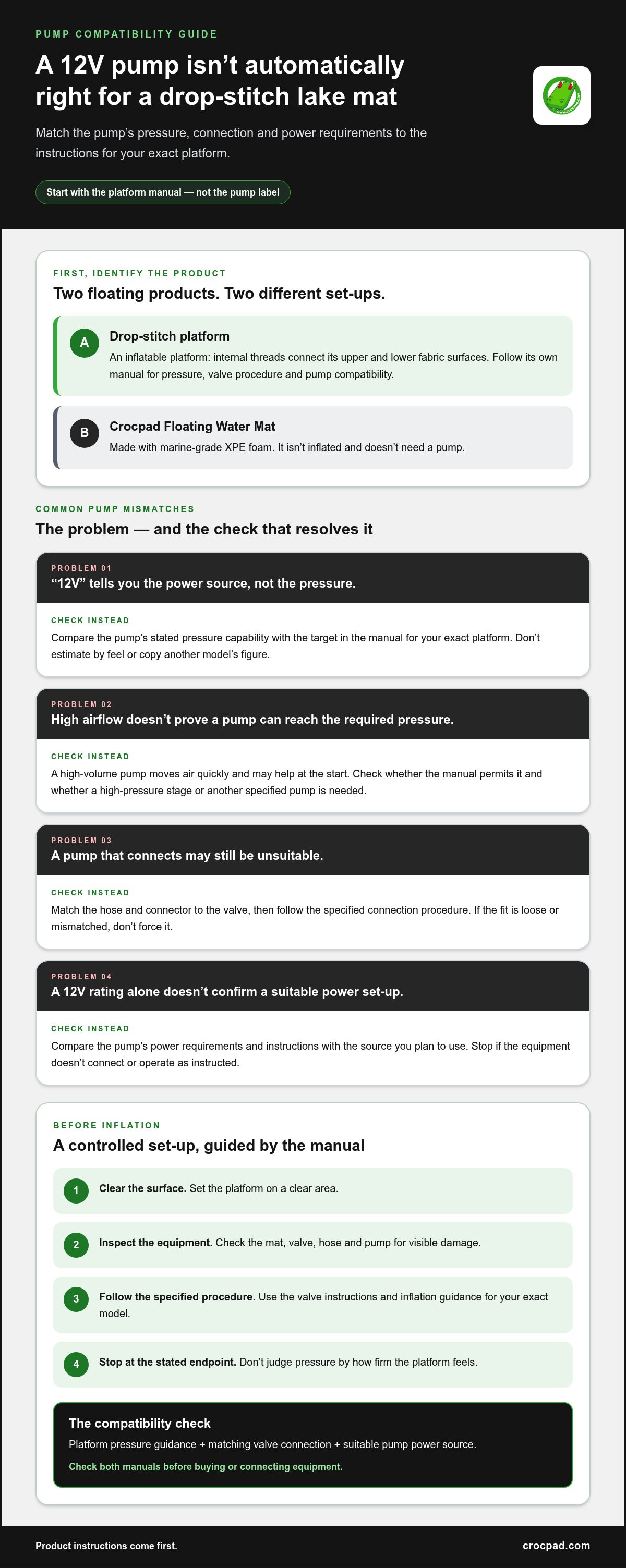
In drop-stitch construction, internal threads connect the upper and lower fabric surfaces. When air fills the space between them, the threads help the platform hold its intended form. The right pressure and setup procedure depend on the particular product, so don’t assume every platform inflates in the same way.
This distinction matters when choosing a pump. A platform’s size or appearance doesn’t tell you its pressure requirement or valve type. Check the product label and the specific manufacturer’s manual. For how to inflate high pressure drop stitch lake mat equipment, those instructions are the reference for the pressure, valve procedure and pump compatibility. General advice for another inflatable may not apply.
How drop-stitch construction affects inflation
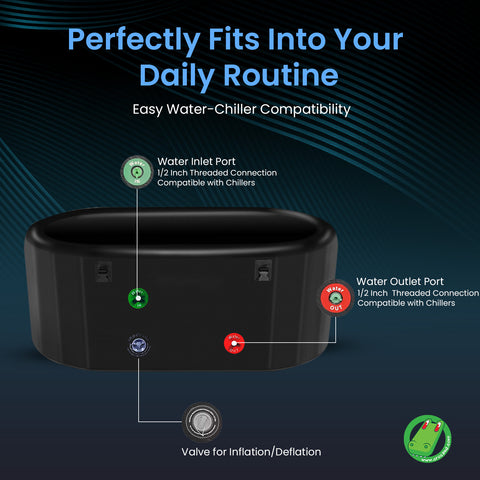
Construction and intended pressure vary between products. Find the required inflation pressure and valve instructions in the manual for your exact model. A valve described as “high-pressure” doesn’t mean every hose or adapter will fit it, so compare the connection before starting. Don’t use pressure guidance from a different mat or inflatable.
For example, a pump may connect to the valve but still be unsuitable if it can’t reach the pressure specified in the platform manual. If the connector doesn’t match, don’t force it. A poor fit can prevent a secure connection or interfere with the valve procedure. Follow the instructions for the product you own.
Does a floating water mat need a pump?
Not if it’s a foam mat. Crocpad Floating Water Mats are made with marine-grade XPE foam, so they aren’t inflated and don’t need a pump. The inflation steps in this guide apply only to products designed as inflatable platforms.
Before unpacking a pump, check the product name and care instructions. A foam mat has no inflatable chamber to fill. A drop-stitch platform, by contrast, is an inflatable product and must be set up according to its own manual.
Keep product types separate, too. Crocpad sells inflatable water slides as well as foam Floating Water Mats. The slides are separate products, so instructions or equipment for one shouldn’t automatically be applied to another. Identify the exact product first, then follow the matching setup and care guidance. That simple check can prevent you from choosing a pump for a mat that doesn’t inflate.
Can a 12V pump inflate a high-pressure drop-stitch lake platform?
Possibly, but “12V” describes the pump’s power source, not the pressure it can produce. A pump can connect to a 12V outlet and still be unsuitable for a particular platform. Check its stated pressure capability and valve connection against the platform’s requirements.
Key takeaway: Choose a pump that matches the platform instructions for output and connection. Don’t decide based only on voltage, speed or the product label.
High-volume pump or high-pressure pump?
A high-volume pump moves a lot of air, which can help fill an inflatable at the start. But airflow alone doesn’t show that it can reach the pressure a drop-stitch platform requires. Some setups may call for a high-pressure stage or another pump specified by the platform manufacturer. Read both manuals before buying or connecting equipment.
When working out how to inflate high pressure drop stitch lake mat equipment, the useful comparison isn’t simply electric versus manual. Check whether the pump can reach the platform’s specified pressure and connect to its valve as directed.
| Pump type | Intended role | Manual check | Key limitation |
|---|---|---|---|
| High-volume pump | Moves air quickly during inflation | Does the platform manual permit this pump for any part of inflation? | High airflow alone doesn’t show it can reach the required pressure. |
| High-pressure pump or stage | Designed to deliver higher pressure than a high-volume-only pump | Does its stated pressure range meet the platform’s instructions, and is it approved for that use? | The label doesn’t establish valve or platform compatibility. |
Check pressure, valve and power compatibility
First, compare the pump’s stated pressure range with the target in the platform manual. Don’t estimate based on how firm the mat feels or copy a figure from another model. Next, check that the hose and connector match the valve, and follow the specified connection procedure. Don’t force a loose or mismatched fit.
Then check the pump’s 12V connection and instructions against the power source you plan to use. The 12V rating alone doesn’t confirm that a particular outlet or setup is suitable. Follow the pump maker’s directions, and stop if the equipment doesn’t connect or operate as instructed. For broader consumer product-safety information, consult the U.S. Consumer Product Safety Commission (CPSC).
If you want a floating option that doesn’t need inflation, explore Crocpad’s Floating Water Mat.
How to choose a 12V pump for a drop-stitch lake mat
Start with the platform manual, not the pump’s advertising. Find the specified pressure, valve procedure and any guidance about pump types. Then compare those instructions with the pump’s stated pressure range, hose connection, power requirements and intended use. These checks help you judge whether a pump suits your particular platform, rather than relying on a broad label such as “12V” or “fast inflation”.
Speed matters only if the pump also meets the platform’s requirements. A fast-fill claim doesn’t tell you whether the pump can reach the required pressure, connect to the valve or operate from your planned power source. Check each point before buying.
A practical pump-check list before buying
Keep the platform manual handy and compare the pump’s specifications against these points:
- Pressure: Note the platform’s required pressure and inflation procedure. Check that the pump’s stated capability covers the manual’s instructions.
- Valve connection: Compare the platform valve with the pump hose and any supplied connector. The connection should match the manual’s guidance without force or improvised fittings.
- Power: Confirm that the pump’s stated electrical requirements, including its 12V connection, suit the source you intend to use. Follow the pump maker’s instructions.
- Intended use: Check whether the pump is designed for the type of inflation the platform requires. If its use or pressure capability is unclear in the product details, don’t assume it will suit the job.
All of these checks matter. A pump with suitable pressure capability may still be a poor match if its hose doesn’t connect as instructed. Likewise, a matching connector doesn’t make a pump suitable if its output falls short of the platform’s requirement.
When a 12V pump may not be the right choice
Rule out a pump if its stated pressure capability doesn’t meet the platform manual or its manufacturer doesn’t permit the intended use. The same applies if the connector won’t fit the valve correctly or the power requirements don’t match your available source. Don’t try to solve a mismatch by forcing parts together, improvising adapters or using equipment contrary to its instructions.
Choose equipment suited to the platform’s stated inflation requirements. If you can’t establish a match from the product specifications and manuals, pause rather than guess. The aim isn’t simply to get air into the platform. It’s to use a pump and connection that follow the maker’s directions.
This manual-first approach is central to how to inflate high pressure drop stitch lake mat equipment without relying on assumptions. Once the pump’s pressure range, connector and power requirements align with the instructions, you can move on to inflation.
How to inflate a high-pressure drop-stitch lake mat safely
Use a steady, manual-led approach. The correct pressure, valve position and connection procedure depend on the platform, so follow its instructions rather than a generic inflation routine. Before switching on the pump, take time to check the equipment and work area.
Prepare the platform and connect the pump
Have the platform and pump instructions to hand. Clear a clean, flat space, then lay out the platform so it isn’t resting on sharp objects. Inspect the platform, valve, hose and pump for visible damage before connecting anything. Follow both manuals when fitting the hose and connector, and don’t force a connection that doesn’t fit as directed.
- Read the platform manual. Find the specified pressure, valve procedure and inflation sequence for your exact model. Note any pump restrictions before you begin.
- Prepare the work area. Choose a clean, flat surface with enough room to unfold the platform fully. Move sharp objects and anything that could snag or puncture it.
- Inspect the equipment. Check the platform and valve, then look over the pump, hose and connector for visible damage. Don’t use damaged equipment.
- Position the valve as instructed. Use the valve setting and procedure specified in the manual. Valve designs vary, so don’t assume a method used for another inflatable will apply.
- Connect the pump. Attach the hose and connector as directed by the platform and pump manufacturers. Check that the connection is seated correctly before operating the pump.
- Inflate to the stated endpoint. Run the pump according to its instructions and keep an eye on the platform. Stop at the pressure or endpoint given in the platform manual. Don’t guess based on feel.
Inflate, check and disconnect
Stay with the platform as it inflates. Watch for unexpected changes, air escaping at the connection or unusual pump behaviour. If anything seems wrong, switch off the pump and stop. Don’t continue to see whether the issue resolves itself. Consult the equipment instructions before proceeding.
At the specified endpoint, follow the platform’s procedure to close the valve and disconnect the hose. The instructions may explain how to prevent air escaping during disconnection, so use that method. Don’t add extra air after reaching the stated limit or substitute a pressure value from another platform.
Prefer a floating option that needs no inflation setup? Explore Crocpad’s Floating Water Mat.
Before your next lake day: choose the right Crocpad floating option
Choose based on the product you want to set up. An inflatable drop-stitch platform has a valve and requires inflation according to its manual. A foam floating mat has no air chamber, so there’s no pressure target, pump or valve connection to manage. Identifying the product first can prevent you from buying or connecting pump equipment for a mat that doesn’t inflate.
Crocpad Floating Water Mats are made with marine-grade XPE foam. They’re foam mats, not inflatable drop-stitch platforms. If you already have an inflatable platform, use that product’s instructions for its pump and setup. If you want a floating mat without an inflation step, Crocpad’s foam option is a different kind of setup.
When a non-inflatable foam mat may suit your plans
Think about the setup you want. If you’re prepared to follow an inflatable platform’s valve and pressure instructions, use a pump that matches its manual. If you’d rather skip inflation, Crocpad Floating Water Mats don’t require an electric pump. That’s the practical difference: one product needs its specified inflation process, while the other is made from foam and isn’t inflated.
Keep product identities clear, especially if you own more than one kind of water gear. Crocpad also sells separate inflatable water slides with drop-stitch construction, but they aren’t Crocpad Floating Water Mats. Don’t transfer a pump, pressure setting or setup procedure from one product to another unless its instructions say to. For guidance on how to inflate high pressure drop stitch lake mat equipment, use the manual for that exact platform rather than treating all floating products as the same.
Explore Crocpad Floating Water Mats if a non-inflatable foam mat fits the setup you want.
Keep product instructions and water safety front of mind
Before setting up an inflatable platform, use the instructions for that exact platform, pump and valve. Follow the stated inflation procedure and pressure limit, and stop if anything behaves unexpectedly. A pump or valve method that works for one item may not apply to another.
Never tow a Crocpad Floating Water Mat behind a boat or any other watercraft. Towing voids the warranty and may cause injury. Don’t jump onto the mat, keep it away from sharp objects, and don’t use it on rough surfaces without a protective mat. Follow the product-care guidance and its stated weight capacity.
Choose the floating option that suits your setup, then browse Crocpad water gear for products to get ready for time on the water.
Make your next water day a confident one
Before you head out, identify the equipment you’ll take and set aside its care instructions. Make sure everyone helping knows how it is meant to be handled. A little preparation can make setup less rushed.
If you’re planning how to inflate high pressure drop stitch lake mat equipment, let the platform’s instructions guide your choices from pump selection through to setup. If you’re considering a floating mat, Crocpad’s marine-grade XPE foam option offers a different setup, with no inflation required. Crocpad focuses on commercial-grade recreational products with a primary focus on safety, so choose and care for your water gear with its product guidance in mind.
Choose the option that suits your day on the water. Explore Crocpad Floating Water Mats.
Frequently Asked Questions
Can a 12V pump inflate a high-pressure drop-stitch lake mat?
Yes, if the pump suits the platform’s specified inflation requirements. To inflate high pressure drop stitch lake mat equipment safely, check the exact model’s instructions rather than assuming any 12V pump will work. A pump may use a 12V supply but still lack the pressure capability or valve connection the platform requires. Compare the pump and platform manuals before use.
What pressure should a drop-stitch lake mat be inflated to?
Use the pressure specified in the manual for your exact platform. There isn’t one target that applies to every drop-stitch lake mat, so don’t borrow a figure from another brand or inflatable. If the instructions give a range, follow their directions for selecting the endpoint. Keep the manual nearby while inflating, and don’t use how firm the platform feels as a substitute for the stated pressure.
Can I use a car’s 12V socket to inflate a lake platform?
Only if the pump maker’s instructions allow that power source and the pump’s requirements suit the socket. A 12V label alone doesn’t establish that the pump and vehicle connection are compatible. Check the pump’s electrical instructions and your vehicle manual before setting up. If either says the connection isn’t suitable, don’t plug it in. This check is separate from confirming that the pump can inflate the platform.
How long does it take to inflate a high-pressure drop-stitch mat?
There’s no single time that applies to every platform. Inflation duration depends on the particular mat, the pump and the pressure or endpoint specified in its manual. A pump’s advertised speed may not describe how long it takes to reach that endpoint. Use any model-specific timing guidance from the manufacturer. If none is provided, allow flexibility rather than relying on an estimate for another mat.
Can I use a regular air pump on a drop-stitch lake mat?
Only if its instructions and specifications suit the platform. A pump intended to move air quickly may be designed for a different kind of inflatable and may not meet a drop-stitch mat’s requirements. Check the pump’s stated capability and connector against the platform manual. Don’t force a hose to fit or use an improvised adapter. Use only equipment and connections permitted by the manufacturers.
Do Crocpad Floating Water Mats need to be inflated?
No. Crocpad Floating Water Mats are made with marine-grade XPE foam, so they don’t need inflation, a valve or an electric pump. Check the product name and material when preparing your gear, so you don’t mistake a foam mat for an inflatable platform. Inflation instructions apply to products designed to be inflated, not Crocpad foam Floating Water Mats.