

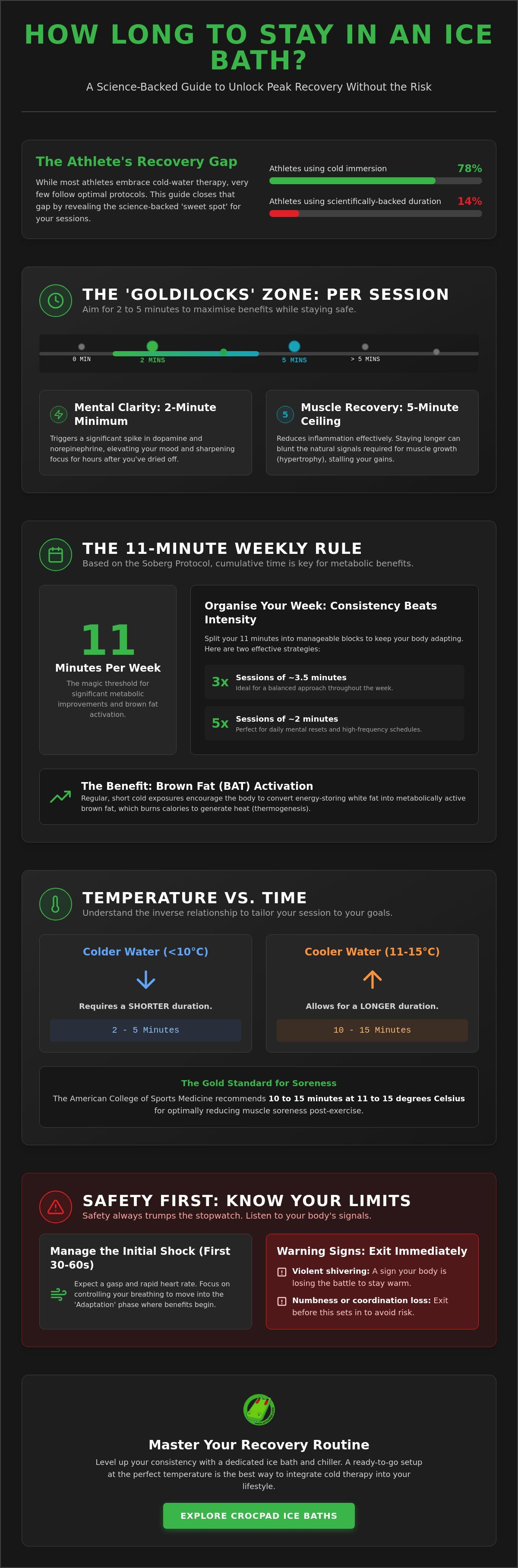
Did you know that while 78% of athletes swear by cold-water immersion, only 14% actually follow the scientifically recommended duration? It’s completely normal to feel a bit of trepidation when you’re standing on the edge of a tub, wondering exactly how long to stay in ice bath before the benefits turn into risks. You want the faster muscle recovery and that legendary dopamine hit, but the fear of cold shock is enough to make anyone hesitate during those first 60 seconds of shivering discomfort.
We understand that you take your recovery as seriously as your performance, so we’ve built this guide to replace confusion with confidence. We promise to reveal the science-backed 'sweet spot' for your sessions, ensuring you get the most out of every plunge without compromising your safety. You will learn the specific protocols recommended by the American College of Sports Medicine; this includes why 10 to 15 minutes at 11 to 15 degrees Celsius is the gold standard for reducing muscle soreness. We will also break down the popular 11-minute weekly rule and show you how to organise a safe, high-performance routine right at home.
Key Takeaways
- Aim for the 2 to 5-minute "Goldilocks" zone per session. This ensures you maximise recovery benefits while staying safe.
- Follow the Soberg Protocol by hitting a cumulative 11 minutes of cold exposure each week. It's the magic number for boosting your metabolism.
- Understand the inverse relationship between temperature and time. This helps you determine exactly how long to stay in ice bath for your specific goals.
- Recognise the warning signs of cold shock early. You must exit the water before numbness sets in to avoid risk.
- Level up your consistency with a dedicated ice bath and chiller. It's the best way to ensure your setup is always ready at the perfect temperature.
Finding the Sweet Spot: How Long Should You Actually Stay in an Ice Bath?
Finding the sweet spot for cold water immersion isn't about testing your toughness or seeing how long you can endure the freeze. It's about efficiency and biological response. For most Aussie athletes and weekend warriors, the general rule of thumb is that 2 to 5 minutes per session represents the 'Goldilocks' zone. This window is long enough to trigger the necessary physiological shifts without tipping into the territory of unnecessary stress or physical risk. While some online guides might suggest staying submerged for 15 minutes, pushing that far often provides diminishing returns and can actually hinder your performance goals.
When you first step into an Ice bath, you will experience the 'Initial Shock' phase. This is characterized by a sharp gasp and a rapid heart rate as your nervous system reacts to the sudden temperature drop. This phase usually lasts between 30 and 60 seconds. Once you control your breathing, you enter the 'Adaptation' phase. This is where the magic happens. However, you must listen to your body's signals. If you start experiencing a violent shiver response or feel your coordination slipping, it is your body's way of telling you it's time to get out. Safety always trumps the stopwatch.
The 2-Minute Minimum for Mental Benefits
If your goal is mental clarity rather than just physical repair, 120 seconds is your target. Hitting this threshold triggers a significant spike in dopamine and norepinephrine, which can elevate your mood and sharpen your focus for hours after you've dried off. It’s a powerful way to reset your brain after a high-stress day or a brutal training session. The 'metabolic winter' effect is a biological reset triggered after just two minutes that forces the body to burn energy simply to maintain its core temperature. This short, sharp burst is often all you need to reap the psychological rewards of the cold.
The 5-Minute Ceiling for Muscle Recovery
When considering how long to stay in ice bath for muscle recovery, more is definitely not better. Staying in past the 5-minute mark, especially in water below 10°C, offers very little extra benefit for reducing inflammation. In fact, 'over-cooling' can be detrimental if you are trying to build muscle size. Cold exposure can blunt the natural inflammatory signals required for muscle hypertrophy, so keeping your sessions brief ensures you recover without stalling your gains. Remember that the clock only truly starts once you have stabilised your breathing and settled into the chill. Control the breath, hit your five minutes, and get out to start the rewarming process.
The 11-Minute Rule: Weekly Duration for Maximum Metabolic Benefits
Forget the idea that you need to endure a marathon session to see results. When athletes ask how long to stay in ice bath, they're often surprised to learn that the total weekly volume is far more important than any single heroic effort. Enter the Soberg Protocol. This research-backed framework identifies 11 minutes of cold exposure per week as the magic threshold for significant metabolic improvements. By focusing on cumulative time, you can achieve elite-level benefits without the physical and mental strain of a long, single plunge.
Consistency beats intensity every single time. Instead of trying to survive one ten-minute session, you should split your 11 minutes into manageable blocks. Three sessions of roughly 3.5 minutes or five sessions of 2 minutes are both highly effective strategies. This approach keeps your nervous system sharp and ensures your body remains in a constant state of adaptation. Using a Science-Based Duration Guide helps you understand that these shorter, frequent exposures are the best way to maintain a high-performance lifestyle without risking over-exposure or cold shock.
Brown Adipose Tissue (BAT) Activation
The primary reason the 11-minute rule works so well is its impact on brown fat. Unlike white fat, which merely stores calories, brown adipose tissue is metabolically active. It burns energy to create heat through a process called thermogenesis. Regular short exposures help turn 'white fat' into 'brown fat', which significantly improves your insulin sensitivity and overall thermoregulation. For Aussies, this protocol is a game-changer for boosting metabolism year-round, keeping you lean and energised even when you aren't training at peak capacity.
Structuring Your Weekly Cold Calendar
Organising your recovery schedule is simple once you have a clear plan. A balanced week might include sessions on Monday, Wednesday, and Friday to keep your metabolic fire burning. However, you must be strategic with your timing. Avoid taking an ice bath immediately after a heavy strength training session. Research suggests waiting at least 4 to 6 hours, as the cold can blunt the natural inflammatory response required for muscle hypertrophy. To make this routine effortless, investing in high-quality Crocpad recovery gear ensures your setup is always ready when you are, allowing you to hit your weekly 11-minute target with zero fuss.
Safety First: Recognising Your Limits and Avoiding Cold Shock
Safety is the foundation of any high-performance recovery routine. While some fitness circles preach the idea of 'pushing through the pain' to build mental grit, this approach is fundamentally dangerous in near-freezing water. When you're figuring out how long to stay in ice bath, your primary focus should be on managing the cold shock response. This is the involuntary gasp reflex that occurs the moment your skin hits the water. If you can't control your breathing, you risk hyperventilation. It's a biological reality, not a lack of willpower.
Using an Optimal Timing for Recovery guide ensures you stay within safe physiological limits. One of the most critical safety rules is having a clear exit strategy. You should always aim to leave the tub before your limbs feel completely numb. Numbness is a sign that your body is struggling to maintain core temperature, and it makes getting out of the water physically difficult. For this reason, you should never plunge alone, especially when you're pushing for longer durations or colder temperatures.
Mastering the First 60 Seconds
The first minute is purely about survival. Your Vagus nerve is the key here; it's the main component of your parasympathetic nervous system and controls your 'fight or flight' response. To settle your heart rate, use box breathing: inhale for four seconds, hold for four, exhale for four, and hold for four. This technique signals to your brain that you aren't in immediate danger. While this first minute is the hardest part of the experience, it's actually the least beneficial for recovery. The real physiological changes happen once you've successfully adapted to the chill.
Red Flags: When to Get Out Immediately
You need to be hyper-aware of your body's specific warning signs. A major red flag is the 'claw hand', where you lose fine motor skills in your fingers. This is a result of peripheral vasoconstriction, where your body pulls blood away from your extremities to protect your vital organs. If this happens, or if you experience excessive shivering that doesn't subside after 30 seconds of breathing, get out immediately. There's a massive difference between being uncomfortable and being in pain. If the sensation shifts from a sharp tingle to a burning ache, your session is over.
Finally, be prepared for the 'afterdrop'. This occurs when cold blood from your limbs returns to your core after you exit the bath, causing your internal temperature to continue falling. To manage this safely, dry off immediately and put on warm layers. Don't jump straight into a hot shower, as this can cause you to faint. Move your body gently to generate natural heat and let your core temperature stabilise naturally.
Temperature vs. Time: Balancing the Chill for Your Recovery Goals
When you are deciding how long to stay in ice bath, the most critical factor is the actual temperature of the water. There is a direct inverse relationship at play here. As the temperature drops, your immersion time must decrease to ensure safety. You can't treat a 5°C plunge the same way you treat a 15°C dip. Pushing for duration in extreme cold doesn't make you tougher; it simply increases the risk of hypothermia and tissue damage without providing extra recovery value.
To get the best results, you should categorise your sessions into these three performance tiers:
- 10°C to 15°C (The Beginner Range): This is the ideal starting point. It's cool enough to trigger recovery but safe enough for 5 to 10-minute sessions. It's perfect for consistent, daily use.
- 5°C to 10°C (The Advanced Range): This is where the metabolic benefits really ramp up. Because the chill is more intense, 2 to 3 minutes is plenty of time to see results.
- Sub-5°C (The Expert Range): This is high-intensity territory. At these temperatures, your sessions should rarely exceed 60 to 90 seconds. It's a short, sharp shock to the system.
Why Precise Temperature Control is Essential
Guessing your water temperature with bags of ice from the local petrol station is a recipe for inconsistency. You might think you're at 12°C, but if you're actually at 8°C, you've significantly changed the safety profile of your plunge. A mere 2-degree difference can effectively halve your safe immersion time. To make every minute of your 11-minute weekly goal count, you need a steady, reliable temperature. This level of precision is why serious Aussie athletes invest in professional ice bath chillers to maintain a perfect environment every time they step in.
Choosing Your Temperature Based on Goals
Your target temperature should reflect what you want to achieve. If you're focused on reducing muscle soreness (DOMS) after a heavy weekend of sport, staying in the 11°C to 15°C range is most effective. However, if you're chasing the mental health benefits and that massive dopamine spike, you might prefer a colder, shorter session in the 5°C to 10°C range. The mammalian dive reflex triggers a natural drop in heart rate and peripheral vasoconstriction that intensifies as water temperature decreases, effectively prioritising oxygen flow to your brain and heart. Even 'cool' water at 15°C still offers heaps of benefits for beginners, so don't feel like you have to freeze on day one to see progress.
Mastering Your Recovery Routine with a Crocpad Ice Bath and Chiller
Elevate your recovery from a messy chore to a high-performance ritual. For Aussie athletes, the biggest barrier to consistency isn't the cold itself; it's the hassle of preparation. When you have a dedicated setup, you stop guessing how long to stay in ice bath and start executing a precise protocol. A professional-grade tub and chiller system transform your backyard or garage into a world-class recovery centre, ensuring you hit your goals every single time without the friction of manual setup.
Consistency is the secret sauce for long-term physiological change. Having your water at the perfect temperature, filtered and ready to go, means you can jump in the moment your training session ends. This reliability is what allows you to actually stick to the 11-minute weekly protocol we discussed earlier. Whether you’re cooling down after a scorching summer session or building mental resilience in the middle of winter, a permanent home setup provides the structural integrity and performance you need to succeed.
The Benefits of an Integrated Chiller System
Forget the endless trips to the service station for bags of ice that melt in minutes. With a digital chiller, you simply set your target temperature and let the technology do the heavy lifting. This precision is vital because, as we've established, a few degrees can drastically change your safe immersion window. Built-in filtration is another massive win, keeping your water crystal clear and hygienic for weeks of daily use. Investing in a Crocpad Ice Bath & Chiller means you're prioritising quality and longevity, giving you a reliable partner for your wellness journey.
Starting Your Journey Today
Ready to take the plunge? Don't feel pressured to hit the five-minute mark on your first day. Start with just 30 seconds at a manageable 15°C and build your tolerance as your body adapts. Focus entirely on your breath rather than staring at the clock; this makes the experience feel like a meditative practice rather than an endurance test. As you become more comfortable, you can slowly decrease the temperature or extend your time to reach the advanced performance tiers. Join the growing community of Aussies who have reclaimed their energy, sharpened their focus, and transformed their physical health through the power of cold therapy.
Take Control of Your Recovery Today
You now have the blueprint to transform your post-workout routine from a guessing game into a high-performance ritual. By focusing on the 11-minute weekly threshold and mastering your breathing during that initial shock, you can unlock faster muscle recovery and lasting mental clarity. It's not about how long you can endure the freeze, but rather understanding exactly how long to stay in ice bath based on the specific temperature of your water. This balanced approach ensures you get the most out of every session without risking cold shock or over-cooling.
Our durable, portable Aussie designs are trusted by professional athletes and weekend warriors alike to deliver consistent results. With an integrated chiller for precise temperature control, you can focus on your recovery while we handle the chill. Ready to level up your recovery? Explore the Crocpad Ice Bath and Chiller range today. Take the plunge and start your journey toward total physical rejuvenation and peak performance. Your body will thank you for it.
Frequently Asked Questions
Is 1 minute in an ice bath enough to see any benefits?
Yes, even 60 seconds provides a massive mental boost. This short burst triggers a significant release of dopamine and norepinephrine, sharpening your focus for hours after you dry off. While you might eventually wonder how long to stay in ice bath for physical gains, one minute is a perfect entry point to build mental resilience and start your cold therapy journey safely.
How many times a week should I do an ice bath for muscle recovery?
Aim for two to four sessions per week to maximise muscle recovery. This frequency helps you hit the recommended 11-minute weekly total without overstressing your system or causing excessive fatigue. Spreading your sessions out ensures your body stays in a constant state of adaptation, providing consistent relief from inflammation and delayed onset muscle soreness (DOMS) after heavy training sessions.
Can I stay in an ice bath for too long?
Yes, staying in too long is counterproductive and increases the risk of hypothermia. Once you lose fine motor skills or experience violent shivering that doesn't stop, you've stayed in past the point of benefit. Most physiological rewards, like reduced inflammation and metabolic activation, plateau after about 10 minutes, so there is no performance reason to push your body into a dangerous state.
What happens if I stay in an ice bath for 20 minutes?
Staying in for 20 minutes is generally unsafe and highly discouraged for most people. At this duration, your core temperature can drop significantly, potentially leading to the 'afterdrop' effect where your internal temperature continues to fall even after you've exited. This can cause extreme fatigue, confusion, and physical distress. Stick to shorter, scientifically-backed windows to ensure your recovery remains safe and effective.
Should I take a hot shower immediately after an ice bath?
Avoid jumping straight into a hot shower immediately after your session. Rapidly heating your skin causes peripheral vasodilation, which can lead to a sudden drop in blood pressure and dizziness. Instead, dry off, put on warm layers, and move your body gently to generate natural heat. Let your core temperature stabilise naturally for at least 20 minutes before seeking external heat sources.
Is it better to do an ice bath in the morning or at night?
Morning is the superior choice for most athletes and wellness seekers. Cold exposure triggers a natural increase in core body temperature and alertness, providing a powerful energy boost to kickstart your day. Doing an ice bath late at night can interfere with your circadian rhythm and make it harder to fall asleep as your body works hard to warm back up.
Can beginners start with 5 minutes or is that too much?
Five minutes is often too much for a complete beginner, especially if the water is below 10°C. It is better to start with one or two minutes at a milder 15°C to gauge your reaction and master your breathing control. Building up your tolerance slowly is the best way to ensure you stay safe and actually enjoy the process rather than dreading your next recovery session.
Does the water need to be freezing or is cool water okay?
Cool water is absolutely fine and often more effective for long-term recovery. Temperatures between 11°C and 15°C are the 'sweet spot' for reducing muscle soreness without the extreme physiological stress of near-freezing water. You don't need to be an expert to see results; even moderate temperatures provide the metabolic and physical benefits you are chasing for your active lifestyle.


