

What if that bone-chilling plunge you see all over social media is actually a calculated risk rather than a simple health hack? You have likely seen the viral videos and wondered, are ice baths dangerous, or is the fear just cold feet? It is completely natural to feel a bit of trepidation before stepping into a tub of near-freezing water. The "cold shock" response is a powerful physiological event. With conflicting advice flying around from influencers and doctors, knowing how to begin your recovery journey can feel like a real challenge.
We want to help you cut through the noise and show you how to transform a potentially risky dip into a safe, high-performance recovery ritual. You will discover exactly who should avoid cold immersion, learn about the latest 2026 safety standards, and get a practical checklist for your home setup. We are going to give you the confidence to master the chill so you can focus on the incredible feeling of physical renewal and peak performance.
Key Takeaways
- Understand the body's intense "fight or flight" response and why managing the initial gasp reflex is vital for a safe plunge.
- Assess your personal health profile to understand when and why are ice baths dangerous for those with specific cardiovascular conditions.
- Learn why a controlled home setup offers far more safety and precision than the unpredictable conditions of wild water immersion.
- Implement a professional protocol by always plunging with a mate and gradually lowering temperatures over several weeks.
- Discover how high-performance ice baths and chillers use triple-layered insulation to maintain the exact temperature needed for safe recovery.
Understanding the Cold Shock Response: What Happens to Your Body?
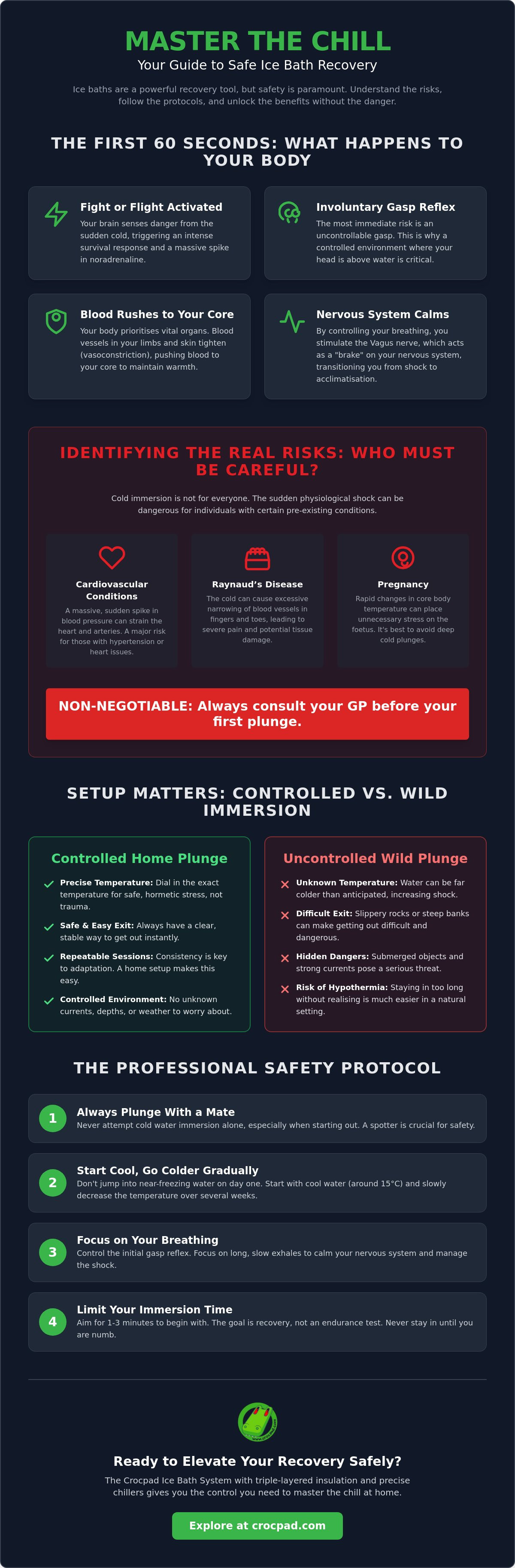
When you first hit the icy water, your brain immediately screams "danger". This is the cold shock response, an intense fight or flight reaction triggered by sudden temperature drops. Many people ask, are ice baths dangerous, and the truth is that the risk often depends on how you manage this initial minute. The most immediate threat is the involuntary gasp reflex. If you are in deep, open water and your head is submerged when that gasp happens, you risk inhaling water directly into your lungs. This is why controlled environments are far superior to wild plunges for beginners.
Your body is a master of survival. During the first few seconds, your system prioritises your vital organs through a process called vasoconstriction. Blood vessels in your skin and limbs tighten, forcing blood toward your core to keep your heart and liver warm. While this happens, you will experience a massive spike in noradrenaline. This chemical surge is what creates the post-plunge "high", but it also puts temporary stress on your heart. Understanding this physiological shift is a core part of Cryotherapy, which uses cold exposure to trigger systemic recovery.
The Physiology of the Plunge
As you settle into the water, your Vagus nerve becomes the star of the show. This nerve acts as the "brake" for your nervous system. By focusing on slow, exhaled breaths, you can manually signal to your brain that you are safe. This transition is the difference between remaining in a state of shock and beginning the process of acclimatisation. Cold shock is a survival mechanism that can be effectively managed with consistent training and proper breathing techniques. Over time, your body learns to dampen the initial panic, making the experience feel revitalising rather than overwhelming.
Myth-Busting the Polar Bear Approach
Jumping into a frozen lake without any preparation is heaps riskier than using a dedicated home setup. In a wild environment, you cannot control the exact temperature or the exit point. People often think that "more cold" equals "more benefit", but that is a dangerous misconception. The goal of cold therapy is hormetic stress, which is a controlled dose of pressure that makes your body stronger. If the temperature is too low for too long, you cross the line from recovery into actual trauma. Precision is your best friend. Are ice baths dangerous when done correctly? Not usually, but they certainly can be if you treat a survival test like a social media stunt without respecting the limits of your own physiology.
Identifying the Real Risks: Who Should Be Careful?
Cold immersion is a powerful tool, but it is not a one-size-fits-all solution. When people ask, are ice baths dangerous, the answer usually lies in their individual medical history. If you have a healthy heart and clear circulation, the risks are manageable with the right protocol. However, for certain groups, the sudden shock can be more than just uncomfortable; it can be life-threatening. While the benefits are vast, asking are ice baths dangerous for your specific condition is a conversation you must have with a professional before your first plunge.
Cardiovascular pre-existing conditions are the number one red flag. The cold causes an immediate and massive spike in blood pressure. If you are already managing hypertension, this surge can put unnecessary strain on your system. Similarly, those with Raynaud’s disease need to be extremely cautious. This condition causes the small arteries that supply blood to your skin to narrow excessively in response to cold, leading to severe pain and potential tissue damage in your fingers and toes. Pregnant women should also avoid deep cold plunges due to the potential for rapid changes in core body temperature, which can stress the foetus. Checking with your GP is a non-negotiable first step for everyone.
Cardiovascular Considerations and Heart Stress
The "diving reflex" is a fascinating but intense physiological event. When your face or body hits cold water, your heart rate slows down. Simultaneously, your blood pressure spikes because of peripheral vasoconstriction. This "clash" between a slowing heart and rising pressure can trigger arrhythmias in susceptible individuals. If you have a history of heart issues or weakened arterial walls, this sudden strain is a major risk factor. If you are unsure about your heart health, starting with cool showers is a much safer way to build tolerance before investing in high-end ice baths and chillers for your home recovery routine.
Hypothermia vs. Targeted Recovery
Many beginners fear hypothermia, but true hypothermia typically takes much longer to develop than a standard three-to-five-minute recovery session. You are unlikely to reach a dangerous core temperature in such a short window. However, you must know the difference between the "good" numbness of cold therapy and the "bad" signs of overexposure. If you feel any of the following, you must get out of the water immediately:
- Mental confusion or "foggy" thinking that makes it hard to focus.
- Slurred speech or difficulty forming simple sentences.
- Loss of motor control, particularly "clumsy" hands or an inability to grip the side of the tub.
- Violent, uncontrollable shivering that does not stop even after you try to control your breath.
- A blue or greyish tint to your lips, fingernails, or skin.
Controlled vs. Wild Immersion: Why Your Setup Matters
Choosing where you take the plunge is just as important as the temperature itself. Many people wonder, are ice baths dangerous when you head out into the surf or a local lake? While the idea of a wild dip feels adventurous, the lack of control introduces variables that can quickly turn a recovery session into a rescue mission. In a home environment, you have a stable, predictable space. You aren't fighting currents, uneven rocky bottoms, or sudden depth changes. A dedicated setup allows you to focus entirely on your breath and your body's response.
Stability is a major safety factor that often gets overlooked. DIY setups like old chest freezers or makeshift tubs can be incredibly slippery and difficult to exit when your limbs are numb. High-quality recovery gear provides non-slip surfaces and sturdy walls to lean on. Hygiene also plays a massive role. Stagnant water in a basic chest becomes a breeding ground for bacteria after just one use. Professional systems with integrated filtration keep the water crystal clear, ensuring you are recovering your muscles without risking a skin infection.
The Dangers of Open Water Plunging
Open water presents the very real risk of swim failure. This happens when your muscles become so cold they simply stop functioning, making it impossible to stay afloat in deep water. If you are still asking are ice baths dangerous, consider that most incidents happen in these unmanaged environments. Whether you are dealing with a humid summer heatwave or a freezing winter morning, jumping into an unmanaged body of water creates a massive thermal shock. Crocpad products are engineered to withstand these harsh environmental conditions, providing a controlled environment that eliminates the external threats of the wild.
The Precision of Portable Ice Baths with Chillers
Precision is essentially the safety switch for cold therapy. Using a high-performance ice bath chiller gives you total control over your environment. Instead of guessing if the water is 10°C or a bone-chilling 3°C, you can set the exact temperature you need for safe adaptation. This allows for a gradual progression, letting your system get used to the cold over several weeks. Consistency is the real secret to safe physiological change. When you know exactly what you are stepping into, you remove the fear of the unknown and turn the experience into a reliable part of your daily routine.
The Crocpad Safety Protocol: How to Plunge Like a Pro
Success in the cold is not about grit; it is about having a solid plan. When asking are ice baths dangerous, the answer usually comes down to your personal protocol. A haphazard approach leads to panic, while a structured routine builds resilience. To get the most out of your recovery without the unnecessary risks, follow these essential steps for every session.
- Step 1: Never plunge alone. Always have a mate nearby or ensure someone in the house knows you are in the water. If you experience a rare issue like a vasovagal response, you need someone there to help you out.
- Step 2: Start at "cool" (15°C). There is no need to jump straight into freezing water. Work your way down over several weeks to allow your body to adapt.
- Step 3: Focus on the exhale. Your breath is your anchor. Controlled, slow exhales are the direct antidote to the cold shock response we discussed earlier.
- Step 4: Set a timer. Never exceed 10 to 15 minutes. Even if you reckon you feel fine, your core temperature is dropping, and staying in too long can lead to excessive fatigue.
- Step 5: Awareness of the "Afterdrop". This is the period after you exit where your core temperature continues to fall. Dry off and move your body immediately to stay safe.
Temperature and Timing: Finding the Sweet Spot
For most beginners, 10°C to 15°C is the "Goldilocks zone". It is cold enough to trigger the benefits of recovery but manageable enough to maintain calm. You don't need a survival-level event to see results. In fact, many users find the "3-minute rule" provides all the mental clarity and physical rejuvenation they need without the added stress of longer durations. Use a reliable thermometer to track your progress. Never guess the temperature; precision is what keeps the routine effective and safe. If you want to take your recovery to the next level, explore our range of ice baths and chillers designed for consistent performance.
The Buddy System and Post-Plunge Warmth
What you do after the plunge is just as vital as the time spent in the water. Resist the urge to jump into a hot shower immediately. This can cause a sudden drop in blood pressure as your vessels dilate too quickly, which might lead to fainting. Instead, use the "Horse Stance" or light calisthenics to generate internal heat naturally. This helps your body recalibrate its temperature at a safe pace. Keep your dry gear close by in a waterproof bag so you can change quickly and start the warming process. By following this structured approach, you ensure that every session is a win for your health and performance.
Elevating Your Recovery with the Crocpad Ice Bath System
Safety isn't just about what you do; it's about the gear you use. While people often ask, are ice baths dangerous, the risk drops significantly when you move away from DIY setups and into purpose-built recovery tools. The Crocpad portable ice bath is engineered specifically to turn a stressful survival test into a high-performance ritual. By using triple-layered insulation, these tubs maintain temperature stability for much longer than a standard plastic tub or a basic chest. This ensures your body isn't fighting wild fluctuations while you are trying to find your calm.
The integrated chiller system is the real game-changer for safe recovery. It completely eliminates the "ice cube guessing game" where you dump bags of ice into a tub and hope for the best. With a digital chiller, you set the exact degree you need. This precision allows you to follow the safety protocols we discussed earlier with total accuracy. You can start at 15°C and slowly work your way down as your resilience grows. This isn't just about getting cold; it's about a Reliable Adventure lifestyle where you take your recovery as seriously as your training.
Engineering Safety into Every Session
We've designed our ice baths with an inflatable rim that makes entry and exit a breeze. Unlike hard-sided tubs or metal tanks, there are no sharp edges or slippery surfaces to worry about. This is crucial when your limbs are a bit numb and your coordination isn't at 100 per cent. Hygiene is another massive safety factor. Our chiller systems include built-in filtration to keep the water clean and clear. You won't have to worry about the bacteria risks associated with stagnant water. Our gear is properly sorted for demanding climates, meaning it handles intense sun and temperature spikes while keeping your recovery water perfectly chilled. You can trust that the structural integrity will hold up even in demanding environments.
Taking the Next Step in Your Wellness Journey
The path to better recovery shouldn't be paved with anxiety. Once you understand the physiology and have the right protocol in place, the only thing left is to get started. Stop worrying about the "what ifs" and start preparing with equipment you can trust. High-quality gear removes the barriers to entry and lets you focus on the incredible feeling of physical renewal. If you are still wondering are ice baths dangerous, remember that control is the ultimate safety feature. Check out our Ice Baths & Chillers to start your journey today. Safety and high-performance go hand-in-hand when you have the right tools for the job.
Master the Chill for Peak Performance
You now have the tactical knowledge to turn a bone-chilling plunge into a professional recovery ritual. By mastering your breath and choosing a controlled environment over unpredictable wild waters, you've removed the biggest obstacles to success. We've shown that safety isn't about avoiding the cold; it's about respecting the physiology of the shock and using a structured protocol to build long-term resilience. While people often wonder are ice baths dangerous, you now know that precision and preparation are the ultimate safeguards for your vitality.
It's time to stop overthinking and start experiencing the incredible surge of energy that comes with cold therapy. As a premium provider of recovery gear, we specialise in high-performance equipment built from heavy-duty, marine-grade materials that stand up to the toughest conditions. Our systems provide the precision temperature control you need to ensure every session is perfectly sorted for your specific fitness goals. Upgrade your recovery with a Crocpad Ice Bath & Chiller and take the guesswork out of your wellness routine. If you reckon you're ready to transform your routine, step into the cold with confidence and feel the difference that professional-grade recovery makes to your performance.
Frequently Asked Questions
Can ice baths cause a heart attack?
Sudden immersion in freezing water triggers an immediate spike in your heart rate and blood pressure. For individuals with undiagnosed or pre-existing cardiovascular conditions, this rapid stress can potentially lead to a cardiac event. It's essential to consult your GP before starting, as the "cold shock" response puts a heavy load on the system. Always ease into the water slowly to give your heart time to adjust to the temperature shift rather than jumping in all at once.
How long is it safe to stay in an ice bath?
Most recovery experts recommend a window of three to fifteen minutes for optimal results. Beginners should start at the lower end of that scale, perhaps aiming for just sixty to ninety seconds during their first few sessions. Staying in longer than fifteen minutes doesn't provide extra benefits and significantly increases your risk of hypothermia. Use a waterproof timer to track your session accurately so you don't lose track of time while focusing on your breathing.
Is it dangerous to do an ice bath every day?
Daily plunges are generally safe for healthy individuals who have properly acclimatised to the cold. However, if you are training for muscle growth, doing an ice bath immediately after every strength session might blunt some of your gains. If you're wondering are ice baths dangerous for daily use, the answer depends on your specific recovery goals and how well you monitor your body for signs of excessive fatigue or lingering coldness.
What is the "Afterdrop" and why is it dangerous?
The Afterdrop is a phenomenon where your core body temperature continues to fall even after you've left the tub. This happens because cold blood from your extremities begins circulating back to your warm core as you start to move. It can cause intense shivering, lightheadedness, or even fainting if you don't warm up correctly. To manage this safely, dry off immediately and use light movement to generate internal heat rather than relying on external heat sources.
Can I do an ice bath if I have high blood pressure?
You should avoid cold immersion if you have untreated high blood pressure due to the massive surge in pressure caused by the water. Sudden cold causes your blood vessels to constrict instantly, which can put dangerous strain on your arterial walls. Even if your condition is well-managed with medication, you must get the green light from your doctor before attempting a plunge. Safety always comes first when dealing with your circulatory system.
Should I take a hot shower straight after an ice bath?
Don't jump into a hot shower immediately after your session. The rapid transition from extreme cold to intense heat causes your blood vessels to dilate too quickly, which can lead to a sudden drop in blood pressure and fainting. It's much safer to dry off, put on warm layers, and let your body temperature return to normal through light exercise or a warm drink. This allows your system to recalibrate at a natural, steady pace.
Is it safer to use a dedicated ice bath chiller than just adding ice?
Using a dedicated chiller is far safer because it provides precision temperature control and constant water filtration. When you just add bags of ice, you're guessing the temperature, which makes it harder to follow a safe, progressive protocol. A chiller ensures the water stays at your exact chosen setting, reducing the risk of accidental overexposure to extreme cold. This level of control is exactly why people ask are ice baths dangerous when they see unmanaged DIY setups.
What should I do if I start shivering uncontrollably?
Get out of the water immediately if you experience violent or uncontrollable shivering. Shivering is your body's final warning that your core temperature has dropped too far. Once you're out, dry yourself thoroughly, wrap up in warm clothes, and perform gentle movements like air squats or a horse stance. This helps your body generate heat from the inside out and prevents the Afterdrop from becoming a more serious issue.


