A cold plunge may ease delayed onset muscle soreness, but plunging straight after lifting isn’t always the best move. Timing a cold plunge for delayed onset muscle soreness means weighing short-term relief against your strength-training goals: soreness often peaks 24 to 72 hours after exercise, while regular immediate cold immersion may work against muscle and strength gains.
After a tough session, tender muscles can make a quick recovery boost tempting. Cold-water immersion may ease delayed onset muscle soreness (DOMS), but it doesn’t replace rest. The best time to plunge depends on your priority: temporary comfort between sessions or supporting muscle growth over time.
This guide explains how cold plunges may affect soreness, when to use cold immersion around strength training, and what water temperature to consider. You’ll also learn why waiting can make sense after a muscle-building workout, when faster recovery may take priority, and how to approach cold water with care.
Key Takeaways
- Cold-water immersion may help ease delayed-onset muscle soreness, which often peaks 24 to 72 hours after exercise.
- For strength or muscle-building goals, avoid making an immediate post-lifting plunge a regular habit; consider leaving a gap after training.
- Research has used water temperatures from 7°C to 15°C, so choose a controlled temperature within a moderate cold range.
- Cold plunges can support recovery between demanding sessions, but they don’t replace rest or a sensible return to training.
- Build your recovery routine around your training priorities, soreness and comfort with cold water.
What is cold plunge therapy?
Cold plunge therapy means immersing the body in cold water, often up to the neck. One description places a plunge between 10°C and 15°C, with sessions lasting up to 10 minutes. For recovery, cold water is used to manage soreness and fatigue after exercise. It’s an option, not a replacement for rest or a gradual return to training.
Temperature and duration vary across cold-water protocols. Recovery guidance commonly describes water around 10°C to 15°C, while research has used exposure times from 30 seconds to much longer sessions. These differences matter: a longer plunge isn’t automatically better, and tolerating cold water doesn’t prove it will improve your next workout.
For muscle soreness, a cautious starting point is 30 seconds to a minute. If that feels manageable, build gradually towards five to 10 minutes rather than jumping into a long session. This offers a practical way to gauge your response. There isn’t one duration that suits everyone, so stop if the cold causes pain or distress.
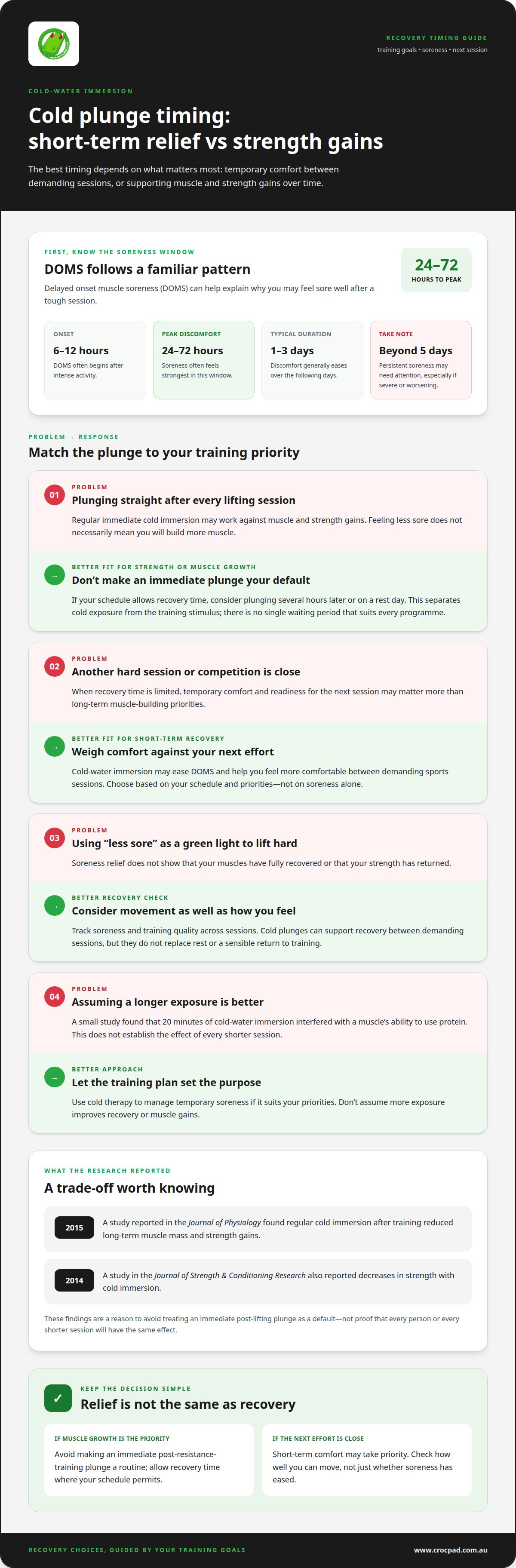
Delayed onset muscle soreness, or DOMS, often begins six to 12 hours after intense activity and typically lasts one to three days. Discomfort can peak 24 to 72 hours after exercise, then ease over the following days. Soreness that persists beyond five days may need attention, especially if it is severe or worsening.
Cold-water immersion may reduce DOMS, but it hasn’t been established as better than active recovery, massage or warm baths. Rest gives your muscles time to recover, while gentle movement may suit you if you want to stay active without repeating an intense session. Choose recovery methods based on your symptoms and your upcoming training or competition.
Cold plunges can cause hypothermia, nerve damage and pain. They may also pose added risks for people with cardiovascular disease, diabetes or neuropathies. If any of these conditions apply to you, cold immersion may carry additional risks. A plunge isn’t a test of toughness when your health or comfort is at stake.
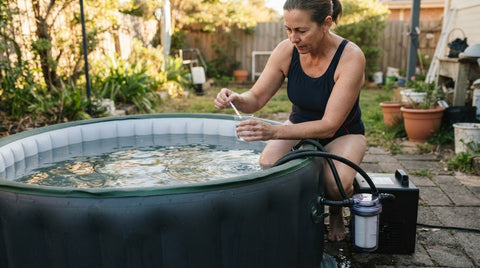
For a safer session, choose a controlled environment and have another person present. Enter steadily, stick to your planned duration, and respond to pain or distress rather than pushing through. After getting out, move to a place where your body can be safely rewarmed. Don’t plunge alone or assume a longer session will improve recovery.
A cold shower is another option if immersion isn’t available, though its recovery benefits may be less extensive than full-body immersion. Whichever approach you choose, track how soreness changes over the next 24 to 72 hours and adjust your training accordingly. If pain is unusually severe, worsening, or accompanied by dark or bloody urine, seek medical care.
What About Strength and Muscle Growth?
Cold-water therapy may ease post-exercise soreness, but feeling less sore doesn’t necessarily mean you’ll build more muscle. If your priority is strength or size, weigh the short-term relief against the possible effects of repeated cold exposure on training adaptations. The right choice may differ for someone preparing for a competition and someone following a long-term muscle-building program.
Research findings point to a trade-off. A 2015 study reported in the Journal of Physiology found that regular cold immersion after training reduced long-term muscle mass and strength gains. A 2014 study in the Journal of Strength & Conditioning Research also reported decreases in strength with cold immersion. These findings caution against making an immediate post-lifting plunge a default habit.
Duration may matter, too. A small study found that 20 minutes of cold-water immersion interfered with a muscle’s ability to use protein. That result doesn’t establish the effect of every shorter session, but it gives strength-focused athletes a reason to avoid assuming longer exposure is better. Cold therapy should serve the training plan, not replace it.
DOMS is a separate consideration. Cold-water immersion may ease soreness after demanding exercise, particularly when you need to feel more comfortable between sports sessions. But relief doesn’t show that your muscles have fully recovered or that your strength has returned. Consider how well you can move alongside how you feel, rather than treating reduced soreness as a green light for maximal lifting.
Consider your next session. If another competition or hard workout is close, short-term comfort and readiness may matter more. If muscle growth is your main goal and your schedule allows time to recover, avoid making an immediate post-resistance-training plunge a routine. Plunging several hours later or on a rest day separates cold exposure from the training stimulus, although no single waiting period suits every program.
Be clear about the purpose: cold therapy may help manage temporary soreness, but it isn’t a shortcut to stronger muscles. A lifter with a heavy session tomorrow, for example, may prioritise rest and normal movement over an immediate drop in soreness. A competitor with limited recovery time may choose differently. Track your soreness and training quality across sessions, then adjust your routine.
Explore cold-water recovery ideas as you shape a routine around your training priorities.
Recommended water temperature
Cold-water studies don’t use one standard temperature. A 2025 systematic review included exposure temperatures from 7°C to 15°C. That range shows why “cold plunge” can describe noticeably different experiences. Water at the cooler end creates a more intense cold sensation than water near 15°C. The right setting depends on your purpose, comfort and training priorities, not simply choosing the lowest available reading.
For recovery after strength or hypertrophy training, the recommended range is 10°C to 12°C. This sits within the wider range used in cold-water studies, while giving strength-focused athletes a specific reference point. It isn’t a guarantee of less soreness or improved performance. Consider the temperature alongside session timing, especially if regular immediate immersion could conflict with muscle-building goals.
Pre-cooling before endurance activity has a different purpose. The suggested water temperature is around 10°C to 14°C, used to help manage heat before exercise. That range overlaps with recovery temperatures, but the reason for immersion differs. A runner preparing for a hot, humid event, for example, is using cold water before exertion, not treating post-workout DOMS.
Use the temperature that matches the intended use:
- Strength recovery: 10°C to 12°C is the suggested range after resistance training.
- Endurance pre-cooling: around 10°C to 14°C is the suggested range before activity.
- Research context: studies in the 2025 review used 7°C to 15°C.
Measure the water rather than judging it by feel. A thermometer makes the difference between, for example, 11°C and 15°C clear, helping you keep sessions consistent. If the water temperature changes between plunges, the same duration may feel more demanding. Record the reading with your training notes, so you can compare soreness and comfort across sessions without assuming colder water works better.
Temperature also changes the practical challenge of immersion. At the coldest end of the 7°C to 15°C research range, the water may feel much more intense than at its warmer end. Don’t treat that intensity as a measure of recovery quality. People with cardiovascular disease, diabetes or neuropathies face added cold-plunge risks, so water temperature is not a substitute for considering health conditions.
Choose a measured temperature that fits your goal, then keep other conditions steady. For example, if you’re comparing how 10°C and 12°C feel after similar workouts, note the session and your response rather than changing temperature and duration together. That simple approach makes it easier to identify what you tolerate and whether cold immersion belongs in your recovery routine.
Timing cold immersion around strength training
Cold immersion may help manage soreness, but timing may matter for strength adaptations. Your choice depends on whether you prioritise muscle growth, short-term relief or readiness for another session.
Scheduling Immersion Around Training
Scheduling means choosing how long to wait between a strength workout and cold-water exposure. This matters because regular immediate immersion may interfere with long-term muscle and strength gains. For hypertrophy goals, one recommendation is to wait 6-8 hours after training; another advises waiting four hours. Ohio State guidance recommends waiting 24 to 48 hours when building muscle size or strength.
Suggested intervals differ, and no universal waiting period has been established. Treat them as approaches, not a settled rule. If muscle growth is your main goal, avoid making an immediate post-lifting plunge routine. If soreness between competitions or training sessions is the pressing concern, immediate immersion may be useful when recovery time is limited.
A study tested heat and cold therapy immediately after exercise and again 24 hours later. Heat was superior for strength recovery immediately after exercise, while cold was superior after 24 hours. That comparison suggests timing can change the effect, but it doesn’t establish that cold immersion should replace other recovery methods. Timing a cold plunge for delayed onset muscle soreness should reflect the next training demand, too.
Plan around your next demanding effort. A strength athlete with a session tomorrow might prioritise adaptation and leave a gap after lifting. Someone facing another competition soon may value short-term soreness relief more. Avoid plunging immediately before heavy weights; one recommendation is to wait 20 to 45 minutes after immersion before lifting heavily.
Plunge Frequency for DOMS Relief
Plunge frequency is how often you use cold immersion to manage soreness. There’s no established number of plunges needed to relieve DOMS. Ohio State guidance says ice baths can be taken daily or multiple times a week, but this is not a requirement or a guarantee of better results.
Match cold exposure to your training pattern and recovery needs. If you train once, assess your soreness before deciding whether to plunge again. If you train multiple times daily, cold immersion between sessions may help reduce cumulative fatigue. Don’t add repeated exposure automatically. Track soreness, strength and workout quality, and continue cold therapy only if it supports your goal.
For cold plunge timing around delayed onset muscle soreness, first decide whether your priority is muscle growth, relief before a competition or comfort between sessions. Keep your timing consistent enough to assess its effect. A lifter focused on strength can separate immersion from the workout, while an athlete with little time before another event may prioritise immediate recovery.
Cold plunging and delayed onset muscle soreness
Cold plunging may reduce DOMS, but the practical question is whether it eases soreness enough to support your next activity. DOMS often follows eccentric exercise, when a muscle contracts as it lengthens, such as when lowering into a squat. This can make stairs uncomfortable after a hard leg workout, even if the exercise itself felt manageable.
The evidence points to possible relief, not a universal recovery fix. The authors of the 2025 meta-analysis comparing cold-water immersion with combined recovery approaches included 24 studies and 475 participants. Across the studies assessed, cold-water immersion alone and immersion combined with another recovery method both reduced DOMS.
That finding doesn’t establish that cold plunging works better than every alternative, or that adding massage or another method will always improve the result. Instead, it suggests cold immersion can be one option in a recovery routine. Its value depends on whether reduced soreness helps you move and train as planned.
A separate study involved 100 college-aged subjects who performed squats for 15 minutes before receiving heat or cold therapy. Cold therapy was superior for pain reduction immediately after exercise and at 24 hours. This offers a specific example of a short-term pain outcome, not proof that cold exposure speeds muscle repair or improves long-term strength.
Cleveland Clinic notes that cold plunges or soaking in an Epsom salt bath may help manage DOMS. Cold immersion may also ease soreness after intense activity, including high-intensity cardio. But less pain doesn’t necessarily mean your muscles are ready for another maximal effort. Assess movement quality and strength, not just how comfortable your muscles feel.
Inflammation is part of the body’s response to strenuous activity, and cold exposure may influence that response. This may matter when soreness makes everyday movement difficult. However, if muscle growth is your priority, weigh temporary relief against the potential effects of regular, immediate post-lifting plunges. Timing matters because your recovery goal and training goal may differ.
Use cold immersion selectively. An athlete with another session soon may value short-term pain relief, while someone prioritising strength gains may avoid routine plunging immediately after lifting. Rest still matters, and a plunge shouldn’t be a reason to train hard through painful movement.
Choose recovery equipment that suits your routine and planned cold-water use. Explore cold-water recovery options as you consider how immersion could fit around training.
Crocpad
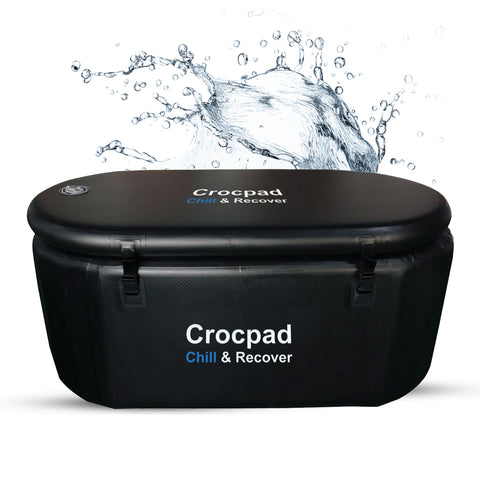
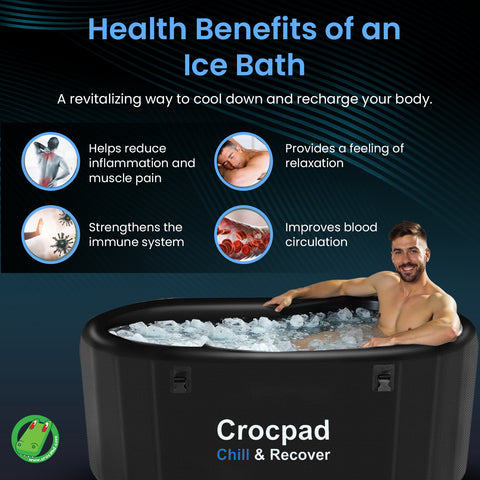
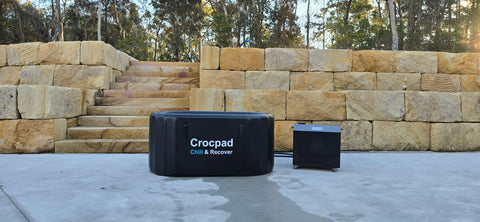
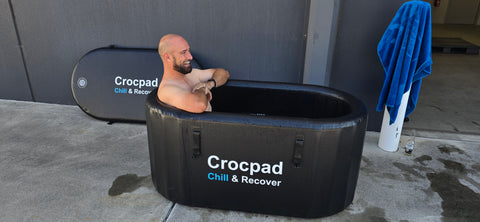
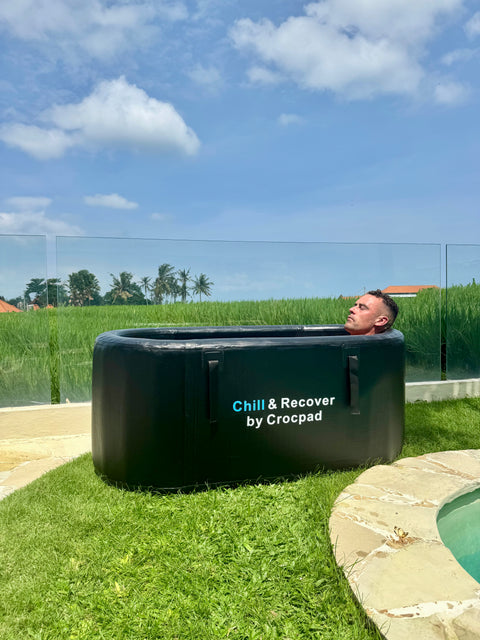
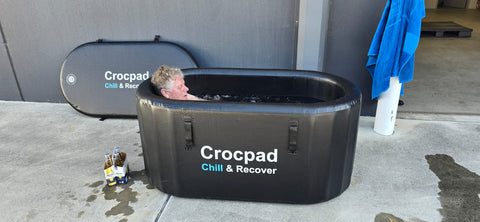
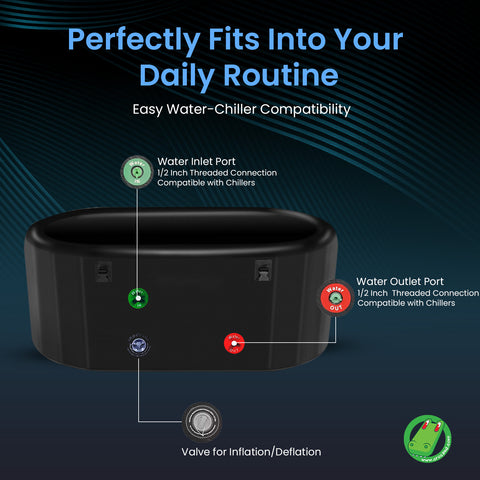
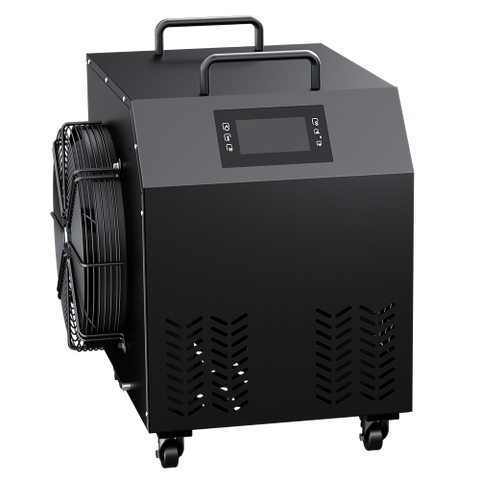
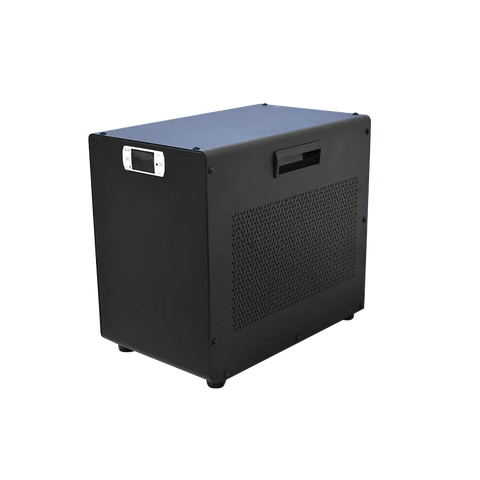
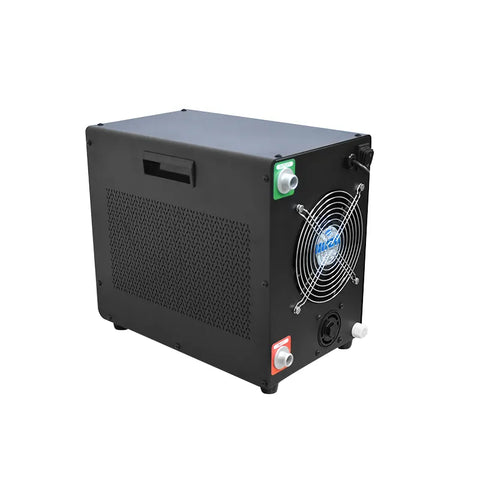
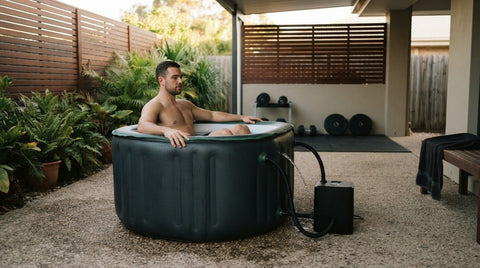
Crocpad offers Ice Baths & Chillers for people considering cold-water immersion as part of a recovery routine. They provide an option for adding a plunge to your training setup, whether you’re managing post-workout soreness or planning recovery between sessions. As research suggests weighing possible short-term relief against strength and muscle-growth goals, consider how a cold plunge fits your routine before choosing one.
Explore Crocpad’s ice bath and chiller options, then choose what suits your approach to recovery. For questions about Crocpad’s offerings, contact Crocpad.
Make recovery work for your training
Build a recovery routine around the training you want to sustain, not just the soreness you feel today. Choosing cold-plunge timing for delayed onset muscle soreness means weighing short-term comfort against your strength and muscle-building priorities. Track how your body responds, and adjust your routine as your training demands change.
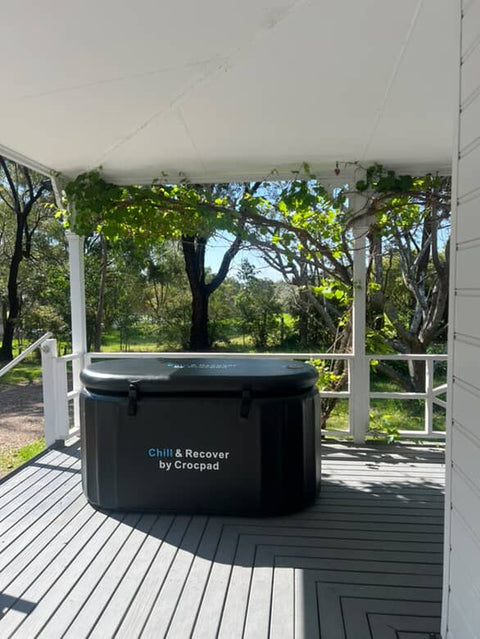
A plunge is one recovery option, not a measure of toughness or a substitute for rest. If you’re considering cold immersion at home, Crocpad’s Ice Baths & Chillers can be part of your setup. Think about how recovery fits your space and routine, then explore the options that suit you.
Start a conversation with Crocpad about your recovery setup, and keep moving towards your training goals.
Frequently Asked Questions
Do ice baths help workout recovery?
Cold plunges may reduce post-exercise soreness and make everyday movement more comfortable. But recovery also means restoring your ability to perform, so less pain alone doesn’t show that your strength or muscle function has fully returned. If stairs feel easier after an ice bath, for example, still consider how your legs move before returning to a demanding workout. Rest and appropriate training adjustments remain important.
How do ice baths work?
An ice bath immerses your body in cold water after exercise. Research has examined immersion as a way to manage muscle soreness and pain, but this doesn’t establish one mechanism or benefit for everyone. Think of it as a recovery method that may change how sore you feel, not proof that the underlying muscle repair is complete. Your training goals matter when deciding whether to use it.
How long should you ice bath for?
Start with a brief immersion of 30 seconds to a minute, then build gradually towards five to 10 minutes if it feels manageable. Research protocols vary, so don’t treat a longer session as automatically more effective. Leave the water if you experience pain or distress, and use a controlled setting with someone else present. A cautious approach helps you assess your response without turning recovery into an endurance test.
What Is DOMS?
DOMS is delayed onset muscle soreness that follows strenuous or unfamiliar activity. It often occurs after eccentric exercise, where a muscle is tense while lengthening, such as lowering a weight during a squat. Soreness can appear hours after training rather than during the workout itself. If discomfort is unusually severe, worsening, or changes how you move, don’t assume it is ordinary post-exercise soreness.
Why am I always sore when working out?
Frequent soreness can follow hard sessions, unfamiliar exercises or repeated eccentric movements, such as downhill running or lowering weights. Review changes to your training load or exercise selection, and allow time to recover before repeating intense work on sore muscles. Persistent soreness isn’t a goal. Cleveland Clinic advises seeking medical care for DOMS accompanied by unusually dark or bloody urine.
Does cold water immersion reduce delayed onset muscle soreness (DOMS)?
It may reduce DOMS, but the effect is not the same as confirming full muscle recovery. Cold-water immersion studies assess soreness and pain, outcomes that can differ from restored strength or readiness for heavy training. For example, feeling less tender after a plunge doesn’t necessarily mean a sore muscle is ready for maximal lifting. Use your movement and training demands alongside how the area feels.
How soon after exercise should you take a cold plunge for DOMS relief?
For short-term relief between closely spaced sessions, cold immersion may be used soon after exercise. If your priority is strength or muscle growth, avoid making an immediate post-lifting plunge routine. Recommendations vary, and no universal waiting period has been established. Choose your timing around your next workout and training goal: an athlete preparing for another event may prioritise short-term comfort differently from someone focused on building muscle.
What water temperature is recommended for cold water immersion after exercise?
For recovery after strength or hypertrophy training, a suggested range is 10°C to 12°C. Studies have used a wider range, from 7°C to 15°C, so there isn’t one temperature used in every protocol. Measure the water rather than relying only on how cold it feels. If a health condition such as cardiovascular disease, diabetes or neuropathy applies, cold immersion may carry added risks.