

What if the most effective way to supercharge your performance isn't another hour on the track, but ten minutes in a tub of near-freezing water? You have likely seen the pros grit their teeth through a sub-zero soak and wondered, why do athletes take ice baths when they could be relaxing on the couch? It is a fair question, especially when you are staring down the barrel of a scorching Australian summer and your muscles feel like lead after a heavy gym session or a long day on the footy field.
We understand that lingering muscle soreness is more than just a nuisance; it is a physical barrier that keeps you from training at your peak. This article breaks down the physiological and psychological reasons why elite competitors use cold water immersion to sharpen their competitive edge. You will discover the science behind reduced muscle pain, improved sleep quality, and the mental resilience required to conquer the cold. We are going to show you how a dedicated recovery station can transform your daily routine, helping you ditch the DOMS and return to your best performance faster than you thought possible.
Key Takeaways
- Learn how Cold Water Immersion has evolved from ancient traditions to a staple in modern AFL recovery rooms to help you bounce back faster.
- Understand why do athletes take ice baths to combat Delayed Onset Muscle Soreness (DOMS) and manage inflammation after intense training sessions.
- Discover how a sub-zero soak resets your central nervous system, shifting your body from a high-stress state into a restorative "rest and digest" mode.
- Master the professional approach to recovery by prioritising consistent water temperatures and safety over extreme, one-off freezes.
- Explore why a dedicated Ice Bath Pod and chiller system provides a more effective and durable recovery station than a standard household bathtub.
What is Cold Water Immersion (CWI)?
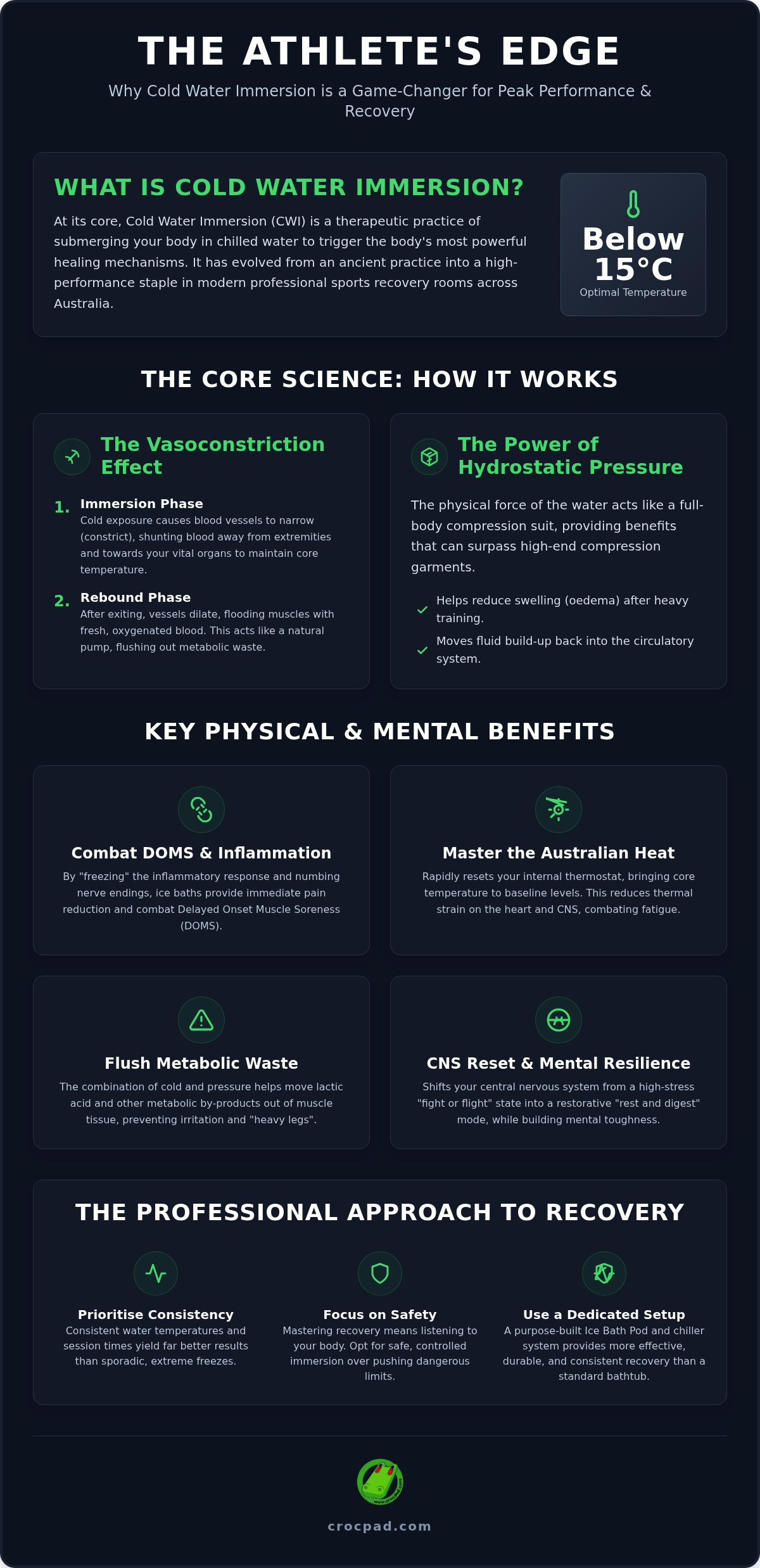
At its core, Cold Water Immersion (CWI) is a therapeutic practice where you submerge your body in water chilled to below 15°C. While it might seem like a modern fitness trend, the history of cryotherapy stretches back to ancient Greece, where the use of cold water for medicinal purposes was first documented. Today, it has evolved into a high-performance staple found in every professional AFL recovery room across Australia. It is a deliberate, controlled stressor designed to trigger your body's most powerful healing mechanisms.
Many people ask, why do athletes take ice baths instead of just using a simple ice pack? The difference lies in systemic recovery. Local icing targets a specific joint, but full-body immersion triggers a total body reset. This begins with the Cold Shock Response. It is an immediate physiological reaction that forces your body to adapt, waking up your nervous system and preparing the ground for deep repair. It is about more than just feeling cold; it is about forcing the body to become more resilient.
The Vasoconstriction Effect
When you step into a Crocpad Ice Bath Pod, your body reacts instantly. The cold causes your blood vessels to narrow, a process known as vasoconstriction. This shunts blood away from your skin and extremities toward your vital organs to maintain core temperature. It is a protective mechanism that reduces metabolic activity in the muscles. Once you exit the water, the rebound effect occurs. Your vessels dilate, and fresh, oxygenated blood floods back into your muscles, flushing out metabolic waste products like a natural internal pump.
The Power of Hydrostatic Pressure
Temperature is only half the story. The physical force of the water itself plays a massive role in why do athletes take ice baths. Hydrostatic pressure is the pressure exerted by the water against your body when submerged. This pressure acts like a full-body compression suit. It helps reduce oedema, which is the swelling caused by fluid build-up in tissues after heavy training. By moving this interstitial fluid back into the circulatory system, CWI provides compression benefits that often surpass even the highest-end compression garments. It is an efficient, chemical-free way to manage inflammation and keep your limbs feeling light and ready for the next session.
The Physical Benefits: Reducing Inflammation and DOMS
You finish a gruelling session and feel like a champion, but the real test comes 24 hours later. Delayed Onset Muscle Soreness (DOMS) usually peaks between 24 and 48 hours post-exercise, often leaving you struggling to walk down the stairs. This is precisely why do athletes take ice baths. High-intensity training causes microscopic tears in your muscle fibres. These micro-tears lead to inflammation and swelling, which is your body's way of trying to heal. However, too much inflammation can actually hinder your mobility and extend your recovery time.
By plunging into the cold, you effectively "freeze" that inflammatory response. The low temperature numbs the nerve endings around your joints and muscles, providing an immediate reduction in pain. This isn't just about feeling better in the moment. It is about the physiological effects of ice baths that allow for a faster return to peak performance. For athletes who need to back up their efforts multiple times a week, managing this physical toll is non-negotiable. It keeps the body resilient and ready for the next challenge.
Flushing Metabolic Waste
Your lymphatic system is the body's waste disposal unit, but it needs movement to function. The external pressure of the water combined with cold-induced vasoconstriction helps move lactic acid and other metabolic by-products out of the muscle tissue. This ensures that cellular debris from hard training doesn't sit and cause further irritation. Efficient metabolic clearance is the cornerstone of successful post-match recovery, allowing athletes to shed the "heavy legs" feeling quickly.
Thermoregulation in the Australian Heat
Nothing drains your energy quite like a training session under the harsh Australian sun. Your core temperature rises, creating significant thermal strain that leads to long-term fatigue and even heat exhaustion. Aussie athletes use cold immersion to reset their internal thermostat and bring their core temperature back to baseline levels immediately. This rapid cooling reduces the workload on your heart and central nervous system. If you are serious about your summer training, setting up a portable ice bath at home is the most efficient way to combat the heat and stay fresh for every session. It is a simple tool with a massive impact on your ability to perform in demanding conditions.
Beyond the Muscles: Mental Resilience and CNS Reset
While the physical relief is immediate, the real edge comes from what happens between your ears. Why do athletes take ice baths? It is often for the massive neurological reset that follows the initial shock. This practice forces your Central Nervous System (CNS) to pivot. You move from a high-alert sympathetic state, often called "fight or flight," into a restorative parasympathetic state. This "rest and digest" shift is essential for true recovery. Without it, your body stays in a state of chronic stress, hindering the repair processes discussed in previous sections.
Submerging in cold water triggers a massive dopamine release. Research indicates that levels can spike by up to 250 percent. Unlike the quick hit you get from a phone screen, this is a sustained increase that lasts for hours. It leaves you feeling focused, alert, and ready to tackle the day. Choosing to step into a portable ice bath at 6:00 AM also builds a unique kind of discipline. You prove to yourself that you can handle discomfort, making every other challenge in your day feel manageable.
Building Mental Fortitude
This is hormesis in action. By exposing your body to a controlled, short-term stressor, you build long-term resilience. You learn to control your breath and override the instinctive "gasp reflex." This mental discipline translates directly to the field. When the pressure is on in the final minutes of a match, your brain is already trained to stay calm and focused under extreme conditions. It is about developing a "cool head" when things get heated.
Improving Sleep Quality
Better sleep is the ultimate performance enhancer. Your body needs its core temperature to drop to initiate deep sleep cycles. An evening soak in a Crocpad Ice Bath Pod facilitates this drop efficiently. It is particularly effective after high-intensity night sessions when your system is too "wired" to rest. A CNS reset helps you switch off, leading to better hormonal balance and more effective muscle repair while you dream. Consistent sleep quality ensures you wake up recharged and ready to go again.
How to Take an Ice Bath Like a Pro
Jumping into freezing water without a plan is a rookie mistake. To get the results you are looking for, you need a strategy that prioritises safety and consistency over extreme, one-off freezes. Understanding why do athletes take ice baths is only half the battle; the other half is mastering the technique. In the harsh Australian climate, maintaining a steady water temperature is your biggest challenge. Without the right gear, your "ice bath" can quickly turn into a lukewarm puddle, stripping away the physiological benefits you are chasing.
Before you plunge, always set a timer and use a buddy system. Cold shock is a powerful physical event, and having someone nearby ensures you stay safe. You also need to consider the "Strength Training Paradox." If your primary goal is muscle hypertrophy (growth), research suggests waiting at least 4 hours after a heavy lifting session before you submerge. This prevents the cold from blunting the natural anabolic response your body needs to build size. For endurance and field athletes, however, immediate immersion is often the go-to for rapid recovery.
Ideal Temperature and Duration
You don't need to sit in a tub of ice cubes to see results. For beginners, a temperature range of 10 to 15°C is the perfect starting point. As you become more conditioned, you can gradually move toward the 5 to 10°C range. Aim for a "sweet spot" of 3 to 5 minutes. Staying in longer than 10 minutes doesn't necessarily improve your recovery and actually increases the risk of hypothermia and over-exposure. It is about the quality of the soak, not the length of time you can endure the shivers.
Timing Your Plunge
When you time your session depends on your specific goals. A morning soak is incredible for mental alertness and that 250 percent dopamine spike we mentioned earlier. Conversely, a post-workout plunge is best for heat dissipation and managing inflammation. If you have just finished a high-intensity cardio session in the summer heat, getting into the water immediately helps drop your core temperature before heat exhaustion sets in. Follow this simple 4-step sequence for success:
- Breath: Take three deep, calming breaths before entry to steady your nervous system.
- Entry: Step in decisively; don't hesitate or "dip a toe" in.
- Stillness: Once submerged to the neck, stay as still as possible to allow a thermal layer to form around your skin.
- Exit: Move slowly when getting out, as your limbs may feel heavy or slightly numb.
Ready to get serious about your recovery? Upgrade your routine with a portable ice bath and experience professional-grade cooling right in your own backyard.
Professional Recovery at Home with Crocpad Ice Baths
You have seen the science and understood the physiological reset that occurs in the cold. Now, it is time to bring that professional edge to your own home. Why do athletes take ice baths? Because they know that consistency is the only way to see real results. At Crocpad, we provide high-quality recovery equipment, including portable ice bath tubs and pods, designed to withstand durable use in Australian conditions. Think of your recovery station as an essential teammate in your kit. It is the tool that ensures you can back up a heavy session with another peak performance tomorrow.
Many people start by trying to use a standard household bathtub, but the experience is usually underwhelming. Standard baths lack the depth for full-body immersion and have zero insulation, meaning your water warms up before you even get in. A dedicated Crocpad Ice Bath Pod is a different beast entirely. It is built with high-grade, insulated materials that trap the cold and provide the structural integrity required for daily use. Plus, the portable design means you can set up your station in the backyard or garage without any permanent plumbing or renovations.
The Role of the Water Chiller
Let's be honest, buying ten bags of ice from the local servo every time you want to recover is a fair dinkum hassle. It is expensive, messy, and frankly, a waste of time. Our integrated chiller system changes the game by maintaining a precise, therapeutic temperature 24/7. This means you have a "ready-to-plunge" setup waiting for you whenever you finish training. Whether it is 5:00 AM or after a late-night match, you can step straight into the cold without the friction of prep work. It makes the habit of recovery effortless and sustainable for the long term.
Choosing Your Setup: Pod vs. Tub
Selecting the right gear depends on your available space and personal preference. The vertical Ice Bath Pod is a space-saving champion, perfect for those who prefer an upright, seated immersion. It takes up a minimal footprint while still allowing for a deep, neck-high soak. If you have a bit more room and prefer to stretch out your legs, the horizontal Ice Bath Tub provides that extra bit of length. Both options are inflatable and portable, ensuring they are easy to pack away if you need to move. Don't let slow recovery times hold you back from your goals. Explore the Crocpad Ice Bath range and level up your recovery today.
Master Your Recovery Routine
The science is clear: cold water immersion is a total body recalibration. By managing inflammation and flushing metabolic waste, you reduce the physical toll of high-intensity training. You have learned that the answer to why do athletes take ice baths goes far beyond simple pain relief; it is about building mental fortitude and ensuring deep, restorative sleep. This systematic reset keeps you at peak performance while others are still sidelined by lingering soreness.
As an Australian-owned and operated brand, we understand the demands of training in our local climate. Our gear features high-performance insulated materials and portable, easy-to-store designs that fit your lifestyle. You don't need to settle for slow recovery times or the constant hassle of buying bags of ice. Take control of your physical and mental health with a setup that is ready whenever you are.
Upgrade your recovery with a Crocpad Ice Bath and Chiller and start every session feeling refreshed, resilient, and ready to win.
Frequently Asked Questions
How long should an athlete stay in an ice bath for maximum benefit?
3 to 5 minutes is generally considered the optimal duration for capturing the physiological benefits of cold water immersion. While it is tempting to stay in longer to prove your grit, most research suggests that the primary cardiovascular and anti-inflammatory effects occur within this short window. Exceeding 10 minutes increases the risk of hypothermia and does not provide additional recovery value. Focus on quality and consistency rather than duration.
Is an ice bath better than a hot shower after a workout?
An ice bath is significantly more effective than a hot shower for reducing muscle soreness and inflammation. While a hot shower feels relaxing, it does not trigger the systemic vasoconstriction and hydrostatic pressure needed to flush metabolic waste from your tissues. If you are wondering why do athletes take ice baths instead of a warm soak, it is because the cold actively facilitates a faster return to peak performance by resetting the central nervous system.
Can I take an ice bath every day, or is it too much for the body?
You can certainly take an ice bath every day, provided you listen to your body and manage the duration effectively. Many people use daily immersion for the mental clarity and dopamine boost it provides each morning. However, if your goal is purely muscle growth, you might choose to skip the cold on heavy lifting days. For general recovery and resilience, a daily three-minute plunge in your backyard pod is a safe and powerful routine.
What is the best temperature for an ice bath for muscle recovery?
The most effective temperature for muscle recovery typically falls between 10°C and 15°C for most users. If you are new to the practice, start at the higher end of this range to allow your body to adapt to the cold shock response. Advanced athletes often push down to 5°C for a more intense stimulus. Maintaining a precise temperature is easy with a dedicated chiller, ensuring every session hits the therapeutic mark and delivers consistent results.
Do ice baths actually help with weight loss and metabolism?
Yes, ice baths can support weight loss by activating brown adipose tissue, which burns calories to generate heat. This process, known as non-shivering thermogenesis, can temporarily boost your metabolic rate. While it is not a substitute for a solid training plan and diet, the metabolic demand of staying warm in 10°C water adds a functional edge to your body composition goals. It is another reason why do athletes take ice baths regularly during their off-season.
Should I take an ice bath immediately after a heavy weightlifting session?
It is best to wait at least 4 hours after a heavy weightlifting session before you jump into the cold. This delay ensures that the natural inflammatory signals required for muscle hypertrophy are not prematurely blunted by the cold water. If you are training for endurance or have a second session later in the day, immediate immersion is fine. For those chasing size and strength, timing your plunge is vital for long-term gains.
Are portable ice baths as effective as professional cold plunge pools?
High-quality portable ice baths are just as effective as expensive, permanent cold plunge pools. The key lies in the insulation and the ability to maintain a steady temperature. Our portable pods are designed with durable materials that keep the water chilled even in the Australian sun. They provide the same hydrostatic pressure and systemic recovery benefits as professional club facilities but with the convenience of a home setup that fits in your garage or backyard.
How do I keep my ice bath water clean and cold in the Australian heat?
Keeping your water clean and cold requires a combination of a high-performance chiller and a secure, insulated cover. A chiller constantly filters the water and maintains your target temperature 24/7, which is essential during a scorching Australian summer. Using a cover prevents debris from entering and stops the sun from warming the water. This setup ensures your recovery station is always ready to plunge, regardless of the temperature outside, without wasting money on ice bags.


