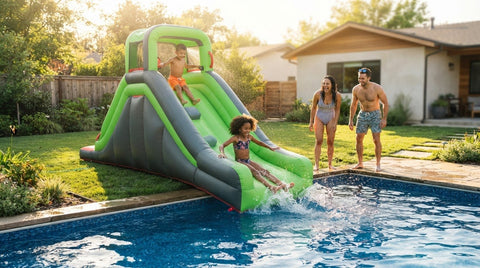
Bolting a rigid fibreglass fixture into your deck shouldn't be the price you pay for genuine backyard excitement. If you own a vinyl liner pool, you already understand the dread of sharp hardware, dragging corners, and heavy metal ladders. A residential vinyl membrane is remarkably thin, and a single shifting bracket can cause catastrophic tears. Fortunately, investing in a high-performance water slide safe for vinyl liner pools means you never have to sacrifice heart-racing thrills just to protect your pool investment.
You want genuine, commercial-grade speed without turning your coping into a permanent construction zone or settling for flimsy toys that buckle under pressure. In this 2026 buyer's guide, discover how to choose an exciting pool slide that delivers thrilling summer fun without puncturing or tearing your delicate vinyl pool liner. We break down the engineering behind puncture-resistant materials, non-abrasive bases, and effortless off-season pack-down, setting your family up for safe, non-stop action all summer long.
Key Takeaways
- Understand why delicate vinyl membranes demand specialised equipment, eliminating abrasive hardware and shifting metal legs that trigger costly pool repairs.
- Discover why choosing an engineered water slide safe for vinyl liner pools prevents the deck drilling and bead-track damage associated with heavy, permanent fibreglass units.
- Identify non-negotiable construction features, including puncture-resistant commercial PVC tarpaulin and water-weighted stepping pads that anchor firmly without scratching coping.
- Master vital deck positioning guidelines and flume exit water depths to guarantee high-speed fun with complete poolside safety.
- Explore how heavy-duty inflatables like the Minima, Mikros, and Megalo 3M deliver commercial-grade rigidity while packing down easily for effortless off-season storage.
Why Vinyl Liner Pools Need Special Consideration for Water Slides
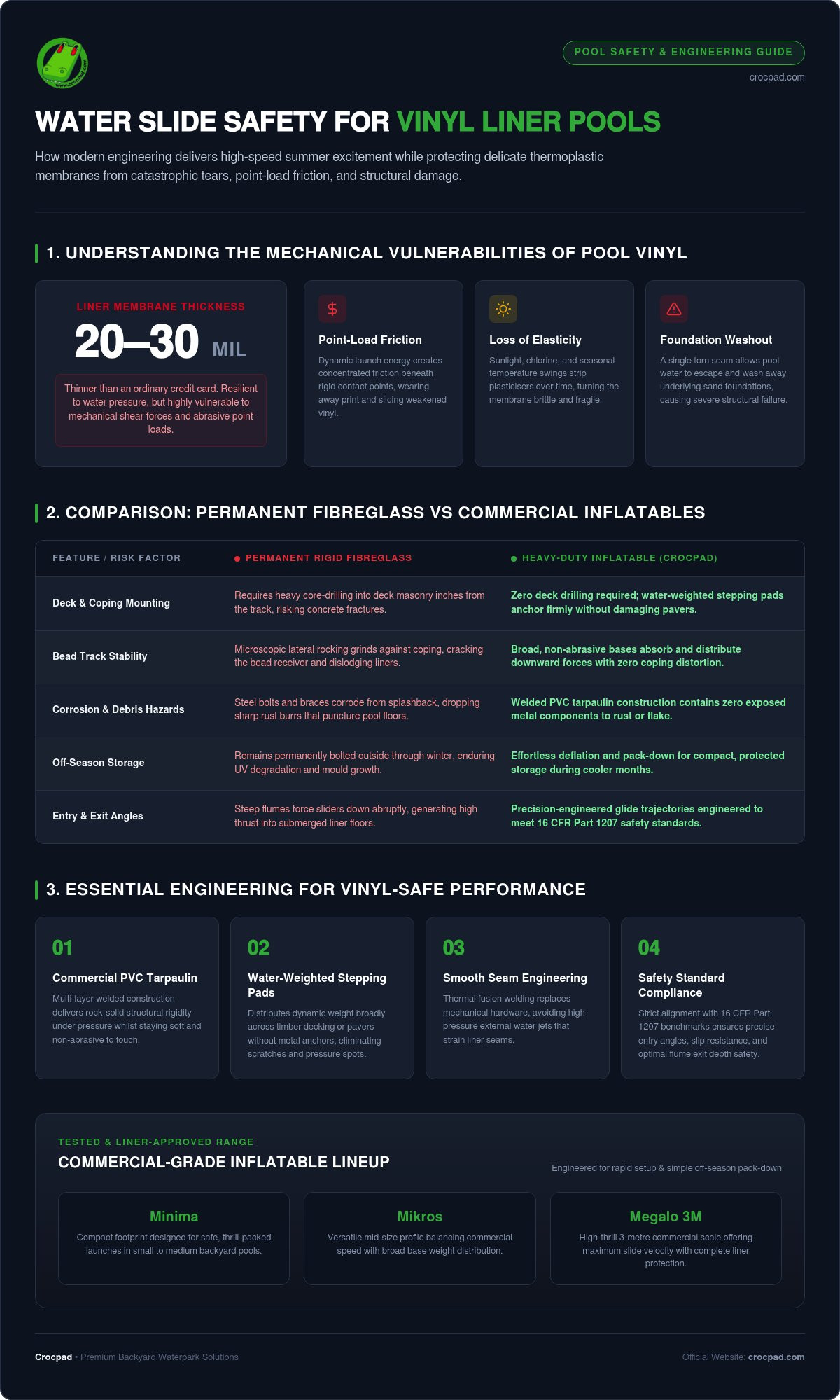
Unlike solid concrete shells or pre-formed fibreglass basins, a vinyl pool relies on a flexible thermoplastic membrane suspended inside a structural framework. Standard residential pool vinyl measures between 20 and 30 mil thick, which is thinner than an ordinary credit card. While remarkably resilient against hydrostatic water pressure, this skin offers little resistance to intense mechanical shear forces. A single dragging bracket or shifted foot can tear the membrane, washing out sand foundations beneath the pool floor and forcing expensive structural repairs. Finding a genuine water slide safe for vinyl liner pools is essential if you want high-octane fun without risking your pool's structural integrity.
The Mechanical Vulnerabilities of Pool Vinyl
Sunlight, chlorine, and seasonal temperature swings steadily strip plasticisers from pool vinyl over time. As the material loses its elasticity, it becomes increasingly brittle and susceptible to friction. When swimmers launch down a slide, dynamic downward energy creates massive point-load friction beneath rigid contact points. Heavy feet or sharp corners concentrate that force onto a tiny surface area, abrading the decorative print and quickly slicing through weakened liners.
Common Risks Posed by Traditional Rigid Slides
Traditional rigid units are engineered primarily for poured concrete decks, creating serious mechanical conflicts when paired with vinyl pools. Exploring the differences across modern backyard and inflatable water slides highlights why bulky bolted structures present major hazards for vinyl liners:
- Bead Track Distortion: As sliders climb and launch, rigid ladder legs experience microscopic lateral shifts. This continuous rocking grinds directly against the coping, cracking the bead receiver and causing the vinyl liner to drop out of its track.
- Hardware Corrosion and Rust Burrs: Steel bolts, brackets, and support braces deteriorate under constant splashback. Flaking rust and razor-sharp metal shavings settle on the pool floor, creating hidden puncture traps when stepped on.
- Seam Stress from High-Pressure Water Delivery: Misaligned external plumbing or aggressive water jets can force water behind loose coping sections, stressing welded liner seams at the pool edge.
Selecting a purpose-built water slide safe for vinyl liner pools eliminates these metal-on-vinyl friction points entirely, letting you run a fast, exciting backyard setup while keeping your pool completely protected.
Permanent Fibreglass vs Heavy-Duty Inflatable Slides: Vinyl Safety Comparison
Upgrading your pool setup shouldn't mean compromising your liner's lifespan. For decades, homeowners assumed rigid, bolt-down fibreglass flumes were the only path to real backyard thrills. In reality, permanent fixtures pose continuous structural threats to vinyl pools, whereas heavy-duty commercial inflatables deliver identical speed and stability without a single piece of destructive hardware. Choosing a purpose-built water slide safe for vinyl liner pools comes down to understanding how each design interacts with your deck and coping.
The Drawbacks of Permanent Slides on Vinyl Installations
Installing a traditional fibreglass slide requires heavy core-drilling directly into deck masonry. These anchor bolts sit mere inches from the perimeter track, sending structural vibration through the concrete and fracturing the bead channel that grips your vinyl in place. Once winter arrives, these bulky fibreglass frames remain bolted outside, enduring torrential rain, mould accumulation, and UV bake. Their steep, rigid exit chutes also force sliders down at abrupt angles, generating sharp downward thrust that repeatedly pummels the submerged liner floor.
Why Drop-Stitch Inflatables Protect Pool Liners
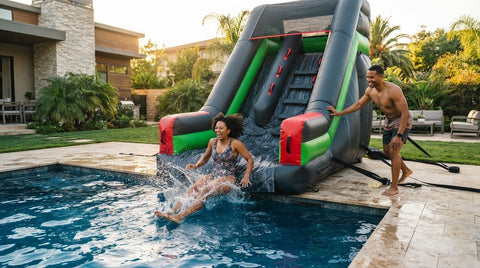
Modern commercial inflatables completely rewrite backyard pool dynamics. Engineered with high-density, multi-layer welded PVC tarpaulin, these structures achieve rock-solid rigidity under pressure while remaining soft and non-abrasive to touch. Instead of point-loading hundreds of kilograms onto metal feet, wide air chambers and broad water-weighted stepping pads distribute weight evenly across timber decking or pavers.
Rigorous consumer benchmarks like the 16 CFR Part 1207 pool slide safety standard mandate precise entry angles, slip resistance, and structural stability. Premium inflatables achieve these benchmarks without metal framing, hard corners, or sharp flange edges. Consider the key structural differences:
- Zero Coping Contact: The slide footprint rests squarely on your surround pavers, keeping rigid load-bearing components entirely off the pool coping.
- Smooth Transition Aprons: Soft exit lips glide sliders into the water on a shallow horizontal plane, preventing heels from striking shallow vinyl floors.
- Rapid Off-Season Storage: Deflate and pack the entire unit into a compact bag when temperatures cool, preserving both your slide and clear deck views.
If you want fast summer rides without leaving permanent scars on your pool surround, exploring engineered designs at crocpad.com.au offers the ultimate balance of thrilling velocity and absolute vinyl protection.
Essential Features of a Truly Liner-Safe Pool Slide
Transforming your backyard into a safe aquatic playground requires looking past generic toy floats. Department-store inflatables built from thin, 0.2 mm vinyl stretch thin under load, buckle beneath adult weight, and drag abrasive underside seams across delicate coping. A dependable water slide safe for vinyl liner pools relies on commercial-grade 0.65 mm PVC tarpaulin, reinforced thermal engineering, and dedicated ballast solutions. Evaluating these specific build characteristics ensures your slide provides adrenaline-pumping fun while keeping pool surfaces pristine.
Smooth Seams and Non-Abrasive Materials
High-frequency thermo-welding joins thick structural panels into cohesive air chambers without coarse stitching or raised ridges. Smooth welded seams flex under impact, eliminating micro-abrasive contact against vinyl pool copings and borders. Check that inflation valves sit recessed or feature protective flush-mount caps. Any exposed plastic hardware rubbing against a vibrating pool wall will eventually wear through the liner.
Soft Entry Lips and Extended Overhang
Swimmers generating high exit speeds must clear perimeter pavers cleanly. An extended slide apron creates a smooth transition zone, carrying riders past the coping line and launching them directly into open water. Integrated overhead sprayers maintain continuous lubrication across the chute. Following the CPSC Pool Safely guidelines for residential water depth and equipment supervision ensures smooth gliding that prevents friction burn on skin and protects submerged vinyl benches from hard landings.
Secure Ballast and External Tie-Downs
Slide movement is the primary culprit behind coping wear and liner distortion. Heavy-duty units resolve this challenge using dual-action anchoring systems rather than invasive deck bolts:
- Water-Ballast Stepping Pads: Large, water-filled base chambers lay flat along the edge. Once filled with pool water, they provide hundreds of kilograms of counterweight that pins the slide firmly to the ground.
- Reinforced D-Ring Anchor Points: Multi-layer welded tether patches let you run tension lines back to existing deck posts, garden bollards, or sandbags away from the water's edge.
- Dynamic Load Absorption: Because the structure uses internal air pressure rather than rigid steel struts, dynamic slider forces displace safely into the air chambers without transferring grinding torque to the pool wall.
High-capacity construction rated for 120 kg to 250 kg guarantees adults and teenagers can join the action without causing the slide walls to flex, roll, or tip sideways into pool coping.
Safe Installation and Positioning for Vinyl Liner Decks
Dialling in your deck layout ensures seamless, high-speed fun right from the first drop. Setting up a water slide safe for vinyl liner pools requires zero heavy machinery or invasive masonry drilling, but proper positioning is vital. Follow a methodical approach to protect your pool coping, maintain clear traffic flow, and safeguard the submerged vinyl beneath the splash zone.
Assessing Deck Space and Water Depth
Measure your pool surrounds before unrolling your gear. Safe operation demands maintaining a 60 cm to 90 cm buffer clearance behind the ladder and along the flanks, keeping excited sliders well clear of fences, pool walls, or patio furniture. Verify water depth directly in front of the planned slide exit chute. Smaller 1.8 m slides require a minimum water depth of 1.2 m, while larger 3 m performance flumes demand at least 1.8 m of deep water at the landing point.
Always sweep the staging area thoroughly. Thoroughly removing grit, loose gravel, and twigs prevents hard particles from grinding beneath the slide base or tracking into the basin, where submerged debris could abrade delicate vinyl floors under swimmers' feet.
Securing Stable Anchors Without Deck Damage
Setting up your slide without drilling into concrete or timber requires simple, reliable counterweight and tension techniques:
- Align the Overhang: Position the front base so the soft exit lip projects completely past the pool edge, ensuring zero rubbing against the vinyl tracking or perimeter coping stones.
- Fill the Integrated Water Ballast: Fill the heavy-duty water-weighted stepping pad straight from your garden hose. This adds instant mass directly over the pool edge, holding the unit immovable under rider impact.
- Anchor Perimeter D-Rings: Fasten tension straps to heavy-duty D-rings, securing the opposite ends to garden posts, boundary uprights, or external weight bags situated away from coping tracks.
- Engage Water Lubrication: Click your garden hose into the built-in sprinkler connection to keep the sliding lane slick and cool under blazing sunshine.
Locking in stable positioning guarantees pure adrenaline without any equipment drift. Ready to upgrade your summer setup? Explore premium inflatable pool slides at crocpad.com.au and secure the ultimate liner-safe attraction for your backyard.
Turn Your Pool into a Safe Waterpark: The Crocpad Slide Range
Transform your backyard into an action-packed family haven without the permanent drawbacks of rigid structures. The Crocpad collection delivers the definitive water slide safe for vinyl liner pools, pairing heavy-duty commercial PVC tarpaulin with thoughtful, non-abrasive footprints. Engineered for vigorous residential pool enjoyment, each model delivers high-speed gliding while completely eliminating the threat of gouged liners, cracked bead locks, or chipped coping.
Mikros and Minima: Compact Thrills for Smaller Spaces
Looking for sleek proportions without giving up premium durability? The Minima Pool Slide features a 1.8 m flume engineered for everyday family backyards. Requiring just 1.2 m of water depth, it supports up to 120 kg with ease. An integrated water-filled stepping pad, protective side walls, and a dedicated pressure relief safety valve keep energetic kids completely secure.
Stepping up the platform size, the Mikros Pool Slide features a 2.0 m flume and a wide 210 cm stepping pad. Rated for an impressive 250 kg weight tolerance, it easily welcomes both adults and eager sliders in tandem. Thermo-welded seams and smooth transition aprons ensure zero abrasive contact against delicate liner edges.
Megalo 3M: Maximum Backyard Thrill
For larger pool footprints, the Megalo 3M Inflatable Water Pool Slide creates an authentic commercial waterpark experience right at home. Spanning 3.0 m in length, 2.0 m in width, and standing 1.5 m tall, this powerhouse requires 1.8 m of pool water depth at the flume entry point. Built with commercial-grade 0.65 mm welded PVC tarpaulin and rated for 250 kg, it effortlessly handles full-grown adults.
Seven reinforced climbing handles, a built-in boarding ladder, and four heavy-duty D-ring tie-down anchors keep the frame rock-solid under high-impact splashes. Inflate it rapidly with an electric pump, click your garden hose into the integrated sprayer line, and let the races begin.
When the swimming season winds down, pack-down is effortless. Deflate the slide, fold it into its storage bag, and tuck it away in your garage, leaving your deck immaculate all winter long. Explore the complete range of inflatable pool slides at Crocpad to find your setup and lock in safe summer thrills.
Upgrade Your Backyard for Unstoppable Summer Thrills
Protecting your pool investment shouldn't mean sitting on the sidelines all summer. Traditional bolted fixtures risk bead displacement and expensive liner punctures, but you don't need invasive masonry modifications to enjoy high-speed action. Investing in a purpose-built water slide safe for vinyl liner pools lets you bring genuine waterpark energy directly to your coping. Built from commercial-grade puncture-resistant materials, these inflatables are engineered specifically for safe, soft contact with domestic pool decks and delicate edges. You get rapid setup, rock-solid stability under heavy splash traffic, and zero permanent deck drilling.
When the warm weather winds down, pack everything away into a storage bag in minutes, leaving your pool surround clear and uncluttered all winter. Give your family the high-octane excitement they crave while keeping your pool liner completely protected from abrasion. Ready to make a splash? Upgrade your pool with a liner-safe water slide from Crocpad and dive straight into an unforgettable summer.
Frequently Asked Questions
Will an inflatable pool slide rip or puncture my vinyl pool liner?
No, a high-quality inflatable slide will not puncture or rip your vinyl liner. Unlike traditional fibreglass units fitted with abrasive steel legs and exposed bolts, commercial inflatables feature smooth, thermo-welded PVC seams. Selecting a genuine water slide safe for vinyl liner pools eliminates hard friction points entirely. The soft air-cushioned structure rests gently against your deck surround, ensuring your vinyl membrane remains completely protected during high-energy splash sessions.
Can adults use inflatable water slides on residential vinyl pools?
Yes, adults can safely use commercial-grade inflatable water slides designed with heavy load capacities. While cheap seasonal toys cap out around 40 kg, robust designs like the Crocpad Mikros and Megalo 3M support up to 250 kg. Their reinforced drop-stitch engineering and 0.65 mm welded PVC tarpaulin withstand adult riders without collapsing, tipping, or transferring excessive mechanical strain onto your pool coping.
Do I need to drill into my pool deck to secure a water slide?
No, you don't need to drill any holes or install permanent masonry anchors into your deck. Investing in an engineered water slide safe for vinyl liner pools relies on water-ballast stepping pads that provide immense counterweight. External straps attach to heavy-duty D-rings, securing safely to existing garden posts, surrounding fences, or external weight bags well away from delicate vinyl tracking.
What is the minimum pool water depth required for a backyard slide?
Minimum required water depth depends directly on the slide's height and length. Compact units like the Minima require at least 1.2 metres of water beneath the exit flume to ensure safe landings. Larger, faster performance slides like the Megalo 3M require a minimum depth of 1.8 metres. Always verify these landing thresholds to protect sliders from striking shallow pool floors.
How do I prevent an inflatable slide from sliding on wet pool pavers?
Slide stability relies on a combination of water ballast and external tethering lines. Filling the base stepping pad with pool water provides instant, heavy ballast right along the pool edge. You then secure heavy-duty tension straps from the slide's welded D-rings to fixed deck posts or sandbags behind the unit. This dual anchoring system prevents slippage on slippery wet pavers without damaging coping.
Can a pool slide be used on an above-ground vinyl liner pool?
Pool slides should only be used on above-ground vinyl pools if you have a compliant, level surrounding deck built flush with the pool coping. Inflatable slides require a flat, solid foundation to sit on and cannot rest directly on top of flexible above-ground pool walls or narrow top rails. The pool must also provide adequate water depth at the flume entry point.
How do I store an inflatable water slide during the winter months?
Preparing your inflatable slide for winter is straightforward and preserves its materials. Empty the water ballast chamber, wash away pool chemicals with fresh tap water, and let the unit dry thoroughly in the sun to prevent mould. Once dry, open the rapid-deflation valves, roll the fabric tightly, and pack it into its carry bag for dry indoor or garage storage until the hot weather returns.