

A standard afternoon on the water is great, but turning your deck into a high-speed launchpad is how you truly own the river. If you aren't equipped with a commercial-grade pontoon boat slide, you're missing out on the ultimate way to keep the whole crew entertained from sunrise to sunset. It's the difference between a quiet float and a full-blown mobile waterpark that brings everyone together.
We know the hesitation. You want the thrills, but you don't want a flimsy toy that punctures on its first outing or takes up every square centimetre of your deck space. You need gear that stands up to the brutal Australian sun and supports the weight of adventurous adults just as easily as the kids. This guide promises to help you find that perfect balance of durability and convenience. We'll walk you through choosing the right size, mastering the five-minute setup, and maintaining your slide so it remains a high-performance staple of your summer holidays for years to come.
Key Takeaways
- Transform your boat into a mobile entertainment hub that keeps the kids entertained while you enjoy some well-earned peace on the deck.
- Understand why a high-grade inflatable pontoon boat slide is the superior choice for maintaining fuel efficiency and maximising storage space compared to permanent fixtures.
- Spot the difference between cheap toys and marine-grade gear by looking for 1000D reinforced PVC and high-level UV protection.
- Get your setup down to under 15 minutes and ensure everyone stays safe with professional anchoring tips and water depth guidelines.
- Compare the heavy-duty Megalo 3M against more compact models like the Mikros to find the right scale for your specific boat and crew size.
Why a Pontoon Boat Slide is the Ultimate Summer Upgrade
Owning a boat in Australia is about more than just getting from point A to point B. It's about the lifestyle you build on the water. A Pontoon boat is already the gold standard for socialising, but it truly comes alive when you add a dedicated launchpad for fun. Integrating a pontoon boat slide into your setup transforms a standard vessel into a high-energy mobile waterpark. Modern engineering has shifted these accessories from being flimsy pool toys to serious pieces of marine-grade equipment. We're talking about 1000D reinforced PVC that handles the brutal Aussie sun and the weight of adventurous adults without breaking a sweat.
To see exactly how a high-quality slide transforms the boating experience, check out this action footage:
The psychological shift for families is massive. When you have a high-performance pontoon boat slide ready to go, the social dynamic on the deck changes instantly. The constant "are we there yet?" from the kids is replaced by hours of active, healthy play. This allows the adults to actually sit back, relax, and enjoy the scenery while the younger crew stays entertained and builds water confidence. If you use your boat for holiday rentals or large family gatherings, this single upgrade often becomes the most sought-after feature, significantly boosting the appeal and value of your time on the water.
Is it a Gimmick or a Game Changer?
Some boaties worry that a slide might be a flimsy gimmick or a hassle to manage. That couldn't be further from the truth with today's premium inflatables. These slides are designed for rapid deployment and rock-solid stability. Beyond the pure adrenaline, they encourage physical activity and coordination in younger swimmers. It is a fantastic way to keep everyone moving in a safe, controlled environment. Being the person with the slide also makes your boat the natural centre of every social raft-up or riverbank party.
Versatility Beyond the Boat
The beauty of a portable, inflatable design is that you aren't locked into one location. While they are perfect for the deck, these slides are just as effective at a riverbank, a jetty, or even a large backyard pool. Because they utilise high-spec materials, they provide a slick, fast sliding surface without the need for bulky, permanent fibreglass structures. When the day is done, you simply deflate, pack it into a storage bag, and reclaim your deck space. You get all the thrills of a permanent installation with none of the logistical headaches.
Inflatable vs. Permanent Pontoon Slides: Which is Right for You?
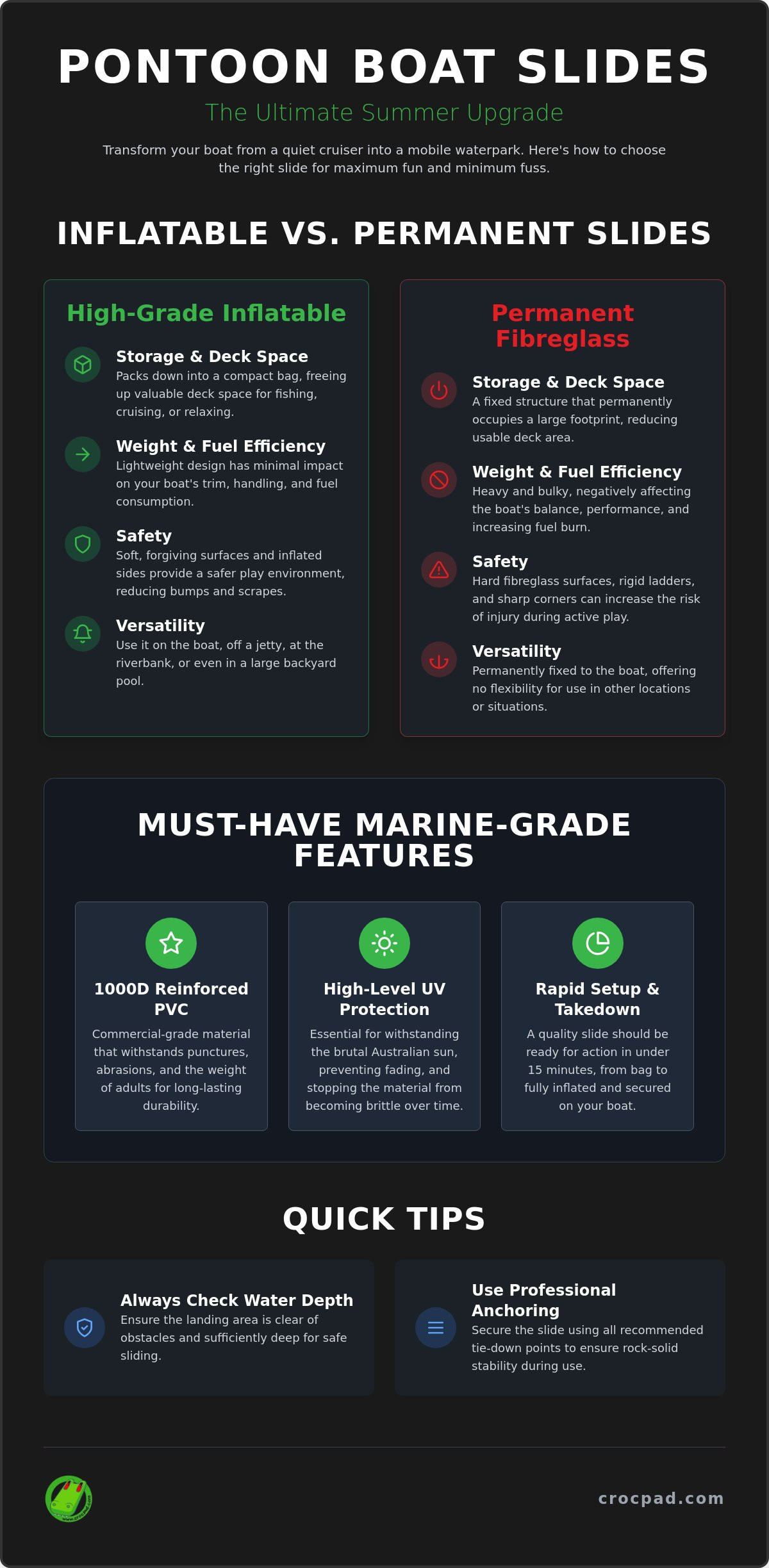
Deciding between a fixed fixture and a portable option is a major crossroad for boat owners. A permanent fibreglass slide might look impressive, but it comes with a "permanent problem" that many don't consider until they're out on the water. These heavy structures permanently alter your boat's weight distribution and fuel efficiency. In contrast, a high-quality inflatable pontoon boat slide offers the same thrills without the logistical baggage. You get the flexibility to choose when your boat is a floating playground and when it's a sleek cruiser for a quiet morning fish.
Safety is another major differentiator. Inflatables provide a forgiving, soft-sided landing surface that is much kinder to active kids. Fibreglass decks often feature hard edges and rigid ladders that can be unforgiving during high-energy play. Modern inflatables utilise marine-grade performance plastics and reinforced PVC to achieve a level of rigidity that rivals solid structures. This ensures a fast, stable ride every time without the risk of scrapes or bruises from hard plastic corners.
Weight and Deck Space Management
Stability is everything on a pontoon. Adding a massive fibreglass upper deck or a fixed slide can seriously mess with your boat's "trim" and handling, especially in choppy river conditions. Portable gear allows you to keep your deck clear when you need the space. If you're heading out for a serious fishing session or a sunset cruise with the adults, you can simply leave the slide in its storage bag. This versatility is a massive win for those who use their craft for more than just one type of activity. You aren't sacrificing your deck's footprint for a feature you might only use once a week.
Cost vs. Long-Term Value
While the entry cost of a premium inflatable is significantly lower than a custom fibreglass install, the real value lies in the maintenance. Fibreglass requires constant polishing and gel-coat repairs to stay looking sharp in the Aussie sun. High-grade PVC simply needs a quick rinse with fresh water. Plus, a permanent slide can actually shrink your future buyer pool. Not every second-hand buyer wants a massive slide taking up their deck space. A portable pontoon boat slide preserves your boat's original configuration, making it much easier to sell down the track.
If you're ready to add some serious speed to your summer without the permanent hassle, check out the durable range of slides at crocpad.com to see which model fits your deck best.
Key Features to Look for in a Marine-Grade Slide
Choosing a pontoon boat slide isn't just about finding the brightest colour on the shelf. In the harsh Australian marine environment, the difference between a high-performance accessory and a single-use toy comes down to the spec sheet. You need gear that can handle the abrasive nature of salt water, the weight of a fully grown adult, and the relentless UV radiation of a Queensland summer. Settling for anything less than a marine-grade build is a recipe for a flat slide and a ruined weekend.
Look for 1000D reinforced PVC. This material is the gold standard for heavy-duty inflatables because it provides incredible puncture resistance and structural integrity. It's the same tech used in professional white-water rafts. This ensures your slide won't sag or buckle when a "big kid" decides to take a turn. A premium build should feel rock-solid underfoot, featuring moulded steps and reinforced safety handles that make the climb easy for all ages. This eliminates the wobble and instability associated with thin, department-store alternatives.
The Importance of UV-Stabilised Materials
Cheap PVC has a nasty habit of turning brittle and sticky when exposed to 40-degree heat. To protect your investment, ensure the material is specifically UV-stabilised. While there are no mandatory laws for private use, following the principles in Safe Work Australia's guide for amusement devices ensures you're prioritising safety and longevity. Heat-welded seams are another non-negotiable. Unlike glued seams that can fail when the internal air pressure rises in the sun, heat-welded joins are fused together, making them effectively fail-proof in high temperatures.
Stability and Attachment Points
A safe pontoon boat slide must stay exactly where you put it. High-quality models feature heavy-duty stainless steel D-rings that allow you to secure the unit firmly to your boat railing. Dual-chamber inflation is another feature to watch for. By separating the air into two zones, the slide maintains better lateral stability, preventing it from tipping sideways during a fast descent. Finally, look for a "slick" top layer. This specialised coating ensures a fast ride even if the slide isn't constantly drenched in water, keeping the momentum high for every slider.
Setup, Safety, and Maintenance in Australian Conditions
A premium pontoon boat slide is built for high-speed action, but its performance depends on a solid setup. You don't want to spend your entire morning wrestling with gear while the sun is beating down. With the right approach, you can move from the esky to the water in under 15 minutes. Efficiency is the goal here. By following a methodical routine, you ensure the slide is rock-solid and ready for the first jumper before the boat is even properly anchored.
How to Inflate and Secure Your Slide
Forget the hand pump. To get the required rigidity for a fast ride, use a high-pressure 12V pump powered directly by your boat battery. This ensures you reach the optimal PSI without breaking a sweat. When positioning the slide, always choose the side of the boat furthest from the engine prop to maintain a clear entry zone. Once inflated, perform the "Finger Test." The surface should feel firm like a basketball, but you should still be able to depress the PVC by about half a centimetre with a firm thumb press. If it's too soft, it will sag; if it's too hard, you risk putting unnecessary stress on the seams during a hot Aussie afternoon.
Safety Rules for the Water
Safety isn't about dampening the fun; it's about keeping the crew in one piece. Before anyone takes the plunge, verify that your pontoon boat slide terminates in at least 2 metres of water. Don't guess the depth. Use a depth sounder or a weighted line to be certain. Shallow landings are the primary cause of injury during water play. Establish a strict "one at a time" rule to prevent mid-air collisions. Even for confident swimmers, wearing a life jacket is a smart move, especially in tidal rivers where currents can be deceptive. Finally, keep an eye on the horizon. If the wind picks up or a squall moves in, deflate and pack the slide away immediately. Inflatables can act like sails in high winds, which can compromise your boat's stability.
Maintenance is where you protect your investment. Salt crystals are effectively microscopic sandpaper. After every trip in salt water, give the slide a thorough "Freshwater Flush" using a garden hose. This prevents salt-crystal damage and keeps the PVC supple. Before you roll it up, ensure the material is bone-dry. Storing a damp slide in a bag is an invitation for mould and bad odours. To save shed space, roll the slide tightly from the end furthest from the valve, pushing the air out as you go. Ready to upgrade your weekend? Check out the full range of marine-grade gear at crocpad.com.
The Crocpad Solution: Premium Slides for Serious Fun
Crocpad provides the hardware for your best summer memories. When you invest in a pontoon boat slide, you need to know it will survive the season and beyond. Our lineup is engineered to meet the specific demands of Australian boaties, offering a scale and durability that generic brands simply can't match. Whether you're captaining a massive double-decker or a compact cruiser, there's a solution tailored to your deck space. We don't believe in a one-size-fits-all approach because every boat and every crew is different.
The Megalo 3M Inflatable Water Pool Slide is our heavy-duty powerhouse. It's built for large groups and high-traffic fun, providing a massive 3-metre drop that turns any lake into a professional-grade attraction. For those with more limited real estate, the Minima and Mikros models offer the same high-performance materials in a smaller footprint. These compact slides ensure that even smaller pontoons can join the action without sacrificing the entire deck for storage or setup. You get the same marine-grade 1000D PVC, just in a size that fits your lifestyle.
Why Crocpad Stands Out in Australia
Our focus on structural integrity and environmental resilience is why we are considered the reliable adventure expert for Aussie families. We understand that your leisure time is valuable, so we design products that work every time you hit the water. Australia's environment is unique, and our gear reflects that. We use high-performance, UV-stabilised materials that don't compromise on safety, giving you peace of mind while the crew is at full throttle. Having local support and expertise means you aren't just buying a box; you're joining a community of boaties who take their fun seriously.
Complete Your Waterpark
The real magic happens when you move beyond a single accessory and create an integrated waterpark. By pairing your pontoon boat slide with a Floating Water Mat, you expand your "real estate" on the water. The mat serves as the perfect landing zone or a massive island for lounging between slides. It is about maximising every square metre of your aquatic environment to keep everyone engaged.
Don't leave your four-legged mates behind, either. Our inflatable dog ramps ensure the family pet can get back on board easily after a swim without scratching your pontoons. Toss in a few of our waterproof bags to keep your towels and electronics bone-dry, and you've got a professional setup ready for a full day of adventure. Summer is short, so make it count. Check out the full range of Crocpad slides and mats here and start building your ultimate floating playground today.
Own the Water This Summer
Choosing a pontoon boat slide is the fastest way to turn your vessel into the ultimate social hub. You've seen how high-performance materials like 1000D PVC outperform flimsy alternatives and why portable inflatables beat heavy permanent structures every time. By prioritising UV resistance and smart safety setups, you're investing in years of reliable, high-energy fun for the whole family. It's about reclaiming your deck space while still having a world-class waterpark ready to deploy in under 15 minutes.
Crocpad is a trusted Australian brand dedicated to helping you maximise your leisure time with gear that's built for our rugged conditions. Our slides are designed for portability and maximum thrills without compromising on structural integrity. Don't settle for a quiet afternoon when you could be the centre of the action at the lake or river. We provide the durable, marine-grade equipment you need to lead the way in outdoor adventure.
Upgrade your boat with a premium Crocpad slide today!
Grab your gear, gather the crew, and get ready to make this summer your most adventurous one yet.
Frequently Asked Questions
Can adults use an inflatable pontoon boat slide?
Yes, absolutely. Premium models like the Megalo 3M are engineered with 1000D reinforced PVC to handle the weight of adventurous adults just as easily as kids. This heavy-duty construction ensures the slide remains rigid and stable even under significant loads. It's a game-changer for social boaties who want to keep the whole crew involved in the action without worrying about the gear buckling or sagging.
How do I attach an inflatable slide to my pontoon boat?
You secure it using heavy-duty D-rings and high-tension straps. Most slides are designed to be lashed directly to your boat's railing or cleats to ensure they stay flush against the deck. Proper anchoring is vital for lateral stability, preventing the unit from shifting while someone is climbing or sliding. Always double-check your knots and strap tension before the first person takes a turn to ensure a rock-solid setup.
Will the sun damage my inflatable slide if I leave it out?
Modern marine-grade slides are UV-stabilised to withstand the brutal Australian sun, but long-term exposure will eventually take its toll. While the high-spec PVC is designed for resilience, leaving any inflatable out for weeks on end can lead to material fatigue. To maximise your investment, we recommend deflating and bagging your pontoon boat slide when it isn't being used for an extended period. This simple step keeps the material supple and the colours vibrant.
How much water depth do I need for a pontoon slide?
You must have a minimum water depth of 1.8 to 2 metres at the slide's exit point. Safety is the priority, so never guess the depth of the river or lake. Use a depth sounder or a weighted line to confirm the landing zone is clear of submerged rocks, logs, or sandbars. Ensuring a deep, clear landing prevents injuries and allows everyone to enjoy the high-speed entry with total confidence.
Are inflatable slides hard to pump up by hand?
Pumping up a large slide by hand is a massive task that will leave you exhausted before the fun even starts. We strongly recommend using a high-pressure 12V electric pump that plugs into your boat's accessory socket. This gets the job done in about 10 to 15 minutes, ensuring the chambers reach the correct PSI for maximum rigidity. It saves your energy for the actual sliding and keeps the setup process efficient.
How do I clean my slide after using it in salt water?
Give your gear a thorough freshwater rinse after every salt-water outing. Salt crystals are abrasive and can slowly degrade the PVC or damage the heat-welded seams if left to dry. Use a standard garden hose to flush away all residue, paying close attention to the valves and handles. Make sure the unit is completely bone-dry before you roll it up to prevent mould or unpleasant smells from developing during storage.
Can I use a pontoon slide on a different type of boat?
You can use these slides on various vessels, including yachts and houseboats, provided you have a flat deck and secure attachment points. The key is ensuring the height of your boat's railing matches the slide's design to maintain a safe, functional angle. If you're unsure about compatibility, check the range at crocpad.com to compare dimensions. These versatile inflatables are perfect for turning any large craft into a mobile waterpark.
What happens if my inflatable slide gets a puncture?
Punctures are rare with 1000D PVC, but they can be easily repaired with a standard marine-grade PVC patch kit. Most small nicks or tears can be fixed on the boat with a bit of adhesive and a patch, getting your pontoon boat slide back in the water within a few hours. The repair is typically as strong as the original material, ensuring the slide's structural integrity remains intact for the rest of your trip.


