

Most floating mats aren't built to survive a single summer under the brutal Australian sun. You've likely seen them before; once-vibrant mats now faded to a dull grey or, worse, crumbling into microplastics after just a few trips to the dam or beach. It's frustrating to invest in summer fun only to watch your gear tear at the tether point the moment a breeze picks up. You want a reliable platform where the kids can play for hours without the equipment failing when you need it most.
This floating water mat buying guide ensures you never waste money on a single-season mat again. You'll discover how to identify high-performance, UV-stabilised XPE foam that handles the heat and stays stable enough for the whole family to wrestle on. We'll break down the essential specs for 2026, from marine-grade durability to the secrets of effortless transport and pack-down. Get ready to transform your boat days into a high-energy playground with total confidence in your gear's longevity. We're diving into everything from weight capacities to anchoring secrets so your summer stays stress-free.
Key Takeaways
- Understand why high-density XPE foam is the superior choice for Australian conditions compared to inflatable alternatives that require constant pumping.
- Learn how to calculate the right size and weight capacity for your mob, whether you need a personal 2-metre mat or a massive 5.5-metre party pad.
- Use this floating water mat buying guide to select a marine-grade platform that adds valuable square-meterage to your boat or jetty.
- Master essential maintenance tips and tethering techniques to protect your investment from the harsh Australian sun and tidal movements.
- Discover why gear designed by local experts at Crocpad ensures your equipment won't crumble or fade after a single season on the water.
What is a Floating Water Mat and Why Does Your Boat Need One?
Imagine dropping anchor in a secluded cove, the sun is blazing, and your boat is packed with mates. The only problem is the limited deck space. A floating water mat solves this instantly by acting as a portable, high-buoyancy island. It's a multi-layered foam platform that stays flat on the water, effectively adding several square metres of usable "real estate" to your boat or jetty. This floating water mat buying guide highlights why these mats have become the ultimate summer accessory for Aussie boaties who want to expand their social zone without upgrading to a larger vessel.
The versatility of these platforms is unmatched. You can use them as a high-energy playground where the kids can wrestle and jump, or as a stable deck for adults to enjoy a cold bevvy while soaking their feet. Because they rely on the same principles of displacement and buoyancy found in a Personal flotation device, they provide a reliable surface that won't sink or dip dangerously under weight. Unlike traditional inflatables, foam mats are ready to use the second they hit the water. You don't need to waste time with noisy pumps or worry about a stray fishing hook ruining your afternoon with a puncture.
The Anatomy of a High-Quality Floating Mat
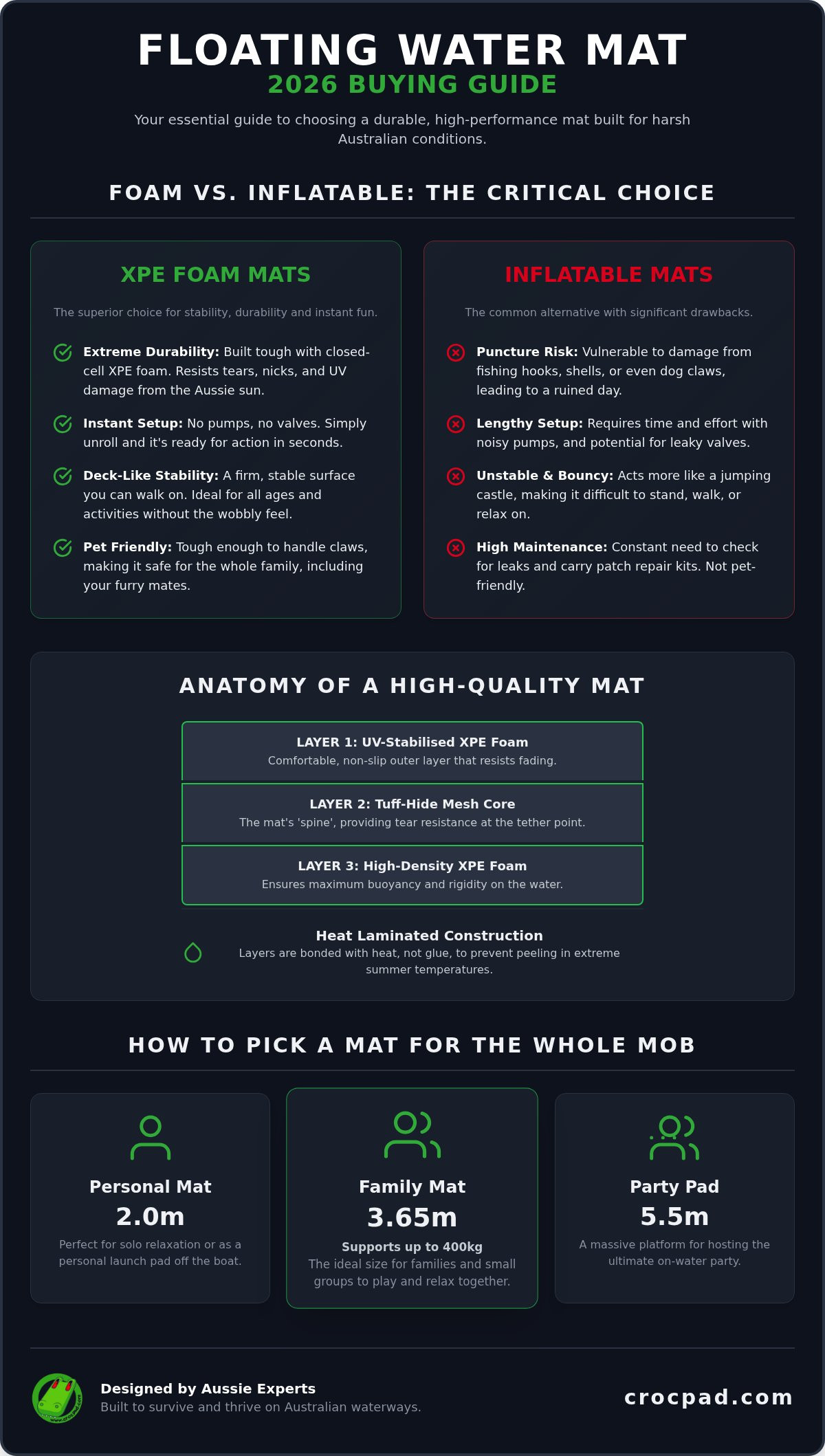
High-performance mats rely on closed-cell XPE foam technology. This material is specifically chosen because it doesn't absorb water, ensuring your mat stays light and manageable even after a full day of use. Quality construction usually involves a three-layer composite. The outer layers are designed for comfort and UV resistance, while the middle layer often contains a "tuff-hide" mesh core. This internal reinforcement is the mat's spine; it prevents the foam from tearing at the tether point when the tide pulls against your boat. As you follow this floating water mat buying guide, look for this mesh layer as a sign of a mat built for longevity.
Key Benefits for Aussie Boaties and Families
Security and ease of use are the primary reasons Crocpad mats are a staple on Australian waterways. You get an instant swim platform with a non-slip surface that's safe for everyone, including the family dog whose claws might puncture a cheaper PVC inflatable. These mats are incredibly portable; they roll up into a compact cylinder that fits easily on a swim platform or a roof rack. With a 3.65m mat supporting up to 400kg, you can fit a significant portion of the mob on one platform for a shared afternoon of sun and surf.
Foam vs Inflatable: Choosing the Right Material for Australian Waters
Choosing between a foam or inflatable platform is the most critical decision in any floating water mat buying guide. While both options get you out on the water, they offer vastly different experiences in terms of stability and maintenance. Foam mats provide a firm, reliable surface that feels more like a floating deck than a pool toy. They don't have the "bouncy" or "springy" feel of air-filled products, which makes them ideal for older adults or anyone who wants to walk across the mat without losing their balance. On the other hand, inflatables act more like a jumping castle; they're high-energy and fun but can be difficult to stand on for long periods.
Maintenance is where foam truly shines for the busy boatie. There are no pumps to forget, no valves to leak, and no repair kits required for a day at the dam. You simply unroll the mat and play. This "instant-on" factor is a game-changer when you're managing a boat full of eager kids. In salt water environments, foam is particularly resilient. High-quality foam won't perish or lose its buoyancy if it gets a small nick from a shell or a fishing hook. When using any recreational gear, always follow basic water safety tips to ensure everyone remains safe while enjoying the new space.
Why XPE Foam is the Gold Standard
Cross-linked polyethylene (XPE) is the secret to a mat that lasts multiple seasons. Unlike cheaper, non-cross-linked foams that feel like packing material, XPE is dense and physically tough. It features a closed-cell structure, which means it cannot absorb water. This keeps the mat light and easy to roll up at the end of the day. Premium mats use heat-lamination to bond their layers together. This process is superior to using glues, which frequently fail and peel apart when exposed to the extreme heat of a Queensland or Western Australian summer. If you want a setup that survives the elements, check out the durable Floating Water Mat range designed specifically for local conditions.
When to Consider an Inflatable Alternative
Inflatables have their place, especially when storage space is at an absolute premium. If you're operating from a small tinny or a jet ski where you can't strap a foam roll to the roof, an inflatable that packs down into a bag might be your only choice. They're also generally lighter for solo launching. While foam is king for lounging, products like the Megalo 3M Inflatable Water Pool Slide or the Mikros Pool Slide offer a different kind of thrill. These inflatable additions provide a high-energy vertical dimension to your swim spot that foam mats simply can't replicate.
Sizing and Weight Capacity: How to Pick a Mat for the Whole Mob
Choosing the right size is about more than just finding a spot on the water. It's a critical safety decision. If you overload a mat, it will dip too far below the surface, creating a "sink" effect that makes it difficult to stand or lounge comfortably. A professional floating water mat buying guide rule of thumb is to calculate the total weight of your expected crew and then add a 20% buffer. This extra capacity accounts for heavy eskies, wet gear, and the sudden weight shifts that happen when everyone jumps on at once.
Standard sizes in the Australian market typically range from personal 2-metre mats up to massive 5.5-metre party pads. For example, a 3.65m x 1.83m XPE foam mat generally supports around 400kg. This is ample for about eight people, provided they aren't all fully grown adults. If you're planning on hosting the whole extended family, the 5.5-metre option is the only way to go. Thickness also plays a huge role in buoyancy. Most high-quality mats are approximately 3.5cm thick, using a 3-layered composite to ensure the platform remains stable underfoot rather than feeling like a flimsy pool toy.
Matching the Mat to Your Vessel
Consider your storage limits before you commit to the biggest mat available. If you're heading out in a small tinny or a speedboat, a 2-metre mat is much easier to manage and won't obstruct your deck space. Large cruisers and pontoons are better suited for the 5.5-metre models, which can be strapped to the swim platform or roof rack. Measure your available storage area while the mat is rolled. Just as you would research How to Choose PFDs to match your passengers, you must match your mat size to your boat's carrying capacity to ensure a safe trip out to the reef or dam.
Specialised Mats: Social and Pet Options
Don't overlook specialised designs that cater to specific social needs. The Beer Pong Floating Mat is a massive hit for lake days, providing a stable, dedicated surface for games so your main lounging area stays clear for relaxing. If you're a dog owner, XPE foam is your best friend. It's tough enough to handle claws without crumbling, though it's always wise to keep your pup's nails trimmed. To make the day even easier for your furry mate, check out our inflatable dog ramps. These provide a simple way for pets to move between the water and the boat without you having to haul them up by the scruff.
Essential Accessories and Maintenance for Long-Term Durability
The Australian sun is the biggest threat to your gear. This floating water mat buying guide wouldn't be complete without addressing the climate; UV rays can turn a cheap mat into a crumbling mess in a single season. To prevent this, you must treat your mat like a marine-grade investment. Longevity starts with how you secure it. While static ropes are fine for calm dams, bungee tethers are superior for tidal management and coastal use. They absorb the shock from waves and boat wakes, which prevents the grommet from tearing out of the foam when the water gets choppy.
Anchoring requires a bit of strategy. If you're in water five metres deep, use a tether at least 15 metres long to follow the 3:1 scope rule. This prevents the mat from being pulled under the surface if the tide rises or a large swell passes through. Always use 316 stainless steel carabiners to avoid rust. Most importantly, never leave your mat in the water overnight. Algae and barnacles can attach to the bottom surprisingly fast, and leaving it out makes it a target for theft or accidental damage from passing vessels.
Tethering and Safety on the Water
Correct use of the grommet system is vital for safety. Always attach your line to the reinforced D-ring or grommet provided; never try to pierce the foam yourself. When you're in high-traffic zones, keep the mat close to your boat or jetty to avoid becoming a hazard for other boaties. Establish clear safety rules for the mob before they jump in. The most critical rule is that nobody swims under the mat. It's dark and disorienting under there, and someone could easily get trapped if they panic. Ensure all kids and weak swimmers wear a life jacket while playing on the platform.
The "Freshwater Rinse" Rule
Salt crystals are microscopic sandpaper. If you don't rinse your mat after a day in the ocean, those crystals will grind into the XPE foam every time you roll it up. This leads to premature wear and a loss of that smooth, comfortable finish. Follow a simple routine: rinse it with fresh water, let it dry completely in the shade, and then roll it up. Storing a wet mat is an invitation for mould and foul smells. During the off-season, keep it in a protective bag or cover to shield it from dust and spiders in the garage. For the best gear to keep your summer rolling, shop the full range of durable floating water mats today.
Why Crocpad is Australia’s Trusted Choice for Floating Fun
Crocpad isn't just another name in recreational gear; it's a team of Aussie boaties who live for the water. We've spent years testing our products in the harshest local conditions to ensure every item we sell actually performs when it matters most. This floating water mat buying guide has highlighted the technical specifications you need for a great summer, but the Crocpad difference lies in our commitment to environmental resilience. We use high-density, cross-linked foam that won't crumble or perish after a single summer in the sun. Our mats are engineered with a portability-first mindset. They're easy to roll, carry, and store on your vessel without cluttering your deck space.
Our brand offers a complete ecosystem of water recreation and recovery gear designed for the active adventurer. Whether you're looking for the signature Floating Water Mat, a high-energy inflatable slide, or even portable ice baths for physical rejuvenation after a day of adventure, we have the right gear for your lifestyle. We understand that your leisure time is a serious investment in your well-being. Our products are built to withstand demanding marine conditions while prioritising the joy and safety of your group. You can trust our gear to be a reliable partner for every trip to the dam, river, or reef.
The Crocpad Difference: Quality You Can Feel
Puncture resistance is where our mats truly lead the market. The specialised "Tuff-Hide" outer layer provides a resilient, non-slip skin that handles dog claws, shell fragments, and rough jetty edges with ease. You aren't just buying a piece of foam; you're getting expert advice from a brand that actually uses the gear every weekend. We know the frustration of gear that fails mid-season, so we've set rigorous standards for our design and materials. Because we ship directly from our Sydney warehouse, you get fast delivery across Australia and local customer support that understands exactly what you need for your specific local waterways.
Ready to Level Up Your Summer?
The Floating Water Mat is the premier boat accessory for 2026 for one simple reason: it transforms how you experience the water. It creates a stable, safe, and exciting platform that brings the whole mob together for hours of social fun. Stop struggling with bulky inflatables that require constant pumping or watching cheap mats fade away into microplastics. Join the "Croc-crew" and invest in a high-performance platform that provides endless summer fun for multiple seasons. Take the first step toward a better lake experience and upgrade your setup today. Your next adventure is waiting just off the back of the boat.
Browse the full range of Crocpad Floating Mats and secure your spot on the water.
Ready to Rule the Water This Summer?
Choosing the right gear is the difference between a single season of fun and a decade of memories. This floating water mat buying guide has shown that prioritising marine-grade XPE foam and calculating a 20% weight buffer are the keys to a stable, durable platform. By following a simple maintenance routine and choosing locally designed equipment, you ensure your investment survives the harsh Australian sun. You don't have to settle for flimsy gear that fails when the mob is ready to play.
Crocpad is 100% Australian owned and operated; we understand the unique demands of our coastal and inland waterways. Our marine-grade XPE foam technology ensures your mat stays buoyant and resilient for years. With fast national shipping, your new floating island will be ready for your next adventure in no time. It's time to stop watching from the deck and start living on the water with total confidence in your equipment.
Shop Australia’s Most Durable Floating Water Mats at Crocpad
Grab your gear and get out there; the best days of summer are just beginning.
Frequently Asked Questions
How long do floating water mats usually last in Australia?
High-quality mats made from XPE foam typically last several seasons if maintained properly. The harsh UV levels in Australia mean that cheaper, non-stabilised foams might crumble within one year. However, if you follow the freshwater rinse and shade dry rules, a premium mat can provide endless summer fun for many years without losing its structural integrity or vibrant colour. It's an investment in long-term leisure for the whole mob.
Can my dog use a floating foam mat without scratching it?
Yes, your dog can safely use the mat, as high-density XPE foam is remarkably puncture-resistant. While dog claws might leave small surface indentations over time, they won't cause the mat to sink or crumble like they would with a PVC inflatable. For the best results, keep your pet's nails trimmed and ensure they use the platform as a lounge area rather than a scratching post to maintain the best durability.
What is the best way to anchor a floating mat in a lake or bay?
Use a bungee tether system connected to a dedicated anchor or your boat's mooring point. For a lake or bay up to 5 metres deep, you should use a 15-metre line to account for the 3:1 scope rule. This setup absorbs the energy from waves and prevents the mat from being pulled under or tearing at the grommet point. Always use 316 stainless steel hardware to prevent saltwater corrosion while out on the reef.
How do I roll up a floating water mat by myself?
Rolling a mat solo is easy if you use the knee-and-tuck method. Start at one end and roll the foam tightly while using your knees to keep the pressure even across the width. Once you've created a tight cylinder, secure it with the included velcro straps immediately. This floating water mat buying guide recommends doing this on a flat surface like a jetty or the boat's swim platform for the best control.
Can I tow a floating water mat behind my boat while people are on it?
No, you should never tow a floating mat while people are on it. These platforms are designed for stationary recreation and do not have the structural reinforcement or safety handles required for towing at speed. Attempting to tow a mat with passengers can lead to serious injury or cause the tether point to rip out of the foam. Always roll it up and secure it properly before moving your vessel to another spot on the dam.
What is the difference between XPE and standard foam mats?
XPE is cross-linked polyethylene, which is far denser and tougher than the standard foam used in pool noodles or packaging. It features a closed-cell structure that prevents water absorption, keeping the mat light and buoyant even after hours of use. Standard foams often lack UV stabilisation and heat-lamination, meaning they are prone to peeling apart and fading quickly when exposed to the intense Australian sun during the summer months.
Are floating water mats safe for young children?
Floating mats are safe for children when used under constant adult supervision. The non-slip surface provides a stable area for play, but kids should always wear a life jacket that complies with Australian Standard AS 4758. Ensure they understand the no swimming under the mat rule to prevent accidents. This floating water mat buying guide emphasises that safety is paramount when introducing young ones to the water for the first time.
How do I clean my mat if it gets covered in algae or salt?
Clean your mat with a mixture of fresh water and a mild, biodegradable soap. Use a soft brush or sponge to gently scrub away algae or salt buildup, then rinse it thoroughly with a hose. Avoid using harsh chemicals or pressure washers, as these can damage the Tuff-Hide outer layer. Always ensure the mat is completely dry before rolling it up to prevent mould and foul smells from growing between the layers during storage.


