

What if you could stop the scorching sun and sneaky winter mould from trashing your premium backyard investment before next summer even arrives? Most owners buy a Crocpad for high-energy fun and epic pool days, yet the reality of inflatable water slide maintenance often feels like a daunting chore. It is completely natural to worry about sun-bleaching, material degradation, or the nightmare of discovering a seam failure just as the kids are ready to splash.
We believe that keeping your gear in top nick should be as straightforward as using it. This guide reveals the professional secrets to protecting your slide from intense UV damage and stubborn mildew, ensuring your equipment remains a durable centrepiece for years of family adventure. You will learn a clear, step-by-step cleaning routine, gain the confidence to repair minor leaks yourself, and master the storage techniques that maximise the lifespan of your investment. Let's ensure your slide stays as resilient and ready for action as you are.
Key Takeaways
- Discover why rinsing pool chemicals immediately is the secret to stopping vinyl degradation and keeping your slide in top nick.
- Master a fast, effective routine for inflatable water slide maintenance that prevents mould growth and protects your investment from the inside out.
- Learn how to use specialised UV-protectant sprays to shield high-performance PVC from the intense Australian sun.
- Uncover the "Cool, Dark, and Dry" storage mantra to ensure large models like the Megalo 3M are folded safely without stressing the seams.
- Gain the confidence to handle minor repairs and understand why marine-grade durability is essential for long-term backyard fun.
Why Inflatable Water Slide Maintenance is Vital for Longevity
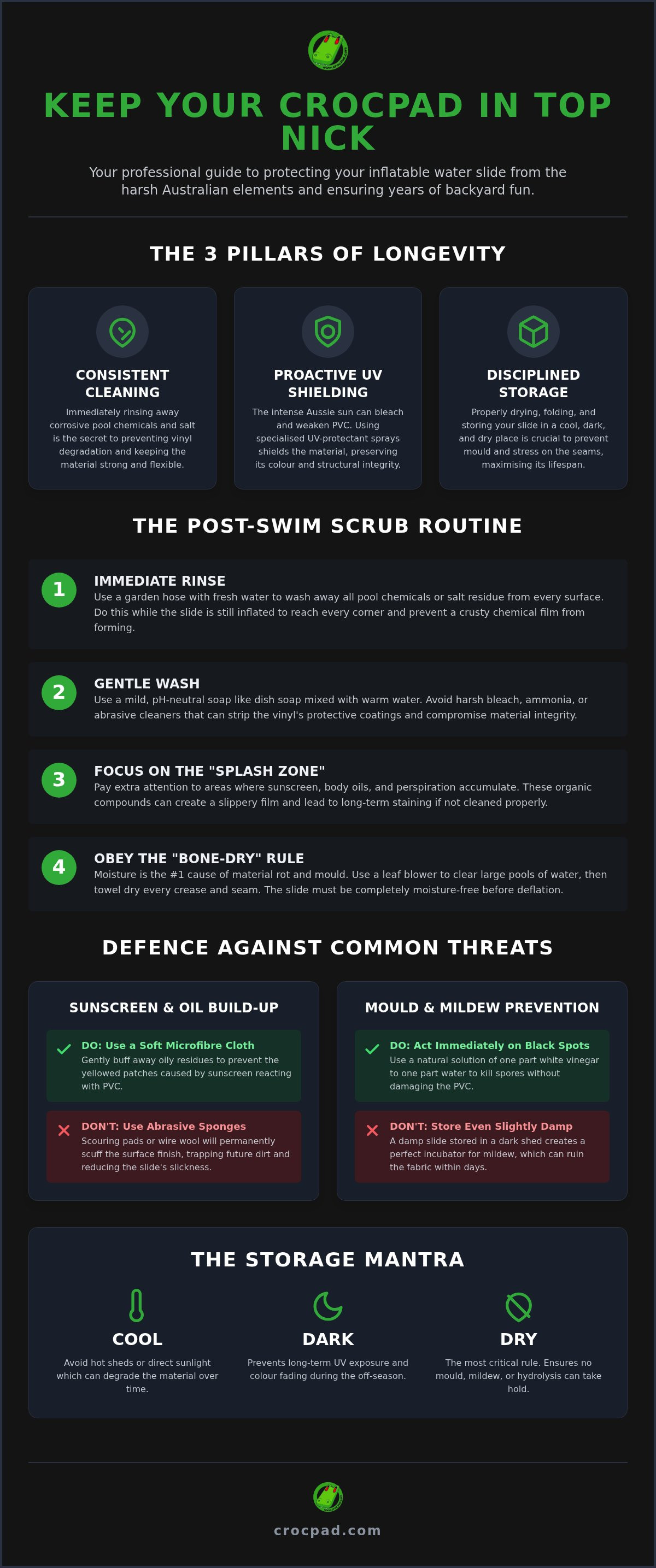
Locking in years of backyard adventure starts with a shift in mindset. Think of your gear as a high-performance vehicle rather than a disposable toy. Inflatable water slides are engineered from robust PVC and vinyl, but even the toughest materials face a constant battle against the elements. Effective inflatable water slide maintenance is a dedicated three-pillar strategy: consistent cleaning, proactive UV shielding, and disciplined storage. It is the secret to keeping your equipment in top nick.
Chlorine and salt water are essential for pool hygiene, yet they are notoriously aggressive on synthetic surfaces. These chemicals slowly strip away vital plasticisers, leaving the material brittle and prone to stress fractures. Investing just 15 minutes in a post-swim routine is a high-value trade. It prevents the need for costly replacements and ensures your Crocpad slide remains a resilient centrepiece for countless summers. A well-maintained slide does not just last; it thrives.
The Impact of the Australian Environment
The Aussie climate is famously unforgiving. If you live near the coast, salt spray carried by the wind can settle into seams and act as an abrasive, weakening the structural integrity of the slide over time. In more humid regions, moisture trapped within the folds of a damp slide becomes a primary breeding ground for mould and mildew. Never adopt a "set and forget" approach. Leaving your gear inflated and ignored for weeks on end invites rapid environmental degradation. Proactive care is your best defence against the local elements.
Understanding Your Slide’s Materials
Quality matters when it comes to longevity. There is a massive gap between thin, toy-grade plastics and the heavy-duty, marine-grade materials used in the Crocpad range. High-performance PVC is designed to remain flexible, allowing it to absorb the impact of every splash without tearing or cracking. Maintaining this material flexibility is the core goal of your routine. Hydrolysis is the chemical breakdown of material coatings caused by prolonged exposure to standing water. By ensuring your gear is thoroughly dried before storage, you prevent this structural rot from taking hold. This simple discipline protects the integrity of the fabric and keeps the surface slick and safe for every user.
The Post-Swim Scrub: A Step-by-Step Cleaning Guide
Maximising the life of your equipment requires a disciplined cleaning routine that begins the moment the fun ends. Effective inflatable water slide maintenance starts with a thorough fresh-water rinse. Use a garden hose to wash away pool chemicals or salt residue from every surface. Don't wait for the water to evaporate and leave a crusty chemical film; rinse while the unit is still inflated to ensure you reach every corner.
Begin the deep clean using a mild, pH-neutral soap. Avoid harsh bleach, ammonia, or abrasive household cleaners that can strip the protective coatings from the vinyl. Whether you are rinsing down a compact Mikros Pool Slide or a larger model, a gentle solution of warm water and dish soap is usually all you need to lift dirt without compromising material integrity.
Transition to the "splash zone" with extra care. This is the area where sunscreen, body oils, and perspiration accumulate most heavily. These organic compounds can create a slippery, unhygienic film and lead to long-term staining if left untreated. Maintaining your gear according to the ASTM F2374-22 safety standard ensures that the surface remains safe and the structural integrity remains intact for every user.
Observe the "Bone-Dry" rule before you even think about deflation. Moisture is the primary catalyst for material rot. Use a leaf blower to clear large pools of water, then follow up with a towel for the remaining damp spots. Every crease and seam must be moisture-free. If you fold a slide that is even slightly damp, you risk a mould breakout that can ruin the fabric within days.
Tackling Sunscreen and Oil Build-up
Sunscreen is the leading cause of unsightly discolouration on high-end inflatables. It reacts with the PVC over time, creating yellowed patches that are difficult to remove. Use a soft microfibre cloth to buff away these oily residues. Never use abrasive green sponges or wire wool. These will scuff the surface finish, making it easier for dirt to trap in the future and reducing the slide's slickness.
Eliminating Mould and Mildew
Black spot mould is a persistent enemy in the Aussie climate. If you spot dark speckles forming in the seams, act immediately with a natural solution of one part white vinegar to one part water. This kills the spores without damaging the PVC. Never store a damp slide in a dark shed or garage; this creates a perfect incubator for mildew. Proper drying is the only way to ensure your gear stays in top nick during the off-season.
Sun-Smart Slides: Protecting Gear from Intense UV
The Australian sun is relentless, and while it makes for perfect pool weather, it is the primary enemy of PVC materials. UV radiation triggers a process known as photo-degradation. This chemical reaction breaks down the polymer chains within the vinyl, leading to a loss of structural integrity over time. Without proactive inflatable water slide maintenance, even the most durable gear will eventually succumb to the harsh exposure. Adhering to ASTM F2374-22 maintenance and safety standards ensures your equipment remains structurally sound despite the intense local radiation.
Spotting the early signs of sun-stress is vital for preventing permanent damage. Inspect your Crocpad slide regularly for noticeable fading or a change in texture. If the surface begins to feel "tacky" or sticky to the touch, the material is already beginning to break down. Brittleness is another red flag; if the vinyl loses its supple feel, it is far more likely to crack under the weight of a rider. Strategic placement is your first line of defence. Whenever possible, position your slide under shade sails or large umbrellas. If you aren't planning to use the slide for more than a few hours, deflating it and moving it out of direct sunlight will significantly extend its lifespan.
Applying UV Protectants Properly
Think of UV protectant sprays as sunscreen for your slide. These specialised formulas create a sacrificial barrier that absorbs radiation before it reaches the PVC. During the peak summer months, apply a fresh coat every eight to twelve weeks. Choose products that are eco-friendly and pool-safe to ensure no nasty chemicals leach into your water. To keep the fun safe, never apply these sprays to the climbing steps or the sliding surface itself. Buff the protectant into the side walls and structural tubes using a soft cloth to avoid making the unit dangerously slippery.
Thermal Expansion and Air Pressure
Physics plays a massive role in the longevity of your gear on a 40-degree day. As the temperature rises, the air molecules inside your slide move faster and expand. This increases the internal pressure, which can put immense strain on the seams of even a heavy-duty Megalo 3M. Over-inflation is a leading cause of seam failure during a heatwave. A professional pro-tip is to release a small amount of air during the hottest part of the arvo. This gives the air room to expand without stretching the fabric to its breaking point. You can always top it back up once the temperature drops in the evening.
Storage Secrets and Minor Repair Basics
The "Cool, Dark, and Dry" mantra is the gold standard for storing your gear. Once you have mastered the cleaning and drying phases, the way you pack away your slide determines whether it survives the winter in top nick. Effective inflatable water slide maintenance doesn't end when the unit is dry. You must protect the vinyl from temperature fluctuations and physical pests. Storing your slide in a heavy-duty plastic bin or the original storage bag is the best way to prevent rodent damage. Mice love to chew through folded PVC in a quiet garage, turning a premium investment into a sieve. Keep the storage container off the ground to add an extra layer of protection against dampness and insects.
Finding a hidden leak is easy with the "Soap Bubble" test. Mix a small amount of dish soap with water in a spray bottle and coat the suspected area while the slide is inflated. If you see bubbles growing, you've found your puncture. This simple diagnostic tool is far more effective than trying to listen for a faint hiss in a noisy backyard. It allows you to pinpoint the exact location for a precise repair rather than guessing and wasting patch material.
Folding Techniques for Longevity
Proper folding is an art form that prevents material fatigue. Use the "burping" method by walking gently toward the air valves as the unit deflates. This forces every last pocket of air out, making the final roll much tighter and more manageable. Avoid creating sharp, hard creases in the same spot every time. Over several seasons, these stress points can develop tiny pinholes. If you are packing away a large model like the Megalo 3M, take your time to roll it loosely rather than using tight ropes or straps that can bite into the material and leave permanent marks.
The DIY Repair Kit Essentials
Most minor punctures are easily fixed at home if you follow the right protocol. Start by cleaning the area around the leak with isopropyl alcohol. This removes any oily residue or old UV protectant that might prevent the adhesive from bonding correctly. Apply the patch with even pressure, working from the centre outwards to eliminate trapped air. The most critical step is the "24-hour cure" rule. Never inflate the slide immediately after patching; the bond needs a full day to reach maximum strength. If you discover a large tear longer than 5cm or a failure right on a structural seam, it's time to consult a professional to ensure the unit remains safe for high-energy use.
Ready to upgrade your backyard setup? Explore the Crocpad collection for slides built to last.
Invest in Quality: Why Crocpad Slides Stand the Test of Time
Choosing a premium slide is a long-term investment in your family's outdoor lifestyle. While cheaper alternatives often fail after a single season of intense Aussie sun, Crocpad gear is built to thrive in our unique environment. High-level inflatable water slide maintenance is significantly more effective when you start with marine-grade materials. Our slides feature high-performance PVC and reinforced seams that provide the structural integrity required for years of high-energy use. When you choose quality, you spend less time patching leaks and more time enjoying the water.
As an Australian brand, we understand the specific environmental stressors your gear faces. From coastal salt spray to extreme humidity, we have engineered our products to be resilient. We also provide the right tools to complement your care routine. Our waterproof bags are designed to protect your slide from moisture and pests during storage, ensuring your equipment stays in top nick. By viewing your slide as a durable asset rather than a disposable toy, you ensure it remains a centrepiece of your summer adventures for a decade or more.
The Crocpad Product Range
We offer a variety of models tailored to different water environments. The Minima and Mikros ranges are perfect for backyard pool setups, offering incredible portability and ease of maintenance for the average homeowner. If you are looking for the ultimate experience on a boat or a large pool, the Megalo 3M is the heavy-duty choice. It is built to withstand more demanding conditions while remaining simple to clean and store. You can find model-specific specs and dimensions for all our Crocpad Inflatable Slides to ensure you get the right fit for your space.
Join the Crocpad Community
Owning a Crocpad makes you part of a community that values adventure and quality. We love seeing our customers share their summer setups and maintenance tips on social media. It is a great way to learn new tricks for keeping your gear pristine. If you ever need specific advice or genuine spare parts, our local customer support team is just a message away. We are here to help you protect your investment and keep the fun going year after year. Ready to upgrade your backyard? Shop the full range at Crocpad and experience the difference that professional-grade gear makes.
Ready for a Lifetime of Summer Splash
Mastering a simple care routine ensures your backyard remains the ultimate destination for high-energy fun. By prioritising immediate rinses, absolute drying, and disciplined storage, you protect your equipment from the harsh elements that sideline lesser gear. Consistent inflatable water slide maintenance is the most effective way to turn a premium purchase into a long-term family heirloom. You have the tools and the knowledge to keep your setup in top nick. Now, just stay consistent.
As an Australian-owned and operated brand, we design our products using high-performance marine-grade materials specifically to withstand the most intense UV radiation. We understand the local conditions. Our commitment to maximum durability means you can spend less time worrying about wear and more time making memories in the water. It is time to secure the future of your summer setup with gear that is built to go the distance.
Keep the fun afloat-explore the Crocpad range today! We can't wait to see you out on the water, enjoying every moment of the sunshine.
Frequently Asked Questions
How do I stop my inflatable water slide from getting mouldy?
You must ensure the unit is bone-dry before deflation and storage to prevent mould growth. Use a leaf blower to clear standing water from the splash zones, then follow up with a microfibre towel for the seams and creases. Moisture trapped in the folds of the PVC is the primary cause of mildew. Storing your gear in a well-ventilated, dry environment will keep it in top nick throughout the off-season.
Can I use a pressure washer to clean my inflatable slide?
No, you should never use a pressure washer on your inflatable slide. The intense force of the water stream can strip away protective UV coatings and weaken the structural seams of the vinyl. Instead, stick to a standard garden hose for rinsing and a soft cloth for scrubbing. Don't risk permanent material damage to your equipment when gentle water pressure is more than enough to remove salt and chlorine.
What is the best way to find a leak in an inflatable pool slide?
The soap bubble test is the most reliable method for locating hidden punctures. Mix a small amount of mild dish soap with water in a spray bottle and coat the suspected area while the slide is fully inflated. Look for growing bubbles, which indicate air escaping from the leak. This technique allows for precise patching and is a vital part of effective inflatable water slide maintenance for any backyard owner.
How often should I apply UV protectant to my water slide?
You should apply a specialised UV protectant every eight to twelve weeks during the peak Australian summer. This creates a sacrificial barrier that shields the marine-grade PVC from intense solar radiation and prevents photo-degradation. Regular application keeps the material supple and prevents the tacky feeling associated with sun damage. Ensure you only apply the product to the side walls and structural tubes to avoid making the slide slippery.
Is it okay to leave my inflatable slide out in the sun all summer?
It is not recommended to leave your slide in direct sunlight for the entire season. Constant exposure accelerates material breakdown and causes the air inside to expand, which can stress the seams. If you aren't using the slide for several days, deflate it or move it under a shade sail. Taking these small steps will significantly extend the lifespan of your gear and maintain its vibrant colour and structural strength.
Can I use household dish soap to clean my Crocpad slide?
Yes, a mild, pH-neutral dish soap is an excellent choice for cleaning your Crocpad slide. Avoid any products containing bleach, ammonia, or abrasive chemicals, as these can degrade the vinyl coatings over time. Mix the soap with warm water and use a soft microfibre cloth to gently lift sunscreen and body oils from the surface. It's a simple cleaning method that is safe for all our materials and keeps your gear pristine.
How do I store a large inflatable slide like the Megalo 3M?
Storing a large model like the Megalo 3M requires patience and the right technique. Use the burping method to walk out all the air before rolling the unit loosely to avoid sharp creases. Place the folded slide into its original storage bag or a heavy-duty plastic bin to protect it from rodents and dust. Ensure the storage area is cool, dark, and completely dry to prevent moisture from causing rot.
What should I do if my inflatable slide gets a puncture?
If you discover a puncture, act quickly by cleaning the area with isopropyl alcohol to remove any residues. Apply a vinyl patch from your repair kit with even pressure, ensuring there are no air bubbles trapped underneath. The most important step is to allow for a full 24-hour cure time before re-inflating the slide. This proactive approach to inflatable water slide maintenance ensures your gear remains safe for high-energy use all summer long.


