

That premium marine-grade foam investment can turn into a crumbly, sun-bleached mess in just one season if you treat floating water mat storage as an afterthought. You love the way your mat transforms a weekend at the lake or river, but wrestling a massive, wet roll into the back of your pickup truck or watching it fade under the harsh sun is a total buzzkill. It's frustrating when gear that's built for fun ends up taking over your entire garage or, worse, develops a layer of mold during the off-season.
We agree that your gear should work for you, not the other way around. This guide will help you master the art of maintaining your XPE foam so you can protect your investment from harsh UV rays and keep it "Croc-Tough" for years to come. You'll learn the most efficient ways to clean, roll, and stow your gear using weatherproof bags to keep everything organized. We are diving into the best practices for maintaining your marine-grade equipment, ensuring it stays ready for every high-energy summer session without losing its vibrant color or structural integrity.
Key Takeaways
- Shield your marine-grade foam from "foam dust" by mastering the UV-stabilisation factors that keep your gear from crumbling under the Aussie sun.
- Optimise your boat space using the "Vertical Roll" technique and secure your mat with bungee tethers to handle the roughest chop.
- Resolve the vertical versus horizontal debate to ensure your floating water mat storage setup preserves the foam's shape and structural integrity during the off-season.
- Eliminate the risk of mould and mildew by implementing a strict freshwater flush and the "Bone Dry" rule before every pack-down.
- Streamline your setup with heavy-duty straps and waterproof bags designed to protect your accessories and simplify transport to and from the water.
Beyond the Bulk: Why Proper Floating Water Mat Storage Matters
Mastering floating water mat storage isn't just about clearing the garage floor; it's a three-phase commitment to your gear's survival. You need to think about how it sits while you're anchored, how it travels on the ute or boat, and how it rests during the long winter months. Adopting a "marine-grade leisure" mindset means you treat your mat as a high-performance extension of your vessel rather than a disposable toy. When you prioritise maintenance, you ensure your equipment stays "Croc-Tough" for years of reliable adventure. This proactive approach separates the serious boaties from those who find themselves replacing gear every second season.
Leaving your mat draped over a jetty or crumpled on the deck is a recipe for disaster. Beyond the risk of material damage, a poorly stowed mat is a massive trip hazard for kids and adults alike. Keeping your deck clear isn't just about aesthetics; it's about maintaining a professional, safety-conscious environment where everyone can move freely without catching a foot on a stray corner of foam. Effective floating water mat storage keeps your gear out of the way and out of the sun, ensuring your focus remains on the fun. You can find high-quality accessories to help with this at crocpad.com.au.
The Aussie Sun: A Silent Killer of Foam Gear
Our local UV levels are some of the harshest on the planet. Intense radiation breaks down non-stabilised polymers with alarming speed, turning a vibrant mat into a brittle mess that sheds "foam dust" every time you touch it. High-density XPE foam is specifically designed to resist this degradation, but even the best materials require smart handling to maintain their structural integrity. UV-stabilisation acts as a built-in sunscreen for your mat's core. By minimising unnecessary exposure when the mat isn't in use, you prevent the chemical breakdown that leads to fading, crumbling, and loss of buoyancy over time.
Safety and Deck Management for Boaties
Space is always at a premium when you're out on the water. Reclaiming your swim platform by using a vertical storage technique allows for better movement and easier access to the boarding ladder. This method also protects your gear from "propeller bite", a common issue where loose mats drift too close to the motor and sustain permanent damage from the blades. Most importantly, a properly secured mat ensures the skipper has clear sightlines at all times. You don't want a bulky roll of foam blocking your view when you're trying to navigate a busy channel or pull into a tight berth. Secure storage keeps your passengers safe and your gear in peak condition.
On-Board Storage Solutions: Keeping Your Mat Secure While Cruising
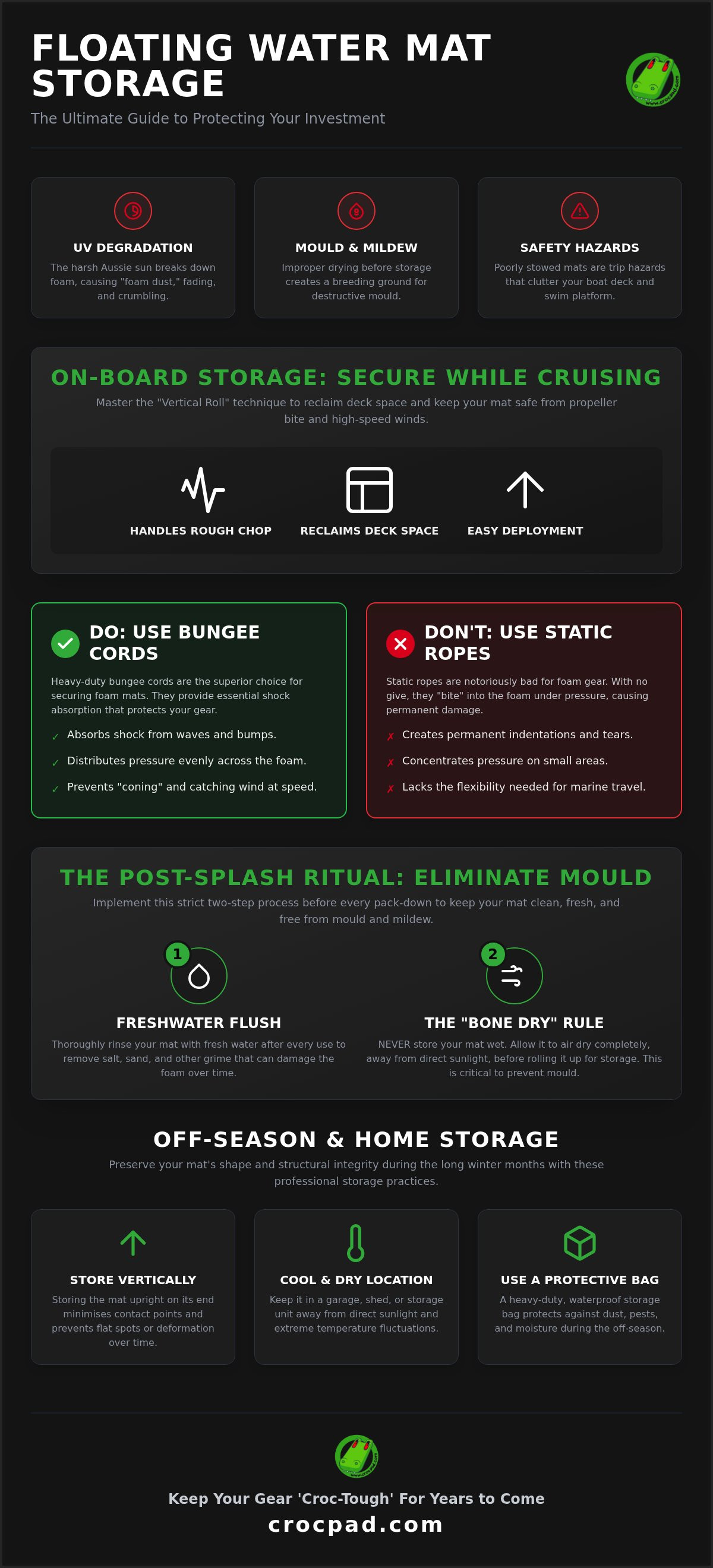
Cruising through a choppy bay with a loose mat is a recipe for a massive headache. You need a setup that handles the vibration and the wind without turning your deck into an obstacle course. Smart floating water mat storage starts with the "Vertical Roll" technique. By rolling the mat tightly and standing it upright against the boat's rails or transom, you reclaim your floor space for eskies and fishing gear. This method keeps the mat out of the foot traffic zone while ensuring it's ready to deploy the moment you drop anchor.
If you prefer using the swim platform, ensure the roll is secured high enough to avoid blocking water access or the boarding ladder. For those with a T-top or hard-top, storing the mat overhead is the ultimate space-saving move. This keeps the weight centralised and the deck completely clear for the crew. Whatever your choice, the goal is to make the mat a seamless part of your vessel's layout rather than a bulky afterthought.
Bungee Straps vs. Static Ropes
Using the wrong tie-downs can ruin a premium mat in a single trip. Static ropes are notoriously bad for foam gear because they don't give. Under the pressure of a bumpy ride, these ropes "bite" into the high-density XPE foam, leaving permanent indentations or even tears. Heavy-duty bungee cords are the superior choice. They provide essential shock absorption, stretching with the boat's movement rather than fighting against it. When securing your gear, position three straps evenly across the roll to distribute pressure. This prevents the ends from "coning" out and catching the wind at high speeds. Following professional advice for off-season boat and gear storage highlights that tension management is key to preventing material fatigue during transit.
External Rack Systems and DIY Alternatives
For boaties with permanent moorings, marine-grade rack systems offer a dedicated home for your gear. If you aren't ready to bolt on a commercial rack, you can create a DIY rail-mount setup using pool noodles as spacers. Slit the noodles lengthways and pop them over your stainless rails to create a soft buffer between the metal and your mat. This prevents heat transfer from the sun-baked rails and stops the mat from rubbing. When you're heading back to the ramp at a clip, always follow the "Three-Strap Rule". One strap in the centre and one at each end ensures the roll stays tight and aerodynamic. You can find high-quality floating water mats that are designed to be portable and easy to secure with the right accessories.
Off-Season and Home Storage: Preserving the Foam's Memory
Home storage is often the silent killer of high-performance gear. When you aren't out on the water, your floating water mat storage strategy determines whether your foam will actually lay flat when the next summer session rolls around. The "Vertical vs. Horizontal" debate usually comes down to your available space, but horizontal storage on a dedicated rack is generally superior for weight distribution. If you must store it vertically, ensure the base is cushioned to prevent the foam from deforming under its own weight. A high-quality floating water mat deserves a home that protects its structural integrity during the quiet months.
Temperature control is a factor many Aussies overlook. Those classic tin sheds can become absolute ovens in the peak of summer, reaching temperatures that can warp non-stabilised foam or affect the "Croc-Tough" resilience of your gear. Keep your mat in a cool, ventilated area like a brick garage or a shaded sub-floor space. Finally, never use your rolled mat as a shelf. Stacking heavy boxes, anchors, or spare boat parts on top of the roll will crush the high-density cells. This leads to permanent "flat spots" and indentations that ruin the mat's aesthetic and can even impact its buoyancy.
The Garage Setup: Racks, Hooks, and Hoists
Don't leave your mat sitting directly on the concrete floor. Concrete is porous and wicks moisture, which creates a perfect breeding ground for mould and mildew, even in seemingly dry environments. You can build a simple rack using PVC pipes or timber to keep the roll elevated and allow for airflow. For those with limited floor space, a ceiling hoist is the ultimate space-saving solution. It keeps the mat away from pets, pests, and accidental damage while keeping your workshop floor clear for other projects. Using a dedicated storage bag also prevents dust buildup and stops spiders or mice from nesting in the foam layers during winter.
Preserving the Roll: Avoiding Permanent Creases
High-density XPE foam has a "memory" effect. If you leave it cinched in an extremely tight roll for six months, the material will resist laying flat during your first session of the season. To avoid this, loosen your straps slightly for long-term storage so the foam isn't under constant high tension. Inserting a large-diameter PVC pipe into the centre of the roll acts as a structural core, preventing the inner layers from collapsing or creasing. Storing a mat vertically in a cool, ventilated area prevents flat spots and preserves buoyancy. This small adjustment ensures that when you finally hit the water, your mat rolls out perfectly every time.
The Post-Splash Ritual: Cleaning and Drying Before You Stow
Every legendary day on the water concludes with a non-negotiable ritual. If you neglect the cleaning phase, your floating water mat storage setup will eventually fail as salt and grit eat away at the foam. Start with a thorough freshwater flush. You need to rinse away every trace of salt and sand from the surface and the tethering points. Salt is a silent destroyer; once it crystallises, it becomes abrasive and can compromise the "Croc-Tough" integrity of your gear. This process is essential whether you've been playing in the surf or anchored in a quiet inland waterway.
Next, address the inevitable sunscreen smears and bird droppings. These aren't just unsightly; the oils in sunscreen can break down the surface of the foam over time. Use a mild, pH-neutral soap and a soft cloth for spot cleaning. Avoid harsh chemicals that can strip the UV-stabilised coating. When it's time to dry, follow the "Shadow Dry" rule. While it's tempting to leave the mat in the blazing sun to speed things up, this adds unnecessary UV stress. Find a shaded, breezy spot to let the air do the work. Finally, consider applying a marine-grade protectant for an extra layer of defence before the final roll. This helps seal the pores and provides a slicker finish that resists future staining.
Banishing the Salt: Why It Matters
Salt crystals act like microscopic sandpaper inside the foam layers when the mat is rolled tight. This friction can lead to premature wear in the "tear-stop" mesh that reinforces high-quality mats. Effective floating water mat storage is impossible if you're rolling up a layer of abrasive salt. Don't forget the tethering grommets and D-rings. Even marine-grade hardware can suffer from salt-induced corrosion if left unrinsed for months. A quick scrub with a soft-bristle brush ensures that stubborn sand particles are dislodged from the pores of the XPE foam, keeping the surface smooth and comfortable for your next session. Keeping these areas clean ensures the mat remains a safe, reliable extension of your boat.
Mould Prevention: The "Dry Before You Fly" Rule
Rolling a damp mat is a recipe for a mould disaster. The "Dry Before You Fly" rule is critical, especially for 3-layer mats where moisture can hide between the laminations. Mildew often appears as small black or green spots and carries a distinct, musty odour that's hard to shift. If you spot early signs of growth, reach for a diluted vinegar solution rather than bleach. Vinegar kills mould at the root without damaging the high-density foam. Ensure the mat is bone dry to the touch before sliding it into its weatherproof bag. Ready to upgrade your gear for the next season? Check out the latest range of floating water mats at Crocpad.
Crocpad Accessories: The Ultimate Storage Kit for Your Water Mat
Reliable gear is only as good as the accessories that protect it. Your floating water mat storage routine becomes significantly easier when you use tools specifically designed for high-density XPE foam. Crocpad's heavy-duty straps are a prime example. Unlike standard ropes that can bite into the material and leave permanent marks, these wide, durable straps distribute pressure evenly across the roll. This prevents the "hourglass" deformation often seen in poorly stored mats. It's part of the "Croc-Tough" promise: we design gear that's built for the rigours of the water but remains incredibly easy to pack down when the day is done.
Organisation is the key to a stress-free boat deck. Every mat package includes a weatherproof storage and carry bag, which is essential for protecting the foam from grit and dust during transport. Our Waterproof Bags are also perfect for keeping smaller accessories like bungee cords and anchor sets in one place. Instead of hunting through a cluttered locker for your tethers, you can keep everything dry and sorted in a dedicated bag. For those who never leave their four-legged mates behind, pairing your mat with an Inflatable Dog Ramp creates the ultimate pet-friendly island. These ramps are designed with the same durability as our mats, ensuring your dog can scramble back on board without damaging the foam with their claws.
The Complete Aussie Aquatic Setup
Creating a social hub on the water is what summer is all about. You can pair your Floating Water Mat with a Beer Pong Floating Mat to build a massive social island for your crew. Every piece of Crocpad equipment is engineered with portability in mind. We ensure our gear is designed to fit comfortably into standard SUV boots and boat storage lockers, making floating water mat storage a breeze even in smaller vehicles. This means you don't need a massive trailer just to bring the fun along. Our customer support team is based right here in Australia, so they understand exactly what it's like to deal with the unique conditions of our local waterways.
Join the Crocpad Family
Upgrading your summer setup shouldn't be a hassle. We offer direct-to-door national shipping across Australia, with stock dispatched from multiple domestic warehouses to ensure your order arrives as quickly as possible. This ensures you get your gear fast, usually within 48 hours of dispatch. Choosing Aussie-designed marine equipment gives you the peace of mind that your gear can handle our unique UV levels and water conditions. Don't let another season go by with subpar storage solutions that put your investment at risk. Take the first step toward a more organised and durable setup when you Explore the Crocpad storage and accessory range.
Secure Your Gear for Endless Aussie Summers
Your marine-grade gear is an investment in your lifestyle, and protecting it ensures the fun never stops. By mastering the right cleaning rituals and smart floating water mat storage techniques, you've already won half the battle against the elements. Remember to always flush away the salt, dry your gear in the shade, and use dedicated straps to preserve that "Croc-Tough" foam memory. These simple habits keep your deck clear and your mat ready for action at a moment's notice.
We are a proudly Aussie-owned and designed brand. Our high-density XPE foam is engineered specifically for our harsh conditions, ensuring your equipment doesn't crumble under the sun. With national fast shipping from our local warehouses, your next session is just around the corner. Shop Crocpad Floating Water Mats and Accessories today to upgrade your summer setup. Get out there and make the most of every sun-drenched weekend.
Frequently Asked Questions
Can I leave my floating water mat in the water overnight?
No, you shouldn't leave your mat in the water overnight. While the high-density XPE foam is marine-grade, extended submersion encourages algae and barnacle growth on the underside. It also exposes the material to unnecessary UV radiation during the early morning sun. From a safety perspective, a floating mat is a navigation hazard for other boats in low-light conditions. Pull it out, rinse it, and secure it on deck or the jetty after every session.
What is the best way to clean bird droppings off my foam mat?
Use a mixture of mild, pH-neutral soap and lukewarm freshwater to lift stubborn stains. Bird droppings contain acidic compounds that can mar the surface if left for too long. Gently scrub the area with a soft-bristle brush or a microfibre cloth to dislodge the waste without scouring the foam's protective layer. Rinse the area thoroughly with a garden hose and ensure it's completely dry before you begin your floating water mat storage process.
Will storing my mat vertically cause it to tip over or lose its shape?
Storing your mat vertically is a space-saving win, but it requires proper support. Without straps or a dedicated rack, the roll can sag under its own weight, leading to "flat spots" or a mushroomed base. Always secure the roll with at least two wide velcro straps to maintain its cylindrical form. Placing the mat on a piece of carpet or a foam offcut prevents the hard garage floor from compressing the bottom edge over time.
How tight should I roll my floating mat for storage?
You should roll the mat firmly for transport to keep it aerodynamic on the boat or ute. However, for long-term floating water mat storage, you must loosen the tension. If the roll is too tight for months on end, the inner layers may develop permanent creases due to the foam's memory effect. Aim for a snug roll that holds its shape but isn't cinched so tight that the material feels under extreme stress.
Can I use a pressure washer to clean my Crocpad mat?
Avoid using a pressure washer on your Crocpad mat. The concentrated force of a high-pressure stream can tear the surface or delaminate the layers of the high-density XPE foam. A standard garden hose with a spray nozzle is more than enough to rinse away salt and sand. For stubborn dirt, stick to a soft sponge and mild detergent. This keeps the "Croc-Tough" integrity of the mat intact for many more seasons of use.
How do I prevent spiders and pests from nesting in my rolled mat?
The best defence against pests is the weatherproof storage bag included with your mat. Always ensure the mat is bone dry before zipping it into the bag to avoid creating a damp microclimate. For extra protection in rural areas, store the bagged mat off the ground on a rack or shelf. This discourages spiders, mice, and other critters from finding a way into the layers of the roll during the quiet winter months.
Is it okay to store my mat in a hot garden shed over winter?
Storing your gear in a tin shed during a scorching Aussie summer isn't recommended. Temperatures inside these structures can soar, potentially causing the foam to warp or lose its buoyancy over time. Seek out a cool, ventilated space like a brick garage or a shaded area under the house. Keeping the mat out of extreme heat cycles through smart floating water mat storage preserves the structural integrity of the polymers and ensures colours stay vibrant.
Does the mat need to be unrolled occasionally during the off-season?
Unrolling your mat once or twice during the off-season is a smart move. It allows the foam to relax and prevents the material from setting into a permanent curve. Use this opportunity to check for any signs of moisture or pests that might've slipped past your initial checks. A quick ten-minute unroll on a dry day keeps the foam flexible and ensures the mat lays perfectly flat the moment you finally hit the water again.


