

What if your ultimate summer oasis is actually a sinking ship in disguise? We've all seen it down at the sandbar; a group of mates piles onto a cheap foam mat only to watch it submerge like a lead weight, leaving the kids sliding off into the salt. It's frustrating when your gear packs it in just as the party starts. You want a stable island that handles the whole family without the stress of wondering about the floating mat weight capacity or whether the tether point will tear under pressure.
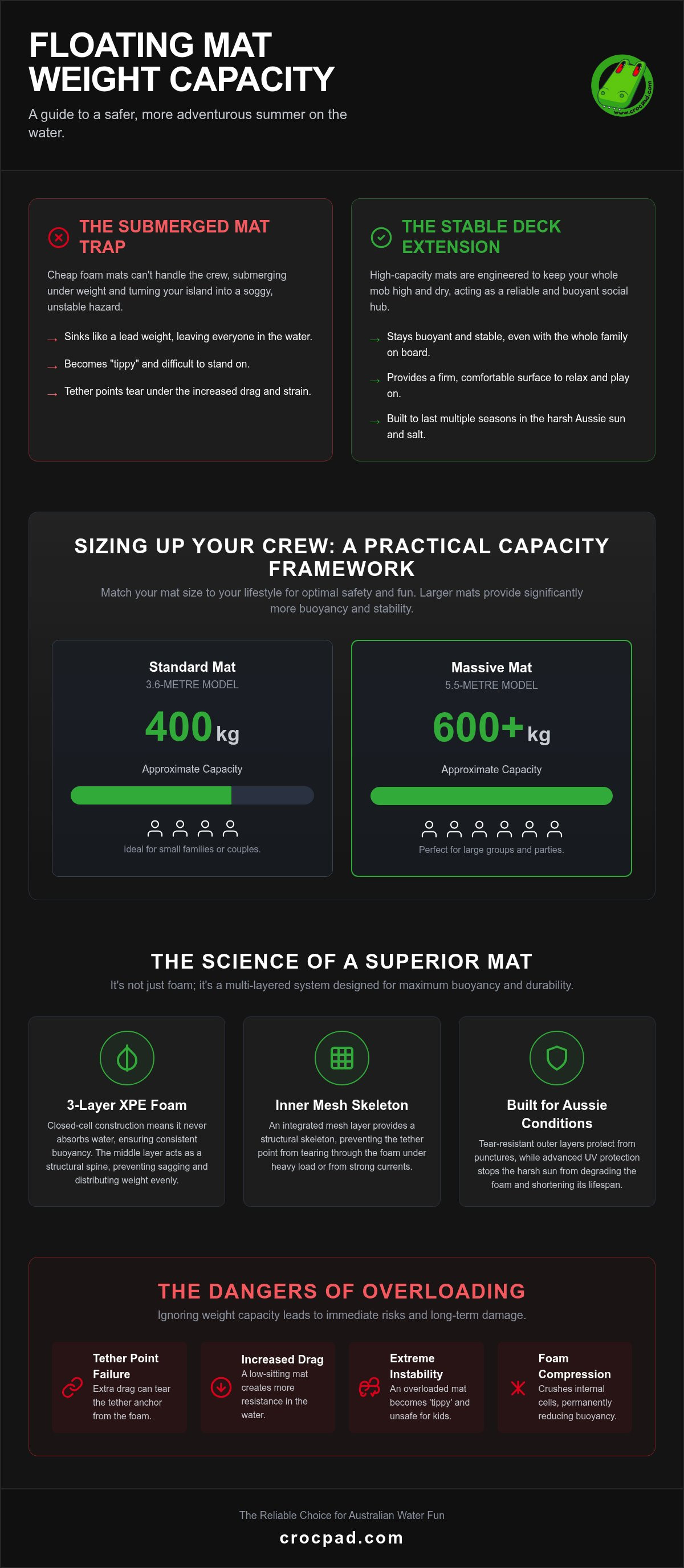
You shouldn't need an engineering degree to keep your crew high and dry. Mastering the physics behind buoyancy and material density is the secret to ensuring your gear lasts more than one season in the harsh Australian sun. This 2026 guide from Crocpad breaks down the exact limits for different sizes, from the 400kg limit of a standard 3.6-metre mat to the massive 600kg-plus capacity of our 5.5-metre models. We will explore the science of marine-grade XPE foam and give you a clear roadmap to a safer, more adventurous summer on the water.
Key Takeaways
- Understand why floating mat weight capacity is a critical safety metric to prevent your island from submerging when the whole crew jumps on.
- Discover how marine-grade, closed-cell XPE foam provides superior buoyancy and structural integrity compared to cheap, single-layer alternatives.
- Learn to match your mat size to your lifestyle, from compact pool models to massive 5.5-metre deck extensions that support over 600kg.
- Identify how the harsh Australian sun and salt affect your gear and the simple maintenance steps needed to stop UV degradation in its tracks.
- Master the science of weight distribution to ensure your floating mat remains a stable and reliable social hub for every summer adventure.
What is Floating Mat Weight Capacity and Why Does it Matter?
Understanding floating mat weight capacity is essential for every Aussie boatie who wants to keep their crew safe and dry. Simply put, this capacity refers to the maximum weight a mat can support while remaining stable and buoyant on the water's surface. It isn't just about whether the mat stays afloat; it's about how high it sits. When you exceed this limit, you fall into the "submerged mat trap." This occurs when the foam is forced below the waterline, turning your sun-soaked island into a soggy, ankle-deep hazard that is difficult to stand on and even harder to relax on.
For families heading out to the Hawkesbury or the Gold Coast Broadwater, capacity is a top-tier safety priority. A high-quality Floating Water Mat from Crocpad is designed to act as a marine-grade deck extension. If you overload it, you risk more than just wet feet. You compromise the structural integrity of the foam and put unnecessary strain on the tether points. Our 3.6-metre models are engineered to handle approximately 400kg, while the larger 5.5-metre versions can support over 600kg, giving you plenty of room for the whole mob without the mat crumbling under pressure.
Buoyancy vs. Static Weight Capacity
There is a significant difference between a mat's ability to stay afloat and its ability to remain a stable platform. Buoyancy is the upward force exerted by the water to counter the weight of the users. While a mat might technically stay on the surface with 500kg of static weight, it may only feel truly stable with 300kg of active users moving around. This relationship is governed by the Archimedes principle; the mat must displace a weight of water equal to its own weight plus the load. Using high-density XPE foam helps maintain this balance. You can learn more about how different materials provide lift by looking at How Foam Layers Determine Capacity in personal flotation devices, as the science is remarkably similar.
The Risks of Overloading Your Water Mat
Ignoring the recommended floating mat weight capacity creates several immediate risks that can ruin a day on the water. First, when a mat sits too low, the drag increases significantly. If you are tethered to the back of the boat, this extra resistance can lead to tether point failure or tearing in the foam. Stability also takes a massive hit. An overloaded mat becomes "tippy," making it nearly impossible for children to keep their balance without sliding off. Long-term, constant overloading leads to foam compression. Once the internal cells are crushed, the mat loses its "memory" and its ability to provide future buoyancy, effectively shortening the lifespan of your gear in the harsh Aussie salt.
The Science of Support: How Foam Layers Determine Capacity
Not all foam is created equal. When you are assessing floating mat weight capacity, the secret lies in the Cross-linked Polyethylene (XPE) foam. This marine-grade material is the industry standard because of its high-performance characteristics. Unlike cheaper alternatives found in big-box stores, XPE is a closed-cell foam. This means it consists of millions of tiny, sealed air pockets that never absorb water. Even if you leave it in the lake all weekend, it won't gain a gram of weight or lose an ounce of buoyancy. The Science of Support is rooted in how this specific material density displaces water to keep your crew high and dry.
The actual density, measured in kilograms per cubic metre (kg/m³), dictates how much weight the mat can handle before it starts to compress. Higher density means a higher weight limit. To ensure this capacity remains reliable under heavy loads, we integrate an inner mesh layer. This acts like a structural skeleton, preventing the tether from pulling through the foam when the wind picks up or when the whole mob is jumping off the side at once. It turns a simple piece of foam into a rugged, dependable platform.
Why 3-Layer Foam is Superior for Weight Distribution
Our 3-layer construction isn't just for show. The middle layer functions as a structural spine, ensuring weight is distributed evenly across the entire surface area. This prevents the frustrating "taco effect" where the mat sags in the middle under a single person's weight. These layers also provide essential thermal insulation. They keep the surface cool enough for bare skin even during a scorching 40-degree January afternoon on the water.
Durability Features that Protect Capacity
A mat's capacity is only as good as its skin. We use tear-resistant outer layers to protect against punctures from dog claws or stray fishing gear. In Australia, UV protection is non-negotiable. UV-stabilised foam maintains its density and capacity over multiple seasons by resisting the breakdown caused by harsh solar radiation. This ensures your investment doesn't start shedding foam like a mangy dog after just one summer. If you want a mat that stands up to the elements, check out our range of Floating Water Mats built specifically for Aussie conditions.
Sizing Up Your Crew: A Practical Capacity Framework
Choosing the right size is about more than just finding a spot for everyone to sit. It is about understanding how the floating mat weight capacity translates to real-world use on the water. Many international brands list their limits in pounds, which can be confusing for Aussie boaties trying to work out if their 3.6-metre mat can actually handle four mates and a heavy esky. To get the most out of your Floating Water Mat, you need a framework that matches your crew to the correct dimensions and foam thickness.
- Small Mats (2-3 metres): These are perfect for couples or 2-3 children. They are often used in backyard pools or as a small tethered island behind a jet ski.
- Medium Mats (3.65-5.5 metres): The standard for Aussie family boats. A 3.65-metre mat typically supports around 400kg, making it ideal for 4-6 adults or a larger group of kids.
- Large Mats (5.5 metres+): These are the true "party islands." Our 5.5-metre models boast a capacity exceeding 600kg, designed for big gatherings, commercial lake use, or as a massive deck extension for a pontoon boat.
Thickness is the other half of the buoyancy equation. While 3.5cm mats are great for kids, adults should look for 5cm thickness. That extra 1.5cm of high-density XPE foam provides significantly more lift, ensuring the mat doesn't sag when a 90kg adult stands up. It is the difference between a stable platform and a soggy piece of foam that dips below the surface every time someone moves.
Calculating Your Group Weight in Kilograms
Don't just count heads; count the total load. A safe rule of thumb is to estimate adults at 85kg and kids at 40kg. Don't forget to account for your gear. An esky full of ice, waterproof bags, and a large Bluetooth speaker can easily add another 30kg to the mat. We recommend maintaining an "Active Use" margin of 20%. This means if your mat is rated for 400kg, aim to keep the total load around 320kg. This buffer ensures the mat remains stable and responsive even when people are jumping or wrestling on the surface.
Matching the Mat to Your Vessel
Your boat's layout will dictate which mat works best. Pontoon boats are the perfect match for 5.5-metre high-capacity mats because they have the deck space to store the roll. If you are on a Centre Console, you need to balance the floating mat weight capacity with available storage. Ensure your boat's cleats are up to the task as well. A loaded mat creates significant drag in a current, so always use high-quality bungee tethers to absorb the shock and protect your vessel's hardware.
Aussie Sun and Salt: Environmental Factors Affecting Capacity
The Australian elements are legendary for a reason. While a mat might look fine on the showroom floor, the real test happens under the brutal Aussie sun and in our high-salinity coastal waters. UV degradation is the silent killer of buoyancy. Over time, intense solar radiation breaks down the Cross-linked Polyethylene (XPE) cell structure, leading to a process often called "shedding." When the foam becomes brittle and begins to flake away, the mat loses its physical volume. This directly reduces the floating mat weight capacity, as there is less material available to displace water and provide lift.
Salt water crystallisation is another factor that many boaties overlook. As salt water evaporates off the mat, it leaves behind abrasive crystals. If these aren't managed, they can work their way into the textured surface, adding unnecessary weight and acting like sandpaper between the foam layers. Extreme heat also plays a role. On a 42-degree afternoon in the Whitsundays, the foam can become more pliable. While this doesn't immediately sink the mat, it can make the platform feel less stable underfoot. High-visibility colours are essential for safety in busy waterways like Sydney Harbour or Moreton Bay, ensuring jet skis and other vessels can spot your floating oasis from a distance.
Maintenance Tips to Preserve Buoyancy
Longevity is built through a solid post-beach ritual. Always rinse your mat thoroughly with fresh water to remove salt, sand, and organic debris. This simple step prevents the chemical breakdown of the foam's outer skin. Ensure the mat is completely dry before rolling it for long-term storage to prevent mould growth. For transport, use specialised waterproof bags. These protect the foam from unnecessary UV exposure when you are driving to the ramp and keep your vehicle's interior dry on the way home.
Safe Tethering in Open Water
Safe tethering protects both your boat and your mat's floating mat weight capacity. Never use static ropes; they snap tight and can rip the grommets right out of the foam. Use bungee tethers instead. These act as shock absorbers, managing the load as the mat moves with the chop. Ensure all hardware is marine-grade stainless steel to prevent rust and corrosion. For maximum safety, always position the mat well away from the boat's propeller and out of heavy current lines where drag is highest. Keep your summer adventures safe by investing in marine-grade gear built for the local climate.
Why Crocpad is the Reliable Choice for Australian Water Fun
Choosing the right gear means trusting the experts who live and breathe the same lifestyle you do. At Crocpad, we don't just sell mats; we design marine-grade equipment specifically for the unique challenges of the Australian environment. From the tropical humidity of the north to the blistering dry heat of the south, our products are built to endure. Our focus on premium XPE construction ensures you get the maximum floating mat weight capacity without the unnecessary bulk of traditional inflatables or heavy, water-logged foam.
Being an Australian owned and operated brand means we understand the local boating culture. We know that your mat isn't just a piece of foam; it's a social hub, a diving platform, and a place for the whole mob to relax. By prioritising high-density materials and structural integrity, we provide a stable island that stays on top of the water even when the party is in full swing. This commitment to quality is why Aussie boaties choose us for their summer adventures.
Specialised Solutions for Socialites and Pets
We believe everyone deserves a spot on the water, including your four-legged mates. Our mats provide the perfect, stable base for inflatable dog ramps, making it easy for pets to climb back on board after a swim. For those who take their leisure seriously, our Beer Pong Floating Mat is engineered for maximum stability during high-energy games. You can even coordinate your entire kit by pairing your mat with our Minima or Megalo 3M slides for a complete floating water park experience.
The Crocpad "Adventure Expert" Commitment
We are your trusted partner for high-performance recreational gear. By offering direct-to-customer service across the entire Australian continent, we ensure you get expert advice and fast delivery no matter where you launch your boat. Our mission is to provide portable, durable gear that elevates your performance and recovery on the water. If you are looking for a reliable floating mat weight capacity that won't let you down, you're in the right place. Ready to upgrade your weekend? Shop the Crocpad Floating Water Mat range today.
Ready to Own the Water This Summer?
Don't let a sinking mat dampen the mood at your next sandbar session. You now have the tools to master the science of floating mat weight capacity, ensuring your crew stays dry and stable regardless of the group size. Remember that choosing high-density, marine-grade XPE foam is the only way to combat the harsh Australian sun and prevent the material from shedding over time. By matching your mat's dimensions to your total crew weight and sticking to a simple fresh-water rinsing ritual, you protect your investment and keep the fun afloat for years.
Crocpad is proud to be Australian owned and operated, providing gear specifically engineered for our rugged coastlines. Our UV-stabilised mats are built for longevity and performance; plus, with fast national shipping across Australia, your new island can be ready for next weekend's launch. Stop settling for flimsy foam that crumbles in the salt and start building your ultimate mobile deck extension. It is time to reclaim your leisure time with gear that works as hard as you do.
Invest in a high-capacity Crocpad Floating Water Mat for your next adventure and experience the difference that premium engineering makes. See you out on the water!
Frequently Asked Questions
How much weight can a standard 5-metre floating mat actually hold?
A standard 5.5-metre Crocpad mat is designed to support over 600kg, while a 5-metre version typically handles approximately 550kg. This capacity allows for roughly six to seven adults to lounge comfortably without the platform submerging. Always check your specific model's rating to ensure your crew stays high and dry during your time on the water.
Will my dog’s claws puncture the foam and reduce its weight capacity?
Your dog’s claws will not puncture high-quality XPE foam or reduce the floating mat weight capacity. Our mats feature a rugged, tear-resistant outer skin built specifically for adventurous Aussie families and their pets. While the foam is highly durable, we recommend using an inflatable dog ramp to help your pup exit the water safely and reduce direct wear on the tether points.
Does the thickness of the mat change the weight limit?
Yes, the thickness of the foam directly dictates the buoyancy and weight limit of the mat. A 5cm mat provides significantly more lift than a 3.5cm version, making it the superior choice for groups of adults. This extra volume of closed-cell foam ensures the platform sits higher in the water and remains stable even when people are moving around the surface.
How do I secure my floating mat to the boat safely when it is fully loaded?
Use high-quality bungee tethers and marine-grade stainless steel hardware to secure a loaded mat to your vessel's cleats. You should avoid static ropes because they don't absorb shock and can rip the grommets out of the foam under heavy loads. Always position the mat away from the boat's propeller and out of the main current to minimise drag and ensure passenger safety.
Can I leave my floating mat in the sun all day without damaging its buoyancy?
You can leave your mat in the sun, as our foam is UV-stabilised to handle the extreme Australian index. However, long-term exposure without maintenance can eventually break down the cell structure. We recommend a fresh-water rinse after every session to remove salt crystals that magnify heat, which helps you maintain the floating mat weight capacity and buoyancy for years to come.
What happens to the weight capacity if the mat gets a small tear?
A small tear will not cause the mat to sink because the marine-grade XPE foam is closed-cell and cannot absorb water. While a minor nick won't immediately ruin your day, a deep tear can create a structural weak point that might spread under heavy weight. It is best to repair any significant damage with a marine-grade adhesive to keep the platform rigid and safe for the whole crew.
Is a foam mat safer than an inflatable one for a large group of adults?
Foam mats are generally safer for large groups because they are puncture-proof and provide a much more stable, non-slip surface. Unlike inflatables, they cannot suddenly lose air or pop, which is a major safety advantage when several adults are moving at once. They also sit lower to the water, making them easier to climb back onto after a swim in the salt.
How do I stop my floating mat from curling, which affects its stability?
To stop your mat from curling, simply roll it in the opposite direction for a few minutes before you lay it on the water. Storing your mat loosely rolled in a cool, dry place also helps the foam maintain its flat "memory." A mat that lays perfectly flat ensures that weight is distributed evenly across the entire surface, preventing the edges from dipping under load.
![Ice Bath with Chiller: The Ultimate Australian Recovery Guide [2026]](http://www.crocpad.com.au/cdn/shop/articles/ice-bath-with-chiller-the-ultimate-australian-recovery-guide-2026_8f23f701-9a5a-4f8c-9de8-74df66e03678.jpg?v=1785588305&width=480)


