

Imagine pulling your gear out for the first run of the season, only to find it's become a brittle, salt-crusted shadow of its former self. It's a gut-wrenching feeling seeing a premium investment ruined by simple neglect. We all want more time on the water and less time dealing with gear that's losing its edge or covered in stubborn mould spots. Mastering floating mat care for boats is the only way to keep your aquatic playground in peak condition for five years or more.
We're sharing the professional secrets to protecting your foam from salt, sun, and grime so it stays as vibrant as the day you bought it. In this guide, you'll learn a high-efficiency cleaning routine that takes less than ten minutes and discover storage methods that keep your deck organised and safe. We're going to show you exactly how to strip away corrosive salt and shield your gear from UV damage so it's always ready for your next weekend adventure.
Key Takeaways
- Neutralise the "sandpaper effect" of salt crystals by rinsing your gear with fresh water before the salt dries on the foam surface.
- Prevent stubborn mould growth and "foam shedding" by ensuring your mat is completely dry and treated with a marine-grade UV-protectant spray.
- Organise your boat deck using wide Velcro straps instead of thin ropes to secure your mat without biting into the high-density foam.
- Master the essential routine for floating mat care for boats to keep your equipment looking brand new for five years or more.
- Maximise durability by choosing mats constructed with cross-linked polyethylene foam and puncture-resistant layers designed for harsh Australian conditions.
Understanding the Marine Environment: Why Floating Mat Care for Boats is Vital
Effective floating mat care for boats is much more than a courtesy splash of water at the end of the day. It's a systematic defence strategy designed to neutralise corrosive elements and stop biological growth before it takes hold. When you're out on the harbour, your gear is under constant attack from salt and sun. Many boaties overlook this, but the reality is that ignoring maintenance often leads to gear replacement every two years. If you spend just ten minutes on a proper routine, you'll easily double that lifespan. Investing in a premium Floating Water Mat is only half the battle; the rest is about maintaining that high-performance edge through consistent care.
Salt crystals are the silent killers of marine foam. As salt water evaporates, it leaves behind sodium chloride crystals that act like microscopic sandpaper. Every time you walk or lounge on the mat, these sharp edges grind into the foam surface. This mechanical abrasion causes "shedding" and gives the mat a dull, aged appearance. In the harsh Australian climate, where UV levels are among the highest in the world, this damage is accelerated. The sun's rays strip away the foam's elasticity, making it brittle and prone to tearing. Without proactive protection, a vibrant mat can become a faded, cracking liability in just a single season.
The Chemistry of Salt and Foam
Sodium chloride doesn't just sit on the surface; it penetrates the tiny pores of cross-linked foam. Once inside, it initiates a "wicking" effect. This process draws essential moisture out of the material's internal structure, leaving it stiff and lifeless. That "crusty" texture you feel on an unwashed mat is the physical sign that the foam is losing its structural integrity. Because marine-grade foam is designed to be buoyant and resilient, keeping these pores clear of salt residue is essential for maintaining the "bounce" and comfort you expect from a high-quality product.
Why Boats Present Unique Maintenance Challenges
Boats create a high-stress environment for recreational gear because of the "double whammy" effect. Your mat isn't just hit by direct sunlight from above; it also cops reflected UV rays bouncing off the water and the white deck of your vessel. This intensifies heat exposure and speeds up colour fading. On a boat, you also face the risk of petrol or oil spills from the outboard motor, which can chemically melt certain foam types if not cleaned immediately.
Cramped deck space often leads to poor drying habits. Folding a wet mat into a storage locker creates a dark, humid breeding ground for mould and mildew. Taking care of your gear prevents it from degrading and contributing to the environmental impact of marine debris, ensuring our pristine Australian waterways stay clean. By mastering a few simple habits, you protect your wallet and the environment simultaneously.
The Post-Boating Rinse: A Step-by-Step Cleaning Routine
The "Golden Rule" of gear maintenance is simple: always rinse your equipment with fresh water before the salt dries. Once salt water evaporates, the remaining crystals bond to the foam surface, making them significantly harder to dislodge. Effective floating mat care for boats begins the moment you pull the mat onto the swim platform or back at the boat ramp. If you let it dry in the sun with salt still on it, you're essentially baking microscopic sandpaper into the texture. A quick, thorough spray with a garden hose is your first line of defence against material degradation.
While a hose is great, it won't always remove stubborn sand trapped in the foam's grain. Use a soft-bristle brush to gently agitate the surface while rinsing. This dislodges grit without scarring the material. Never use a high-pressure washer on your mat. The intense force of a pressure cleaner can cause delamination, where the foam layers begin to separate and peel. Stick to standard hose pressure and let the water do the work. If you've been using your Floating Water Mat all day, pay extra attention to the tether points and marine-grade bungee cords. Salt build-up in these hardware areas can lead to fraying or corrosion, compromising the safety of your anchor setup.
Choosing the Right Cleaning Agents
Most of the time, fresh water is all you need. However, if you spot bird droppings, sunscreen stains, or organic matter, reach for a mild, pH-neutral dish soap or a specialised marine vinyl cleaner. Avoid harsh chemicals like bleach or ammonia at all costs. These substances strip the protective UV inhibitors from the foam, leading to premature brittleness. Similarly, stay away from "cleaning oils"; while they might smell nice, they leave a sticky residue that actually attracts more dirt and grime during your next trip. Never use abrasive scouring pads, as they will micro-tear the foam surface and create pockets where mould can hide.
The Importance of the "Flush and Drain" Method
Proper cleaning requires a methodical approach to drainage. Elevate one end of the mat by draping it over a rail or a clean outdoor table to ensure water runs off completely. If you leave puddles sitting on the mat while it dries, the water acts like a magnifying glass for the sun. This creates "sun spots"—concentrated areas of heat that can cause localised fading or warping. Don't forget to clean the underside. This side is often neglected because it looks clean, but it's where algae and river slime love to take hold. A quick flip and a final rinse ensure no biological nasties are hitching a ride into your storage locker. This simple routine keeps your gear fresh and ready for the next weekend on the water.
Battling the Elements: Guarding Against UV Damage and Mould
Australia’s UV index is notoriously brutal on marine equipment. While salt provides a mechanical threat, UV radiation is a chemical one. It is the leading cause of "foam shedding," a process where the top layer of the material becomes chalky and begins to flake off. This isn't just an aesthetic issue; it signifies that the structural integrity of the foam is failing. Integrating UV protection into your routine for floating mat care for boats is non-negotiable if you want your gear to survive more than two summers in the harsh Aussie sun. Proactive shielding keeps the foam supple and prevents the brittleness that leads to catastrophic tears.
Mould is the second major threat to your investment. If you notice tiny black specks or a funky, musty smell when unrolling your mat, you have an infestation. This usually occurs because the mat was rolled up while still slightly damp, creating a dark, humid incubator for spores. Unlike salt, which can be rinsed away, mould can permanently stain the foam and degrade the material from the inside out. Preventing this requires a "zero-moisture" policy before the mat is stored away for the week.
Maximising UV Resistance in the Australian Sun
Apply a marine-grade UV-protectant spray, such as 303 Aerospace, to the surface of your mat every few months. Spray it onto a clean, dry surface and buff it in with a soft cloth. This creates a sacrificial barrier that absorbs radiation so your foam doesn't have to. Crucially, these sprays don't make the mat slippery once they have cured, so your kids can still run and jump safely. When the mat isn't in use, pull it into a shaded area of the boat or cover it. High-quality gear like the Crocpad Floating Water Mat features colour-fast properties and high-density foam, but even the best materials benefit from a break from the midday sun.
Mould Prevention: The "Dry Before You Fly" Rule
Rolling a damp mat is an open invitation for mildew to take over. To speed up the process on deck, use a chamois or a large microfibre towel to soak up standing water before you head back to the ramp. Never rely on the wind to dry the mat while the boat is in motion; water often gets trapped in the tight coils of a rolled mat. If you do spot mould, don't reach for the bleach. Instead, use a solution of 50% white vinegar and 50% water. This natural mix kills the spores at the root without damaging the foam's delicate cell structure. Wipe the area thoroughly, rinse with fresh water, and ensure it's 100% dry before rolling it up again.
- UV Protection: Apply protectant every 3-4 months for maximum resilience.
- Shade: Store the mat under a bimini or in a locker when not in use.
- Drying: Use a chamois to remove surface water immediately after rinsing.
- Mould Treatment: Stick to vinegar-based cleaners to protect the foam's lifespan.
Smart Storage Solutions: Keeping Your Mat Secure Onboard and Ashore
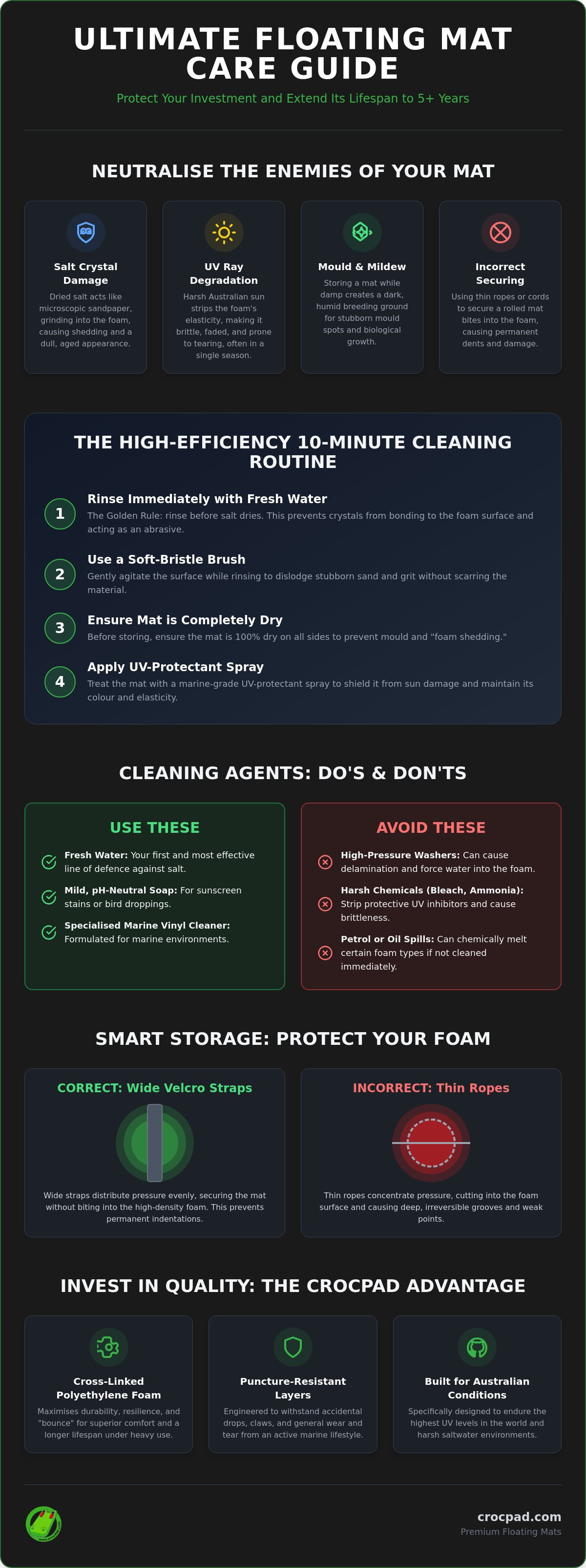
Mastering floating mat care for boats means thinking about where your gear lives when the engine is off. Storage is often the stage where physical damage occurs, primarily through improper strapping or heat exposure. When you're ready to pack up, ditch the thin nylon ropes. These narrow lines cause "foam biting," where the tension slices into the soft material and leaves permanent scars. Instead, use wide Velcro straps. These distribute the pressure across a larger surface area, keeping the roll secure without compromising the foam's structural integrity. Foam has a memory, and avoiding deep indentations is key to keeping it looking brand new.
Keep your mat off hot metal surfaces. During a typical Aussie summer, aluminium or steel boat decks can reach temperatures over 60 degrees. This level of heat can singe or warp foam if it's in direct contact for too long. If you must store it on deck, ensure there's a towel or a protective layer underneath. Store the mat vertically whenever you're back on shore. This orientation allows gravity to pull any residual moisture out of the roll, preventing the damp pockets where mould thrives. To keep the rest of your deck clear and safe, stash your smaller gear in Waterproof Bags so you're not tripping over loose items while docking.
On-Boat Management for Pontoons and Yachts
Securing a large mat on a moving vessel requires a bit of strategy. For pontoons, use heavy-duty bungee cords to lash the roll to the swim platform or the railing. Always double-check that your storage position doesn't obstruct the skipper's line of sight. Safety is paramount when you're navigating busy waterways. Adopt a "mat-first, gear-last" loading strategy. By placing the mat at the bottom of your storage pile or at the very back of the deck, you keep the walkway clear for anchors, lines, and passengers until you've reached your destination. This keeps the boat organised and prevents the mat from becoming a trip hazard.
Long-Term Storage During the Off-Season
When the temperature drops and the boat goes into hibernation, your mat needs a proper home. A dry garage or shed is always better than an outdoor rack. Even under a tarp, outdoor exposure leads to temperature swings that can degrade the foam over several months. Be aware that rodents love nesting in rolled foam. It's soft, warm, and easy to chew. Store your mat in a sealed container or high off the ground to avoid unwanted visitors. Before you say goodbye for the winter, perform a "deep clean" with a vinegar solution to kill any lingering spores. This ensures your gear is fresh and ready for the first run of next season.
Ready to take your weekend adventures to the next level? Explore the most durable gear on the market and shop the Crocpad collection for your next trip.
Investing in Quality: Why Crocpad Floating Mats Outlast the Rest
Choosing the right gear is the foundation of any great day on the water. While we’ve covered the technical side of floating mat care for boats, the reality is that maintenance is only as effective as the material you’re protecting. Crocpad mats are engineered specifically for the rugged Australian coastline, where salt and UV are at their most aggressive. We use high-density, cross-linked polyethylene foam that provides superior buoyancy without the risk of water absorption. This isn't your standard pool noodle material; it's a marine-grade composite designed to withstand years of heavy use and sun exposure.
The "Tuff-Hide" outer layer is our secret weapon against puncture damage. Whether it's a stray fishing hook or a rogue shell on the beach, this protective skin keeps the internal foam layers intact and looking sharp. Our expertise in high-performance materials extends across our entire range, from our signature Floating Water Mats to our recovery-focused Ice Baths. When you invest in quality, you're not just buying a toy. You're buying a piece of equipment that respects your time, your budget, and your thirst for adventure.
The Crocpad Engineering Difference
What sets our design apart is the internal "scrim" or heavy-duty mesh layer. This invisible backbone prevents the foam from tearing under the weight of multiple jumpers. It’s the difference between a mat that lasts one summer and one that becomes a family heirloom for years of boating trips. Our proprietary tether system is another game-changer. Unlike DIY solutions that can rip through the foam, our anchors are reinforced to handle the pull of currents and tides safely. We even made sure our gear is pet-friendly. If you’re heading out with your four-legged best mate, our mats pair perfectly with our Inflatable Dog Ramps, ensuring every member of the family can get back on the boat with ease.
Join the Crocpad Community
We’re more than just a gear company; we’re a community of adventure seekers who live for the sun and the salt. We’d love to see your boat setups in action. Share your weekend photos on social media and tag us to join a group of like-minded boaties who value performance and recovery equally. Our commitment to being your "Reliable Adventure Expert" means we’re always here to help you get the most out of your gear. Don't settle for flimsy imitations that end up in a landfill after a few trips. Upgrade your summer setup today at the home of Australian water fun and experience the Crocpad difference for yourself.
Ready for Endless Summer Adventures?
You've now got the professional blueprint to keep your gear in showroom condition. By committing to a fresh-water rinse, applying a UV shield, and using wide straps for storage, you're protecting more than just foam; you're protecting years of family memories. Mastering floating mat care for boats is the difference between a one-season wonder and a decade of fun on the water. It's about being proactive so you can spend less time scrubbing and more time diving into the blue.
Ready to upgrade your vessel's entertainment? Our mats are designed specifically for harsh Australian UV conditions and feature puncture-resistant high-density foam that's trusted by Aussie boaties nationwide. Don't settle for gear that can't handle the heat. Maximise your summer with a Crocpad Floating Water Mat and experience the ultimate in durability and buoyancy. Grab your gear, hit the harbour, and enjoy the peace of mind that comes with equipment built to last. See you out there!
Frequently Asked Questions
Can I leave my floating mat in the water overnight while anchored?
No, you should always pull your mat out of the water before sundown. Leaving it submerged overnight invites marine growth like barnacles or algae to attach to the foam surface. It also presents a major safety hazard if the tide shifts or the wind picks up, potentially tangling the mat in your anchor chain or outboard motor. Secure it on deck to keep it safe and clean for the morning.
How do I repair a small tear or puncture in my foam mat?
Small nicks can be fixed using a specialised foam glue or spray adhesive designed for marine polyethylene. For larger punctures, apply a leather PVC patch with waterproof adhesive to maintain the mat's structural integrity. Always ensure the area is bone-dry and free of salt before starting the repair. Regular inspections are a vital part of floating mat care for boats to catch minor damage before it spreads.
Will sunscreen or tanning oil stain the surface of the mat?
Yes, sunscreen and tanning oils can lead to yellowing or slippery patches on the foam surface. While high-quality mats have a protective layer, these chemicals can eventually break down the UV inhibitors if left to bake in the sun. Encourage guests to towel off before lounging. If you notice a greasy residue, use a mild, pH-neutral soap and fresh water to lift the oils immediately after your trip.
Is it safe to tow a floating mat behind the boat while people are on it?
Never tow a floating mat with passengers on board. These products are designed for stationary lounging and aren't built to handle the drag or speeds of a moving vessel. Towing can cause the mat to flip or dive, leading to serious injury or drowning risks. Always roll up the mat and secure it on the deck before you start the engine to move your boat to a new location.
What is the best way to remove bird droppings or tree sap from the foam?
Rinse bird droppings immediately with fresh water and a soft-bristle brush to prevent staining. For stubborn tree sap, try placing an ice pack on the sap to harden it, then gently scrape it off with a plastic edge. If a residue remains, a tiny amount of diluted methylated spirits on a soft cloth can work, but always test a small, hidden area first and rinse thoroughly with fresh water afterward.
Can I use a pressure washer to clean my Crocpad mat?
No, you must avoid using a pressure washer at all costs. The concentrated force of the water jet can easily penetrate the foam layers and cause delamination, where the material begins to peel and separate. Stick to a standard garden hose with a spray nozzle. This provides plenty of pressure to dislodge sand and salt without risking the long-term health of your high-performance Floating Water Mat.
How often should I apply a UV protectant spray?
Apply a marine-grade UV protectant every three to four months during the peak boating season. If you're out on the water every weekend, you might want to increase this to once every eight weeks. This proactive step is a cornerstone of floating mat care for boats, helping the foam stay flexible and vibrant despite the brutal Australian sun. Always apply the spray to a clean, dry surface for the best results.
Does salt water damage the internal layers of the mat more than fresh water?
Salt water is significantly more abrasive than fresh water due to the sodium chloride crystals it leaves behind. When these crystals dry inside the foam's pores, they act like tiny blades that grind against the material from the inside out. While fresh water can still lead to mould if the mat isn't dried properly, salt water adds a layer of chemical and mechanical stress that accelerates material degradation and fading.


