

Your boat's deck space isn't a fixed measurement; it is actually limited only by the gear you decide to bring along. With five million Australians hitting the water for leisure boating every year, the battle for elbow room on a crowded vessel is a challenge every skipper knows well. A high-quality boat floating mat solves this problem instantly by creating a durable, buoyant island that acts as a high-performance extension of your swim platform. It is the quickest way to double your usable space while keeping the vibe relaxed and the kids entertained.
We agree that recreational gear should be a source of joy, not a maintenance headache or a storage nightmare. This guide promises to help you choose, secure, and maintain a mat that withstands the brutal UV rays and heavy use of a classic Aussie summer. You will find a complete breakdown of marine-grade materials, professional anchoring tips to prevent drifting, and smart pack-down routines that keep your deck clear. Prepare to turn your local bay into a private floating oasis with gear built for the long haul and designed for maximum recovery and fun.
Key Takeaways
- Expand your vessel's usable area instantly by adding a portable foam island that effectively doubles your deck space.
- Identify the critical differences between marine-grade foam and cheap alternatives to ensure your boat floating mat lasts for multiple seasons.
- Secure your setup like a pro using the bungee and cleat method to keep your floating island stable and safe for everyone on board.
- Protect your investment from the intense Australian sun and salt with specific maintenance steps designed for high-performance gear.
- Compare density and construction standards to see why gear designed by Aussie boaties offers superior reliability in local conditions.
Why a Boat Floating Mat is the Ultimate Summer Essential
Owning a boat is about freedom, but deck space is always at a premium. A boat floating mat changes the game by acting as a portable, foam-based island that trails behind your vessel. Think of it as "increasing your acreage" without the massive price tag of a bigger hull. While traditional personal flotation devices keep you buoyant, these mats provide a solid, walkable surface that effectively doubles your living area once you drop anchor.
In the heat of an Aussie summer, the best part of the day starts when the engines stop. Moving from cruising to lounging is a core pastime, and a solid foam mat makes this transition seamless. Unlike inflatable pads that require pumps and carry the constant risk of punctures, a high-density foam mat is ready the moment you unroll it. It won't pop if a stray fishing hook grazes it, making it a reliable choice for rugged marine environments.
To see this gear in action and understand the setup, check out this real-world review:
The Social Hub: From Sandbars to Open Water
Raft-ups are the lifeblood of the Aussie boating community. When multiple boats tie together, a boat floating mat becomes the central hub for the entire group. It creates a "neutral ground" where kids can play and adults can congregate away from the cramped confines of the cockpit. It also serves as a convenient, dry-ish spot for snacks and drinks. For those who take their socialising seriously, the Beer Pong Floating Mat is a legendary addition that turns any quiet bay into a high-energy party zone.
Family Fun and Safety on the Water
Safety is a top priority for any skipper. While towable toys are great for thrills, they can be unpredictable for younger children when the boat is stationary. A floating mat offers a stable, predictable platform that reduces anxiety for less confident swimmers. It gives them a place to rest without needing to climb back up a ladder every five minutes. This sense of security extends to the four-legged members of the family too. You can easily pair your setup with Inflatable Dog Ramps to ensure your pup can get back on board safely after a dip.
Choosing the Right Floating Mat for Your Vessel
Not all mats are created equal. Selecting the right boat floating mat requires a careful balance between your vessel's storage capacity and the size of your typical crew. Many industry experts consider these mats the ultimate summer essential because they transform a standard day on the bay into a multi-level adventure. However, a mat that is too large for your storage lockers or too thin for a group of adults will quickly become a chore rather than a highlight.
Start by assessing who will be using the mat. If you're hosting a group of adults, you need a high-density mat with significant weight capacity. While kids can stay buoyant on almost anything, adults require the structural integrity of professional-grade foam to remain above the waterline. Safety is another critical factor. Always opt for high-visibility colours like vibrant orange or neon green. These shades ensure other skippers can spot your floating island from a distance, even in busy or choppy waterways.
Material Matters: XPE Foam vs. Inflatables
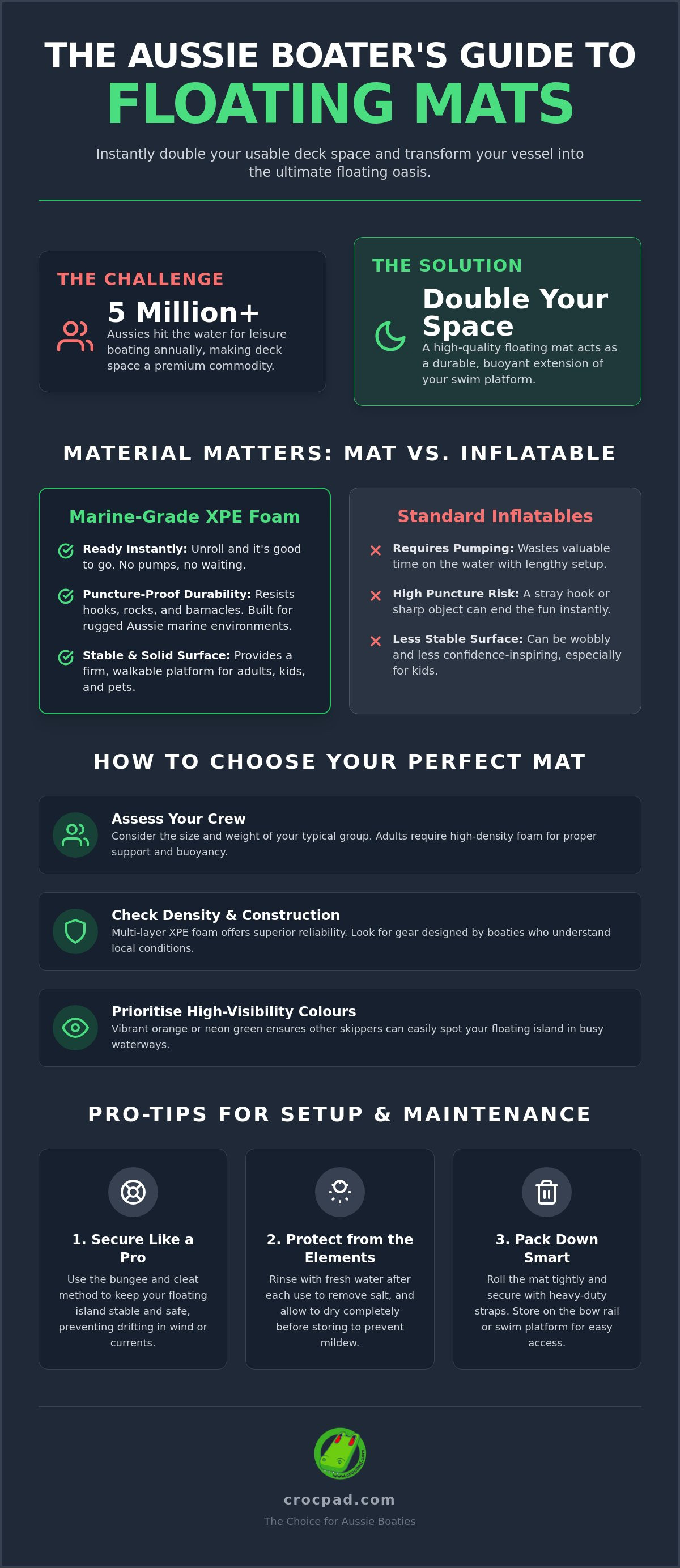
Durability is everything when you're dealing with the harsh Aussie sun and salt. Multi-layer XPE foam is the gold standard for marine use. It offers incredible puncture resistance, which is vital if you're anchoring near rocky shorelines or barnacle-covered jetties. Unlike inflatables, foam mats are ready to go the moment you hit the water. You won't waste twenty minutes of your morning wrestling with a pump. They provide a consistent, stable platform feel that inflatables simply can't match.
Storage Solutions for Small and Large Boats
Storage is often the biggest hurdle for boaties. For smaller vessels, roll the mat tightly and secure it to the bow rail or the swim platform using heavy-duty velcro straps. Keep in mind that a mat will be heavier when wet, which can slightly shift your boat's centre of gravity if stored too high. To keep your deck organised and salt-free, store your tethering lines and clips in Waterproof Bags. This prevents wet ropes from dripping into your dry storage areas and keeps your gear ready for the next trip.
Finding the right balance of size and strength is easy when you browse the high-performance range at crocpad.com.
How to Secure and Anchor Your Mat to Your Boat
A boat floating mat is a fantastic addition to your day, but it becomes a major liability if it isn't fastened correctly. A loose mat is more than just a lost investment; it is a navigational hazard for other boaties and can damage sensitive marine environments if it drifts into protected zones. To enjoy your day without stress, you must learn how to properly secure and anchor your mat using reliable marine-grade hardware and smart positioning.
The most effective setup for any skipper is the "Bungee and Cleat" method. Unlike static ropes that yank on the mat’s eyelets when a wake hits, a marine bungee cord provides essential shock absorption. This flexibility prevents the tether points from tearing under the pressure of moving water. Always maintain a safe distance from the transom. You want the mat far enough away to avoid any contact with the propeller, even if the wind shifts suddenly. If you're spending the afternoon on a shallow sandbar, consider anchoring the mat independently with its own small sand anchor. This keeps the area around your swim platform clear for people moving in and out of the boat.
The 4-Step Tethering Process
- Step 1: Locate the reinforced mooring point on your mat. High-quality mats feature a grommet system designed to distribute load across the foam layers rather than pulling on a single point.
- Step 2: Attach a high-quality marine bungee or a length of braided nylon rope. Ensure the clips are corrosion-resistant and locked tight before deployment.
- Step 3: Secure the other end to a sturdy boat cleat or the ski tow eye. Avoid using plastic rails or bimini supports as they aren't designed for sustained horizontal tension.
- Step 4: Check for drift and line tension before anyone hops on. Give the mat a firm tug to ensure the connection is solid and the distance from the hull is correct.
Safety Precautions in Tidal Waters
Currents can be deceptive. In tidal areas, the force of moving water puts immense pressure on your boat floating mat and its tether points. What feels like a calm bay can quickly turn into a high-tension situation as the tide turns. Keep a constant eye on the line tension; if the mat starts to dive or submerge at the front, the current is too strong for that specific mooring setup and you should bring it back on board.
Never attempt to tow a foam mat behind your boat at speed. These products are designed for stationary lounging, not high-speed thrills. Towing can cause the foam to delaminate or the tether point to rip out entirely. Finally, always maintain a "lookout" rule. Even when anchored in open water, one person on the boat should keep a casual eye on the mat to ensure everyone stays safe and the tether remains secure against the hull.
Maintenance Tips for Lasting Durability in Aussie Conditions
The Australian sun is a beast. While your boat floating mat is built for the marine environment, the combination of high UV indices and crystalline salt can degrade even the toughest gear over time. Saltwater isn't just wet; it's a chemical cocktail. When the water evaporates, it leaves behind sharp salt crystals that can lodge in the cellular structure of the foam. These crystals act like tiny shards of sandpaper, slowly grinding away at the mat's integrity every time it's rolled or stepped on.
Maintaining your gear isn't difficult, but it requires a consistent "rinse, dry, roll" routine. After every outing, your first task should be a thorough freshwater flush. This removes the salt and any organic debris from the bay. If you spot a minor scuff or tear, treat it early with a marine-grade sealant. This prevents water from entering the foam core, which could lead to waterlogging and a loss of buoyancy. Taking five minutes at the end of the day ensures your gear lasts for multiple seasons rather than just one.
Cleaning and Saltwater Removal
Fresh water is non-negotiable. If you've been anchored in salt water, hose down both sides of the mat as soon as you get back to the ramp or home. For stubborn stains or bird droppings, use a mild, eco-friendly soap. Avoid harsh detergents that can strip the UV-resistant coating or damage the local marine ecosystem. One of the biggest mistakes boaties make is leaving their mat to bake in the direct noon sun to dry. This is a myth that actually accelerates foam breakdown. Instead, let your mat air dry in a shaded, well-ventilated area. This preserves the elasticity of the XPE foam and keeps the colours vibrant for years.
Proper Storage and Rolling Techniques
How you store your mat determines its lifespan. Always roll the mat tightly to prevent "memory curl", which is that annoying habit where the mat refuses to lay flat on the water. Start rolling from the end opposite the tether point to ensure a smooth, even cylinder. Use wide storage straps that distribute pressure evenly across the surface. Narrow ropes or thin bungee cords can "bite" into the foam, leaving permanent indentations that weaken the structure. During the winter months, store your mat in a cool, dry place. Keep it off the garage floor to avoid attracting rodents and away from extreme garage heat that can cause the foam to warp.
Invest in a mat that's built to survive the elements by checking out the durable range at crocpad.com.
Why Crocpad is the Choice for Aussie Boaties
Selecting a boat floating mat shouldn't be a gamble. Crocpad is an Australian-owned and operated brand that understands the unique demands of our rugged coastline. We don't just sell gear; we live the lifestyle. This "Designed by Boaties, for Boaties" ethos ensures that every design choice, from the foam density to the tethering hardware, is built to handle real-world marine conditions. You get the peace of mind that comes with local support and rapid shipping across the country, ensuring you're never left waiting on the shore.
The difference lies in the structural integrity of our specialised marine-grade foam. While budget retail versions often feel like oversized pool noodles, a Crocpad mat offers premium density that supports groups of adults with ease. This high-performance construction ensures the mat remains stable and buoyant even when the party gets lively. Whether you're choosing the standard Floating Water Mat for family quiet time or the Beer Pong Floating Mat for a social raft-up, you're investing in gear that won't let you down when the sun is out and the water is perfect.
Engineered for the Australian Outdoors
Cheap mats are notorious for fading and flaking after just a few weeks in the sun. Our mats feature UV-stabilised layers specifically designed to withstand the harsh Australian index without losing their vibrant colour or structural strength. We also include reinforced tethering points that won't pull through when the tide picks up or the wind shifts. Crocpad mats represent the definitive benchmark for local aquatic durability and long-term reliability.
Your Complete Summer Setup
Transform your vessel into a mobile water park by pairing your boat floating mat with our other high-energy accessories. You can easily add a Megalo 3M Inflatable Water Pool Slide or the compact Mikros Pool Slide to create multiple levels of fun for all ages. This modular approach allows you to customise your setup based on your boat size and the number of guests on board. Join our growing community of Aussie adventure seekers who take their leisure as seriously as their performance.
Grab your Floating Water Mat today and own the water this summer!
Transform Your Summer Adventure
You've discovered how a boat floating mat can double your vessel's usable space and turn a standard day on the water into a premium floating island adventure. The secret to a long-lasting investment lies in choosing high-density, UV-resistant XPE foam and mastering the bungee and cleat anchoring method. By sticking to a quick freshwater rinse routine after every trip, you'll protect your gear from the aggressive salt and intense UV rays that define a classic Aussie summer.
Crocpad remains a proud Australian owned and operated brand, delivering high-performance gear specifically engineered for our demanding marine conditions. We prioritise structural integrity and high-visibility safety so you can focus on making memories with your crew. It's time to stop dreaming about the perfect social hub and start building your own floating oasis. Grab your gear and get ready for a season of renewal, energy, and pure outdoor joy.
Shop the full Crocpad Floating Water Mat range here
We'll see you out on the bay!
Frequently Asked Questions
Can I tow my boat floating mat behind the boat while moving?
No, you should never tow a foam mat while the boat is in motion. These products are specifically designed for stationary lounging and aren't built to withstand the hydrodynamic drag of being pulled at speed. Towing can lead to the tethering points ripping out or the foam delaminating entirely. Always roll it up and secure it to your bow rails or swim platform before heading to your next destination.
How many adults can a standard Crocpad floating water mat hold safely?
The weight capacity depends on the specific dimensions of your Floating Water Mat, but high-density marine foam is built to support multiple adults comfortably. Most standard mats provide enough buoyancy for a small group to lounge without the surface submerging underwater. For the best performance, distribute the weight evenly across the mat's surface rather than huddling in one corner to ensure everyone stays dry and stable.
Will the salt water damage the foam over time?
Salt water won't cause immediate damage, but salt crystals can degrade the foam's integrity if they aren't rinsed off. As water evaporates, the remaining crystals can act like abrasives within the foam's cellular structure. Combined with the intense Australian sun, this can lead to premature wear or flaking. A quick freshwater flush after every session is the best way to maintain your boat floating mat for years to come.
What is the best way to clean a foam water mat after a day at the beach?
The best way to clean your mat is a thorough rinse with fresh water and a wipe down with mild, eco-friendly soap. This removes salt, sand, and organic debris that can attract mould or cause odours. Avoid using high-pressure washers or harsh chemicals that could strip the UV-stabilised coating. Always ensure the mat is completely dry in a shaded area before rolling it tightly for long-term storage.
How do I stop my floating mat from rolling back up while in the water?
To prevent your mat from curling while in use, simply flip it over once you unroll it on the water. This uses the mat's "memory" to curl the edges downward into the water rather than upward. After a few minutes in the warm sun, the foam will usually relax and lay completely flat. Rolling it in the opposite direction for storage occasionally can also help reduce this curling effect over time.
Is a foam mat better than an inflatable water mat for a boat?
Foam mats are generally superior for boaties who want a "ready-to-go" experience without the hassle of pumps or electricity. Solid XPE foam is puncture-resistant and won't deflate if it touches a stray fishing hook or a barnacle-covered jetty. While inflatables might save a bit of storage space, the durability and instant deployment of a foam boat floating mat make it the more reliable choice for rugged marine environments.
Do I need a special permit to use a floating mat in Australian public waterways?
You don't need a special permit to use a floating mat in Australian public waterways, but you must comply with local maritime safety regulations. Ensure your mat isn't blocking navigation channels or creating a hazard for other vessels. If children under 14 are using the mat, ensure it meets the Consumer Goods (Swimming and Flotation Aids) Safety Standard 2017 for peace of mind and general water safety.
Can my dog join me on the floating water mat without scratching it?
Your dog can absolutely join the fun because marine-grade foam is resilient against pet claws. The high-density construction prevents the surface from tearing or puncturing under normal use by your four-legged friends. To make it even easier for your pup to get on and off, consider pairing the mat with Inflatable Dog Ramps, which provide a stable transition from the water to the mat's surface without slipping.


