

With over 950,000 registered boats across Australia and one in ten of us now holding a boat licence, our collective love for the water has never been stronger. Still, that sense of adventure quickly fades when you hear the dreaded crunch of sand in your charging port or find your dry clothes soaked by a single rogue wave. We've all been there, nursing a salt-damaged phone or binning a flimsy bag that couldn't handle one season in the harsh Aussie sun.
You need gear as tough as your weekend plans. This guide will help you select the perfect waterproof bags to keep your electronics and towels bone-dry, whether you're lounging on a Crocpad floating mat or heading out for a day of fishing. We will explore the latest IPX8 standards for submersion, heavy-duty PVC material choices, and the essential features that ensure your gear survives every splash, spill, and sandstorm. It's time to stop worrying about your kit and start enjoying the water with absolute confidence.
Key Takeaways
- Learn why high-performance materials like heavy-duty PVC are crucial for shielding your gear from corrosive salt spray and fine Australian sand.
- Understand the Ingress Protection (IP) rating system to ensure your tech survives everything from a light splash to a full dunking.
- Find the right size for your adventure by matching litre capacity to your gear, making it easier to organise your waterproof bags for boat days or poolside lounging.
- Master the "Perfect Roll" technique to create an airtight seal that keeps water out and adds life-saving buoyancy to your kit.
- Discover how Crocpad's lightweight, UV-resistant designs provide the ultimate peace of mind when you are out on the water.
Why Every Aussie Boat and Pool Day Needs Reliable Waterproof Bags
Australia's coastline is our ultimate playground, but it is a brutal environment for anything with a circuit board or a zipper. While a standard backpack is fine for a stroll through the shops, it offers zero protection against a rogue wave or a sudden downpour. A proper What is a Dry Bag? is a flexible, heavy-duty container designed to seal hermetically, keeping your gear bone-dry regardless of the conditions. Unlike traditional luggage, high-quality waterproof bags are built to withstand the relentless salt spray of the Whitsundays and the fine, invasive sand of the Gold Coast. They turn a stressful day of "watching the waves" into a relaxed afternoon of pure leisure.
To better understand this concept, watch this helpful video:
For boaties and families lounging by the pool, the peace of mind factor is the real winner. You want to focus on the BBQ or the kids' bombie competition, not whether your smartphone is getting splashed. Modern lifestyle essentials like car fobs, tablets, and expensive sunnies require more than just a towel wrap for safety. By using gear specifically designed for the marine environment, you ensure your valuables stay protected from the three big Aussie threats: corrosive salt, abrasive sand, and intense UV degradation.
Waterproof vs. Water-Resistant: Know the Difference
Splash-proof gear is a gamble you don't want to take when you are out on the water. Water-resistant bags are designed to repel a light drizzle or a few stray droplets, but they will fail the moment they hit the deck of a boat or fall off a floating mat. True waterproof protection means your bag can handle a full dunking without letting a single molecule of moisture inside. The roll-top mechanism is the gold standard for sealing these bags because it creates a physical, airtight barrier that remains secure even under pressure.
The Cost of Gear Failure on the Water
Electronics and salt water are natural enemies. A single splash of brine can trigger rapid corrosion inside a smartphone or a modern car key fob, often leading to a repair bill that costs hundreds of dollars. Beyond the money, there is the sheer frustration of being stranded at a boat ramp because your remote entry bit the dust. Choosing waterproof bags from a trusted name like Crocpad is an investment in your sanity. Quality gear saves you money in the long run by preventing the "salt-water tax" that ruins so many Aussie adventures.
Decoding Waterproof Ratings and Materials for Maximum Protection
When you are browsing for waterproof bags, the technical jargon can feel like a maze. You aren't just buying a simple plastic sack; you are investing in a sophisticated barrier for your most expensive gear. The key to long-term protection lies in understanding the Ingress Protection (IP) rating and the structural integrity of the materials used. Getting this right means the difference between a dry phone and a very expensive paperweight.
Understanding IP66 vs. IP68 Ratings
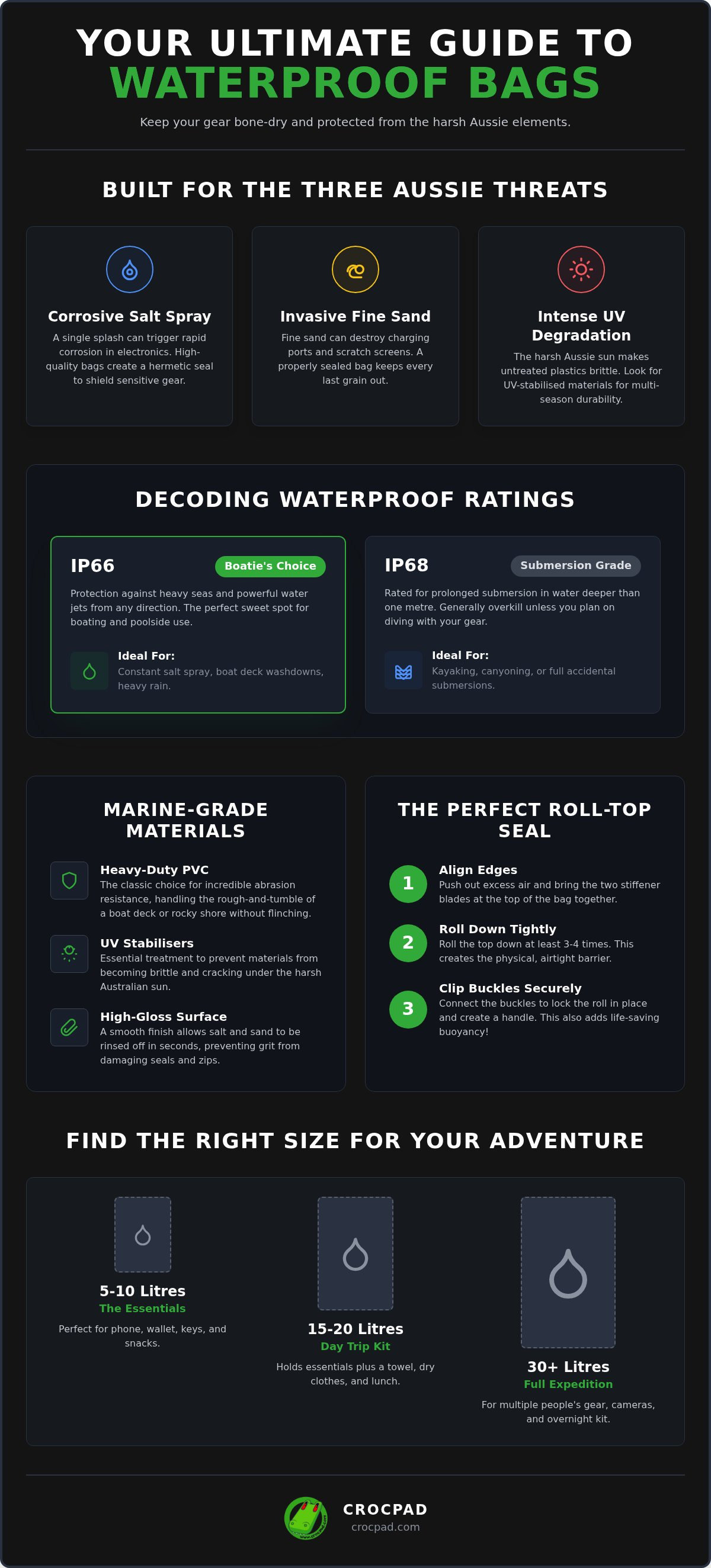
The IP rating system is an international standard that tells you exactly how much moisture a bag can handle. IP66 is the heavy-duty workhorse of the marine world. It is rated to withstand heavy seas and powerful jets of water from any angle. This makes it the perfect "sweet spot" for Aussie boaties who deal with constant salt spray or a vigorous hosing down at the boat ramp. IP68 is the next level up, designed for prolonged submersion in water deeper than one metre. Unless you are planning on diving with your kit, an IP66 rating offers more than enough security for a standard day on a floating mat or pool slide.
Marine-Grade Materials: Built to Last
Choosing the right fabric is about balancing weight with ruggedness. Heavy-duty PVC is the classic choice for its incredible abrasion resistance. It handles the rough-and-tumble of a boat deck or a rocky shoreline without flinching. To get the most out of your gear, look for materials treated with UV stabilisers. The harsh Australian sun can make untreated plastics brittle and prone to cracking within a single summer. Smooth, high-gloss surfaces are also a massive advantage; they allow you to rinse off salt and sand in seconds, preventing grit from building up in the seals. While clear panels allow you to locate your gear instantly, they also act as a double-edged sword by leaving your expensive valuables visible to anyone passing by on the beach.
Construction matters just as much as the fabric itself. High-performance bags use high-frequency welded seams rather than traditional stitching. Welded seams literally fuse the material together at a molecular level, creating a permanent, leak-proof bond that won't fail under pressure. Stitched and taped seams can eventually peel or leak when exposed to the intense Aussie heat for long periods. If you are wondering How to Choose the Right Dry Bag, always prioritise welded construction for anything that might end up in the drink. It is the only way to ensure your lifestyle essentials remain safe from the elements.
For those who want a blend of portability and professional-grade strength, the waterproof bags at Crocpad are specifically designed to handle these high-performance requirements. They offer the structural integrity needed for the boat while remaining lightweight enough for a casual day by the pool. Investing in the right materials now ensures your gear lasts for many seasons to come.
How to Choose the Right Dry Bag for Your Specific Activity
Selecting the right kit for your day out shouldn't be a guessing game. While some brands focus solely on extreme kayaking or mountain climbing, the reality for most Aussies is a mix of boat use, beach relaxation, and poolside fun. Since 60% of boating trips in Australia last up to four hours, your gear needs to be agile and easy to handle. Choosing the wrong size is a common pitfall. A bag that's too small leaves your towel damp, while one that's too large becomes a bulky nuisance on a crowded deck. If you're squeezing onto a boat under six metres, where 85% of Aussie vessels sit, space is a premium resource you can't afford to waste.
Size Guide: From 5L to 30L+
Capacity is measured in litres, and getting the volume right is essential for staying organised. It's often better to have two smaller waterproof bags than one giant one that's impossible to rummage through. Use this framework to plan your load:
- 5L-10L (The Essentials): This is your personal vault. It's the perfect size for keeping your car fob, smartphone, and wallet safe from salt spray. It fits easily inside a larger bag or clips onto a belt loop.
- 15L-20L (The Day Tripper): This is the versatile choice for most. It comfortably fits a microfibre towel, a spare shirt, and your lunch. It's the go-to size for a solo afternoon on a floating mat.
- 30L+ (The Family Pack): If you're heading out with the whole crew, this is the way to go. It handles multiple towels and shared snacks with ease, though it requires more effort to carry across the sand.
Attachment Points and Carrying Comfort
Don't overlook the hardware. D-rings are a game-changer for securing your gear to boat rails or the edge of your floating mat. This prevents your valuables from sliding overboard when the water gets choppy or when someone does a massive bombie off the side. For the trek from the car to the water, adjustable shoulder straps are non-negotiable. While a single-strap "tube" design works for light 5L loads, backpack-style dual straps are far superior for carrying heavier 30L packs comfortably.
Before you commit to a purchase, consult a guide to waterproof ratings to ensure your chosen size also meets your protection needs. For gear specifically tailored to the Aussie lifestyle, the waterproof bags at Crocpad offer the perfect balance of size and portability for any water activity. They are designed to be lightweight enough for the pool while remaining tough enough for the open sea.
Pro Tips for Organising and Maintaining Your Marine Gear
Achieving a watertight seal is a skill every Aussie boatie should master. Start by aligning the top edges of your waterproof bags and pulling them taut to remove any wrinkles. Roll the top down tightly at least three to four times. This creates the labyrinth seal necessary to stop moisture from creeping in. Once rolled, buckle the clips in the opposite direction to the fold to maintain constant pressure on the seal. It is a simple process, but rushing it is the leading cause of gear getting soaked in the drink.
Don't make the mistake of burping all the air out before you seal the bag. Leaving a small pocket of air inside provides essential buoyancy. If your bag accidentally kicks off the side of a floating mat, it will bob on the surface like a buoy rather than sinking to the bottom of the bay. This trapped air also acts as a protective cushion for your electronics, shielding them from minor bumps and drops on the boat deck.
The "Dry Bag Nesting" Method
Most people treat a dry bag like a black hole where gear disappears. The nesting method is a game-changer for internal organisation. Instead of throwing everything into one giant void, use smaller 5L pouches to categorise your gear inside a larger 30L pack. This system allows you to keep your dry clothes separate from your wet swimmers after a dip. Consider these organisation tips for your next trip:
- Colour-code your kits: Use different coloured internal pouches for snacks, first aid, and tech to find what you need in seconds.
- Separate wet from dry: Always keep a dedicated "wet pouch" for soggy towels to prevent moisture from spreading to your dry gear.
- Tech first: Place your most sensitive electronics in the very centre of the bag for maximum impact protection.
Post-Adventure Maintenance Checklist
Salt is the silent killer of high-performance outdoor gear. After a day in the spray, salt crystals can jam clips or abrade the heavy-duty fabric. Follow this routine to ensure your gear lasts for multiple seasons:
- Fresh water rinse: Thoroughly wash the exterior and clips to dissolve salt and remove abrasive sand.
- Dry inside-out: Always dry your bags in a shaded area to prevent stagnant odours and mould growth.
- Inspect the seals: Look for signs of wear or cracking in the material before you pack it away for the winter.
To ensure your gear stays protected with professional-grade equipment, shop our range of waterproof bags and prepare for your next big day on the water. Proper maintenance now means your bags will be ready to perform when the sun comes back out.
Discover the Crocpad Waterproof Bag Collection for 2026
While other brands focus on extreme survival gear, we've curated a collection of four waterproof bags that bridge the gap between rugged marine tech and everyday leisure. As an Australian brand, we realise that our gear needs to survive more than just a splash; it needs to endure the scorching UV rays and the relentless grit of our coastlines. Our 2026 collection is built with high-performance, lightweight materials that won't weigh you down while you're lugging gear to the shoreline or setting up the boat for a day of fishing.
The Crocpad range features four distinct models designed to handle everything from commercial-grade use to a quiet afternoon by the backyard pool. Each bag utilises heavy-duty, UV-stabilised PVC that remains supple and reliable season after season. Whether you're a professional charter operator needing a rugged storage solution or a family looking for a reliable dry station, these bags provide the structural integrity you need without the unnecessary bulk of traditional hiking packs. They are the ultimate insurance policy for your lifestyle essentials.
Why Crocpad Bags Stand Out
Our design philosophy is simple: gear should be tough, intuitive, and perfectly sized for the Aussie environment. We've eliminated the guesswork by focusing on the volumes that boaties actually use. By prioritising smooth, easy-to-clean surfaces and high-frequency welded seams, we ensure that salt and sand can be rinsed away in seconds. This focus on durability means you can toss your bag onto a wet deck or a sandy beach with absolute confidence. Your smartphone, car keys, and microfibre towels will remain bone-dry, even when the conditions get rough.
Complete Your Water Setup
A great day on the water is all about the accessories. Our waterproof bags are the perfect companions for our range of floating mats. Imagine having a dedicated dry zone right in the middle of the lake where you can grab your sunnies or a dry shirt without heading back to the shore. They also provide a convenient dry station when using our Mikros or Megalo 3M Inflatable Water Pool Slides, ensuring your tech stays safe while the kids are busy making a splash. Having a designated spot for your gear means less time worrying about splashes and more time enjoying the sun.
Shop the full Crocpad Waterproof Bag collection here and elevate your next Aussie adventure with gear that's built to last. It is time to invest in peace of mind and protect your valuables with the experts in high-end recreational gear.
Gear Up for Your Best Summer Yet
Your gear deserves the same high-performance protection you expect from your boat or pool setup. By understanding IP ratings and choosing marine-grade materials like heavy-duty PVC, you've already taken the first step toward a stress-free day on the water. Remember to master the perfect roll for buoyancy and always rinse away salt crystals to ensure your kit lasts for many seasons. It's about protecting those lifestyle essentials so you can stay focused on the rejuvenation that only a day by the water provides.
Crocpad is a proud Aussie-owned and operated brand. We've designed our range specifically for the unique demands of our sun-drenched beaches and salty waterways. Whether you're lounging on a floating mat or heading out for a serious day of fishing, our waterproof bags provide the structural integrity and peace of mind you need. Don't let a single splash ruin your electronics or leave you with a soggy towel. Secure your gear with Crocpad Waterproof Bags and enjoy the total freedom of an active outdoor lifestyle. See you out on the water!
Frequently Asked Questions
Are waterproof bags actually 100% waterproof if submerged?
Protection levels depend entirely on the Ingress Protection (IP) rating of the specific bag. A bag rated IPX7 can handle full submersion in up to one metre of water for 30 minutes, whereas an IPX8 rating is required for deeper or more prolonged underwater use. Most standard roll-top bags are designed to handle heavy salt spray and brief surface dunks rather than being dragged along the sea floor for hours.
Can I use a dry bag for my smartphone while swimming?
You can certainly use a specialised pouch, but only if it carries a certified IPX8 rating. These compact pouches are designed to handle the pressure of submersion while allowing you to operate the touchscreen through the material. For general swimming, a standard large dry bag is too bulky and buoyant; it's much better to use a dedicated phone sleeve that you can tether to your wrist.
How do I properly seal a roll-top waterproof bag?
Start by flattening the top edges together to remove any trapped air pockets or wrinkles in the material. Roll the stiffened bar down tightly at least three to four times to create a secure, watertight seal. Once you've finished rolling, clip the buckles together in the opposite direction of the fold. This process creates the mechanical seal needed to keep your lifestyle essentials bone-dry during a day on the water.
What is the best size dry bag for a day on a boat?
A 15L to 20L bag is the ideal sweet spot for most Aussie boaties. This capacity provides enough room to store a microfibre towel, a spare change of clothes, your lunch, and a few personal valuables without cluttering the deck. If you are only heading out to the pool or a floating mat with your phone and car keys, a compact 5L version is far more portable.
Do waterproof bags float if they fall into the water?
Most waterproof bags will float if you leave a small amount of air inside before you complete the roll-top seal. This trapped air provides the buoyancy needed to keep the bag on the surface if it accidentally kicks off a boat or a floating mat. It acts as a safety buoy for your gear, making it much easier to spot and retrieve before it drifts away.
How do I get the smell of salt water out of my waterproof bag?
Rinse the bag thoroughly with fresh water after every trip to dissolve abrasive salt crystals. If a stubborn odour develops, wash the interior with a mild, eco-friendly soap and a soft sponge before rinsing again. Always hang your bag to dry completely inside-out in a shaded area; storing a damp bag in a dark cupboard is a guaranteed recipe for mould and mildew.
Can I put wet clothes inside a dry bag with my dry gear?
Mixing wet and dry gear in the same compartment is a mistake that often leads to everything getting damp. The moisture from your wet swimmers will quickly evaporate and condense inside the sealed bag, soaking your dry towels. Instead, use a nesting method by placing your soggy gear into a smaller internal pouch before sliding it into the main bag to keep your kit organised.
What materials should I look for in a durable Australian waterproof bag?
Look for waterproof bags constructed from heavy-duty PVC or TPU that include built-in UV stabilisers to withstand our intense sun. These professional-grade materials are incredibly resilient against sand abrasion and won't become brittle after one summer. Ensure the bag features high-frequency welded seams rather than traditional stitching, as this creates a permanent, leak-proof bond that is far superior for long-term marine use.


